
Refurbishing a tired 1970’S or 1980s bathroom

Refurbishing a tired 1970’s or 1980s bathroom is a great opportunity to add modern comfort and real value to your home. Before choosing fixtures or finishes, think about three priorities: durability, waterproofing/ventilation, and how the change will affect the property’s resale appeal.

Below is a practical, design-conscious guide to choosing between a shower and a wet room, current style directions, and smart choices for flooring and colour.

Shower versus wet room – the right investment

• Shower enclosure (walk-in or framed): Best balance of cost, flexibility and resale appeal. A high-quality walk-in or quadrant enclosure modernises the space, conserves floor area, and is relatively straightforward to install. Easy to retrofit into existing layouts with standard drainage and minimal structural alterations.

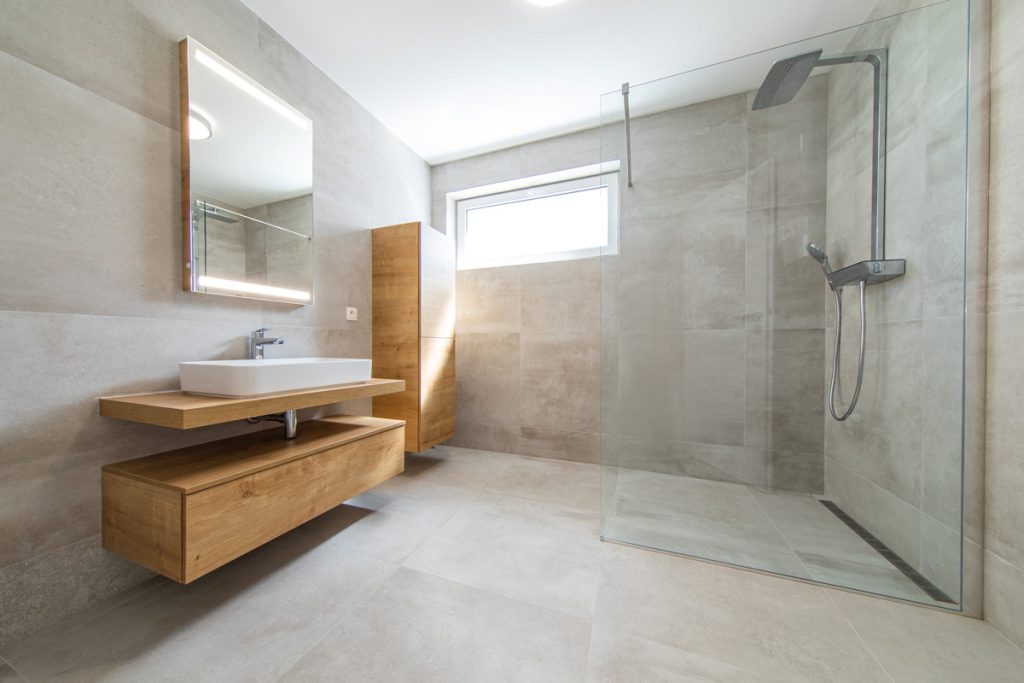
• Wet room: A bold, premium choice that delivers a sleek, accessible, spa-like result. Best when you can rework drainage and floor build-up (fall to drain) and are prepared to invest in professional tanking and ventilation. Wet rooms increase perceived space and are excellent for accessibility (no thresholds), but they cost more and require meticulous waterproofing to avoid damp issues, especially important in older 1980s constructions where floor joists and Party Wall interfaces might need inspection.

• Investment view: If resale and budget are priorities, a high-quality shower enclosure with a modern tray or a flush-fit walk-in offers the best ROI. If you want a long-term, high-end upgrade and are prepared to fund proper waterproofing and ventilation, a wet room is a standout selling point, but only if installed correctly.

Practical considerations before you start

• Check structural and services: Older 1980s houses may have timber floors, narrow joists or concealed pipe runs. Verify whether floor strengthening, new drainage runs or relocation of waste pipes are needed.

• Waterproofing & ventilation: Use a certified tanking system or liquid waterproof membrane for wet rooms; mosaic or large-format tiles must be laid over a properly prepared substrate. Install mechanical extract ventilation rated to current Building Regulations (Part F) and ensure all electrical work complies with Part P.

• Heating: Underfloor heating is highly compatible with tiled floors and is a strong selling point; it improves comfort and reduces condensation.

• Accessibility & longevity: Consider future-proofing (level access, grab rails, wider doorways) which can broaden appeal for downsizers or older buyers.

Contemporary styles that suit 1970’s / 1980s homes

• Minimal/Scandi: Clean lines, neutral palettes, matte white sanitaryware, slim black or chrome hardware, timber accents. Works well to modernise boxy 1980s layouts.

• Spa-inspired: Natural stone or stone-effect tiles, freestanding baths (if space allows), warm lighting, plants and tactile surfaces for a calm retreat.

• Industrial chic: Dark grout, concrete-effect tiles, exposed metallic finishes and bold fixtures—good for adding character to a plain room.

• Japandi/Organic modern: Soft curves, muted colours, natural timber vanities and simple fittings—balances warmth and minimalism.

• Transitional: A mix of classic and contemporary can help preserve period character while updating functionality; useful if you want broad market appeal.

Flooring choices

• Porcelain tiles: Best all-round option – durable, waterproof, frost and stain-resistant. Large-format tiles reduce grout lines and make small bathrooms feel bigger.

• Natural stone: Luxurious but needs sealing and careful installation; pairs well with underfloor heating.

• Luxury vinyl tile (LVT): Cost-effective, warm underfoot, waterproof and easier to fit on timber floors. Look for quality products designed for bathrooms.

• Mosaic tiles: Ideal for wet room drainage areas and for adding texture, but higher maintenance due to grout.

• Underfloor heating: Pairs well with tile or stone and reduces reliance on towel rails; electric systems suit retrofits, water-based systems are best with major floor work.

Colour schemes and décor

• Neutral base: Soft greys, warm off-whites and greige provide longevity and resale-friendly appeal. Layer in texture (matte tiles, timber vanities).

• High-contrast: Black fixtures or dark feature tiles against white baths and basins create contemporary drama.

• Muted colour: Sage green, dusty blue or terracotta accents add personality without dating the room.

• Metallics & fittings: Brushed brass or matte black taps and shower frames are current and add warmth or bold contrast.

• Lighting: Good task lighting (mirror lights) plus warm ambient sources; consider dimmable downlights and LED mirror units.

Final notes

Get a site survey and quotes from accredited installers (check references and examples of completed wet rooms). Prioritise correct waterproofing, ventilation and heating, because these determine whether your new bathroom will be beautiful and problem-free for years. 

With the right approach, you can convert a tired 1980s bathroom into a modern, marketable, and comfortable space that fits both lifestyle and budget.

Wet room: A bold, premium choice that delivers a sleek, accessible, spa-like result

INTERIORS: A Haven of Peace – Colouring an English Home for Calm

In a world that hums too loudly, the most radical luxury is a quiet home. 

In England, where the light can be soft and cool, calm design is less about stark minimalism and more about gentleness: hues with softened edges, natural textures, and patterns that breathe. The goal is not to impress but to exhale – rooms that slow the pulse, not steal the show.

Begin with the light. 

Northern light leans blue, so colours can read cooler than on the tester card. Choose paints with warm undertones – grey-greens with a drop of yellow, stone neutrals touched by pink or mushroom, and blues muddied with grey. 

Aim for low-contrast transitions between walls, woodwork, and ceilings; the eye rests when it isn’t jolted from shade to shade. Flat or matte finishes feel softer than high-sheen; soft sheen in kitchens and bathrooms adds practicality without glare.

The kitchen: 

Grounded freshness Kitchens work best as serene workshops – ordered, tactile, and quietly cheerful. Sage and olive greens anchor the room to nature; they pair beautifully with pale, warm neutrals on walls and ceilings.

 Think: mid-sage cabinetry, linen-white walls, and warm oak or honeyed beech accents. If you love blue, choose a greyed, smoky blue for islands or lower units, balanced with creamy off-whites rather than bright whites.

For wallpaper, use it sparingly: a small breakfast nook clad in a delicate botanical or block-printed sprig pattern can soften the hum of appliances. 

Tile with soft, handmade character – chalky zellige in warm white, celadon, or pale eucalyptus – adds depth without noise. Brass or aged bronze hardware warms the palette; keep worktops quiet (oatmeal quartz, honed marble, or wood with a matte oil). Under-cabinet lighting and warm bulbs (around 2700K) keep the space cosy through grey afternoons.

The main bedroom –  cocooning serenity: 

Bedrooms should feel like dusk. Choose enveloping colours – moss, muted teal, warm taupe, or a tender plaster pink – that wrap the room, skirting to ceiling. A mid-tone on walls with a shade deeper on woodwork lends softness and quiet structure. Alternatively, go tone-on-tone: a gentle greige across walls and ceiling, curtains in a slightly darker sibling, bed linen in chalky white and mushroom.

Wallpaper is at its best here. Look for small-scale, hand-drawn florals, willow fronds, or simple stripes in faded tones – patterns that suggest nature without shouting it. If you want to be brave go for a large scale nature inspired wallpaper.

If you prefer plain walls, panel the headboard wall and paint it a few shades deeper than the others for a restful focal point.

Layer textures that whisper: linen, brushed cotton, wool throws, a tufted rug underfoot. Keep metallics subdued – antique brass over chrome and limit contrast.

Night lighting should be low, warm, and directional; a pendant on a dimmer plus bedside lamps with fabric shades will do more for peace than any colour alone.

The bathroom: 

Bathrooms thrive on clarity and softness. Start with a warm white or pale stone on walls, then introduce colour through tiles or a half-height panel in sea-glass green, soft aqua, or clay. 

Avoid icy whites; look for creamy bases and honed finishes to diffuse light. A single gentle hue, pistachio, pale sage, or a whisper-blue across walls and bath panel feels cohesive and fresh.

For pattern, think water and meadow: fine reed stripes, lily pads, or a minimal Japanese wave motif. A small wallpapered cloakroom can carry bolder pattern, but in the main bathroom keep it airy. 

Natural materials – oiled oak shelves, wicker baskets, pebble or terrazzo-style floors add warmth and touch. 

Pulling it together

• Keep a connected palette: three families repeated throughout – grey-green, warm neutral, and softened blue or blush.

• Blur edges: paint ceilings a half-tone of the walls; echo cabinet colours in textiles.

• Prioritise matte, tactile finishes and warm lighting.

• Let pattern be small-scale, nature-led, and slightly faded.

Peace is cumulative: it’s the sum of kind colours, hushed textures, and gentle light. In an English home, where the sky often lends its own soft filter, these choices don’t just decorate; they restore.

How About A BBQ With A Caribbean Twist, Weather Permitting?

Spring in England begs for the sizzle of a garden barbeque, yet the sky loves a plot twist.

This Spring or Summer, why not embrace a Caribbean twist: bright flavours, smoky spice, and easy conviviality, with a plan that holds whether the forecast says blazing sun or surprise shower. Here are some tips and thoughts to consider.

Plan for sunshine – with a rain back-up

Gear: A lidded kettle or gas BBQ doubles as an oven if drizzle hits. Keep a grill-safe cast-iron pan and a baking tray ready to move items indoors. A pop-up gazebo (with sides) and a stack of umbrellas save the day.

Prep smart: Marinate the night before; par-cook dense items (wings, corn) in the oven to finish on the grill fast. Keep a warm oven at 100°C for holding.

Flow: Set a self-serve drinks station and a “finish-on-the-grill” menu so the cook isn’t drenched. Calypso or reggae playlist, battery speaker, fairy lights – done.

The Caribbean twist: smoke, citrus, heat, and sweetness Think jerk spice, green seasoning, Scotch bonnet heat (used judiciously), tropical fruit acids, and a little rum and brown sugar on the glaze.

Headline mains

Jerk chicken thighs: Bone-in, skin-on for juiciness.

Green-seasoned lamb chops:  Fragrant, herby, grill-kissed.

Prawns with Scotch bonnet–lime butter: Fast, dramatic.

Grilled halloumi with pineapple salsa: Veg-forward, big flavour.

Quick recipes (serve 4–6)

1. Classic jerk chicken

Marinade: 6 spring onions, 3 garlic cloves, 1 thumb ginger, 1–2 Scotch bonnets (seeded for less heat), 2 tsp allspice, 1 tsp thyme, 1 tsp ground cinnamon, 2 tbsp brown sugar, 2 tbsp soy, 2 tbsp lime juice, 2 tbsp oil, 1 tsp salt. Blitz.

Method: Toss 1.2–1.5 kg chicken thighs in marinade; chill overnight. Grill over medium heat with lid, 25–30 min, turning, until 75°C internal and lightly charred. Finish with a squeeze of lime.

1. Green-seasoned lamb chops

Paste: Blend 1 bunch coriander, 1 small bunch parsley, 4 spring onions, 2 garlic cloves, 1 tbsp thyme, 1 tsp allspice, zest/juice of 1 lime, 2 tbsp oil, 1 tsp salt.

Method: Coat 8 lamb chops; marinate 2–6 hours. Grill 2–3 min per side to medium; rest 5 min. Optional glaze: brush with 1 tbsp warmed honey plus 1 tsp rum last 30 seconds.

Prawns with Scotch bonnet–lime butter

Scotch bonnet–lime butter is a vibrant, spicy, and tangy compound butter made by blending softened butter with minced Scotch bonnet peppers, fresh lime juice (or zest), and often garlic or herbs. It is a popular Caribbean-inspired condiment used to add fiery flavour to grilled seafood, chicken, steaks, rice dishes, and roasted vegetables.

Butter: Mash 75 g softened butter with 1 tsp finely minced Scotch bonnet, zest of 1 lime, pinch salt.

Method: Skewer 500 g large prawns; oil and salt. Grill hot, 1–2 min per side. Toss in the butter and a splash of rum; finish with coriander.

Halloumi with pineapple-mango salsa

Salsa: 1 cup diced ripe pineapple, 1 small mango diced, 2 tbsp red onion, 1 tbsp lime juice, pinch salt, chopped coriander.

Method: Slice 2 blocks halloumi; brush with oil. Grill until golden, 2–3 min per side. Top with salsa, drizzle of chilli oil if desired.

Sides that sing

Rice and peas: Cook basmati with coconut milk, thyme, spring onion, allspice, and tinned kidney beans. Finish with butter and black pepper.

Corn with coconut-lime butter: Mix 50 g butter with 2 tbsp coconut cream, lime zest, pinch chilli; brush onto grilled corn.

Festival (sweet fried dumplings): 1 cup flour, 1/3 cup fine cornmeal, 2 tbsp sugar, 1 tsp baking powder, pinch salt, splash vanilla; add water to a soft dough. Shape logs; fry golden. Great with jerk.

Caribbean slaw: Finely shredded cabbage, carrot, spring onion, a little mango; dress with lime juice, mayo, and a touch of allspice.

Make-ahead crowd-pleasers

Rum-glazed plantains (Unlike sweet dessert bananas, they are larger, have thicker skins, and must be cooked before consumption): Toss ripe plantain slices with brown sugar, cinnamon, and oil; grill, then splash with a teaspoon of dark rum to caramelise.

Pepper shrimp tray: Roast shell-on prawns with garlic, paprika, Scotch bonnet oil (a fiery, aromatic condiment made by infusing neutral oil, like rapeseed or avocado with Scotch bonnet peppers, often combined with aromatics like garlic, ginger, and shallots), and butter at 220°C for 8–10 min if rain hits.

Drinks to match

Classic rum punch (1-2-3-4 rule): 1 part lime, 2 parts simple syrup, 3 parts dark rum, 4 parts water, dash Angostura; grate nutmeg.

Ting with a Sting: Over ice, 50 ml white rum topped with Ting grapefruit soda and a lime wedge.

Sorrel spritz: Hibiscus (sorrel) concentrate topped with prosecco or soda, ginger slice.

No-alcohol: Coconut water with lime and mint; pineapple-ginger cooler.

Final touch Set sauces on the side—extra jerk, mango chutney, hot pepper sauce—for custom heat. If the heavens open, move trays indoors, keep the grill master under the gazebo, and let the Caribbean warmth carry the day.

Now, if you want to check out some amazing properties with gardens to entertain in then take a look at these suggestions (guide prices correct at time of creating editorial).

Guide £800,000 – https://www.mccarthyholden.co.uk/property/high-street-odiham-rg29-5/

Guide £595,000 – https://www.mccarthyholden.co.uk/property/hitches-lane-fleet-gu51/

Guide £1,000,000 – https://www.mccarthyholden.co.uk/property/hitches-lane-fleet-gu51/

Guide £1,050,000 – https://www.mccarthyholden.co.uk/property/crown-lane-old-basing-rg24/

Market Update & Latest Property Magazine

Against a backdrop of international turmoil, the UK’s residential sales market, especially in the South East, continues to display striking resilience. 

Even as headlines are dominated by the Iran/US war and its longer-term economic reverberations, transaction pipelines remain active, pricing is broadly stable, and buyer intent appears stubbornly intact across core commuter belts and well-connected towns.

This is not an isolated episode. Recent history shows a pattern: during the Covid crisis, prices rose – most notably for homes with gardens, workspace, and access to green space, as buyers reassessed priorities. The war in Ukraine sent shockwaves through energy markets and inflation, yet the UK housing market absorbed the blow better than many expected. While mortgage costs did rise and activity cooled in segments, outright distress was limited and values generally held, particularly where schools, transport, and amenities underpin demand.

Several fundamentals help explain this durability. Chronic under supply, especially in the South East, supports prices even when sentiment wavers. A tight labour market and accumulated household savings cushions demand. The prevalence of fixed-rate mortgages slows the pass-through of shocks.  In addition high rents nudge would-be buyers toward ownership despite rate headwinds. 

International uncertainty can also redirect capital toward perceived safe, rules-based jurisdictions – prime UK housing often benefits.

The Real / 'Shop Floor' Local Market

Tthere is a deeper, human explanation. After years of rolling crises, many households seem unwilling to let distant geopolitics permanently defer life decisions. 

If home owners and buyers cannot influence the news cycle, they can still shape their immediate future: moving closer to family, trading space for commute, or finally securing that garden. This pragmatic optimism, tempered by careful budgeting and realism on price, helps keep chains moving.

No market is fully insulated. Yet the UK housing story, and the South East in particular, continues to show that clear needs, finite supply, and determined buyers can outweigh even a noisy global backdrop.

moving home remains a priority

Find A Home To Buy Or Rent

Take a look at our latest digital magazine where we are showcasing some fine properties to buy or rent. Buyers can see homes from £350,000 to £2,500,000, and for renters some simply stunning homes are available.

In this issue some of our editorial content includes insights into what might be going on in the mind of a house buyer with a classic car collection, a barbecue recipe with a Caribbean twist, interior design and some thoughts in how to modernise an outdated 1970’s /1980’s bathroom.

Just click here or on the image below to go to our 150 page flipping book digital magazine….

Village House Sales Boost In Odiham and Hartley Wintney

HARTLEY WINTNEY High Street copyright McCarthy Holden

This week has seen an impressive uplift in both exchanges and buyer demand for village properties, particularly across our Hartley Wintney and Odiham branches.

Activity has been strong across a broad range of price brackets, from £500,000 to £1.250m. Notably, contracts have exchanged on a number of properties in both central village locations and more rural settings on the outskirts, including sought-after areas such as Long Sutton and Crondall.

A selection of characterful and distinctive homes have recently exchanged contracts, including the following fine properties:

Why Live in Odiham or Hartley Wintney

Hartley Wintney offers an appealing blend of village charm, excellent amenities and strong transport connections. Ideally located near the M3 and A30, it benefits from fast rail links to London via Hook and Winchfield, as well as convenient access to Basingstoke, Reading and the wider M4 corridor—making it particularly attractive for commuters.

The village itself is rich in character, with a picturesque historic centre, period architecture and a vibrant high street. Landmarks such as the cricket green and duck pond are much-loved features that contribute to its distinctive sense of place.

Cricket Green HARTLEY WINTNEY copyright McCarthy Holden
The Cricket Green, HARTLEY WINTNEY
HARTLEY WINTNEY duck pond copyright McCarthy Holden
Duck Pond, Hartley Wintney
HARTLEY WINTNEY Golf Course copyright McCarthy Holden
Hartley Wintney Golf Course

Beyond the centre, the surrounding countryside offers extensive opportunities for walking, cycling and riding, alongside nearby golf courses and leisure facilities that support an active outdoor lifestyle.

Sharing many of these qualities, Odiham combines historical charm with a strong sense of community, excellent connectivity and easy access to open countryside.

Its historic high street, lined with period buildings, is widely regarded as one of the most characterful and quintessential in Hampshire.

From a buyer’s perspective, Odiham offers a diverse range of properties—from charming period cottages to modern family homes—appealing to first-time buyers, families and downsizers alike. On the outskirts, there are also some exceptional country homes.

With its relaxed pace of life and strong community feel, Odiham offers an excellent quality of living.

Basingstoke canal copyright McCarthy Holden
The Basingstoke Canal
king john's castle Odiham Hampshire McCarthy Holden estate agents
King John's Castle North Warnborough, Odiham

The village also has a close association with RAF Odiham, with Chinook helicopters often providing striking and memorable sights overhead.

Chinook In Odiham copyright McCarthy Holden
Chinook flying over Odiham High Street - image copyright John Joe Photography

Thinking of Moving?

If you are looking to find a home in a village or country setting, explore our latest properties through our search page. Alternatively, if you are a homeowner in these areas, contact your nearest branch for a free valuation or appraisal.

Early Signs Of High End Property Sales In the Blue Triangle Area

PEATMOOR BLUE TRIANGLE SOLD MCCARTHY HOLDEN

“There are some impressive house sales occurring in early 2026 in the Blue Tringle area of Fleet, witnessed by two completions which have happened in recent days, one guided at £2.350m and the second £1.75m. It appears that the 2025 uncertainty around top end stamp duty is well and truly consigned to history now,” reports director at McCarthy Holden Richard Ebsworth.

Why Fleet?

As a company, we know that Fleet is a fantastic place to live with and we always see a good level of people moving out of London to settle in Fleet. High buyer demand is not surprising because not only is the town a great place to raise a family, but for those working from home or for those buyers who commute into the City, travel connectivity is great with the M3 or Fleet mainline railway station on our doorstep. Once established in Fleet, people continually up-size and downsize but tend to remain within the area.

Highly Sought After Blue Triangle Area

The outlook for house sales in the Blue Triangle in 2026 is one of a stable market with increased interest from buyers. For those contemplating a house sale, vendors can be confident in the potential of finding plenty of buyers willing to secure their dream home.

So if you are thinking of a house sale this year, please do consider inviting McCarthy Holden to provide you with a free no obligation valuation / property appraisal.

GREENACRES BLUE TRIANGLE SOLD MCCARTHY HOLDEN
A McCarthy Holden sale which completed late February 2026 on a guide of £2.350m.
PEATMOOR BLUE TRIANGLE SOLD MCCARTHY HOLDEN
A McCarthy Holden sale which completed late February 2026 on a guide of £1.750m.

Experience Makes The Negotiating Difference

Our research shows that experienced personnel and high quality marketing, combined with a competitive fee level are the main reasons why house sellers chose McCarthy Holden, so below is a reminder of just a few of the reasons why we remain the agent of choice in the Blue Triangle.

• Experienced property professionals
• Property video tours – increased web engagement
• In The Country & Town Magazine
• In branch TV marketing
• Social media marketing campaigns
• Email campaigns to our 5,000 strong database
• Well connected – Mayfair Office London
• Established level of buyers
• Professional integrity and honest service delivery

Experienced personnel make a significant difference to the delivery of estate agency services, from the initial marketing through to the judgements needed around negotiating a sale and getting the transaction to exchange of contracts.

At McCarthy Holden in Fleet we have a long established and very experienced team.

Richard Ebsworth (Director): Lives in Fleet and has worked at McCarthy Holden for 22 years and has around 30 years of estate agency / property experience.

Victoria Davies (Manager): Lives in Fleet and has worked at McCarthy Holden for over 15 years and is one of our top performing managers year in year out.

Amalia Moruzzi-Lee (Property Consultant): Has worked at McCarthy Holden for 6 years and is one of our top performing house sale personnel.

Pedro Barros (Assistant Manager): With over 10 years of local knowledge in Fleet and the surrounding areas, Pedro combines 24+ years of sales negotiation experience to deliver outstanding results for his clients.

Henry David (Negotiator): Having grown up in Fleet, Henry has a good knowledge of the local area and he is confident and focused on achieving a high level of house sales.

Joanne Byford: Lives in Fleet and has worked at McCarthy Holden for over 14 years as a property viewer / sales negotiator.

Louise Looijestijn: Lives in Fleet and has worked at McCarthy Holden for over 12 years as a property viewer / sales negotiator.

Candice Walmsley: Lives in Fleet and has worked at McCarthy Holden for 12 years as a property viewer / sales negotiator.

Candice Walmsley: Lives in Fleet and has worked at McCarthy Holden for 12 years as a property viewer / sales negotiator.

Marianne Hascher: Lives in Fleet and has worked at McCarthy Holden for 5 years as a property viewer / sales negotiator.

Sophie Roberts: Lives in Farnborough and works at McCarthy Holden as an Administrator.

Harriett LLoyd: Lives in Fleet and works at McCarthy Holden as an Administrator

How to Buy a House in England as a First-Time Buyer

Purchasing your first home in England is a significant financial and legal undertaking.

Purchasing your first home in England is a significant financial and legal undertaking.

While the process follows a broadly structured path, it is important to understand the specific stages involved, particularly the legal position prior to exchange of contracts and the rules surrounding Stamp Duty Land Tax (SDLT).

The following guide explains the process in a clear and formal manner.

Preparing Financially

Before beginning your property search, you should assess your financial position carefully. Most lenders require a deposit of at least 5% of the purchase price, although a deposit of 10–20% often secures more favourable mortgage rates. In addition to the deposit, buyers must budget for associated costs such as legal fees, survey fees, mortgage arrangement charges and removal expenses.

It is prudent to retain a financial buffer after completion to cover unforeseen repairs or adjustments in living costs. First-time buyers frequently underestimate these additional expenses.

Viewing and Selecting a Property

When viewing properties, attention should be given not only to presentation but also to structural condition, heating systems, insulation standards and evidence of damp or movement. If purchasing a flat, particular care must be taken to review the lease term, service charges and ground rent provisions, as these can significantly affect long-term affordability and resale value.

You should also establish whether the seller is involved in a property chain, as this may influence the timeline of the transaction.


Making an Offer

In England, offers are submitted through the estate agent. Once accepted, the property is typically marked “Sold Subject to Contract.” At this stage, the agreement is not legally binding. Either party may withdraw prior to exchange of contracts without legal penalty, which distinguishes the English system from that of Scotland.

First-time buyers are often viewed favourably by sellers because they are chain-free and therefore reduce transactional complexity.

Instructing a Conveyancer

Once an offer is accepted, you should instruct a conveyancer or solicitor to manage the legal process. The conveyancer will conduct local authority searches, environmental checks and title investigations, raise enquiries with the seller’s solicitor, and liaise with your mortgage lender.

This stage typically lasts between eight and twelve weeks, although transactions involving chains or complex leasehold arrangements may take longer.

Formal Mortgage Application and Survey

Following acceptance of your offer, you will submit a full mortgage application. The lender will conduct a valuation of the property to ensure it represents suitable security for the loan. This valuation is for the lender’s benefit and should not be relied upon as a detailed inspection.

It is therefore strongly recommended that buyers commission an independent survey. A RICS Level 2 (HomeBuyer Report) is appropriate for most standard properties, whereas older or altered buildings may require a more comprehensive RICS Level 3 (Building Survey). If significant issues arise, you may seek to renegotiate the purchase price or reconsider proceeding.

Following acceptance of your offer, you will submit a full mortgage application. The lender will conduct a valuation of the property to ensure it represents suitable security for the loan. This valuation is for the lender’s benefit and should not be relied upon as a detailed inspection.

It is therefore strongly recommended that buyers commission an independent survey. A RICS Level 2 (HomeBuyer Report) is appropriate for most standard properties, whereas older or altered buildings may require a more comprehensive RICS Level 3 (Building Survey). If significant issues arise, you may seek to renegotiate the purchase price or reconsider proceeding.

Exchange of Contracts

Exchange of contracts is the pivotal legal moment in the English conveyancing process. Upon exchange, the agreement becomes legally binding and a completion date is fixed. The buyer usually transfers a deposit, commonly 10% of the purchase price.

Prior to exchange, there is no binding commitment. After exchange, withdrawal would normally result in severe financial penalties.

Completion

On the agreed completion date, mortgage funds are transferred to the seller’s solicitor and ownership passes to you. You receive the keys and may take possession of the property. Your solicitor will then arrange payment of any Stamp Duty due and register your ownership with HM Land Registry.

Stamp Duty Land Tax for First-Time Buyers

First-time buyers in England may qualify for SDLT relief on properties valued at £500,000 or less. Under current rules, no SDLT is payable on the first £300,000 of the purchase price, with 5% payable on the portion between £300,001 and £500,000. Properties exceeding £500,000 do not qualify for first-time buyer relief.

As tax rules are subject to change, buyers should verify current thresholds at the time of purchase.

Government Support Schemes

Eligible first-time buyers may also benefit from the Lifetime ISA scheme, which provides a 25% government bonus on qualifying savings used towards a first home (subject to conditions, including a £450,000 property value cap and a minimum account duration of 12 months). Shared Ownership schemes are also available in England, allowing buyers to purchase a percentage of a property and pay rent on the remaining share.

Typical Timeline

From offer acceptance to completion, the process generally takes between ten and fourteen weeks, though delays may occur where multiple transactions are linked in a chain.

Budget Insights For Landlords & Homeowners

MAG OUT NOVEMBER25 AND BUDGET IMPACT

This Autumn Budget was like no other, because the leaky lead up to it had a negative impact on the property market and the wider economy. So much uncertainty was generated in recent months and many people simply shut down and did nothing. So the Budget day is over and people can now plan their property moves and investments with the knowledge of what’s to come as a result if this Budget.

There were no rabbits pulled out of the hat and the only surprise was that the government’s financial position is nowhere near as bad as had been suggested in the run-up.

Property & Taxes

Landlords were further impacted if their investment property is held by them as an individual as opposed to a limited company.

From April 2027, property income (e.g. rents), as well as savings and dividend income, will be taxed 2 percentage points higher than today. That brings property income tax bands to 22%, 42% and 47%. 

The Budget stops short of replacing or abolishing Stamp Duty Land Tax (SDLT). Stamp duty remains in place for now, despite earlier speculation. 

The so called “mansion tax” has now arrived and it’s worth remembering that Labour previously voiced this intent back in 2019 and in part it impacted on them losing that General Election. In early 2025 rumours abounded about a forthcoming “mansion tax” and for the remainder of this year the top end of the market has been on hold.

Now we know that for owners of high-value homes, a new “mansion tax” — formally a high-value council tax surcharge — was confirmed. From April 2028, properties valued at £2 million and above will face an annual surcharge.

The tax will differ depending on the value of a property and will be determined by the following four bands.

£2 million to £2.5 million– You will pay £2,500.

£2.5 million to £3.5 million– You will pay £3,500.

£3.5 million to £5 million – You will pay £5,000.

More than £5 million – You will pay £7,500.

This will be an annual tax and the charge will be imposed on top of the existing council tax. The money will go to the Treasury rather than the local authority.

What It Means For The Property Market & Landlords / Tenants

The decision not to scrap stamp duty means there is no relief for home buyers and no  increased incentives to move or buy.

For landlords, higher taxation on rental income (from 2027) will erode net returns. But one thing is for certain, this added cost will be passed on to Tenants so this move alongside the Renters Right Act earlier this year will cost Tenants more for their rented homes.

There is much speculation about the new “mansion tax” suppressing demand at the very top end of the market, but we don’t believe this will be the outcome. 

The buyer demand will now return because the level of the “mansion tax” is known and whilst it might keep a lid on prices in this sector, at least transaction numbers will return. 

The tax isn’t coming in until 2028 and by then another General Election will be on the horizon so disgruntled home owners wary of property taxes in general will take their discontent out at the ballot box.

MAG OUT NOVEMBER25 AND BUDGET IMPACT
The top end market was on hold in 2025 but should now recover for 2026

Summary

From a property perspective across all price sectors, the Budget has little or no impact and any “bounce back” is likely to be moderate, not a dramatic boom. The weight of new taxes and limited reforms means we’re more likely to see steady growth and cautious investor re-entry  rather than a surge in building or housing-led economic growth.

In other word, a steady business as normal outlook for the short to medium term.

Overall, expect steady demand property sales and rentals, modest rental growth in strong micro-markets, and continued importance of quality and location.

Time To Start House Hunting?

A good place to start your 2026 house move could be to check out out latest property magazine, which came out today.

This 122 page property & lifestyle magazine is full for properties for sale from £295,000 to £2.0m., a selection of properties to rent and some engaging editorial such as cookery tips for Christmas from Rick Stein and Dr Clare Mosley.

MAG OUT NOVEMBER25 AND BUDGET IMPACT
Rick Stein’s ultimate guide to cooking the Christmas dinner
MAG OUT NOVEMBER25 AND BUDGET IMPACT
Recipies From Dr Clare Mosley

To enjoy a full read of our digital magazine In The Country & Town just click the image below.

MAG OUT NOVEMBER25 AND BUDGET IMPACT
Click Image To See Digital Flippingbook

Landmark Renters’ Rights Act Becomes Law

McCarthy Holden property let image

Yesterday the Renters’ Rights Act received Royal Assent, delivering the most significant overhaul of the English and Welsh private rented sector in a generation. The law aims to rebalance rights between tenants and landlords by strengthening safety and security for renters, tightening standards for properties, and simplifying dispute resolution..

Key Measures

  • Abolishes ‘no-fault’ section 21 evictions entirely, replacing them with a clearer, limited set of grounds for possession and stricter notice periods.
  • Introduces a new Decent Homes standard for rented properties with mandatory repairs timelines and minimum energy efficiency requirements (EPC band C target for private rentals within a phased timetable).
  • Establishes a national landlord and letting agent registration and licensing regime with sanctions for rogue landlords, including fines, civil penalties and criminal sanctions for severe breaches.
  • Creates an independent Housing Ombudsman or expands an existing dispute-resolution body with powers to issue binding orders and compensation for tenants; fast-track arbitration for common disputes (repairs, deposits, unlawful eviction).
  • Strengthens protections for renters in private tenancies against retaliatory eviction and unfair rent increases by requiring justification and limits on frequency of increases.
  • Caps certain fees charged to tenants (administration, referencing, inventory) and reforms deposit handling and dispute timelines.
  • Extends possession and rehousing duties in limited circumstances, such as where poor conditions render properties uninhabitable; enhances support for vulnerable tenants facing eviction.
  • Provides funding and guidance for local authorities to enforce standards, and powers to issue Remedial Notices and take emergency remediation action.
  • Commits to data collection and reporting on the private rented sector to monitor impacts and a statutory review clause after a set period (often 3–5 years).

The Act signals a major policy shift toward tenants’ rights after years of campaigning by charities and tenant groups; ministers argue it will improve housing stability and standards, while many landlord bodies warn of reduced investment in the private rented sector and potential rent rises.

Operationally, the law places a new compliance burden on landlords and local authorities will need increased resources to enforce the regime.

As the new law bedrocks renters’ protections, its true test will be in implementation: whether enforcement is adequately funded, whether landlords adapt without shrinking supply, and whether renters actually see safer, more secure homes — not just stronger rights on paper.

It is expected that there will be a phased approach to a number of the changes, however, the creation of periodic tenancies and the abolition of Section 21 notices are expected to be at the forefront.

Footnote: If you have any questions or wish to discuss possible implications email Nicola Bremner ….

Nicola Bremner 598 449
Nicola Bremner - Email nbremner@mccarthyholden.co.uk

10 ways to style winter berry shades in the home

INTERIORS

Seasonal and seductive, dark interiors are bearing fruit… so much so, we’re embracing shades of cassis, deep claret and plum, with winter berries are emerging as a firm favourite in the world of interiors.

Such is the surge in popularity, cookware, textiles and accent walls are being reimagined in rich berry tones – with new collections lending warmth, while creating an inviting atmosphere with a sense of luxury.

Indeed, leading interiors firm, Graham & Brown have named their Colour of the Year 2026 Divine Damson, which they describe as a “deep, timeless shade that evokes elegance, luxury and sophistication.”

Cited as a versatile and enduring colour, the inside team of designers say it “enriches a variety of styles and spaces,” and its versatility “makes it suitable all year-round, offering a cocooning, comforting feel in the colder months.”

While in summer, they say natural sunlight “brings out its vibrant depth allowing it to transition seamlessly across the seasons.”

Highlighting rich, bold hues, here’s what’s on our wish list…

INTERIORS
Cast Aluminium Casserole Dish in Burgundy, 2.7L, £35; Winter Berries Multi-Wick Candle, £8; rest of items from a selection, Dunelm

Think a comforting autumnal beetroot soup, or red wine casserole, and this is your new centrepiece to chime with supper parties and themed tablescapes. Style with burgundy velvet ribbons on stemware, and a bottle of bordeaux.

INTERIORS
Elements Ellis 4 Seater Round Dining Table in Burgundy, £449; Elements Cooper Dining Chairs, Tonal Boucle in Burgundy, £79 each; rest of items from a selection, Dunelm

As well as adding drama, colour and texture, this Scandi-style dining set makes for a conversation piece with its high-gloss finish, on-trend solid, pillar legs, and cool dining chairs… a dead cert for colour drenching.

INTERIORS
Graham & Brown’s Design of the Year 2026, Eternal Weave Black Wallpaper (Set of 2), £190 per set, Graham & Brown

This dark and moody motif features exotic birds, blooms and fauna for a dramatic backdrop – and generous dose of high drama. Said to be inspired by ancient textiles, nature and mythology, the design is produced as a double-width set; meaning you need two coordinating rolls for hanging the horizontal repeat pattern… frame the paper with a lick of Divine Damson to link the look

INTERIORS
Oakham Small Sideboard with Drawer in Wild Cherry, £169.99, Daals

Chic and contemporary, this polished sideboard in a deep shade of cherry, topped with gold tone T-bar handles will enhance any aesthetic.

INTERIORS
Lottie Berry Red Fabric Bar Stools, £159 each, Danetti

Upholstered in a plush chenille, these modish bar stools will bring colour and comfort to a kitchen island or trendy home bar.

INTERIORS
The Burgundy Fringed Lampshade, from £195, (Extra Small), Tinker & Tallulah

This vintage-inspired tassel lampshade shouts sumptuous, and can be used to dramatic effect with its gorgeous gold fringing, scalloped detail and rich, burgundy hue.

INTERIORS
Veeno Wine Glass Motif Wallpaper, £79 per roll, Bobbi Beck

More than a decorative afterthought, when you want to drink in a smooth merlot or cabernet sauvignon, set the scene for wining and dining with this whimsy wallpaper.

INTERIORS
Graham & Brown’s Colour of the Year 2026, Divine Damson Paint 1L Interior Eggshell, £36, Graham & Brown

This dark and moody motif features exotic birds, blooms and fauna for a dramatic backdrop – and generous dose of high drama. Said to be inspired by ancient textiles, nature and mythology, the design is produced as a double-width set; meaning you need two coordinating rolls for hanging the horizontal repeat pattern… frame the paper with a lick of Divine Damson to link the look.

INTERIORS
Luxury Marbles Christmas Bauble in Bitter Cherry, £29, Webb & Gray

This statement bauble will add instant charm to stylish place settings… and can double up as a napkin holder.

INTERIORS
Romance Ruffle Bed Linen Set in Berry Red, from £50, (Double), French Bedroom

Glamorous and romantic, ruffle-trimmed bedding in beautiful berry tones will luxe up any bedroom scheme – and who wouldn’t look forward to cocooning themselves in a delicious dark mulberry as we head into snuggle season?

Note – article by By Sam Wylie-Harris, PA. Prices correct at time of going to press but may have changed since.

×
Find a Property
M
Country & Equestrian
By submitting this form, you agree to McCarthy Holden using your personal data in accordance with our Privacy Notice.