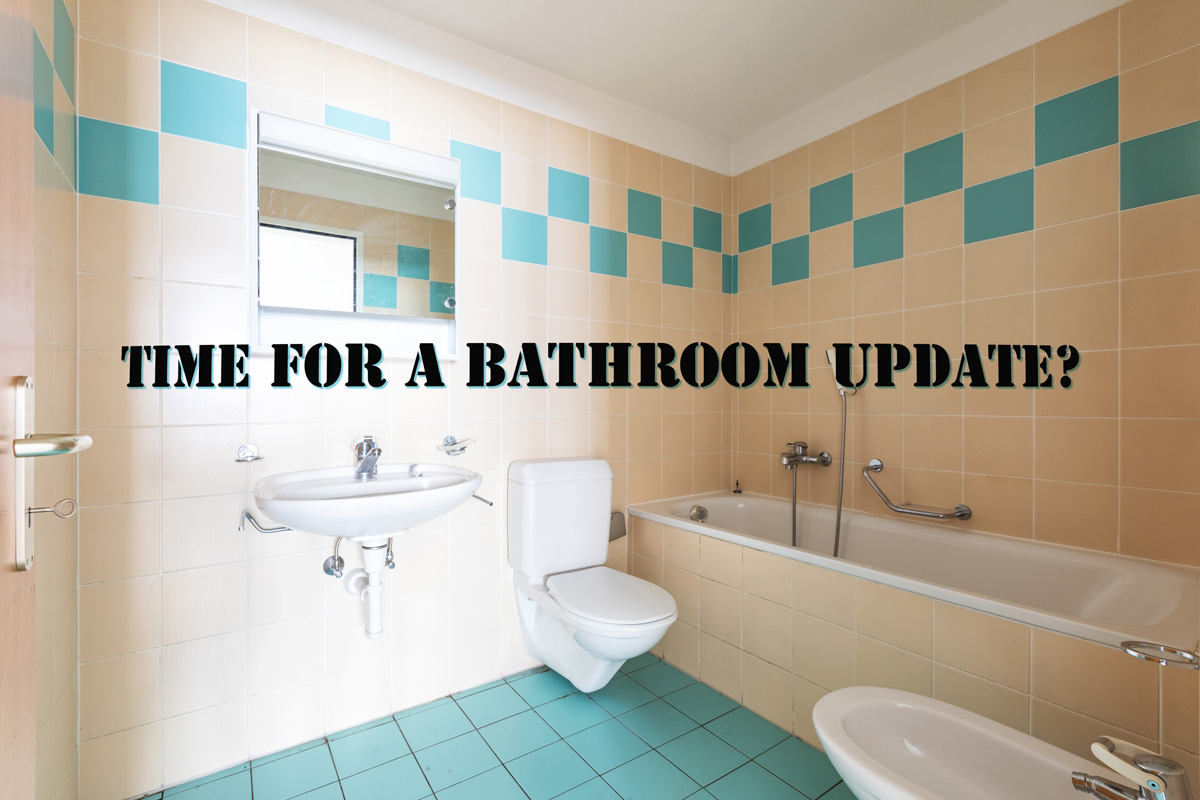
Refurbishing a tired 1970’S or 1980s bathroom

Refurbishing a tired 1970’s or 1980s bathroom is a great opportunity to add modern comfort and real value to your home. Before choosing fixtures or finishes, think about three priorities: durability, waterproofing/ventilation, and how the change will affect the property’s resale appeal.

Below is a practical, design-conscious guide to choosing between a shower and a wet room, current style directions, and smart choices for flooring and colour.

Shower versus wet room – the right investment

• Shower enclosure (walk-in or framed): Best balance of cost, flexibility and resale appeal. A high-quality walk-in or quadrant enclosure modernises the space, conserves floor area, and is relatively straightforward to install. Easy to retrofit into existing layouts with standard drainage and minimal structural alterations.

• Wet room: A bold, premium choice that delivers a sleek, accessible, spa-like result. Best when you can rework drainage and floor build-up (fall to drain) and are prepared to invest in professional tanking and ventilation. Wet rooms increase perceived space and are excellent for accessibility (no thresholds), but they cost more and require meticulous waterproofing to avoid damp issues, especially important in older 1980s constructions where floor joists and Party Wall interfaces might need inspection.

• Investment view: If resale and budget are priorities, a high-quality shower enclosure with a modern tray or a flush-fit walk-in offers the best ROI. If you want a long-term, high-end upgrade and are prepared to fund proper waterproofing and ventilation, a wet room is a standout selling point, but only if installed correctly.

Practical considerations before you start

• Check structural and services: Older 1980s houses may have timber floors, narrow joists or concealed pipe runs. Verify whether floor strengthening, new drainage runs or relocation of waste pipes are needed.

• Waterproofing & ventilation: Use a certified tanking system or liquid waterproof membrane for wet rooms; mosaic or large-format tiles must be laid over a properly prepared substrate. Install mechanical extract ventilation rated to current Building Regulations (Part F) and ensure all electrical work complies with Part P.

• Heating: Underfloor heating is highly compatible with tiled floors and is a strong selling point; it improves comfort and reduces condensation.

• Accessibility & longevity: Consider future-proofing (level access, grab rails, wider doorways) which can broaden appeal for downsizers or older buyers.

Contemporary styles that suit 1970’s / 1980s homes

• Minimal/Scandi: Clean lines, neutral palettes, matte white sanitaryware, slim black or chrome hardware, timber accents. Works well to modernise boxy 1980s layouts.

• Spa-inspired: Natural stone or stone-effect tiles, freestanding baths (if space allows), warm lighting, plants and tactile surfaces for a calm retreat.

• Industrial chic: Dark grout, concrete-effect tiles, exposed metallic finishes and bold fixtures—good for adding character to a plain room.

• Japandi/Organic modern: Soft curves, muted colours, natural timber vanities and simple fittings—balances warmth and minimalism.

• Transitional: A mix of classic and contemporary can help preserve period character while updating functionality; useful if you want broad market appeal.

Flooring choices

• Porcelain tiles: Best all-round option – durable, waterproof, frost and stain-resistant. Large-format tiles reduce grout lines and make small bathrooms feel bigger.

• Natural stone: Luxurious but needs sealing and careful installation; pairs well with underfloor heating.

• Luxury vinyl tile (LVT): Cost-effective, warm underfoot, waterproof and easier to fit on timber floors. Look for quality products designed for bathrooms.

• Mosaic tiles: Ideal for wet room drainage areas and for adding texture, but higher maintenance due to grout.

• Underfloor heating: Pairs well with tile or stone and reduces reliance on towel rails; electric systems suit retrofits, water-based systems are best with major floor work.

Colour schemes and décor

• Neutral base: Soft greys, warm off-whites and greige provide longevity and resale-friendly appeal. Layer in texture (matte tiles, timber vanities).

• High-contrast: Black fixtures or dark feature tiles against white baths and basins create contemporary drama.

• Muted colour: Sage green, dusty blue or terracotta accents add personality without dating the room.

• Metallics & fittings: Brushed brass or matte black taps and shower frames are current and add warmth or bold contrast.

• Lighting: Good task lighting (mirror lights) plus warm ambient sources; consider dimmable downlights and LED mirror units.

Final notes

Get a site survey and quotes from accredited installers (check references and examples of completed wet rooms). Prioritise correct waterproofing, ventilation and heating, because these determine whether your new bathroom will be beautiful and problem-free for years. 

With the right approach, you can convert a tired 1980s bathroom into a modern, marketable, and comfortable space that fits both lifestyle and budget.
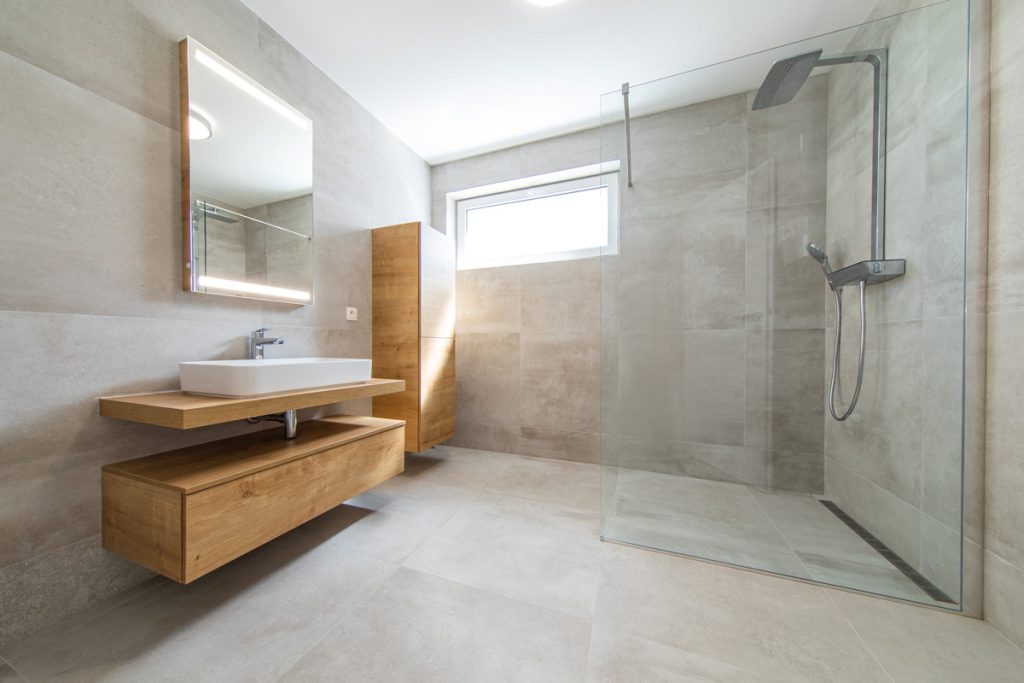

Wet room: A bold, premium choice that delivers a sleek, accessible, spa-like result

INTERIORS: A Haven of Peace – Colouring an English Home for Calm

In a world that hums too loudly, the most radical luxury is a quiet home. 

In England, where the light can be soft and cool, calm design is less about stark minimalism and more about gentleness: hues with softened edges, natural textures, and patterns that breathe. The goal is not to impress but to exhale – rooms that slow the pulse, not steal the show.

Begin with the light. 

Northern light leans blue, so colours can read cooler than on the tester card. Choose paints with warm undertones – grey-greens with a drop of yellow, stone neutrals touched by pink or mushroom, and blues muddied with grey. 

Aim for low-contrast transitions between walls, woodwork, and ceilings; the eye rests when it isn’t jolted from shade to shade. Flat or matte finishes feel softer than high-sheen; soft sheen in kitchens and bathrooms adds practicality without glare.

The kitchen: 

Grounded freshness Kitchens work best as serene workshops – ordered, tactile, and quietly cheerful. Sage and olive greens anchor the room to nature; they pair beautifully with pale, warm neutrals on walls and ceilings.

 Think: mid-sage cabinetry, linen-white walls, and warm oak or honeyed beech accents. If you love blue, choose a greyed, smoky blue for islands or lower units, balanced with creamy off-whites rather than bright whites.

For wallpaper, use it sparingly: a small breakfast nook clad in a delicate botanical or block-printed sprig pattern can soften the hum of appliances. 

Tile with soft, handmade character – chalky zellige in warm white, celadon, or pale eucalyptus – adds depth without noise. Brass or aged bronze hardware warms the palette; keep worktops quiet (oatmeal quartz, honed marble, or wood with a matte oil). Under-cabinet lighting and warm bulbs (around 2700K) keep the space cosy through grey afternoons.

The main bedroom –  cocooning serenity: 

Bedrooms should feel like dusk. Choose enveloping colours – moss, muted teal, warm taupe, or a tender plaster pink – that wrap the room, skirting to ceiling. A mid-tone on walls with a shade deeper on woodwork lends softness and quiet structure. Alternatively, go tone-on-tone: a gentle greige across walls and ceiling, curtains in a slightly darker sibling, bed linen in chalky white and mushroom.

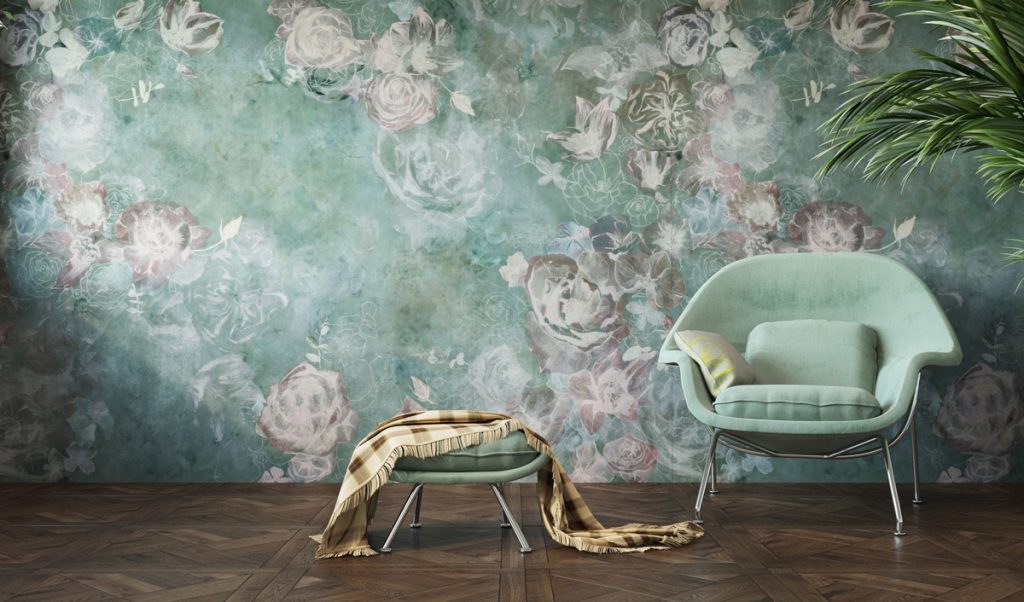
Wallpaper is at its best here. Look for small-scale, hand-drawn florals, willow fronds, or simple stripes in faded tones – patterns that suggest nature without shouting it. If you want to be brave go for a large scale nature inspired wallpaper.

If you prefer plain walls, panel the headboard wall and paint it a few shades deeper than the others for a restful focal point.

Layer textures that whisper: linen, brushed cotton, wool throws, a tufted rug underfoot. Keep metallics subdued – antique brass over chrome and limit contrast.

Night lighting should be low, warm, and directional; a pendant on a dimmer plus bedside lamps with fabric shades will do more for peace than any colour alone.

The bathroom: 

Bathrooms thrive on clarity and softness. Start with a warm white or pale stone on walls, then introduce colour through tiles or a half-height panel in sea-glass green, soft aqua, or clay. 

Avoid icy whites; look for creamy bases and honed finishes to diffuse light. A single gentle hue, pistachio, pale sage, or a whisper-blue across walls and bath panel feels cohesive and fresh.

For pattern, think water and meadow: fine reed stripes, lily pads, or a minimal Japanese wave motif. A small wallpapered cloakroom can carry bolder pattern, but in the main bathroom keep it airy. 

Natural materials – oiled oak shelves, wicker baskets, pebble or terrazzo-style floors add warmth and touch. 

Pulling it together

• Keep a connected palette: three families repeated throughout – grey-green, warm neutral, and softened blue or blush.

• Blur edges: paint ceilings a half-tone of the walls; echo cabinet colours in textiles.

• Prioritise matte, tactile finishes and warm lighting.

• Let pattern be small-scale, nature-led, and slightly faded.

Peace is cumulative: it’s the sum of kind colours, hushed textures, and gentle light. In an English home, where the sky often lends its own soft filter, these choices don’t just decorate; they restore.

How About A BBQ With A Caribbean Twist, Weather Permitting?

Spring in England begs for the sizzle of a garden barbeque, yet the sky loves a plot twist.

This Spring or Summer, why not embrace a Caribbean twist: bright flavours, smoky spice, and easy conviviality, with a plan that holds whether the forecast says blazing sun or surprise shower. Here are some tips and thoughts to consider.

Plan for sunshine – with a rain back-up

Gear: A lidded kettle or gas BBQ doubles as an oven if drizzle hits. Keep a grill-safe cast-iron pan and a baking tray ready to move items indoors. A pop-up gazebo (with sides) and a stack of umbrellas save the day.

Prep smart: Marinate the night before; par-cook dense items (wings, corn) in the oven to finish on the grill fast. Keep a warm oven at 100°C for holding.

Flow: Set a self-serve drinks station and a “finish-on-the-grill” menu so the cook isn’t drenched. Calypso or reggae playlist, battery speaker, fairy lights – done.

The Caribbean twist: smoke, citrus, heat, and sweetness Think jerk spice, green seasoning, Scotch bonnet heat (used judiciously), tropical fruit acids, and a little rum and brown sugar on the glaze.

Headline mains

Jerk chicken thighs: Bone-in, skin-on for juiciness.

Green-seasoned lamb chops:  Fragrant, herby, grill-kissed.

Prawns with Scotch bonnet–lime butter: Fast, dramatic.

Grilled halloumi with pineapple salsa: Veg-forward, big flavour.

Quick recipes (serve 4–6)

1. Classic jerk chicken

Marinade: 6 spring onions, 3 garlic cloves, 1 thumb ginger, 1–2 Scotch bonnets (seeded for less heat), 2 tsp allspice, 1 tsp thyme, 1 tsp ground cinnamon, 2 tbsp brown sugar, 2 tbsp soy, 2 tbsp lime juice, 2 tbsp oil, 1 tsp salt. Blitz.

Method: Toss 1.2–1.5 kg chicken thighs in marinade; chill overnight. Grill over medium heat with lid, 25–30 min, turning, until 75°C internal and lightly charred. Finish with a squeeze of lime.

1. Green-seasoned lamb chops

Paste: Blend 1 bunch coriander, 1 small bunch parsley, 4 spring onions, 2 garlic cloves, 1 tbsp thyme, 1 tsp allspice, zest/juice of 1 lime, 2 tbsp oil, 1 tsp salt.

Method: Coat 8 lamb chops; marinate 2–6 hours. Grill 2–3 min per side to medium; rest 5 min. Optional glaze: brush with 1 tbsp warmed honey plus 1 tsp rum last 30 seconds.

Prawns with Scotch bonnet–lime butter

Scotch bonnet–lime butter is a vibrant, spicy, and tangy compound butter made by blending softened butter with minced Scotch bonnet peppers, fresh lime juice (or zest), and often garlic or herbs. It is a popular Caribbean-inspired condiment used to add fiery flavour to grilled seafood, chicken, steaks, rice dishes, and roasted vegetables.

Butter: Mash 75 g softened butter with 1 tsp finely minced Scotch bonnet, zest of 1 lime, pinch salt.

Method: Skewer 500 g large prawns; oil and salt. Grill hot, 1–2 min per side. Toss in the butter and a splash of rum; finish with coriander.

Halloumi with pineapple-mango salsa

Salsa: 1 cup diced ripe pineapple, 1 small mango diced, 2 tbsp red onion, 1 tbsp lime juice, pinch salt, chopped coriander.

Method: Slice 2 blocks halloumi; brush with oil. Grill until golden, 2–3 min per side. Top with salsa, drizzle of chilli oil if desired.

Sides that sing

Rice and peas: Cook basmati with coconut milk, thyme, spring onion, allspice, and tinned kidney beans. Finish with butter and black pepper.

Corn with coconut-lime butter: Mix 50 g butter with 2 tbsp coconut cream, lime zest, pinch chilli; brush onto grilled corn.

Festival (sweet fried dumplings): 1 cup flour, 1/3 cup fine cornmeal, 2 tbsp sugar, 1 tsp baking powder, pinch salt, splash vanilla; add water to a soft dough. Shape logs; fry golden. Great with jerk.

Caribbean slaw: Finely shredded cabbage, carrot, spring onion, a little mango; dress with lime juice, mayo, and a touch of allspice.

Make-ahead crowd-pleasers

Rum-glazed plantains (Unlike sweet dessert bananas, they are larger, have thicker skins, and must be cooked before consumption): Toss ripe plantain slices with brown sugar, cinnamon, and oil; grill, then splash with a teaspoon of dark rum to caramelise.

Pepper shrimp tray: Roast shell-on prawns with garlic, paprika, Scotch bonnet oil (a fiery, aromatic condiment made by infusing neutral oil, like rapeseed or avocado with Scotch bonnet peppers, often combined with aromatics like garlic, ginger, and shallots), and butter at 220°C for 8–10 min if rain hits.

Drinks to match

Classic rum punch (1-2-3-4 rule): 1 part lime, 2 parts simple syrup, 3 parts dark rum, 4 parts water, dash Angostura; grate nutmeg.

Ting with a Sting: Over ice, 50 ml white rum topped with Ting grapefruit soda and a lime wedge.

Sorrel spritz: Hibiscus (sorrel) concentrate topped with prosecco or soda, ginger slice.

No-alcohol: Coconut water with lime and mint; pineapple-ginger cooler.

Final touch Set sauces on the side—extra jerk, mango chutney, hot pepper sauce—for custom heat. If the heavens open, move trays indoors, keep the grill master under the gazebo, and let the Caribbean warmth carry the day.

Now, if you want to check out some amazing properties with gardens to entertain in then take a look at these suggestions (guide prices correct at time of creating editorial).

Guide £800,000 – https://www.mccarthyholden.co.uk/property/high-street-odiham-rg29-5/

Guide £595,000 – https://www.mccarthyholden.co.uk/property/hitches-lane-fleet-gu51/

Guide £1,000,000 – https://www.mccarthyholden.co.uk/property/hitches-lane-fleet-gu51/

Guide £1,050,000 – https://www.mccarthyholden.co.uk/property/crown-lane-old-basing-rg24/

Market Update & Latest Property Magazine

Against a backdrop of international turmoil, the UK’s residential sales market, especially in the South East, continues to display striking resilience. 

Even as headlines are dominated by the Iran/US war and its longer-term economic reverberations, transaction pipelines remain active, pricing is broadly stable, and buyer intent appears stubbornly intact across core commuter belts and well-connected towns.

This is not an isolated episode. Recent history shows a pattern: during the Covid crisis, prices rose – most notably for homes with gardens, workspace, and access to green space, as buyers reassessed priorities. The war in Ukraine sent shockwaves through energy markets and inflation, yet the UK housing market absorbed the blow better than many expected. While mortgage costs did rise and activity cooled in segments, outright distress was limited and values generally held, particularly where schools, transport, and amenities underpin demand.

Several fundamentals help explain this durability. Chronic under supply, especially in the South East, supports prices even when sentiment wavers. A tight labour market and accumulated household savings cushions demand. The prevalence of fixed-rate mortgages slows the pass-through of shocks.  In addition high rents nudge would-be buyers toward ownership despite rate headwinds. 

International uncertainty can also redirect capital toward perceived safe, rules-based jurisdictions – prime UK housing often benefits.

The Real / 'Shop Floor' Local Market

Tthere is a deeper, human explanation. After years of rolling crises, many households seem unwilling to let distant geopolitics permanently defer life decisions. 

If home owners and buyers cannot influence the news cycle, they can still shape their immediate future: moving closer to family, trading space for commute, or finally securing that garden. This pragmatic optimism, tempered by careful budgeting and realism on price, helps keep chains moving.

No market is fully insulated. Yet the UK housing story, and the South East in particular, continues to show that clear needs, finite supply, and determined buyers can outweigh even a noisy global backdrop.

moving home remains a priority

Find A Home To Buy Or Rent

Take a look at our latest digital magazine where we are showcasing some fine properties to buy or rent. Buyers can see homes from £350,000 to £2,500,000, and for renters some simply stunning homes are available.

In this issue some of our editorial content includes insights into what might be going on in the mind of a house buyer with a classic car collection, a barbecue recipe with a Caribbean twist, interior design and some thoughts in how to modernise an outdated 1970’s /1980’s bathroom.

Just click here or on the image below to go to our 150 page flipping book digital magazine….

×
Find a Property
M
Country & Equestrian
By submitting this form, you agree to McCarthy Holden using your personal data in accordance with our Privacy Notice.