





Refurbishing a tired 1970’S or 1980s bathroom

Refurbishing a tired 1970’s or 1980s bathroom is a great opportunity to add modern comfort and real value to your home. Before choosing fixtures or finishes, think about three priorities: durability, waterproofing/ventilation, and how the change will affect the property’s resale appeal.

Below is a practical, design-conscious guide to choosing between a shower and a wet room, current style directions, and smart choices for flooring and colour.

Shower versus wet room – the right investment

• Shower enclosure (walk-in or framed): Best balance of cost, flexibility and resale appeal. A high-quality walk-in or quadrant enclosure modernises the space, conserves floor area, and is relatively straightforward to install. Easy to retrofit into existing layouts with standard drainage and minimal structural alterations.

• Wet room: A bold, premium choice that delivers a sleek, accessible, spa-like result. Best when you can rework drainage and floor build-up (fall to drain) and are prepared to invest in professional tanking and ventilation. Wet rooms increase perceived space and are excellent for accessibility (no thresholds), but they cost more and require meticulous waterproofing to avoid damp issues, especially important in older 1980s constructions where floor joists and Party Wall interfaces might need inspection.

• Investment view: If resale and budget are priorities, a high-quality shower enclosure with a modern tray or a flush-fit walk-in offers the best ROI. If you want a long-term, high-end upgrade and are prepared to fund proper waterproofing and ventilation, a wet room is a standout selling point, but only if installed correctly.

Practical considerations before you start

• Check structural and services: Older 1980s houses may have timber floors, narrow joists or concealed pipe runs. Verify whether floor strengthening, new drainage runs or relocation of waste pipes are needed.

• Waterproofing & ventilation: Use a certified tanking system or liquid waterproof membrane for wet rooms; mosaic or large-format tiles must be laid over a properly prepared substrate. Install mechanical extract ventilation rated to current Building Regulations (Part F) and ensure all electrical work complies with Part P.

• Heating: Underfloor heating is highly compatible with tiled floors and is a strong selling point; it improves comfort and reduces condensation.

• Accessibility & longevity: Consider future-proofing (level access, grab rails, wider doorways) which can broaden appeal for downsizers or older buyers.

Contemporary styles that suit 1970’s / 1980s homes

• Minimal/Scandi: Clean lines, neutral palettes, matte white sanitaryware, slim black or chrome hardware, timber accents. Works well to modernise boxy 1980s layouts.

• Spa-inspired: Natural stone or stone-effect tiles, freestanding baths (if space allows), warm lighting, plants and tactile surfaces for a calm retreat.

• Industrial chic: Dark grout, concrete-effect tiles, exposed metallic finishes and bold fixtures—good for adding character to a plain room.

• Japandi/Organic modern: Soft curves, muted colours, natural timber vanities and simple fittings—balances warmth and minimalism.

• Transitional: A mix of classic and contemporary can help preserve period character while updating functionality; useful if you want broad market appeal.

Flooring choices

• Porcelain tiles: Best all-round option – durable, waterproof, frost and stain-resistant. Large-format tiles reduce grout lines and make small bathrooms feel bigger.

• Natural stone: Luxurious but needs sealing and careful installation; pairs well with underfloor heating.

• Luxury vinyl tile (LVT): Cost-effective, warm underfoot, waterproof and easier to fit on timber floors. Look for quality products designed for bathrooms.

• Mosaic tiles: Ideal for wet room drainage areas and for adding texture, but higher maintenance due to grout.

• Underfloor heating: Pairs well with tile or stone and reduces reliance on towel rails; electric systems suit retrofits, water-based systems are best with major floor work.

Colour schemes and décor

• Neutral base: Soft greys, warm off-whites and greige provide longevity and resale-friendly appeal. Layer in texture (matte tiles, timber vanities).

• High-contrast: Black fixtures or dark feature tiles against white baths and basins create contemporary drama.

• Muted colour: Sage green, dusty blue or terracotta accents add personality without dating the room.

• Metallics & fittings: Brushed brass or matte black taps and shower frames are current and add warmth or bold contrast.

• Lighting: Good task lighting (mirror lights) plus warm ambient sources; consider dimmable downlights and LED mirror units.

Final notes

Get a site survey and quotes from accredited installers (check references and examples of completed wet rooms). Prioritise correct waterproofing, ventilation and heating, because these determine whether your new bathroom will be beautiful and problem-free for years. 

With the right approach, you can convert a tired 1980s bathroom into a modern, marketable, and comfortable space that fits both lifestyle and budget.

Wet room: A bold, premium choice that delivers a sleek, accessible, spa-like result

INTERIORS: A Haven of Peace – Colouring an English Home for Calm

In a world that hums too loudly, the most radical luxury is a quiet home. 

In England, where the light can be soft and cool, calm design is less about stark minimalism and more about gentleness: hues with softened edges, natural textures, and patterns that breathe. The goal is not to impress but to exhale – rooms that slow the pulse, not steal the show.

Begin with the light. 

Northern light leans blue, so colours can read cooler than on the tester card. Choose paints with warm undertones – grey-greens with a drop of yellow, stone neutrals touched by pink or mushroom, and blues muddied with grey. 

Aim for low-contrast transitions between walls, woodwork, and ceilings; the eye rests when it isn’t jolted from shade to shade. Flat or matte finishes feel softer than high-sheen; soft sheen in kitchens and bathrooms adds practicality without glare.

The kitchen: 

Grounded freshness Kitchens work best as serene workshops – ordered, tactile, and quietly cheerful. Sage and olive greens anchor the room to nature; they pair beautifully with pale, warm neutrals on walls and ceilings.

 Think: mid-sage cabinetry, linen-white walls, and warm oak or honeyed beech accents. If you love blue, choose a greyed, smoky blue for islands or lower units, balanced with creamy off-whites rather than bright whites.

For wallpaper, use it sparingly: a small breakfast nook clad in a delicate botanical or block-printed sprig pattern can soften the hum of appliances. 

Tile with soft, handmade character – chalky zellige in warm white, celadon, or pale eucalyptus – adds depth without noise. Brass or aged bronze hardware warms the palette; keep worktops quiet (oatmeal quartz, honed marble, or wood with a matte oil). Under-cabinet lighting and warm bulbs (around 2700K) keep the space cosy through grey afternoons.

The main bedroom –  cocooning serenity: 

Bedrooms should feel like dusk. Choose enveloping colours – moss, muted teal, warm taupe, or a tender plaster pink – that wrap the room, skirting to ceiling. A mid-tone on walls with a shade deeper on woodwork lends softness and quiet structure. Alternatively, go tone-on-tone: a gentle greige across walls and ceiling, curtains in a slightly darker sibling, bed linen in chalky white and mushroom.

Wallpaper is at its best here. Look for small-scale, hand-drawn florals, willow fronds, or simple stripes in faded tones – patterns that suggest nature without shouting it. If you want to be brave go for a large scale nature inspired wallpaper.

If you prefer plain walls, panel the headboard wall and paint it a few shades deeper than the others for a restful focal point.

Layer textures that whisper: linen, brushed cotton, wool throws, a tufted rug underfoot. Keep metallics subdued – antique brass over chrome and limit contrast.

Night lighting should be low, warm, and directional; a pendant on a dimmer plus bedside lamps with fabric shades will do more for peace than any colour alone.

The bathroom: 

Bathrooms thrive on clarity and softness. Start with a warm white or pale stone on walls, then introduce colour through tiles or a half-height panel in sea-glass green, soft aqua, or clay. 

Avoid icy whites; look for creamy bases and honed finishes to diffuse light. A single gentle hue, pistachio, pale sage, or a whisper-blue across walls and bath panel feels cohesive and fresh.

For pattern, think water and meadow: fine reed stripes, lily pads, or a minimal Japanese wave motif. A small wallpapered cloakroom can carry bolder pattern, but in the main bathroom keep it airy. 

Natural materials – oiled oak shelves, wicker baskets, pebble or terrazzo-style floors add warmth and touch. 

Pulling it together

• Keep a connected palette: three families repeated throughout – grey-green, warm neutral, and softened blue or blush.

• Blur edges: paint ceilings a half-tone of the walls; echo cabinet colours in textiles.

• Prioritise matte, tactile finishes and warm lighting.

• Let pattern be small-scale, nature-led, and slightly faded.

Peace is cumulative: it’s the sum of kind colours, hushed textures, and gentle light. In an English home, where the sky often lends its own soft filter, these choices don’t just decorate; they restore.

How About A BBQ With A Caribbean Twist, Weather Permitting?

Spring in England begs for the sizzle of a garden barbeque, yet the sky loves a plot twist.

This Spring or Summer, why not embrace a Caribbean twist: bright flavours, smoky spice, and easy conviviality, with a plan that holds whether the forecast says blazing sun or surprise shower. Here are some tips and thoughts to consider.

Plan for sunshine – with a rain back-up

Gear: A lidded kettle or gas BBQ doubles as an oven if drizzle hits. Keep a grill-safe cast-iron pan and a baking tray ready to move items indoors. A pop-up gazebo (with sides) and a stack of umbrellas save the day.

Prep smart: Marinate the night before; par-cook dense items (wings, corn) in the oven to finish on the grill fast. Keep a warm oven at 100°C for holding.

Flow: Set a self-serve drinks station and a “finish-on-the-grill” menu so the cook isn’t drenched. Calypso or reggae playlist, battery speaker, fairy lights – done.

The Caribbean twist: smoke, citrus, heat, and sweetness Think jerk spice, green seasoning, Scotch bonnet heat (used judiciously), tropical fruit acids, and a little rum and brown sugar on the glaze.

Headline mains

Jerk chicken thighs: Bone-in, skin-on for juiciness.

Green-seasoned lamb chops:  Fragrant, herby, grill-kissed.

Prawns with Scotch bonnet–lime butter: Fast, dramatic.

Grilled halloumi with pineapple salsa: Veg-forward, big flavour.

Quick recipes (serve 4–6)

1. Classic jerk chicken

Marinade: 6 spring onions, 3 garlic cloves, 1 thumb ginger, 1–2 Scotch bonnets (seeded for less heat), 2 tsp allspice, 1 tsp thyme, 1 tsp ground cinnamon, 2 tbsp brown sugar, 2 tbsp soy, 2 tbsp lime juice, 2 tbsp oil, 1 tsp salt. Blitz.

Method: Toss 1.2–1.5 kg chicken thighs in marinade; chill overnight. Grill over medium heat with lid, 25–30 min, turning, until 75°C internal and lightly charred. Finish with a squeeze of lime.

1. Green-seasoned lamb chops

Paste: Blend 1 bunch coriander, 1 small bunch parsley, 4 spring onions, 2 garlic cloves, 1 tbsp thyme, 1 tsp allspice, zest/juice of 1 lime, 2 tbsp oil, 1 tsp salt.

Method: Coat 8 lamb chops; marinate 2–6 hours. Grill 2–3 min per side to medium; rest 5 min. Optional glaze: brush with 1 tbsp warmed honey plus 1 tsp rum last 30 seconds.

Prawns with Scotch bonnet–lime butter

Scotch bonnet–lime butter is a vibrant, spicy, and tangy compound butter made by blending softened butter with minced Scotch bonnet peppers, fresh lime juice (or zest), and often garlic or herbs. It is a popular Caribbean-inspired condiment used to add fiery flavour to grilled seafood, chicken, steaks, rice dishes, and roasted vegetables.

Butter: Mash 75 g softened butter with 1 tsp finely minced Scotch bonnet, zest of 1 lime, pinch salt.

Method: Skewer 500 g large prawns; oil and salt. Grill hot, 1–2 min per side. Toss in the butter and a splash of rum; finish with coriander.

Halloumi with pineapple-mango salsa

Salsa: 1 cup diced ripe pineapple, 1 small mango diced, 2 tbsp red onion, 1 tbsp lime juice, pinch salt, chopped coriander.

Method: Slice 2 blocks halloumi; brush with oil. Grill until golden, 2–3 min per side. Top with salsa, drizzle of chilli oil if desired.

Sides that sing

Rice and peas: Cook basmati with coconut milk, thyme, spring onion, allspice, and tinned kidney beans. Finish with butter and black pepper.

Corn with coconut-lime butter: Mix 50 g butter with 2 tbsp coconut cream, lime zest, pinch chilli; brush onto grilled corn.

Festival (sweet fried dumplings): 1 cup flour, 1/3 cup fine cornmeal, 2 tbsp sugar, 1 tsp baking powder, pinch salt, splash vanilla; add water to a soft dough. Shape logs; fry golden. Great with jerk.

Caribbean slaw: Finely shredded cabbage, carrot, spring onion, a little mango; dress with lime juice, mayo, and a touch of allspice.

Make-ahead crowd-pleasers

Rum-glazed plantains (Unlike sweet dessert bananas, they are larger, have thicker skins, and must be cooked before consumption): Toss ripe plantain slices with brown sugar, cinnamon, and oil; grill, then splash with a teaspoon of dark rum to caramelise.

Pepper shrimp tray: Roast shell-on prawns with garlic, paprika, Scotch bonnet oil (a fiery, aromatic condiment made by infusing neutral oil, like rapeseed or avocado with Scotch bonnet peppers, often combined with aromatics like garlic, ginger, and shallots), and butter at 220°C for 8–10 min if rain hits.

Drinks to match

Classic rum punch (1-2-3-4 rule): 1 part lime, 2 parts simple syrup, 3 parts dark rum, 4 parts water, dash Angostura; grate nutmeg.

Ting with a Sting: Over ice, 50 ml white rum topped with Ting grapefruit soda and a lime wedge.

Sorrel spritz: Hibiscus (sorrel) concentrate topped with prosecco or soda, ginger slice.

No-alcohol: Coconut water with lime and mint; pineapple-ginger cooler.

Final touch Set sauces on the side—extra jerk, mango chutney, hot pepper sauce—for custom heat. If the heavens open, move trays indoors, keep the grill master under the gazebo, and let the Caribbean warmth carry the day.

Now, if you want to check out some amazing properties with gardens to entertain in then take a look at these suggestions (guide prices correct at time of creating editorial).

Guide £800,000 – https://www.mccarthyholden.co.uk/property/high-street-odiham-rg29-5/

Guide £595,000 – https://www.mccarthyholden.co.uk/property/hitches-lane-fleet-gu51/

Guide £1,000,000 – https://www.mccarthyholden.co.uk/property/hitches-lane-fleet-gu51/

Guide £1,050,000 – https://www.mccarthyholden.co.uk/property/crown-lane-old-basing-rg24/

Market Update & Latest Property Magazine

Against a backdrop of international turmoil, the UK’s residential sales market, especially in the South East, continues to display striking resilience. 

Even as headlines are dominated by the Iran/US war and its longer-term economic reverberations, transaction pipelines remain active, pricing is broadly stable, and buyer intent appears stubbornly intact across core commuter belts and well-connected towns.

This is not an isolated episode. Recent history shows a pattern: during the Covid crisis, prices rose – most notably for homes with gardens, workspace, and access to green space, as buyers reassessed priorities. The war in Ukraine sent shockwaves through energy markets and inflation, yet the UK housing market absorbed the blow better than many expected. While mortgage costs did rise and activity cooled in segments, outright distress was limited and values generally held, particularly where schools, transport, and amenities underpin demand.

Several fundamentals help explain this durability. Chronic under supply, especially in the South East, supports prices even when sentiment wavers. A tight labour market and accumulated household savings cushions demand. The prevalence of fixed-rate mortgages slows the pass-through of shocks.  In addition high rents nudge would-be buyers toward ownership despite rate headwinds. 

International uncertainty can also redirect capital toward perceived safe, rules-based jurisdictions – prime UK housing often benefits.

The Real / 'Shop Floor' Local Market

Tthere is a deeper, human explanation. After years of rolling crises, many households seem unwilling to let distant geopolitics permanently defer life decisions. 

If home owners and buyers cannot influence the news cycle, they can still shape their immediate future: moving closer to family, trading space for commute, or finally securing that garden. This pragmatic optimism, tempered by careful budgeting and realism on price, helps keep chains moving.

No market is fully insulated. Yet the UK housing story, and the South East in particular, continues to show that clear needs, finite supply, and determined buyers can outweigh even a noisy global backdrop.

moving home remains a priority

Find A Home To Buy Or Rent

Take a look at our latest digital magazine where we are showcasing some fine properties to buy or rent. Buyers can see homes from £350,000 to £2,500,000, and for renters some simply stunning homes are available.

In this issue some of our editorial content includes insights into what might be going on in the mind of a house buyer with a classic car collection, a barbecue recipe with a Caribbean twist, interior design and some thoughts in how to modernise an outdated 1970’s /1980’s bathroom.

Just click here or on the image below to go to our 150 page flipping book digital magazine….

Village House Sales Boost In Odiham and Hartley Wintney

HARTLEY WINTNEY High Street copyright McCarthy Holden

This week has seen an impressive uplift in both exchanges and buyer demand for village properties, particularly across our Hartley Wintney and Odiham branches.

Activity has been strong across a broad range of price brackets, from £500,000 to £1.250m. Notably, contracts have exchanged on a number of properties in both central village locations and more rural settings on the outskirts, including sought-after areas such as Long Sutton and Crondall.

A selection of characterful and distinctive homes have recently exchanged contracts, including the following fine properties:

Why Live in Odiham or Hartley Wintney

Hartley Wintney offers an appealing blend of village charm, excellent amenities and strong transport connections. Ideally located near the M3 and A30, it benefits from fast rail links to London via Hook and Winchfield, as well as convenient access to Basingstoke, Reading and the wider M4 corridor—making it particularly attractive for commuters.

The village itself is rich in character, with a picturesque historic centre, period architecture and a vibrant high street. Landmarks such as the cricket green and duck pond are much-loved features that contribute to its distinctive sense of place.

Cricket Green HARTLEY WINTNEY copyright McCarthy Holden
The Cricket Green, HARTLEY WINTNEY
HARTLEY WINTNEY duck pond copyright McCarthy Holden
Duck Pond, Hartley Wintney
HARTLEY WINTNEY Golf Course copyright McCarthy Holden
Hartley Wintney Golf Course

Beyond the centre, the surrounding countryside offers extensive opportunities for walking, cycling and riding, alongside nearby golf courses and leisure facilities that support an active outdoor lifestyle.

Sharing many of these qualities, Odiham combines historical charm with a strong sense of community, excellent connectivity and easy access to open countryside.

Its historic high street, lined with period buildings, is widely regarded as one of the most characterful and quintessential in Hampshire.

From a buyer’s perspective, Odiham offers a diverse range of properties—from charming period cottages to modern family homes—appealing to first-time buyers, families and downsizers alike. On the outskirts, there are also some exceptional country homes.

With its relaxed pace of life and strong community feel, Odiham offers an excellent quality of living.

Basingstoke canal copyright McCarthy Holden
The Basingstoke Canal
king john's castle Odiham Hampshire McCarthy Holden estate agents
King John's Castle North Warnborough, Odiham

The village also has a close association with RAF Odiham, with Chinook helicopters often providing striking and memorable sights overhead.

Chinook In Odiham copyright McCarthy Holden
Chinook flying over Odiham High Street - image copyright John Joe Photography

Thinking of Moving?

If you are looking to find a home in a village or country setting, explore our latest properties through our search page. Alternatively, if you are a homeowner in these areas, contact your nearest branch for a free valuation or appraisal.

Renters’ Right Act Ready Landlord?

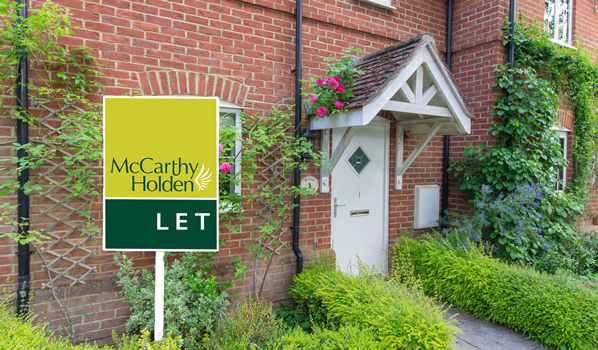
McCarthy Holden property let image

If you’re a residential landlord not yet ready for May 1st., we can help and here are some useful insights…

We are helping hundreds of our landlord clients to prepare for the may 1st changes, but there are many residential landlords who are being impacted by too many commentators scaremongering about the new Renters Rights Act, so this news item is a summary to try and provide some clear information about the key factors a Landlord needs to be aware of.

With the right professional agent support there isn’t anything a landlord needs to be worried about.

At McCarthy Holden we shall be implementing these changes in line with the Government’s phased timeline and we aim to provide our Landlords with a seamless transition from May this year.

In essence the new law aims to rebalance rights between tenants and landlords by strengthening safety and security for those renting, tightening the overall standard of rental properties, and simplifying dispute resolution.

The main changes include the following;

Abolishment Of ‘no-fault’ Section 21 Evictions

Section 21 ‘no-fault’ evictions will no longer be available for use from 1st May 2026. For a Landlord this means that gaining possession of their property will only be possible through a defined set of approved grounds under Schedule 2 of the Housing Act 1988 by mean of serving a Section 8 notice citing specific grounds and the notice period shall vary depending on the ground being relied on.

Occupation By The Landlord Or Family

It will be possible to gain possession in circumstances where a landlord or close family member wishes to move into the property. This cannot be used for the first twelve months of a tenancy and the Notice period shall be at least 4 months.

Sale Of The Property

Possession will be possible in circumstances where a landlord needs to sell the property, however, this again, cannot be used for the first twelve months of a tenancy with a Notice period of at least 4 months being required.

Rent Arrears

If a tenant has at least three months rental arrears (please note this must both be at the time notice is served and at the time of a possession hearing), then a landlord can move to gain possession of the property after serving a Section 8 with 4 week notice period.

There are also other grounds within Section 8 , both mandatory and discretionary for reasons of possession.

What Happens With An Existing AST Tenancy

On the 1st May 2026, if you currently have a tenant in situ with an Assured Shorthold tenancy (AST), this tenancy shall automatically become a ‘statutory periodic tenancy’ from this date and after this date the tenant shall be able to give 2 months notice at any time. A landlord however, will only be able to give notice for specific reasons and not to end before a tenant has been allowed to live in the property for at least 12 months.

Rental Increases

Shall only be able to be administered via the service of a Section 13 notice. These notices cannot be served more than once within a 12 month period and a landlord must provide at least 2 months notice of the increase if the rent is paid monthly. If a tenant wishes to challenge a rent increase, they can do so by applying to the first tier tribunal.

Introduction Of A New Decent Homes Standard

With mandatory repairs, timelines and minimum energy efficiency requirements (EPC band C target for private rentals within a phased timetable, expected 2028).

Establishment Of A National Landlord & Letting Agent Registration And Licensing

All landlords will be required to register on the database prior to renting out their property and this will include providing all compliance documentation (Gas Safety, EICR, EPC etc). Local Authority powers are being enhanced with Sanctions for rogue landlords, including fines, civil penalties and criminal sanctions for severe breaches.

Pet Policy

As of the 1st May all pet requests must be considered and It will be difficult to say no pets, apart from specific reasons (ie: head lease does not permit).

Our Professional Lettings Team Are Here To Help

At McCarthy Holden our Landlords are looked after by real people who live and work locally, with whom you can speak to on the phone so no bots or algorithms to delay or frustrate service delivery. We believe our Landlords experience the difference and benefits.

Our professional team are always available by phone or email, so if you are a Landlord who wants a one to one reliable service, call us on 01252 622550 for a free property valuation and advice about renting property.

Early Signs Of High End Property Sales In the Blue Triangle Area

PEATMOOR BLUE TRIANGLE SOLD MCCARTHY HOLDEN

“There are some impressive house sales occurring in early 2026 in the Blue Tringle area of Fleet, witnessed by two completions which have happened in recent days, one guided at £2.350m and the second £1.75m. It appears that the 2025 uncertainty around top end stamp duty is well and truly consigned to history now,” reports director at McCarthy Holden Richard Ebsworth.

Why Fleet?

As a company, we know that Fleet is a fantastic place to live with and we always see a good level of people moving out of London to settle in Fleet. High buyer demand is not surprising because not only is the town a great place to raise a family, but for those working from home or for those buyers who commute into the City, travel connectivity is great with the M3 or Fleet mainline railway station on our doorstep. Once established in Fleet, people continually up-size and downsize but tend to remain within the area.

Highly Sought After Blue Triangle Area

The outlook for house sales in the Blue Triangle in 2026 is one of a stable market with increased interest from buyers. For those contemplating a house sale, vendors can be confident in the potential of finding plenty of buyers willing to secure their dream home.

So if you are thinking of a house sale this year, please do consider inviting McCarthy Holden to provide you with a free no obligation valuation / property appraisal.

GREENACRES BLUE TRIANGLE SOLD MCCARTHY HOLDEN
A McCarthy Holden sale which completed late February 2026 on a guide of £2.350m.
PEATMOOR BLUE TRIANGLE SOLD MCCARTHY HOLDEN
A McCarthy Holden sale which completed late February 2026 on a guide of £1.750m.

Experience Makes The Negotiating Difference

Our research shows that experienced personnel and high quality marketing, combined with a competitive fee level are the main reasons why house sellers chose McCarthy Holden, so below is a reminder of just a few of the reasons why we remain the agent of choice in the Blue Triangle.

• Experienced property professionals
• Property video tours – increased web engagement
• In The Country & Town Magazine
• In branch TV marketing
• Social media marketing campaigns
• Email campaigns to our 5,000 strong database
• Well connected – Mayfair Office London
• Established level of buyers
• Professional integrity and honest service delivery

Experienced personnel make a significant difference to the delivery of estate agency services, from the initial marketing through to the judgements needed around negotiating a sale and getting the transaction to exchange of contracts.

At McCarthy Holden in Fleet we have a long established and very experienced team.

Richard Ebsworth (Director): Lives in Fleet and has worked at McCarthy Holden for 22 years and has around 30 years of estate agency / property experience.

Victoria Davies (Manager): Lives in Fleet and has worked at McCarthy Holden for over 15 years and is one of our top performing managers year in year out.

Amalia Moruzzi-Lee (Property Consultant): Has worked at McCarthy Holden for 6 years and is one of our top performing house sale personnel.

Pedro Barros (Assistant Manager): With over 10 years of local knowledge in Fleet and the surrounding areas, Pedro combines 24+ years of sales negotiation experience to deliver outstanding results for his clients.

Henry David (Negotiator): Having grown up in Fleet, Henry has a good knowledge of the local area and he is confident and focused on achieving a high level of house sales.

Joanne Byford: Lives in Fleet and has worked at McCarthy Holden for over 14 years as a property viewer / sales negotiator.

Louise Looijestijn: Lives in Fleet and has worked at McCarthy Holden for over 12 years as a property viewer / sales negotiator.

Candice Walmsley: Lives in Fleet and has worked at McCarthy Holden for 12 years as a property viewer / sales negotiator.

Candice Walmsley: Lives in Fleet and has worked at McCarthy Holden for 12 years as a property viewer / sales negotiator.

Marianne Hascher: Lives in Fleet and has worked at McCarthy Holden for 5 years as a property viewer / sales negotiator.

Sophie Roberts: Lives in Farnborough and works at McCarthy Holden as an Administrator.

Harriett LLoyd: Lives in Fleet and works at McCarthy Holden as an Administrator

Budget Insights For Landlords & Homeowners

MAG OUT NOVEMBER25 AND BUDGET IMPACT

This Autumn Budget was like no other, because the leaky lead up to it had a negative impact on the property market and the wider economy. So much uncertainty was generated in recent months and many people simply shut down and did nothing. So the Budget day is over and people can now plan their property moves and investments with the knowledge of what’s to come as a result if this Budget.

There were no rabbits pulled out of the hat and the only surprise was that the government’s financial position is nowhere near as bad as had been suggested in the run-up.

Property & Taxes

Landlords were further impacted if their investment property is held by them as an individual as opposed to a limited company.

From April 2027, property income (e.g. rents), as well as savings and dividend income, will be taxed 2 percentage points higher than today. That brings property income tax bands to 22%, 42% and 47%. 

The Budget stops short of replacing or abolishing Stamp Duty Land Tax (SDLT). Stamp duty remains in place for now, despite earlier speculation. 

The so called “mansion tax” has now arrived and it’s worth remembering that Labour previously voiced this intent back in 2019 and in part it impacted on them losing that General Election. In early 2025 rumours abounded about a forthcoming “mansion tax” and for the remainder of this year the top end of the market has been on hold.

Now we know that for owners of high-value homes, a new “mansion tax” — formally a high-value council tax surcharge — was confirmed. From April 2028, properties valued at £2 million and above will face an annual surcharge.

The tax will differ depending on the value of a property and will be determined by the following four bands.

£2 million to £2.5 million– You will pay £2,500.

£2.5 million to £3.5 million– You will pay £3,500.

£3.5 million to £5 million – You will pay £5,000.

More than £5 million – You will pay £7,500.

This will be an annual tax and the charge will be imposed on top of the existing council tax. The money will go to the Treasury rather than the local authority.

What It Means For The Property Market & Landlords / Tenants

The decision not to scrap stamp duty means there is no relief for home buyers and no  increased incentives to move or buy.

For landlords, higher taxation on rental income (from 2027) will erode net returns. But one thing is for certain, this added cost will be passed on to Tenants so this move alongside the Renters Right Act earlier this year will cost Tenants more for their rented homes.

There is much speculation about the new “mansion tax” suppressing demand at the very top end of the market, but we don’t believe this will be the outcome. 

The buyer demand will now return because the level of the “mansion tax” is known and whilst it might keep a lid on prices in this sector, at least transaction numbers will return. 

The tax isn’t coming in until 2028 and by then another General Election will be on the horizon so disgruntled home owners wary of property taxes in general will take their discontent out at the ballot box.

MAG OUT NOVEMBER25 AND BUDGET IMPACT
The top end market was on hold in 2025 but should now recover for 2026

Summary

From a property perspective across all price sectors, the Budget has little or no impact and any “bounce back” is likely to be moderate, not a dramatic boom. The weight of new taxes and limited reforms means we’re more likely to see steady growth and cautious investor re-entry  rather than a surge in building or housing-led economic growth.

In other word, a steady business as normal outlook for the short to medium term.

Overall, expect steady demand property sales and rentals, modest rental growth in strong micro-markets, and continued importance of quality and location.

Time To Start House Hunting?

A good place to start your 2026 house move could be to check out out latest property magazine, which came out today.

This 122 page property & lifestyle magazine is full for properties for sale from £295,000 to £2.0m., a selection of properties to rent and some engaging editorial such as cookery tips for Christmas from Rick Stein and Dr Clare Mosley.

MAG OUT NOVEMBER25 AND BUDGET IMPACT
Rick Stein’s ultimate guide to cooking the Christmas dinner
MAG OUT NOVEMBER25 AND BUDGET IMPACT
Recipies From Dr Clare Mosley

To enjoy a full read of our digital magazine In The Country & Town just click the image below.

MAG OUT NOVEMBER25 AND BUDGET IMPACT
Click Image To See Digital Flippingbook

Chancellor’s choices: how the upcoming Budget could impact the UK housing market

McCarthy Holden will of course comment on the facts when known post Budget this week, but as a starter we’ve pulled together some of the wide-ranging options the Chancellor could be considering in order to extract tax revenue from property owners and aspiring home owners alike.

As the Chancellor prepares to unveil the Autumn Budget, the residential property sector could take centre-stage because of the wide ranging economic benefits of a market that is on the move and as unfettered as possible. House-price falls, a fragile recovery in buyer confidence and continued political pressure to raise revenue from wealthier homeowners mean property taxes and landlord measures are likely to feature heavily. Below we pull together the realistic options facing the Treasury, explain how each would work in practice, and outline the most probable effects on buyers, sellers, landlords and the overall housing market

Where the market stands right now

Recent market data show static asking prices. There is also caution among sellers and buyers ahead of the Budget in some market sectors mostly above £2.0m., driven in part by speculation over new property taxes and broader cost of living uncertainty. In addition, whilst mortgage rates have eased from their recent peaks, the cost of borrowing remains an important constraint on affordability

The policy levers the Chancellor could use - and what they would do

1) Reform or replace Stamp Duty Land Tax (SDLT)

Options:

  • Restore higher nil-rate thresholds or re-profile bands to reduce upfront buying costs for first-time buyers and mover chains.
  • Replace SDLT for owner-occupiers with an annual/property wealth tax or an annual charge payable on sale (proposals reported this autumn would target homes above a threshold such as £500,000)

Likely market effect:

  • Cutting SDLT thresholds (or reinstating more generous first-time buyer reliefs) would likely boost transactional activity quickly because SDLT is an upfront, purchase-time wedge block. Buyers would respond to lower up-front costs.
  • Replacing SDLT with an annual or “moving” charge spreads the cost over time and can reduce the disincentive to move created by a high one-off tax, but it risks making some homeowners (particularly in high-value areas but with low incomes) worse off, and could depress high-end sales if it’s perceived as a recurring wealth charge. Lower property transactions / house moves would significantly impact tax revenue in the wrong way because of losing the revenue from current stamp duty and vat charges by service providers working in the house market, and of course the loss of vat from the vast amount of services created by a house moves such as new kitchens and bathrooms.

2) Higher or more targeted rates for second homes / buy-to-let investors

Options:

  • Increase the surcharge on second homes / additional properties (currently an extra SDLT percentage for additional dwellings), raise it further, or extend similar surcharges to more transactions.
  • Introduce a landlord-specific levy or higher effective tax on portfolio owners.

Likely market effect:

  • Further targeting landlords would likely accelerate some small-scale exits from the sector (already under pressure), reduce investment demand and could tighten supply in the private rented sector, pushing rents higher in the short term. Without a meaningful social housing level in the UK targeting landlords would not help tenant because rents would increase and supply of housing stock availability would reduce due to landlords exiting the market.

3) Capital Gains Tax (CGT) changes on property

Options:

  • Raise CGT rates or reduce the annual exempt amount (AEA) — both would raise the tax burden on gains when properties are sold.
  • Tighten or reduce Principal Private Residence (PPR) relief for high-value homes (for example limiting relief above a threshold) — a targeted approach that raises revenue from the most valuable homes without touching ordinary households.

Likely market effect:

  • Higher CGT or a reduced AEA would increase the cost of selling investment and second-home property. This could potentially lock in existing owners and reduce transactions.
  • Cutting PPR relief for expensive homes would mainly hit the top end — potentially cooling top end market segments and raising effective holding costs for high-value owners. This could impact high-end prices because buyers are sensitive to potential future taxes. Lower property transactions / house moves would result and less tax revenue because of losing the revenue from current stamp duty and vat charges by service providers working in the house market. Result, a less mobile and flexible house market.

4) Measures aimed directly at landlords’ tax treatment and rental incomes

Options:

  • Introduce National Insurance on rental profits or allow some form of additional tax on landlord income.
  • Rollback of tax breaks — although mortgage interest relief was largely reformed previously, further tweaks could be considered (for example reintroducing some relief, or increasing taxes on rental income).

Likely market effect:

  • New employer-style taxes on rental profits or higher effective rates would make more and more small landlords financially unviable, likely reducing rental supply. This would put upward pressure on rents and increase housing insecurity for tenants.

5) Council tax / local property taxation reform

Options:

  • Reform or revalue council tax bands, or begin a gradual move toward a more modern local property tax (often mooted as a replacement for council tax).
  • Offer reliefs or targeted support for low-income homeowners in high-value areas.

Likely market effect:

  • Revaluation or an annual local property tax increases the ongoing cost of homeownership (especially for those currently paying low council tax relative to property value), which can reduce mobility as owners stay put to avoid higher bills, depressing transactions in affected areas.

Likely short-term market responses

  • Transaction volumes are likely to fall pre-announcement and remain subdued until the policy details are known — sellers delay listings, buyers wait for clarity. Data show buyers already pulling back ahead of the Budget.
  • Upper-end weakness: rumours of wealth-targeting measures have already led to a steeper slowdown at the top of the market. If the Government confirms higher recurring or one-off charges on expensive homes, the prime market could see further correction.
  • Rental squeeze: any measures that raise landlords’ costs (higher tax on rental profits, restricted reliefs, or higher transaction taxes on replacement purchases) could reduce supply and raise rents in the short term. Targeting landlords will be detrimental.

Political and administrative constraints

  • Revenue vs incentive trade-off. Taxes that raise quick revenue (raising CGT rates, lowering CGT allowances) are administratively straightforward but can chill transactions and lock in property owners. Structural reforms (replacing SDLT with an annual tax) could be fairer economically but are complex to implement and politically sensitive. 
  • Distributional optics. Targeting high-value homes is politically popular in some quarters, but any policy that hits “ordinary” homeowners in expensive areas (for example an annual property charge) risks backlash.

What to watch for in the Chancellor’s Budget

  1. Concrete changes to SDLT thresholds or bands — quick to deliver and politically visible. (Watch for first-time buyer tweaks).
  2. Announcements on CGT: reductions in AEA or rate rises would be signalled early; small tweaks are most probable.
  3. Proposals for a national property/wealth charge or enabling reviews of council tax reform — perhaps signalled rather than fully legislated in a single Budget. 
  4. Measures aimed at landlords — changes may be signalled (consultations) or small immediate measures (eg. tightening reliefs); large sudden levies would be disruptive.

Bottom line — who wins and who loses

  • Potential winners: first-time buyers if SDLT reliefs are restored or if mortgage costs fall; homeowners in lower-value regions if policy focus is targeted at high-value houses.
  • Potential losers: owners of high-value homes if PPR reliefs or new annual charges are introduced; small landlords if new taxes or NI on rental income are applied; tenants in tight rental markets if supply contracts.
  • Overall market: The unknow throughout most of 2025 has already causes a short-term dip in transactions, so post Budget we expect an upturn in house sales transactions but with house prices impacted in certain sectors.  

Final observation

The Treasury faces a classic policy trade-off: raising revenue and addressing perceived unfairness in the property tax system versus maintaining transactional fluidity and rental supply.

Over many years Government / Tax interventions in the house market have cause problems for ordinary people. Stamp duty cliff edges for larger properties and even first time buyer properties simply result in a distorted market and reduced mobility. As for an annual tax on properties valued at over £2.0m., well how does the Government think people are going to pay this out of already taxed income! Surely tax should mostly relate to salary / income and purchases in the wider economy. There has also been talk of doubling council tax on properties worth more than £750,000. All of these considerations would mean people spend less on their properties and this would have a massive negative impact on the wider economy.

Berries which will make your garden a magnet for birds

GARDENING OCT25

Growing berry-bearing shrubs and trees is an almost guaranteed way to help birds in the garden stock up ready for winter.

Yet there are some berries that seem to be taken in preference to others, or which certain species of birds prefer, says Adrian Thomas, RSPB wildlife gardening expert.

“In particular, birds seem to prefer red berries, but that doesn’t mean that more unusual colours are to be avoided,” he observes.

“Those which ripen to pink, white or yellow may often be those that remain into the middle of winter when birds such as waxwings can be desperate for them.

“Of course there is even a British bird that is named because of its association with berries – the mistle thrush, which adores mistletoe.

“I wouldn’t be without lots of berry-bearing plants in the garden. To see flocks of birds descend on them in a feeding frenzy is always exciting, and if any of the feast lasts until winter, the chance of attracting redwings, fieldfares or even the rare waxwing is a winter treat for us, too.”

Different berries ripen at different times, which means that with a bit of careful planning you can provide a staggered feast over many months, starting with juneberry (Amelanchier lamarckii) and going through until spring with ivy berries.

You can plant berry-bearing shrubs in borders or pots, and some can be trained up trellises, walls and fences.

Five berry-bearing climbers, shrubs and trees that Thomas thinks are indispensable in the garden are:

1. Ivy

The berries have a very high fat content. They also ripen sequentially over a long period right through until spring. You do need to allow ivy to get its ‘head into the light’ for it to flower well and hence set fruit.

Growing tips: Ivy is about the easiest plant to grow – it’s not fussy about soil (although common ivy does better in alkaline soils) and will grow in sun or shade, quickly covering difficult areas such as dry spots and stabilising the soil. Just don’t put it in an area that is permanently waterlogged.

GARDENING OCT25
blackbird feeding on ivy berries

2. Hawthorn

The red ‘haws’ are a staple in the countryside for all the common members of the thrush family – blackbird, song thrush, mistle thrush, redwing and fieldfare. Peak consumption is October to December. Their autumn flowers also provide late nectar for insects.

Growing tips: You can grow it as a specimen tree or a hedge in any garden soil in sun or partial shade. Avoid ground which is permanently waterlogged, which could rot the roots. If you are creating a new hedge, plant bare root hedging plants between October and February.

GARDENING OCT25
bird in a hawthorn bush

3. Holly

Remember holly bushes are either male or female, and you’ll need a female variety to be sure of winter berries. You may have to plant a male as well for pollination if there isn’t one close by. The red berries are again staples for the thrush family, plus wood pigeons.

Growing tips: Hollies are not fussy about their soil type or situation. All hollies tolerate shade although variegated varieties do better in sun. If you have limited space, go for a self-fertile one which doesn’t need a mate to produce berries, such as ‘J.C. Van Tol’.

GARDENING OCT25
a blackcap on holly berries

4. Rowan

As well as the native rowan, many of the other garden varieties and cultivars are excellent for berries including the pink-berried Sorbus vilmorinii. For the native rowan, peak consumption is in August, ahead of the arrival of the winter-visiting redwings and fieldfares.

Growing tips: Again, it is not fussy, thriving in sun or partial shade, but try to grow it in moderately fertile, humus-rich soil. Pruning isn’t necessary, although you can remove dead branches in winter. While some rowans such as mountain ash can grow to around 6m, you can get smaller ones, such as the yellow-berried ‘Joseph Rock’, which makes an ideal specimen tree, reaching 4m in 10 years.

GARDENING OCT25
a fieldfare in a rowan tree

5. Bird cherry

A native tree of the northern half of the UK, the deep red berries of Prunus padus which ripen to shiny black are small which means that smaller birds such as blackcaps and robins can eat them as well as the thrushes.

Growing tips: Ideally plant this deciduous tree in autumn in moderately fertile soil in full sun. It can grow to 15m tall and almost the same in width, so you’ll need a big garden, although you can get more compact varieties such as Prunus padus ‘Albertii’.

GARDENING OCT25
bird cherry berries

By Hannah Stephenson, PA

×
Find a Property
M
Country & Equestrian
By submitting this form, you agree to McCarthy Holden using your personal data in accordance with our Privacy Notice.