Market Update & Latest Property Magazine

Against a backdrop of international turmoil, the UK’s residential sales market, especially in the South East, continues to display striking resilience. 

Even as headlines are dominated by the Iran/US war and its longer-term economic reverberations, transaction pipelines remain active, pricing is broadly stable, and buyer intent appears stubbornly intact across core commuter belts and well-connected towns.

This is not an isolated episode. Recent history shows a pattern: during the Covid crisis, prices rose – most notably for homes with gardens, workspace, and access to green space, as buyers reassessed priorities. The war in Ukraine sent shockwaves through energy markets and inflation, yet the UK housing market absorbed the blow better than many expected. While mortgage costs did rise and activity cooled in segments, outright distress was limited and values generally held, particularly where schools, transport, and amenities underpin demand.

Several fundamentals help explain this durability. Chronic under supply, especially in the South East, supports prices even when sentiment wavers. A tight labour market and accumulated household savings cushions demand. The prevalence of fixed-rate mortgages slows the pass-through of shocks.  In addition high rents nudge would-be buyers toward ownership despite rate headwinds. 

International uncertainty can also redirect capital toward perceived safe, rules-based jurisdictions – prime UK housing often benefits.

The Real / 'Shop Floor' Local Market

Tthere is a deeper, human explanation. After years of rolling crises, many households seem unwilling to let distant geopolitics permanently defer life decisions. 

If home owners and buyers cannot influence the news cycle, they can still shape their immediate future: moving closer to family, trading space for commute, or finally securing that garden. This pragmatic optimism, tempered by careful budgeting and realism on price, helps keep chains moving.

No market is fully insulated. Yet the UK housing story, and the South East in particular, continues to show that clear needs, finite supply, and determined buyers can outweigh even a noisy global backdrop.

moving home remains a priority

Find A Home To Buy Or Rent

Take a look at our latest digital magazine where we are showcasing some fine properties to buy or rent. Buyers can see homes from £350,000 to £2,500,000, and for renters some simply stunning homes are available.

In this issue some of our editorial content includes insights into what might be going on in the mind of a house buyer with a classic car collection, a barbecue recipe with a Caribbean twist, interior design and some thoughts in how to modernise an outdated 1970’s /1980’s bathroom.

Just click here or on the image below to go to our 150 page flipping book digital magazine….

Village House Sales Boost In Odiham and Hartley Wintney

HARTLEY WINTNEY High Street copyright McCarthy Holden

This week has seen an impressive uplift in both exchanges and buyer demand for village properties, particularly across our Hartley Wintney and Odiham branches.

Activity has been strong across a broad range of price brackets, from £500,000 to £1.250m. Notably, contracts have exchanged on a number of properties in both central village locations and more rural settings on the outskirts, including sought-after areas such as Long Sutton and Crondall.

A selection of characterful and distinctive homes have recently exchanged contracts, including the following fine properties:

Why Live in Odiham or Hartley Wintney

Hartley Wintney offers an appealing blend of village charm, excellent amenities and strong transport connections. Ideally located near the M3 and A30, it benefits from fast rail links to London via Hook and Winchfield, as well as convenient access to Basingstoke, Reading and the wider M4 corridor—making it particularly attractive for commuters.

The village itself is rich in character, with a picturesque historic centre, period architecture and a vibrant high street. Landmarks such as the cricket green and duck pond are much-loved features that contribute to its distinctive sense of place.

Cricket Green HARTLEY WINTNEY copyright McCarthy Holden
The Cricket Green, HARTLEY WINTNEY
HARTLEY WINTNEY duck pond copyright McCarthy Holden
Duck Pond, Hartley Wintney
HARTLEY WINTNEY Golf Course copyright McCarthy Holden
Hartley Wintney Golf Course

Beyond the centre, the surrounding countryside offers extensive opportunities for walking, cycling and riding, alongside nearby golf courses and leisure facilities that support an active outdoor lifestyle.

Sharing many of these qualities, Odiham combines historical charm with a strong sense of community, excellent connectivity and easy access to open countryside.

Its historic high street, lined with period buildings, is widely regarded as one of the most characterful and quintessential in Hampshire.

From a buyer’s perspective, Odiham offers a diverse range of properties—from charming period cottages to modern family homes—appealing to first-time buyers, families and downsizers alike. On the outskirts, there are also some exceptional country homes.

With its relaxed pace of life and strong community feel, Odiham offers an excellent quality of living.

Basingstoke canal copyright McCarthy Holden
The Basingstoke Canal
king john's castle Odiham Hampshire McCarthy Holden estate agents
King John's Castle North Warnborough, Odiham

The village also has a close association with RAF Odiham, with Chinook helicopters often providing striking and memorable sights overhead.

Chinook In Odiham copyright McCarthy Holden
Chinook flying over Odiham High Street - image copyright John Joe Photography

Thinking of Moving?

If you are looking to find a home in a village or country setting, explore our latest properties through our search page. Alternatively, if you are a homeowner in these areas, contact your nearest branch for a free valuation or appraisal.

Renters’ Right Act Ready Landlord?

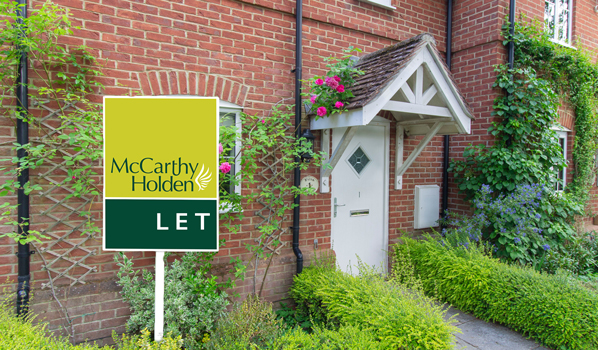
McCarthy Holden property let image

If you’re a residential landlord not yet ready for May 1st., we can help and here are some useful insights…

We are helping hundreds of our landlord clients to prepare for the may 1st changes, but there are many residential landlords who are being impacted by too many commentators scaremongering about the new Renters Rights Act, so this news item is a summary to try and provide some clear information about the key factors a Landlord needs to be aware of.

With the right professional agent support there isn’t anything a landlord needs to be worried about.

At McCarthy Holden we shall be implementing these changes in line with the Government’s phased timeline and we aim to provide our Landlords with a seamless transition from May this year.

In essence the new law aims to rebalance rights between tenants and landlords by strengthening safety and security for those renting, tightening the overall standard of rental properties, and simplifying dispute resolution.

The main changes include the following;

Abolishment Of ‘no-fault’ Section 21 Evictions

Section 21 ‘no-fault’ evictions will no longer be available for use from 1st May 2026. For a Landlord this means that gaining possession of their property will only be possible through a defined set of approved grounds under Schedule 2 of the Housing Act 1988 by mean of serving a Section 8 notice citing specific grounds and the notice period shall vary depending on the ground being relied on.

Occupation By The Landlord Or Family

It will be possible to gain possession in circumstances where a landlord or close family member wishes to move into the property. This cannot be used for the first twelve months of a tenancy and the Notice period shall be at least 4 months.

Sale Of The Property

Possession will be possible in circumstances where a landlord needs to sell the property, however, this again, cannot be used for the first twelve months of a tenancy with a Notice period of at least 4 months being required.

Rent Arrears

If a tenant has at least three months rental arrears (please note this must both be at the time notice is served and at the time of a possession hearing), then a landlord can move to gain possession of the property after serving a Section 8 with 4 week notice period.

There are also other grounds within Section 8 , both mandatory and discretionary for reasons of possession.

What Happens With An Existing AST Tenancy

On the 1st May 2026, if you currently have a tenant in situ with an Assured Shorthold tenancy (AST), this tenancy shall automatically become a ‘statutory periodic tenancy’ from this date and after this date the tenant shall be able to give 2 months notice at any time. A landlord however, will only be able to give notice for specific reasons and not to end before a tenant has been allowed to live in the property for at least 12 months.

Rental Increases

Shall only be able to be administered via the service of a Section 13 notice. These notices cannot be served more than once within a 12 month period and a landlord must provide at least 2 months notice of the increase if the rent is paid monthly. If a tenant wishes to challenge a rent increase, they can do so by applying to the first tier tribunal.

Introduction Of A New Decent Homes Standard

With mandatory repairs, timelines and minimum energy efficiency requirements (EPC band C target for private rentals within a phased timetable, expected 2028).

Establishment Of A National Landlord & Letting Agent Registration And Licensing

All landlords will be required to register on the database prior to renting out their property and this will include providing all compliance documentation (Gas Safety, EICR, EPC etc). Local Authority powers are being enhanced with Sanctions for rogue landlords, including fines, civil penalties and criminal sanctions for severe breaches.

Pet Policy

As of the 1st May all pet requests must be considered and It will be difficult to say no pets, apart from specific reasons (ie: head lease does not permit).

Our Professional Lettings Team Are Here To Help

At McCarthy Holden our Landlords are looked after by real people who live and work locally, with whom you can speak to on the phone so no bots or algorithms to delay or frustrate service delivery. We believe our Landlords experience the difference and benefits.

Our professional team are always available by phone or email, so if you are a Landlord who wants a one to one reliable service, call us on 01252 622550 for a free property valuation and advice about renting property.

Early Signs Of High End Property Sales In the Blue Triangle Area

PEATMOOR BLUE TRIANGLE SOLD MCCARTHY HOLDEN

“There are some impressive house sales occurring in early 2026 in the Blue Tringle area of Fleet, witnessed by two completions which have happened in recent days, one guided at £2.350m and the second £1.75m. It appears that the 2025 uncertainty around top end stamp duty is well and truly consigned to history now,” reports director at McCarthy Holden Richard Ebsworth.

Why Fleet?

As a company, we know that Fleet is a fantastic place to live with and we always see a good level of people moving out of London to settle in Fleet. High buyer demand is not surprising because not only is the town a great place to raise a family, but for those working from home or for those buyers who commute into the City, travel connectivity is great with the M3 or Fleet mainline railway station on our doorstep. Once established in Fleet, people continually up-size and downsize but tend to remain within the area.

Highly Sought After Blue Triangle Area

The outlook for house sales in the Blue Triangle in 2026 is one of a stable market with increased interest from buyers. For those contemplating a house sale, vendors can be confident in the potential of finding plenty of buyers willing to secure their dream home.

So if you are thinking of a house sale this year, please do consider inviting McCarthy Holden to provide you with a free no obligation valuation / property appraisal.

GREENACRES BLUE TRIANGLE SOLD MCCARTHY HOLDEN
A McCarthy Holden sale which completed late February 2026 on a guide of £2.350m.
PEATMOOR BLUE TRIANGLE SOLD MCCARTHY HOLDEN
A McCarthy Holden sale which completed late February 2026 on a guide of £1.750m.

Experience Makes The Negotiating Difference

Our research shows that experienced personnel and high quality marketing, combined with a competitive fee level are the main reasons why house sellers chose McCarthy Holden, so below is a reminder of just a few of the reasons why we remain the agent of choice in the Blue Triangle.

• Experienced property professionals
• Property video tours – increased web engagement
• In The Country & Town Magazine
• In branch TV marketing
• Social media marketing campaigns
• Email campaigns to our 5,000 strong database
• Well connected – Mayfair Office London
• Established level of buyers
• Professional integrity and honest service delivery

Experienced personnel make a significant difference to the delivery of estate agency services, from the initial marketing through to the judgements needed around negotiating a sale and getting the transaction to exchange of contracts.

At McCarthy Holden in Fleet we have a long established and very experienced team.

Richard Ebsworth (Director): Lives in Fleet and has worked at McCarthy Holden for 22 years and has around 30 years of estate agency / property experience.

Victoria Davies (Manager): Lives in Fleet and has worked at McCarthy Holden for over 15 years and is one of our top performing managers year in year out.

Amalia Moruzzi-Lee (Property Consultant): Has worked at McCarthy Holden for 6 years and is one of our top performing house sale personnel.

Pedro Barros (Assistant Manager): With over 10 years of local knowledge in Fleet and the surrounding areas, Pedro combines 24+ years of sales negotiation experience to deliver outstanding results for his clients.

Henry David (Negotiator): Having grown up in Fleet, Henry has a good knowledge of the local area and he is confident and focused on achieving a high level of house sales.

Joanne Byford: Lives in Fleet and has worked at McCarthy Holden for over 14 years as a property viewer / sales negotiator.

Louise Looijestijn: Lives in Fleet and has worked at McCarthy Holden for over 12 years as a property viewer / sales negotiator.

Candice Walmsley: Lives in Fleet and has worked at McCarthy Holden for 12 years as a property viewer / sales negotiator.

Candice Walmsley: Lives in Fleet and has worked at McCarthy Holden for 12 years as a property viewer / sales negotiator.

Marianne Hascher: Lives in Fleet and has worked at McCarthy Holden for 5 years as a property viewer / sales negotiator.

Sophie Roberts: Lives in Farnborough and works at McCarthy Holden as an Administrator.

Harriett LLoyd: Lives in Fleet and works at McCarthy Holden as an Administrator

Budget Insights For Landlords & Homeowners

MAG OUT NOVEMBER25 AND BUDGET IMPACT

This Autumn Budget was like no other, because the leaky lead up to it had a negative impact on the property market and the wider economy. So much uncertainty was generated in recent months and many people simply shut down and did nothing. So the Budget day is over and people can now plan their property moves and investments with the knowledge of what’s to come as a result if this Budget.

There were no rabbits pulled out of the hat and the only surprise was that the government’s financial position is nowhere near as bad as had been suggested in the run-up.

Property & Taxes

Landlords were further impacted if their investment property is held by them as an individual as opposed to a limited company.

From April 2027, property income (e.g. rents), as well as savings and dividend income, will be taxed 2 percentage points higher than today. That brings property income tax bands to 22%, 42% and 47%. 

The Budget stops short of replacing or abolishing Stamp Duty Land Tax (SDLT). Stamp duty remains in place for now, despite earlier speculation. 

The so called “mansion tax” has now arrived and it’s worth remembering that Labour previously voiced this intent back in 2019 and in part it impacted on them losing that General Election. In early 2025 rumours abounded about a forthcoming “mansion tax” and for the remainder of this year the top end of the market has been on hold.

Now we know that for owners of high-value homes, a new “mansion tax” — formally a high-value council tax surcharge — was confirmed. From April 2028, properties valued at £2 million and above will face an annual surcharge.

The tax will differ depending on the value of a property and will be determined by the following four bands.

£2 million to £2.5 million– You will pay £2,500.

£2.5 million to £3.5 million– You will pay £3,500.

£3.5 million to £5 million – You will pay £5,000.

More than £5 million – You will pay £7,500.

This will be an annual tax and the charge will be imposed on top of the existing council tax. The money will go to the Treasury rather than the local authority.

What It Means For The Property Market & Landlords / Tenants

The decision not to scrap stamp duty means there is no relief for home buyers and no  increased incentives to move or buy.

For landlords, higher taxation on rental income (from 2027) will erode net returns. But one thing is for certain, this added cost will be passed on to Tenants so this move alongside the Renters Right Act earlier this year will cost Tenants more for their rented homes.

There is much speculation about the new “mansion tax” suppressing demand at the very top end of the market, but we don’t believe this will be the outcome. 

The buyer demand will now return because the level of the “mansion tax” is known and whilst it might keep a lid on prices in this sector, at least transaction numbers will return. 

The tax isn’t coming in until 2028 and by then another General Election will be on the horizon so disgruntled home owners wary of property taxes in general will take their discontent out at the ballot box.

MAG OUT NOVEMBER25 AND BUDGET IMPACT
The top end market was on hold in 2025 but should now recover for 2026

Summary

From a property perspective across all price sectors, the Budget has little or no impact and any “bounce back” is likely to be moderate, not a dramatic boom. The weight of new taxes and limited reforms means we’re more likely to see steady growth and cautious investor re-entry  rather than a surge in building or housing-led economic growth.

In other word, a steady business as normal outlook for the short to medium term.

Overall, expect steady demand property sales and rentals, modest rental growth in strong micro-markets, and continued importance of quality and location.

Time To Start House Hunting?

A good place to start your 2026 house move could be to check out out latest property magazine, which came out today.

This 122 page property & lifestyle magazine is full for properties for sale from £295,000 to £2.0m., a selection of properties to rent and some engaging editorial such as cookery tips for Christmas from Rick Stein and Dr Clare Mosley.

. 

MAG OUT NOVEMBER25 AND BUDGET IMPACT
Rick Stein’s ultimate guide to cooking the Christmas dinner
MAG OUT NOVEMBER25 AND BUDGET IMPACT
Recipies From Dr Clare Mosley

To enjoy a full read of our digital magazine In The Country & Town just click the image below.

MAG OUT NOVEMBER25 AND BUDGET IMPACT
Click Image To See Digital Flippingbook

Chancellor’s choices: how the upcoming Budget could impact the UK housing market

McCarthy Holden will of course comment on the facts when known post Budget this week, but as a starter we’ve pulled together some of the wide-ranging options the Chancellor could be considering in order to extract tax revenue from property owners and aspiring home owners alike.

As the Chancellor prepares to unveil the Autumn Budget, the residential property sector could take centre-stage because of the wide ranging economic benefits of a market that is on the move and as unfettered as possible. House-price falls, a fragile recovery in buyer confidence and continued political pressure to raise revenue from wealthier homeowners mean property taxes and landlord measures are likely to feature heavily. Below we pull together the realistic options facing the Treasury, explain how each would work in practice, and outline the most probable effects on buyers, sellers, landlords and the overall housing market

Where the market stands right now

Recent market data show static asking prices. There is also caution among sellers and buyers ahead of the Budget in some market sectors mostly above £2.0m., driven in part by speculation over new property taxes and broader cost of living uncertainty. In addition, whilst mortgage rates have eased from their recent peaks, the cost of borrowing remains an important constraint on affordability

The policy levers the Chancellor could use - and what they would do

1) Reform or replace Stamp Duty Land Tax (SDLT)

Options:

  • Restore higher nil-rate thresholds or re-profile bands to reduce upfront buying costs for first-time buyers and mover chains.
  • Replace SDLT for owner-occupiers with an annual/property wealth tax or an annual charge payable on sale (proposals reported this autumn would target homes above a threshold such as £500,000)

Likely market effect:

  • Cutting SDLT thresholds (or reinstating more generous first-time buyer reliefs) would likely boost transactional activity quickly because SDLT is an upfront, purchase-time wedge block. Buyers would respond to lower up-front costs.
  • Replacing SDLT with an annual or “moving” charge spreads the cost over time and can reduce the disincentive to move created by a high one-off tax, but it risks making some homeowners (particularly in high-value areas but with low incomes) worse off, and could depress high-end sales if it’s perceived as a recurring wealth charge. Lower property transactions / house moves would significantly impact tax revenue in the wrong way because of losing the revenue from current stamp duty and vat charges by service providers working in the house market, and of course the loss of vat from the vast amount of services created by a house moves such as new kitchens and bathrooms.

2) Higher or more targeted rates for second homes / buy-to-let investors

Options:

  • Increase the surcharge on second homes / additional properties (currently an extra SDLT percentage for additional dwellings), raise it further, or extend similar surcharges to more transactions.
  • Introduce a landlord-specific levy or higher effective tax on portfolio owners.

Likely market effect:

  • Further targeting landlords would likely accelerate some small-scale exits from the sector (already under pressure), reduce investment demand and could tighten supply in the private rented sector, pushing rents higher in the short term. Without a meaningful social housing level in the UK targeting landlords would not help tenant because rents would increase and supply of housing stock availability would reduce due to landlords exiting the market.

3) Capital Gains Tax (CGT) changes on property

Options:

  • Raise CGT rates or reduce the annual exempt amount (AEA) — both would raise the tax burden on gains when properties are sold.
  • Tighten or reduce Principal Private Residence (PPR) relief for high-value homes (for example limiting relief above a threshold) — a targeted approach that raises revenue from the most valuable homes without touching ordinary households.

Likely market effect:

  • Higher CGT or a reduced AEA would increase the cost of selling investment and second-home property. This could potentially lock in existing owners and reduce transactions.
  • Cutting PPR relief for expensive homes would mainly hit the top end — potentially cooling top end market segments and raising effective holding costs for high-value owners. This could impact high-end prices because buyers are sensitive to potential future taxes. Lower property transactions / house moves would result and less tax revenue because of losing the revenue from current stamp duty and vat charges by service providers working in the house market. Result, a less mobile and flexible house market.

4) Measures aimed directly at landlords’ tax treatment and rental incomes

Options:

  • Introduce National Insurance on rental profits or allow some form of additional tax on landlord income.
  • Rollback of tax breaks — although mortgage interest relief was largely reformed previously, further tweaks could be considered (for example reintroducing some relief, or increasing taxes on rental income).

Likely market effect:

  • New employer-style taxes on rental profits or higher effective rates would make more and more small landlords financially unviable, likely reducing rental supply. This would put upward pressure on rents and increase housing insecurity for tenants.

5) Council tax / local property taxation reform

Options:

  • Reform or revalue council tax bands, or begin a gradual move toward a more modern local property tax (often mooted as a replacement for council tax).
  • Offer reliefs or targeted support for low-income homeowners in high-value areas.

Likely market effect:

  • Revaluation or an annual local property tax increases the ongoing cost of homeownership (especially for those currently paying low council tax relative to property value), which can reduce mobility as owners stay put to avoid higher bills, depressing transactions in affected areas.

Likely short-term market responses

  • Transaction volumes are likely to fall pre-announcement and remain subdued until the policy details are known — sellers delay listings, buyers wait for clarity. Data show buyers already pulling back ahead of the Budget.
  • Upper-end weakness: rumours of wealth-targeting measures have already led to a steeper slowdown at the top of the market. If the Government confirms higher recurring or one-off charges on expensive homes, the prime market could see further correction.
  • Rental squeeze: any measures that raise landlords’ costs (higher tax on rental profits, restricted reliefs, or higher transaction taxes on replacement purchases) could reduce supply and raise rents in the short term. Targeting landlords will be detrimental.

Political and administrative constraints

  • Revenue vs incentive trade-off. Taxes that raise quick revenue (raising CGT rates, lowering CGT allowances) are administratively straightforward but can chill transactions and lock in property owners. Structural reforms (replacing SDLT with an annual tax) could be fairer economically but are complex to implement and politically sensitive. 
  • Distributional optics. Targeting high-value homes is politically popular in some quarters, but any policy that hits “ordinary” homeowners in expensive areas (for example an annual property charge) risks backlash.

What to watch for in the Chancellor’s Budget

  1. Concrete changes to SDLT thresholds or bands — quick to deliver and politically visible. (Watch for first-time buyer tweaks).
  2. Announcements on CGT: reductions in AEA or rate rises would be signalled early; small tweaks are most probable.
  3. Proposals for a national property/wealth charge or enabling reviews of council tax reform — perhaps signalled rather than fully legislated in a single Budget. 
  4. Measures aimed at landlords — changes may be signalled (consultations) or small immediate measures (eg. tightening reliefs); large sudden levies would be disruptive.

Bottom line — who wins and who loses

  • Potential winners: first-time buyers if SDLT reliefs are restored or if mortgage costs fall; homeowners in lower-value regions if policy focus is targeted at high-value houses.
  • Potential losers: owners of high-value homes if PPR reliefs or new annual charges are introduced; small landlords if new taxes or NI on rental income are applied; tenants in tight rental markets if supply contracts.
  • Overall market: The unknow throughout most of 2025 has already causes a short-term dip in transactions, so post Budget we expect an upturn in house sales transactions but with house prices impacted in certain sectors.  

Final observation

The Treasury faces a classic policy trade-off: raising revenue and addressing perceived unfairness in the property tax system versus maintaining transactional fluidity and rental supply.

Over many years Government / Tax interventions in the house market have cause problems for ordinary people. Stamp duty cliff edges for larger properties and even first time buyer properties simply result in a distorted market and reduced mobility. As for an annual tax on properties valued at over £2.0m., well how does the Government think people are going to pay this out of already taxed income! Surely tax should mostly relate to salary / income and purchases in the wider economy. There has also been talk of doubling council tax on properties worth more than £750,000. All of these considerations would mean people spend less on their properties and this would have a massive negative impact on the wider economy.

Berries which will make your garden a magnet for birds

GARDENING OCT25

Growing berry-bearing shrubs and trees is an almost guaranteed way to help birds in the garden stock up ready for winter.

Yet there are some berries that seem to be taken in preference to others, or which certain species of birds prefer, says Adrian Thomas, RSPB wildlife gardening expert.

“In particular, birds seem to prefer red berries, but that doesn’t mean that more unusual colours are to be avoided,” he observes.

“Those which ripen to pink, white or yellow may often be those that remain into the middle of winter when birds such as waxwings can be desperate for them.

“Of course there is even a British bird that is named because of its association with berries – the mistle thrush, which adores mistletoe.

“I wouldn’t be without lots of berry-bearing plants in the garden. To see flocks of birds descend on them in a feeding frenzy is always exciting, and if any of the feast lasts until winter, the chance of attracting redwings, fieldfares or even the rare waxwing is a winter treat for us, too.”

Different berries ripen at different times, which means that with a bit of careful planning you can provide a staggered feast over many months, starting with juneberry (Amelanchier lamarckii) and going through until spring with ivy berries.

You can plant berry-bearing shrubs in borders or pots, and some can be trained up trellises, walls and fences.

Five berry-bearing climbers, shrubs and trees that Thomas thinks are indispensable in the garden are:

1. Ivy

The berries have a very high fat content. They also ripen sequentially over a long period right through until spring. You do need to allow ivy to get its ‘head into the light’ for it to flower well and hence set fruit.

Growing tips: Ivy is about the easiest plant to grow – it’s not fussy about soil (although common ivy does better in alkaline soils) and will grow in sun or shade, quickly covering difficult areas such as dry spots and stabilising the soil. Just don’t put it in an area that is permanently waterlogged.

GARDENING OCT25
blackbird feeding on ivy berries

2. Hawthorn

The red ‘haws’ are a staple in the countryside for all the common members of the thrush family – blackbird, song thrush, mistle thrush, redwing and fieldfare. Peak consumption is October to December. Their autumn flowers also provide late nectar for insects.

Growing tips: You can grow it as a specimen tree or a hedge in any garden soil in sun or partial shade. Avoid ground which is permanently waterlogged, which could rot the roots. If you are creating a new hedge, plant bare root hedging plants between October and February.

GARDENING OCT25
bird in a hawthorn bush

3. Holly

Remember holly bushes are either male or female, and you’ll need a female variety to be sure of winter berries. You may have to plant a male as well for pollination if there isn’t one close by. The red berries are again staples for the thrush family, plus wood pigeons.

Growing tips: Hollies are not fussy about their soil type or situation. All hollies tolerate shade although variegated varieties do better in sun. If you have limited space, go for a self-fertile one which doesn’t need a mate to produce berries, such as ‘J.C. Van Tol’.

GARDENING OCT25
a blackcap on holly berries

4. Rowan

As well as the native rowan, many of the other garden varieties and cultivars are excellent for berries including the pink-berried Sorbus vilmorinii. For the native rowan, peak consumption is in August, ahead of the arrival of the winter-visiting redwings and fieldfares.

Growing tips: Again, it is not fussy, thriving in sun or partial shade, but try to grow it in moderately fertile, humus-rich soil. Pruning isn’t necessary, although you can remove dead branches in winter. While some rowans such as mountain ash can grow to around 6m, you can get smaller ones, such as the yellow-berried ‘Joseph Rock’, which makes an ideal specimen tree, reaching 4m in 10 years.

GARDENING OCT25
a fieldfare in a rowan tree

5. Bird cherry

A native tree of the northern half of the UK, the deep red berries of Prunus padus which ripen to shiny black are small which means that smaller birds such as blackcaps and robins can eat them as well as the thrushes.

Growing tips: Ideally plant this deciduous tree in autumn in moderately fertile soil in full sun. It can grow to 15m tall and almost the same in width, so you’ll need a big garden, although you can get more compact varieties such as Prunus padus ‘Albertii’.

GARDENING OCT25
bird cherry berries

By Hannah Stephenson, PA

Landmark Renters’ Rights Act Becomes Law

McCarthy Holden property let image

Yesterday the Renters’ Rights Act received Royal Assent, delivering the most significant overhaul of the English and Welsh private rented sector in a generation. The law aims to rebalance rights between tenants and landlords by strengthening safety and security for renters, tightening standards for properties, and simplifying dispute resolution..

Key Measures

  • Abolishes ‘no-fault’ section 21 evictions entirely, replacing them with a clearer, limited set of grounds for possession and stricter notice periods.
  • Introduces a new Decent Homes standard for rented properties with mandatory repairs timelines and minimum energy efficiency requirements (EPC band C target for private rentals within a phased timetable).
  • Establishes a national landlord and letting agent registration and licensing regime with sanctions for rogue landlords, including fines, civil penalties and criminal sanctions for severe breaches.
  • Creates an independent Housing Ombudsman or expands an existing dispute-resolution body with powers to issue binding orders and compensation for tenants; fast-track arbitration for common disputes (repairs, deposits, unlawful eviction).
  • Strengthens protections for renters in private tenancies against retaliatory eviction and unfair rent increases by requiring justification and limits on frequency of increases.
  • Caps certain fees charged to tenants (administration, referencing, inventory) and reforms deposit handling and dispute timelines.
  • Extends possession and rehousing duties in limited circumstances, such as where poor conditions render properties uninhabitable; enhances support for vulnerable tenants facing eviction.
  • Provides funding and guidance for local authorities to enforce standards, and powers to issue Remedial Notices and take emergency remediation action.
  • Commits to data collection and reporting on the private rented sector to monitor impacts and a statutory review clause after a set period (often 3–5 years).

The Act signals a major policy shift toward tenants’ rights after years of campaigning by charities and tenant groups; ministers argue it will improve housing stability and standards, while many landlord bodies warn of reduced investment in the private rented sector and potential rent rises.

Operationally, the law places a new compliance burden on landlords and local authorities will need increased resources to enforce the regime.

As the new law bedrocks renters’ protections, its true test will be in implementation: whether enforcement is adequately funded, whether landlords adapt without shrinking supply, and whether renters actually see safer, more secure homes — not just stronger rights on paper.

It is expected that there will be a phased approach to a number of the changes, however, the creation of periodic tenancies and the abolition of Section 21 notices are expected to be at the forefront.

Footnote: If you have any questions or wish to discuss possible implications email Nicola Bremner ….

Nicola Bremner 598 449
Nicola Bremner - Email nbremner@mccarthyholden.co.uk

10 ways to style winter berry shades in the home

INTERIORS

Seasonal and seductive, dark interiors are bearing fruit… so much so, we’re embracing shades of cassis, deep claret and plum, with winter berries are emerging as a firm favourite in the world of interiors.

Such is the surge in popularity, cookware, textiles and accent walls are being reimagined in rich berry tones – with new collections lending warmth, while creating an inviting atmosphere with a sense of luxury.

Indeed, leading interiors firm, Graham & Brown have named their Colour of the Year 2026 Divine Damson, which they describe as a “deep, timeless shade that evokes elegance, luxury and sophistication.”

Cited as a versatile and enduring colour, the inside team of designers say it “enriches a variety of styles and spaces,” and its versatility “makes it suitable all year-round, offering a cocooning, comforting feel in the colder months.”

While in summer, they say natural sunlight “brings out its vibrant depth allowing it to transition seamlessly across the seasons.”

Highlighting rich, bold hues, here’s what’s on our wish list…

INTERIORS
Cast Aluminium Casserole Dish in Burgundy, 2.7L, £35; Winter Berries Multi-Wick Candle, £8; rest of items from a selection, Dunelm

Think a comforting autumnal beetroot soup, or red wine casserole, and this is your new centrepiece to chime with supper parties and themed tablescapes. Style with burgundy velvet ribbons on stemware, and a bottle of bordeaux.

INTERIORS
Elements Ellis 4 Seater Round Dining Table in Burgundy, £449; Elements Cooper Dining Chairs, Tonal Boucle in Burgundy, £79 each; rest of items from a selection, Dunelm

As well as adding drama, colour and texture, this Scandi-style dining set makes for a conversation piece with its high-gloss finish, on-trend solid, pillar legs, and cool dining chairs… a dead cert for colour drenching.

INTERIORS
Graham & Brown’s Design of the Year 2026, Eternal Weave Black Wallpaper (Set of 2), £190 per set, Graham & Brown

This dark and moody motif features exotic birds, blooms and fauna for a dramatic backdrop – and generous dose of high drama. Said to be inspired by ancient textiles, nature and mythology, the design is produced as a double-width set; meaning you need two coordinating rolls for hanging the horizontal repeat pattern… frame the paper with a lick of Divine Damson to link the look

INTERIORS
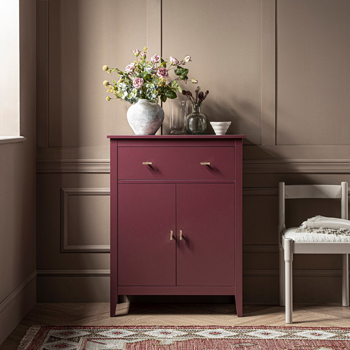
Oakham Small Sideboard with Drawer in Wild Cherry, £169.99, Daals

Chic and contemporary, this polished sideboard in a deep shade of cherry, topped with gold tone T-bar handles will enhance any aesthetic.

INTERIORS
Lottie Berry Red Fabric Bar Stools, £159 each, Danetti

Upholstered in a plush chenille, these modish bar stools will bring colour and comfort to a kitchen island or trendy home bar.

INTERIORS
The Burgundy Fringed Lampshade, from £195, (Extra Small), Tinker & Tallulah

This vintage-inspired tassel lampshade shouts sumptuous, and can be used to dramatic effect with its gorgeous gold fringing, scalloped detail and rich, burgundy hue.

INTERIORS
Veeno Wine Glass Motif Wallpaper, £79 per roll, Bobbi Beck

More than a decorative afterthought, when you want to drink in a smooth merlot or cabernet sauvignon, set the scene for wining and dining with this whimsy wallpaper.

INTERIORS
Graham & Brown’s Colour of the Year 2026, Divine Damson Paint 1L Interior Eggshell, £36, Graham & Brown

This dark and moody motif features exotic birds, blooms and fauna for a dramatic backdrop – and generous dose of high drama. Said to be inspired by ancient textiles, nature and mythology, the design is produced as a double-width set; meaning you need two coordinating rolls for hanging the horizontal repeat pattern… frame the paper with a lick of Divine Damson to link the look.

INTERIORS
Luxury Marbles Christmas Bauble in Bitter Cherry, £29, Webb & Gray

This statement bauble will add instant charm to stylish place settings… and can double up as a napkin holder.

INTERIORS
Romance Ruffle Bed Linen Set in Berry Red, from £50, (Double), French Bedroom

Glamorous and romantic, ruffle-trimmed bedding in beautiful berry tones will luxe up any bedroom scheme – and who wouldn’t look forward to cocooning themselves in a delicious dark mulberry as we head into snuggle season?

Note – article by By Sam Wylie-Harris, PA. Prices correct at time of going to press but may have changed since.

3 new Mary Berry recipes to make this autumn

MARY BERRY

Mary Berry turned 90 this year and to celebrate, she has released a new cookbook, Mary 90 – aiming to give home cooks a ‘career-spanning’ collection of fuss-free recipes for many different occasions.

It accompanies a new BBC TV series, Mary at 90: A Lifetime of Cooking.

The TV chef shares a mixture of brand-new recipes and her nostalgic classics, with Berry saying it has been a “sheer joy” to write, and includes the baking she’s so known for, alongside tasty, easy mid-week meals and crowd pleasers.

Fragrant chicken traybake

Mary Berry

“An all-in-one dish, this delicious, aromatic chicken recipe is vibrant and full of flavour,” says Berry. “Serve with rice or a dressed salad.”

Ingredients:

(Serves 4–6)

1 large aubergine, sliced into half-moons

2 peppers, deseeded and sliced into large pieces

1 large onion, sliced

3tbsp sunflower oil

3 dried lime leaves

1 large stick of lemongrass, bashed

3 large chicken breast fillets, each sliced in half

2tbsp sweet chilli sauce

150g baby spinach leaves

Small bunch of Thai basil, chopped

For the fragrant sauce:

1 x 400ml can coconut milk

2tbsp Thai red curry paste

2 garlic cloves, crushed

2tsp freshly grated ginger

Juice of 1 lime

2tsp fish sauce

2tbsp sweet chilli sauce

Method:

1. Preheat the oven to 220°C/200°C Fan/Gas 7.

2. To make the sauce, mix all the ingredients together in a bowl.

3. Scatter the aubergine, peppers and onion into a large shallow roasting tin. Drizzle with 2 tablespoons of the oil and toss everything together. Pour over half of the sauce. Add the lime leaves and lemongrass to the tin and roast in the preheated oven for 15 minutes.

4. Toss the chicken in the remaining oil and the sweet chilli sauce, and season well. Place a large frying pan over a high heat until very hot. Add the chicken and brown very quickly until sealed and golden, stirring constantly.

5. Remove the roasting tin from the oven and pour over the remaining sauce. Place the chicken on top and return to the oven for about 15 minutes, or until cooked through.

6. Transfer the chicken onto a plate. Stir the spinach and Thai basil into the sauce and vegetables in the tin and gently warm over the hob until the spinach has wilted.

7. Serve the chicken traybake with rice.

Best made and served. Not suitable for freezing.

Skate wing with caper sauce and samphire

Mary Berry

“Hugely popular, skate wings are readily available and simple to cook. The sauce makes the dish extra special. Buy samphire from the fish counter in the supermarket or farm shop,” says Berry.

Ingredients:

(Serves 4)

4 x 400g skate wings, edges trimmed with scissors

100g butter, softened, plus a knob

Juice of ½ lemon

4tbsp capers

4tbsp finely chopped parsley

400g fresh samphire

Method:

1. Preheat the oven to 200°C/180°C Fan/Gas 6.

2. Lie the skate wings on a board and use half the butter to spread over both sides of the skate wings. Season well with salt and ground black pepper.

3. Heat a large frying pan over a high heat. When hot, brown the wings in batches for 2 minutes on each side until golden.

4. Place the browned wings in a large roasting tin and transfer to the preheated oven. Roast for about 15 minutes until cooked through (the translucent flesh will become opaque when it is done). To test for doneness, try to pull the flesh away carefully from the bones with a sharp knife – if it comes away easily, it is done. Place on a large platter and cover with foil. Leave to rest in a warm place.

4. Add the remaining butter to the frying pan and heat until nutty brown in colour. Add the lemon juice, capers and parsley and remove from the heat.

5. Meanwhile, cook the samphire in a large frying pan with a knob of butter and a splash of water over a high heat. Fry for a few minutes to heat through.

6. Divide the samphire between the plates and top each one with a skate wing. Pour over the caper butter sauce to serve.

Best made and served. Not suitable for freezing.

Carrot cake with frosting

Mary Berry

“A carrot cake is so popular, especially in coffee shops and bakeries,” says Berry. “My version includes my favourite spices. Carrot cake originated in the USA where they make cakes with oil, rather than our butter-based sponges. Use a flavourless oil, such as sunflower or vegetable.”

Ingredients:

(Serves 8–10)

4 large eggs

175g caster sugar

75g light muscovado sugar

250ml sunflower oil, plus extra for greasing

1tsp vanilla extract

2 ripe bananas, mashed

150g carrots, peeled and coarsely grated

275g self-raising flour

2tsp baking powder

1tsp ground cinnamon

1tsp ground ginger

½tsp mixed spice

55g walnuts or pecans, finely chopped, plus a few extra for decoration

For the cream cheese frosting:

250g butter, softened

2tsp vanilla extract

350g icing sugar

350g full-fat cream cheese

Method:

1. Preheat the oven to 180°C/160°C Fan/Gas 4. Grease and line the bases of 2 x 20cm (8in) loose-bottomed sandwich tins.

2. Break the eggs into a large bowl and beat with a fork to break up. Add the caster and muscovado sugar, oil and vanilla and mix well.

3. Add the remaining ingredients to the bowl and whisk using an electric hand whisk until just combined. Be careful not to over beat.

4. Divide the mixture between the two prepared tins and level the surface. Bake in the preheated oven for about 35–40 minutes until well risen and lightly golden. Leave to cool in the tins for 10 minutes, then transfer to a wire rack.

5. Meanwhile, make the frosting. Measure the butter, vanilla and icing sugar into a large bowl and whisk using an electric hand whisk until combined. Add the cream cheese and beat until creamy and light.

6. Peel the paper from the bases of the sponges and invert one onto a plate. Spread with frosting. Place the other cake on top and use the remaining frosting to cover the top and sides, leaving a pretty swirl on top. Decorate with walnuts or pecans to serve.

Can be made and assembled up to 8 hours ahead. Freezes well but best to ice on the day.

Mary Berry

Mary 90 – My Very Best Recipes by Mary Berry is published in hardback by BBC Books, priced £28. Photography by Tara Fisher. Available now

×
Find a Property
M
Country & Equestrian
By submitting this form, you agree to McCarthy Holden using your personal data in accordance with our Privacy Notice.