Buy To Let – Squeeze Or Opportunity For Landlords?

McCarthy Holden property let image

Let’s start with the bad news, then dig a little deeper to uncover what’s really happening beyond the usual headlines

Following a wave of Government policy changes and rising costs, the buy‑to‑let segment is feeling the pinch. In addition Stamp duty on second homes has jumped and upcoming EPC C energy efficiency standards (effective by 2030, possibly earlier in 2028), will create extra costs for a Landlord in some cases.

Yet, the market is far from collapsing. Since April 2025, UK rents have continued to climb, albeit at a slower pace—up roughly 7 % year-on-year UK wide.

Some small-scale or accidental landlords are exiting the sector, squeezed by cost, regulation, and compliance pressures—yet returns remain buoyant in yield-rich regions, supported by persistent tenant demand and potential lower borrowing costs.

The Shift

In many cases however, these changes are prompting landlords—especially higher-rate taxpayers—to shift into company status. That shift is backed up with some interesting facts at Companies House.

Over 400,000 companies registered solely to hold BTL properties as of February 2025

In 2024 alone, about 61,500 new limited company BTL businesses were founded — a 23% rise from 2023

No doubt landlords shifting to a company status are influenced by Limited companies offering full deduction of mortgage interest, paying corporation tax on profits, and enjoying more flexible expense claims.

It is estimated that there is about 680,000 buy-to-let properties held in a limited company structure across England and Wales, with the number rising every year. Not all of them are new rental properties – many are being moved from personal names into a limited company owned by the same landlord

In summary, the growth in BTL companies is real and substantial. Driven by tax changes, shifting investor behaviour, strong mortgage volumes, and regional yield opportunities, the UK’s BTL sector has undergone rapid corporatisation. While momentum may ease if costs rise (e.g. stamp duty hikes), current indicators suggest the trend will continue for professional landlords.

For insights into the residential rental market and advice from professional property consultant contact our lettings department by phoning 01252 622550.

A Landlord Focused Agency

At McCarthy Holden our landlords are regarded as one in a million, perhaps unlike in the very large corporate agents where a Landlord could easily become just one in a million.

Because our Landlords are looked after by real people who live and work locally, people who you can speak to on the phone and people who are taking the responsibility of looking after your property, our Landlords experience the difference and benefits.

Our professional team are always available by phone or email and guess what, there are no online bots or automated telephone systems to get in the way of good communication.

So if you are a Landlord who wants one to one reliable service, telephone 01252 622550 for a free property valuation and advice about renting property.

McCarthy Holden Fleet
CONTACT OUR LETTINGS HQ - 01252 622552

How to grow a bumper crop of strawberries to rival Wimbledon

As the tennis championships approach, all thoughts are on this favourite summer fruit.

It’s strawberry season, and British strawberries are off to a great start, with British Berry Growers reporting one of the most promising early seasons in recent memory, thanks to warm days, cool nights and the highest sunshine levels in over 100 years.

And nothing shines a light more on this delicious fruit than the Wimbledon Tennis Championships. On average, 200,000 portions of strawberries and cream are enjoyed during the fortnight.

But there’s nothing quite like the taste of home-grown strawberries picked fresh from the plant to add to your summer desserts – and they are not that difficult to grow. So you could already be thinking about next year’s crop.

The weather makes a difference

“The weather has been very kind to all growers,” says Jim Floor, managing director of berry growers Hall Hunter. “We had a very cold February and March, then from April onwards it’s been sunny – and strawberries love sunshine.

“The nights have been quite cool and the perfect environment for strawberries is 20 degree days and 10 degree nights.”

Plenty of bees help

If you have a garden with plenty of plants which attract pollinators, such as open-flowered geum, iberis, cranesbill geraniums, lavender and heathers, you’re likely to get better crops because the bees will pollinate the strawberry flowers.

For the biggest harvests…

You’ll need plenty of space for a strawberry patch if you want a huge crop, and will need to plant numerous plants. Alternatively, you can grow strawberries in pots but because of the limited number of plants you can accommodate, your yield may be limited.

Many types produce new runners after flowering, which create new plantlets on their own.

You can also plant different varieties of strawberries to extend the season – summer-fruiting types, perpetual strawberries which produce a smaller quantity of fruit from summer until autumn, and Alpine, or wild, strawberries, which bear small crops of tiny berries spasmodically during summer.

How to grow

Plug plants are a good bet and are available in garden centres and nurseries from late spring onwards, or alternatively you can buy bare-root plants, known as runners, which look like root clumps, in late summer or early autumn, and again in spring.

Plant in full sun or in polytunnels where they will be warm and won’t become damp, or if outside a raised bed or grow bag is a good option, Floor suggests.

“I grow them in a hanging basket (at home) because they tend to do much better if they’re not (at ground level) in the soil, where there are lots of pests and diseases.”

During the growing season, make sure they are fed and watered regularly. “I would recommend a balanced multi-purpose liquid feed.

“If you want sweeter strawberries you might want to put more potassium in, but you need to be careful because any overfeeding of potassium, calcium or nitrogen could give you a problem.

“Calcium can burn the leaves, potassium could potentially kill the plants and (overfeeding with) nitrogen, you will get 100% leaves and no fruit.

Possible problems

Slugs are a threat, he warns. “Last year because of the mild winter and the wet year the problem was slugs, particularly if you were growing strawberries in the ground.

“This year it’s been about keeping everything irrigated. As long as the plants have plenty of water, they will do well.”

Birds may also feast on the fruits, so it would be wise to cover your strawberries with netting if you need to keep them at bay.

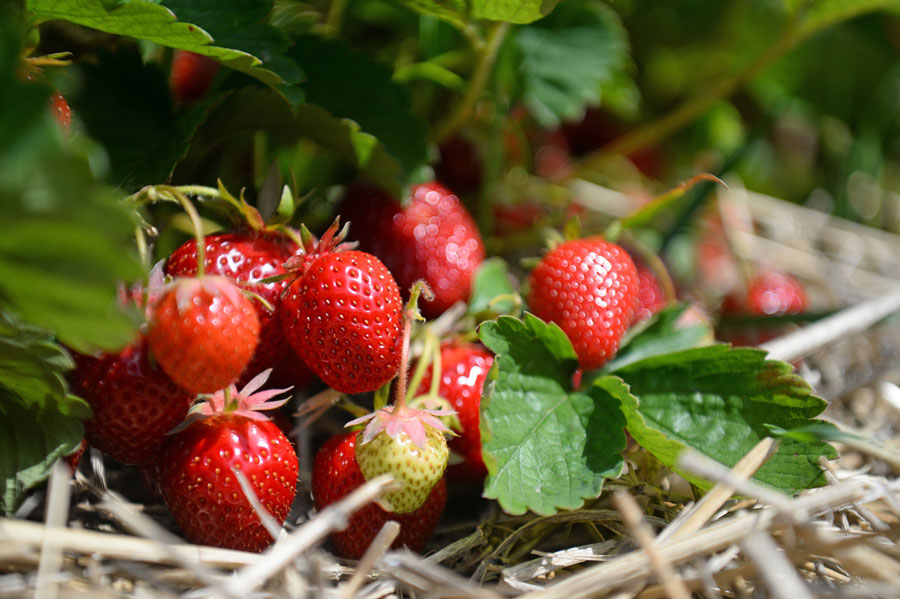
As the fruits emerge, place straw underneath them so the fruits don’t brush against the ground and rot.

When are they ready to pick?

When they are evenly red, he says. “They don’t necessarily come off the stem quite easily. If the fruit comes off easily it may be over-ripe.”

After fruiting

“De-leaf the plants a little bit, getting rid of the debris and dead leaves, and there’s no reason why they couldn’t be kept for another year,” he suggests.

Good varieties

Strawberries which have received the RHS Award of Garden Merit include ‘Hapil’, which produces large red fruits and is lauded for its vigorous growth and is well-suited to light or drier soils and to containers; and the late season ‘Florence’ which has ‘exceptional disease resistance’ and whose large dark red fruits are produced in mid-July.

×
Find a Property
M
Country & Equestrian
By submitting this form, you agree to McCarthy Holden using your personal data in accordance with our Privacy Notice.