The Budget and The Property Market

Looking at the Budget from a property perspective, the fiscal environment was defined by tight constraints. For the UK residential property market, a sector already navigating complex affordability challenges, the announcements bring a mixture of targeted support for buyers and continued fiscal pressure on investors. Generally this October 2026 Budget was underwhelming and lacked initiatives for economic growth, whilst at the same time avoided tackling matters such as the cost of welfare.

Supporting the First Steps: Buyers and New Entrants

The most significant headline for prospective buyers is the introduction of the “Your First Home” initiative. By providing a structured pathway for first-time buyers, the government appears aimed at addressing the barriers to entry that have plagued the market for years. Complementing this is the new First-Time Buyer ISA, which incentivizes long-term saving by providing a government contribution toward deposits.
While these measures are a welcome injection of optimism for those struggling to get a foot on the ladder, the long-term impact on house prices remains to be seen. Historically, targeted demand-side support can inadvertently inflate prices unless met with a commensurate increase in supply. For the broader market, this signals a government intent to keep the dream of homeownership alive, potentially sustaining buyer demand in entry-level segments even if wider economic conditions remain testing.

There wasn’t a sniff of expanding the dreaded ‘Mansion Tax’ so some short term respite on that front for owners of larger properties.

The Investor Landscape: Pressure on Landlords Continues

For property owners, particularly those in the buy-to-let sector, the Budget offers little respite. The announcement confirmed a further rise in tax on rental income. This continues a well-established trend of tightening the fiscal environment for private landlords.

The Chancellor announced that tax on income from property rental will increase by a further 2% from April next year. It was already due to go up to 22% from 1 April next year and will now go up to 24%.

When coupled with the existing burden of stringent regulatory compliance and high interest rates, this latest tax hike creates a challenging paradox. On one hand, the government is looking to extract revenue from property investment; on the other, the cumulative impact of these measures risks further reducing the supply of private rental stock.

Many good landlords exited the rental market following the Renters Rights Act in May 2026 and this further tax squeeze will add to that exodus. If landlords continue to exit the market in search of more tax-efficient investments, the result may be increased pressure on an already overstretched rental sector, potentially leading to further upward pressure on rents—a burden ultimately borne by tenants.
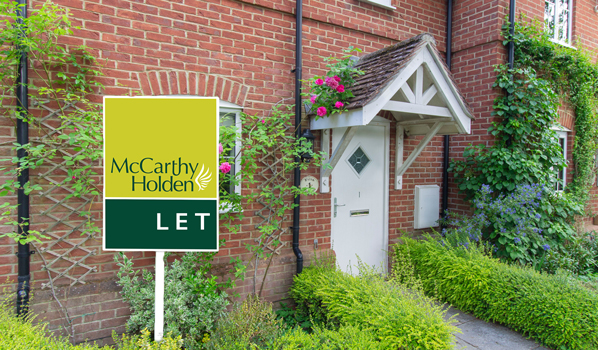
McCarthy Holden property let image

Conclusion

The Autumn Budget 2026 was a balancing act. By offering tangible support to first-time buyers, the government is attempting to keep the residential sales market moving and support aspirational homeowners. However, by further increasing the tax burden on landlords, it risks exacerbating the supply issues in the private rental sector.

For house sales, the outlook remains cautiously optimistic, driven by initiatives to assist buyers. For rental owners, the narrative remains one of endurance against fiscal headwinds. Ultimately, while today’s measures provide immediate clarity, the most significant impact on the property market may well come later from the long-term structural reforms currently being debated behind the scenes in Westminster.

There wasn’t any signs of radical changes and some of the big decisions around the cost of welfare and the cost of borrowing have been kicked down the road.


Landlords, Pets And Tenants

At McCarthy Holden we are from time to time asked what is a ‘reasonable refusal’ for a Landlord to prohibit a tenant having a pet in their rental property, so here is a brief insight.

Pets In Rented Properties became a subject of focus in the Renters’ Rights Act, which came into force on 1st May 2026.

Firstly, Landlord are still able to say no to a pet request, but there needs to be a valid reason. Under the Renters’ Rights Act, all private tenants now have a legal right to formally request to keep a pet in their rented home. Regardless of what the contract says, this right is implied into every tenancy agreement, which means that even if a current tenancy agreement includes a “no pets” clause, the tenant can still submit a formal written request.

A Landlord can still refuse a pet request, but any refusal must be reasonable, specific to the property and pet in question and communicated in writing within 28 days.

What is reasonable refusal?

The government hasn’t published a comprehensive list, but the following are considered likely to constitute reasonable grounds for refusal:

A property isn’t suitable for the pet requested, so for example a large dog in a small flat without outdoor space, is a genuinely property-specific reason.

If the Landlord owns a leasehold property and the freeholder has a no-pets clause, the Landlord may have no practical choice but to refuse. The Landlord must have taken reasonable steps to seek the freeholder’s consent before saying no.

If a tenancy is share and a co-tenant had a serious allergy, wellbeing of such tenants would be a legitimate consideration (this is more likely in HMO situations).

What is not reasonable refusal?

The following could be typical of issues that would not be considered reasonable grounds for refusal:

The Landlord doesn’t like animals
The Landlord had bad experiences with pets in previous tenancies
The Landlord is worried about potential damage (without specific evidence)

Of special note is the fact that assistance animals such as guide dogs cannot be refused, which has been the case under the Equality Act 2010.

Landlord and Agent Communication

In property listings and in emails or letters, the wording matters. Landlords can no longer list a property as “no pets” upfront or use exclusionary descriptions / wording.

When refusing a specific request, the wording needs to cover a blanket statement and a reasoned property-specific explanation.

At McCarthy Holden we can advise Landlords on the best approach in line with regulations.

28-day Window For Landlords

If a tenant submits a written pet request, which must include a specific description of the pet, the Landlord has 28 days to respond in writing. If more information is required  to make a decision, the Landlord must request it within that same 28-day window. Once the tenant responds the Landlord has seven days to give a decision.

Landlords and their Agent should avoid missing this timeframe in order to avoid legal exposure, even if the Landlords refusal would have been justified.

At McCarthy Holden our sophisticated lettings software and our experienced team will help ensure good record-keeping and communications.

Let Your Yea Be Yea – No Reversal

If a Landlord grants permission to keep a specific pet, that consent is permanent for the duration of the tenancy.

Redress?

If a tenant thinks a refusal is unreasonable, they can apply to court. If a court agrees, it has the power to order the Landlord to allow the pet and to require the Landlord to cover the tenant’s costs.

Reality Check

We find that most reasonable landlords make decisions on a case-by-case basis and generally try to be helpful when in the process of securing a tenant.

Established nearly 40 years, McCarthy Holden is a trusted and dependable letting agency so please get in touch if you are a landlord seeking support and advice. We cover areas such as Wokingham, Crowthorne, Eversley, Finchampstead, Hartley Wintney, Fleet and Odiham.

If you are a Landlord who would benefit from further advice on how to handle a pet request on a single rental property or across your entire portfolio, our experienced lettings team is here to help – telephone 01252 622550

A Deadline Reminder For Residential Landlords

If you are a residential landlord, you need to be aware that from April 2027 the HMRC threshold requiring you to be set up for Making Tax Digital will be £30,000 or above.

In 2026 the UK Government introduced a new tax initiative, called Making Tax Digital, especially designed for people earning annual income from property and/or self-employment.

Making Tax Digital didn’t apply to everyone immediately because it is being introduced in phases:

  • In 2026: Landlords earning over £50,000
  • From April 2027: Landlords earning over £30,000
  • From April 2028: Landlords earning over £20,000

This mean’s for a Landlord with just one property being rented for £2,500 p.c.m. they will need to be set up for Making Tax Digital by April next year.

Once set up Landlords will need to submit quarterly updates, and most importantly they will have to use ‘compatible software’ (HMRC approved) to submit their filings.

Established nearly 40 years, McCarthy Holden is a trusted and dependable letting agency so please get in touch if you are a landlord seeking support and advice.

For additional information on “compatible software” please see the link below.

Choose the right software for Making Tax Digital for Income Tax – GOV.UK

At McCarthy Holden we can help landlords source ‘compatible software’ and provide general guidance to help keep our landlords compliant. Contact our experienced property experts on 01252 622550.

Is Your Rental Property Ready for Winter?

As the temperatures begin to fall and the evenings draw in, autumn is the ideal time for landlords to make sure their rental properties are prepared for the colder months ahead.

A little preventative maintenance now can help avoid inconvenient and potentially costly problems later in the winter – while also helping to keep tenants comfortable and properties well maintained.

Heating and boilers

One of the most important areas to consider is the heating system. Boilers and heating are put under considerably more pressure during the colder months, so addressing any concerns before winter arrives can help reduce the likelihood of a breakdown at the worst possible time.

Tenants should also know how to operate the heating correctly and where to find important controls.

Gutters, roofs and outside areas

Autumn leaves and heavier rainfall can quickly highlight problems with gutters and drainage. Blocked gutters, damaged roof tiles and overflowing drains can all contribute to damp and water ingress if they are left unattended.

Trees, fences, gates and other external areas are also worth checking before the arrival of winter storms and high winds.

Condensation and ventilation

Condensation can become more noticeable as temperatures drop and windows remain closed for longer periods. Good ventilation is important, particularly in kitchens and bathrooms, and extractor fans and vents should be checked to ensure they are working effectively.

It is also helpful for tenants to understand the simple steps they can take to reduce condensation while keeping their home comfortably heated.

Keeping communication open

Perhaps most importantly, encourage tenants to report maintenance concerns promptly. A small leak, dripping gutter or minor heating problem is usually much easier to resolve when it is identified early.

At McCarthy Holden, our lettings and property management teams work with landlords and tenants throughout the year to help keep properties well maintained and deal with issues as efficiently as possible.

If you have a property that you currently let, or you’re considering becoming a landlord, our local lettings team would be delighted to talk through how we can help. Call them on 01252 622550 to find out how we can help.

×
Find a Property
M
Country & Equestrian
By submitting this form, you agree to McCarthy Holden using your personal data in accordance with our Privacy Notice.