
8 ways to weave summer blooms into your space

McCarthy Holden Summer Blooms

A beautiful bouquet is one of life’s pleasures… and embellishing your home with florals, botanicals and ditsy prints is an imaginary way to reinvent your existing scheme.

Whether it’s through soft furnishings, romantic accents or pretty pottery, think a timeless, mood-enhancing aesthetic inspired by a secret garden… without the need for a patch of green grass.

To get the look, these hand-picked bouquets are ready to mix and match…

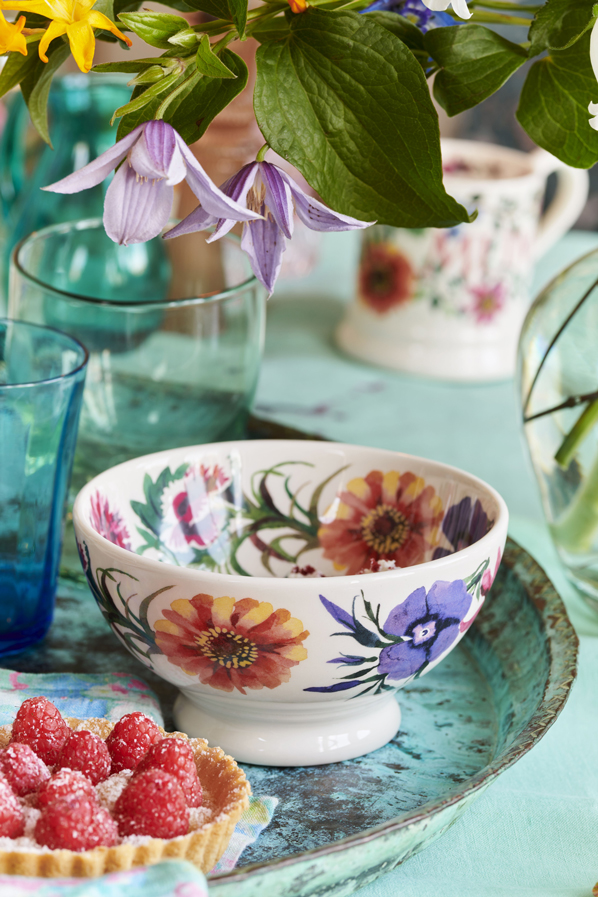
1. Emma Bridgewater Garden Flowers French Bowl, £24; Garden Flowers Half Pint Mug, £25, Emma Bridgewater

With a country cottage vibe, these brilliant blooms will bring colour, texture and panache to tea parties.

McCarthy Holden Summer Blooms

2. Laura Ashley 2.8L Stovetop Kettle China Rose, £59.99, Boots

With a delightful whistling sound and designer print finish, this stovetop kettle combines function with flair.

McCarthy Holden Summer Blooms

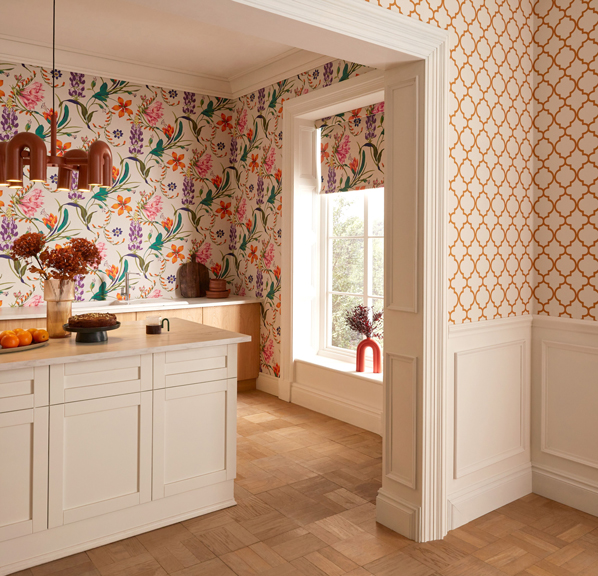
3. Botanist’s Scroll Vivant Wallpaper, £95 per roll; Trellia Orange Wallpaper, £95 per roll, Graham & Brown

A flowery feature wall in vibrant shades of pink, purple, fuchsia and orange has dopamine décor written all over it – and is an appealing vista with character and charm. For a cohesive scheme, pair with this co-ordinating Trellia print for a grand display.

McCarthy Holden Summer Blooms

4. Ditsy Floral Seat Pad – Dusky Pink, £19.99, Rucomfybeanbags

This sweet seat pad will style up a spindle chair, or garden seating.

McCarthy Holden Summer Blooms

5. Wimbledon in Bloom Tea Towel, £14; Wimbledon in Bloom Large Mug, £19; Wimbledon in Bloom Drinks Tray, £24; Wimbledon in Bloom Apron, £26, rest of items from a selection, Shop.Wimbledon

An exciting new homeware collection themed to ‘tennis in an English Garden,’ this floral range features iconic Wimbledon motifs such as strawberries, tennis rackets and winner’s trophies, strewn with pretty petals and greenery.

McCarthy Holden Summer Blooms

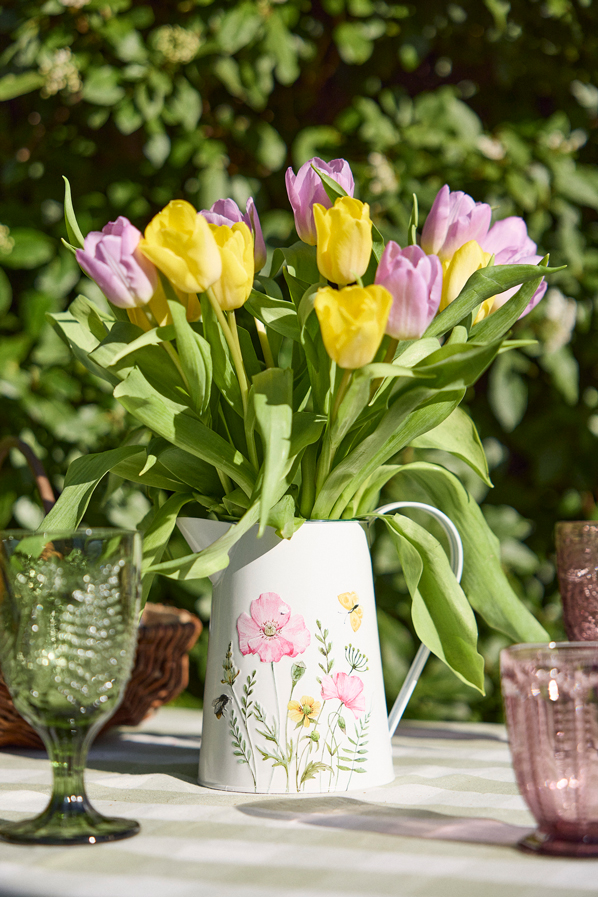
6. Cornflower Pitcher Jug Vase, £16, Dibor

With peony season coming into swing and tulips teasing us with their rich hues, this vintage style vase will enhance your petal power.

McCarthy Holden Summer Blooms

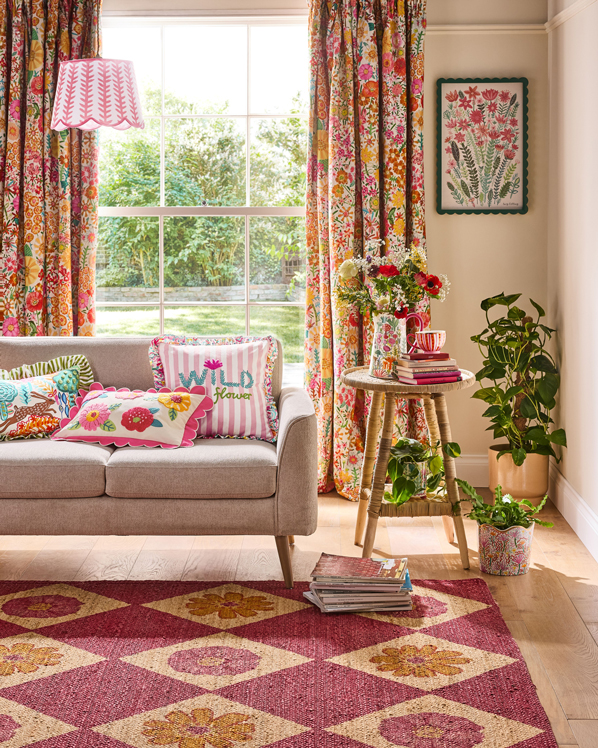
7. Lucy Tiffney Floral Pencil Pleat Campion Blackout Lined Curtains, from £50 to £145; Lucy Tiffney Pink Wildflower Embroidered Cotton Cushion, £24; Lucy Tiffney Pink Floral Diamond Jute Rug, from £60 to £280, rest of items from a selection, Next

A fantastic way to make everything feel fresher is with a new set of curtains… especially a playful floral print you can have lots of fun with. Set against a neutral background, these pops of colour can be picked up with statement scatter cushions, whimsy accessories, and a colourful throw rug to spice things up.

McCarthy Holden Summer Blooms

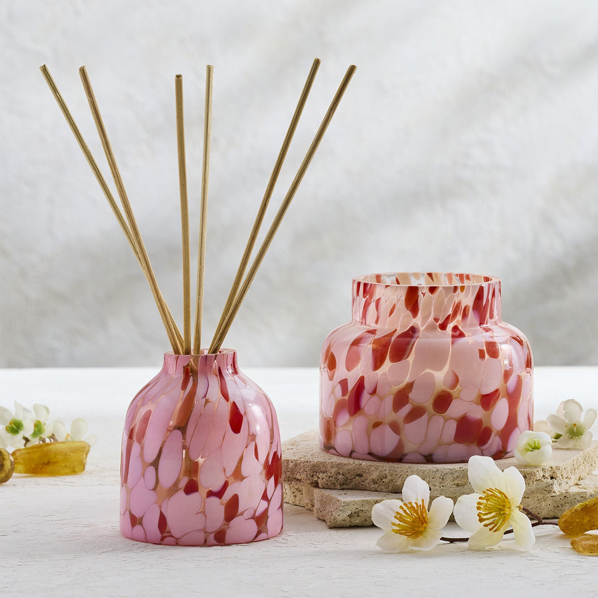
8. Habitat Confetti Glass Reed Diffuser – Pink Jasmine & Amber, £11, Habitat

The easiest way to scent the home for summer… a decorative diffuser. Think sweetish aromas of pink jasmine with woody hints of amber, to mirror those blossom patterns and cute collections.

.

McCarthy Holden Summer Blooms

Five minutes with… Interior Design Masters’ Alan Carr

INTERIOR DESIGN MCCARTHY HOLDEN ALAN CARR

Alan Carr’s signature sense of humour has made him something of a national treasure. Outside of the comedy circuit, he’s been getting stuck into all things interior design in shows like Amanda & Alan’s Italian Job and Spanish Job, which he presented alongside Amanda Holden, and Interior Design Masters, which is soon to return for its sixth series on BBC One.

By Rachael Davis, PA Assistant Lifestyle Editor

INTERIOR DESIGN MCCARTHY HOLDEN ALAN CARR
Alan Carr, Michelle Ogundehin.

Once again Carr, 48, is welcoming 10 interior designers on the ultimate crash course, tasking them with transforming a range of spaces for discerning clients across the country, with their design creations being judged by guru Michelle Ogundehin and a bunch of celebrity guest judges.

Ahead of the show’s return, let’s find out more from the hilarious host.

ALAN, THIS IS THE SIXTH SERIES OF INTERIOR DESIGN MASTERS – WHAT KEEPS YOU COMING BACK?

I think the way they push the envelope, just keeps me excited in it. Because it is the sixth series now, and I think they need to excite me, they need to excite the designers, and I think they need to excite the audience. So that’s why I keep coming back. It’s a laugh, and it’s a giggle, you know?

INTERIOR DESIGN MCCARTHY HOLDEN ALAN CARR
Photo from Interior Design Masters With Alan Carr 56. Pictured: (l-r) John, Emma, Ese, Briony, Bradley, Rita, Ayisha, Craig, Victoria, Holly.

YOU CAN TELL YOU’RE HAVING FUN! TELL ME ABOUT SOME OF THE PROJECTS IN THIS SERIES.

We’re doing youth hostels, and then we also do a dog’s transition room at Battersea Dogs & Cats Home. We do comedy clubs up in Edinburgh. We do quirky cottages up in Portmeirion for the final, which is so surreal, so fabulous, so fantastic.

(Battersea Dogs & Cats Home) was heart-wrenching for me, because, you know, you’re trying to be on your game, and then you’ve got these dogs!

But this was really interesting though, because it wasn’t just a kennel. What they designed was (for) the dog that was transitioning from being in Battersea Dogs & Cats Home to having its new home, so they had to create a room that looked simulated like a normal room to bring them gently into: ‘You’re going to have your forever home now’. So you can imagine how emotional that was…

You’ve got a charity, a fantastic charity like Battersea Dogs & Cats Home, they’ve got what they want, but what does the dog want? And how do you stop a dog that’s nervous or angry, calming it down, ready for its new home? I mean, that is such a curveball, isn’t it, for any designer.

SOME BIG PROJECTS, THEN… HAS THE STANDARD GONE UP?

The standard has gone up, which makes it hard for me, because I do like the weird and wonderful ones, just from a comedian’s angle, where we like to go in there and someone’s gone, what the hell’s gone on here? But you find as you get people who love to do it so much, and who have clearly watched the show and want to win, the standard does go up, and you can’t really take the mick so much because they’re bloody good. Damn!

DO YOU HAVE TO BITE YOUR TONGUE SOMETIMES IF YOU SEE SOMETHING YOU FIND FUNNY OR UGLY?

Yes, I do have to bite my tongue! I do have to bite my tongue, and they don’t warn me, I go in there and what you see is what you get. I mean, you know my poker face is not the best.

I think the reason I got the job was (because) they said: ‘Alan, you are the people at home’… I’ve got no filter. It’s got me into so much trouble before. But like I said, I go in there and, you know, if they’ve painted it the colour of baby poo, then it’s baby poo! If it looks like the inside of a nappy, what can I say?

But, yeah, I try not to be too cruel… But, I mean, sometimes I can’t help myself. You know, there’s so many WTF moments and you’re going ‘really?’ But I think that’s the joy of the show.

You get people who inspire you, you go: ‘Wow, I’m going to do that in my house’, to people like: ‘Oh my God, do not come anywhere near my house!’

INTERIOR DESIGN MCCARTHY HOLDEN ALAN CARR
Photo from Interior Design Masters With Alan Carr 56. Pictured: (l-r) Ese, Victoria, Rita, Bradley, Emma, Briony, Holly, John, Ayisha, Craig.

DO THE ELIMINATIONS GET EASIER AS TIME HAS GONE ON?

Every series I say: ‘Can we just have a trap door put in?’ It’s just quicker, swifter, you know, one pull and they’re gone, and you don’t have any awkward goodbyes. Or gunging?

I just hate confrontation anyway, and it’s the worst bit when someone has to go home. And I do sit there sometimes like a child in a divorce proceedings. I just sit there with my hands between my knees looking awkward. I just hate people going home.

And of course, the longer you’re there, you know them. You know them so well, because we spend all day, whether it’s in Bristol, Glasgow, Edinburgh, we’re there. So, yeah, I mean, it never gets any easier, even though it is six series in. I mean, my toes are so curled up, I can’t bear it!

AS YOU SAY, THIS SHOW HAS YOU TRAVELLING ALL AROUND THE UK, MEETING ALL SORTS OF PEOPLE – WHAT DO YOU LOVE ABOUT THAT?

Yes, you do get to spend (time in) some lovely places, like Rye, I’d never been to before, and because it was streets, everyone in Rye came out to see the transformation, and they did something with the front of the shop. You’ll see it on the show, as the camera pans round, I think the whole of Rye was there and just gave a massive round of applause because they approved of what they’d done. So that was a real emotional moment for me, Michelle and the people, you know, you can’t get a better endorsement than that!

And then Edinburgh, went to comedy clubs, and they were actually doing up some comedy clubs that I had performed in when I was back in the Fringe, back in 2003 and 2004, so that was really, really emotional for me.

And then in the final I spent three days in Portmeirion, which is just so surreal and fabulous and everything, right on the outskirts there in Wales.

See, I’m so lucky. I get to spend time in these lovely places.

Obviously the industrial estate in Bristol with the containers – you know, it wasn’t Vegas, but you saw a different side of Bristol!

Interior Design Masters with Alan Carr returns to BBC One on Thursday, April 10 at 8pm

Why every home needs a posh pantry

POSH PANTRY EDITORIAL

Beyond the layout, smart technology, integrated appliances and sociable aspect for family and friends to mingle, storage is key to a modern kitchen.

Moreover, when placing your products – from dry foods to tins, to spices and food processors – a dedicated space is key to making your daily routine stress-free.

And with the trend for open-plan schemes and clutter-free surfaces, a pantry is right on point when planning an upgrade, or making every space count.

(by Sam Wylie-Harris PA)

Commonly associated with large farmhouse kitchens in spacious homes, Looeeze Grossman, founder of The Used Kitchen Company, says that couldn’t be further from the truth.

“A well-designed pantry is an asset in any kitchen, regardless of its size,” opines Grossman.

Here, the design expert shares her top tips for pantry planning…

If you have a large kitchen, it’s all about smart storage

If you have a large kitchen, but no pantry, adding one is a worthwhile investment, advises Grossman. “You may see it as sacrificing valuable kitchen space, but the benefits you’ll get in return are hugely worth it.”

Not only could it add more value to your home, but buyers often add a kitchen with a pantry to their wish list, says Grossman.

Moreover, she says you’ll actually gain more space by decluttering your worktops. “Small appliances, bread bins and storage items can be neatly tucked away, allowing your kitchen to maintain a sleek, showroom-worthy look.”

POSH PANTRY EDITORIAL
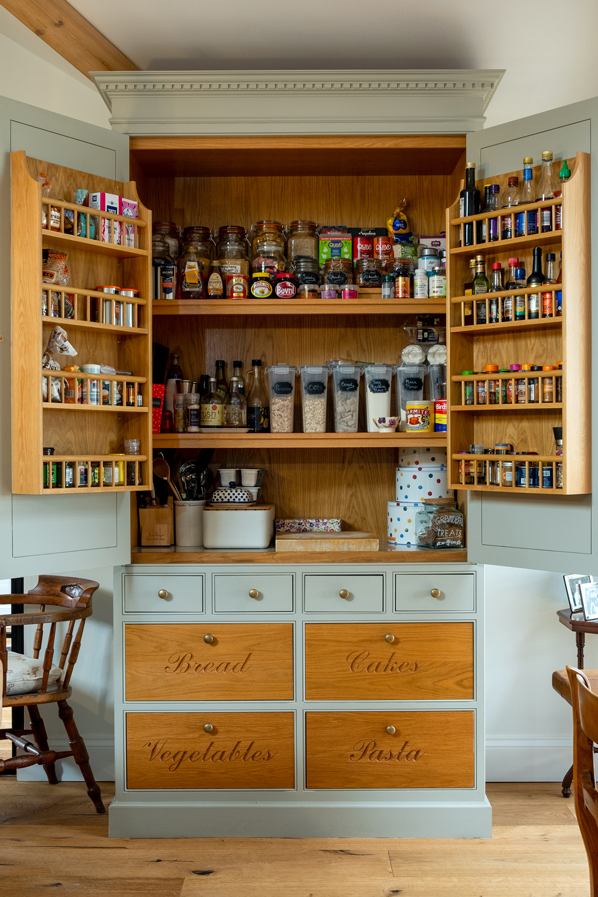
Preloved pantry unit reinstalled, Rehome.

A pantry also makes it easier to stay organised. “With clearly labelled shelves and a well-thought-out layout, you can quickly locate ingredients and kitchen essentials.

“Seasonal cookware, rarely used gadgets, and holiday-specific items can be stored here,” suggests Grossman. “Freeing up your everyday cupboards for items you use on a daily basis.”

If you have a small kitchen, you can still create a pantry space

Even in the smallest of kitchens, a well-planned pantry space can make all the difference, highlights Grossman.

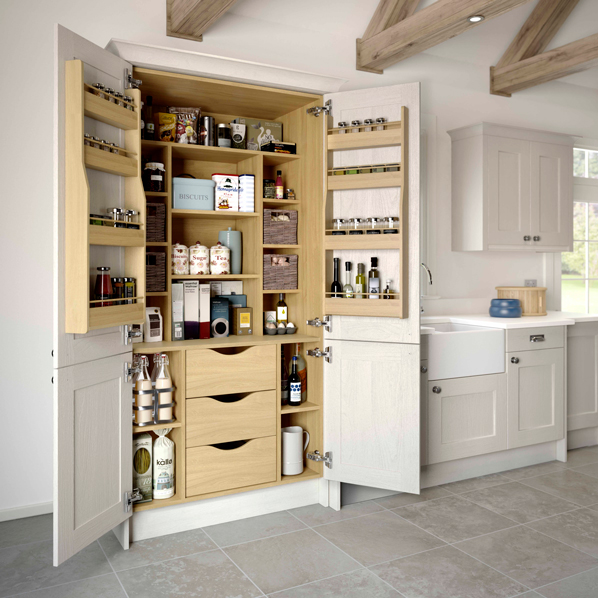
“Wall-mounted solutions like spice racks and plate racks offer an effective way to maximise vertical storage, freeing up valuable cupboard space for dry goods and bulk ingredients.

“Open shelving can also be a stylish and practical option, allowing you to keep essentials like jars of pasta, rice, and cereals within easy reach while adding character to your kitchen,” suggests Grossman.

If you prefer a more streamlined appearance, she says to use wicker baskets or containers inside your cupboards – making it easier to find what you need without rummaging through cluttered shelves.

Grossman continues: “For those who prefer a more concealed storage approach, slim pull-out pantry units or stackable organisers can transform even the narrowest cupboard into a functional space for food storage.”

“Clever additions like over-the-door racks for spices or small tins can create extra storage without taking up valuable worktop space,” she adds.

Whether tucked away or showcased as part of your kitchen’s design, Grossman says a thoughtfully arranged pantry ensures even the most compact kitchens remain both stylish and highly functional.

POSH PANTRY EDITORIAL
Loch-Anna Kitchens Butlers Pantry in Lissa Oak.

It doesn’t have to cost a fortune

Designing a functional and stylish pantry doesn’t have to come with a high price tag, she underlines. “While many assume adding a pantry requires a significant investment, it can be achieved cost-effectively with the right approach.”

Think second-hand or ex-display, that can be used as a standalone unit or part of a larger kitchen redesign. In addition, most pantry layouts follow a simple, formulaic approach, notes Grossman.

“Shelves for dry goods, designated spaces for jars and tins, and clever use of vertical storage – instead of splurging on high-end organisers, everyday household items can be repurposed to create a tidy and efficient space.”

She says basic baskets, repurposed jars, and stackable containers work just as well as premium alternatives, helping to keep everything in order without unnecessary expense.

Even more budget friendly, Grossman suggests checking out car boot sales, online marketplaces and discount stores for baskets, jars, and organisers… a fraction of the price of high-end homeware shops.

“With a little creativity and resourcefulness, you can design a well-organised, stylish pantry that maximises space and functionality, all without overspending.”

Organisation is key

A well-organised pantry isn’t just about storage, it’s about creating a space where everything has its place…

Thoughtful layout planning is essential, and by ensuring everyday essentials are easily accessible, and surplus items neatly tucked away, even the smallest pantry can feel spacious and efficient, says Grossman.

Beyond practicality, a well-arranged pantry can be a design feature in its own right, she enthuses. “There’s a certain satisfaction in opening the pantry doors to a beautifully arranged space.

“In fact, a thoughtfully planned pantry often becomes a talking point, with friends unable to resist taking a peek at what’s inside.”

With the right balance of organisation and creativity, Grossman says a stylish and efficient pantry is well within budget for every home.

POSH PANTRY EDITORIAL
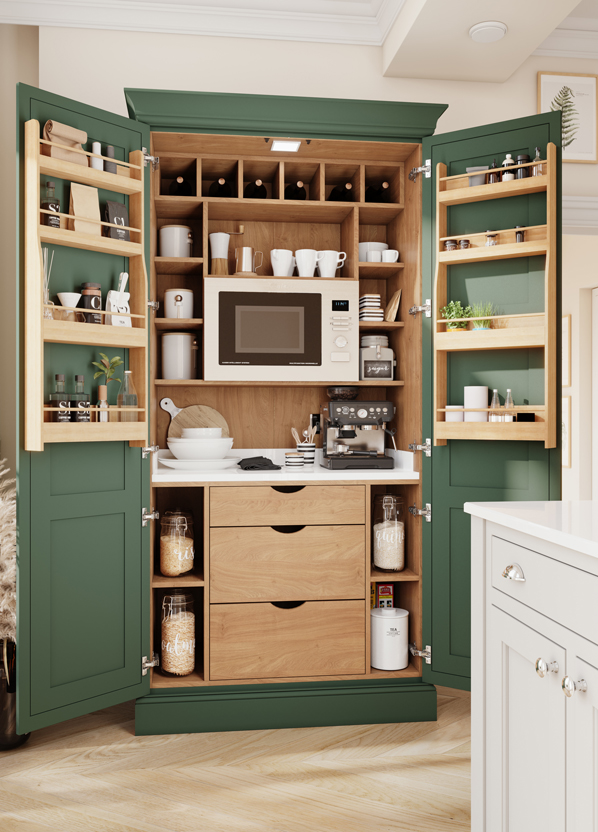
Loch-Anna Kitchens The Durham Pantry Collection in Heather Green.

How to refresh your home for springtime with a seasonal vibe

It’s the moment for renewal, breathing new life into your space and reinventing furnishings by switching out wintry textiles for free-spirited decorative accessories and airy accents.

Indeed, with 2025 coming into full swing, now is the time to refresh your home for spring, highlights Alysha Alli, group interior designer at Redrow.

“This season is all about embracing new materials, bold designs and sustainable innovations that enhance both style and functionality,” says Alli.

“Whether you’re looking to introduce eco-friendly elements, experiment with vibrant colours, or create a seamless indoor-outdoor flow, these key trends will help you transform your space.”

Here are her style notes to put you on the front foot…

Embracing alternative materials

Sustainability is shaping the future of home design, with a rise in untreated natural materials such as wood, cork, and bamboo, underlines Alli.

“Zero-waste production is also gaining traction, as designers transform leftover materials into beautiful, eco-friendly furniture.”

To bring this approach into your home, she says to opt for statement pieces that contrast beautifully with their surroundings. “Think a reclaimed wood table in a sleek modern space, or recycled metal light fixture adding edge to a cosy, rustic setting.”

And while sustainably crafted pieces may come with a higher price tag, they offer “superior quality, longevity, and one-of-a-kind character that mass-produced items simply cannot match,” notes Alli.

“Plus, you will be making an eco-friendly choice while supporting independent artisans and small businesses.”

A playful approach to the basics

Everyday essentials are given a vibrant refresh with bold colours and adaptable designs…

Alli says modular seating, adjustable shelving and stools with built-in storage combine practicality with personality, making them perfect for busy households.

“Want to maximise a family space? Consider multifunctional furniture like extendable dining tables for gatherings, or foldaway desks for homework and crafts.”

“Creating dedicated zones such as a cosy reading nook, playful activity area or flexible workspace can make your home more adaptable, while maintaining a fun and inviting aesthetic,” she says.

Playing with perceptions

This year, expect to see more transparency, reflection, and futuristic finishes used to create sleek, modern spaces, outlines Alli.

Moreover, she says mirrored surfaces, glass furniture, and responsibly sourced acrylic add depth and sophistication without overwhelming a room.

“A well-placed mirror can instantly open a space and amplify natural light, while translucent décor – such as vases, pendant lights, and glistening finishes – add subtle visual interest.

“For a contemporary edge, pair these elements with high-shine metals like chrome or brushed gold,” suggests the interiors expert.

“Prefer a softer touch? Balance modern accents with plush fabrics, warm wood tones, or natural stone for a chic, yet inviting, look.”

She continues: “For an extra pop, introduce ombre hues, glowing accents, or bold statement pieces featuring graphic grains.”

Whether you fully embrace the trend or just add a few key pieces, it’s an effortless way to make your home feel fresh, airy, and stylish, suggests Alli.

Colour shifts… 2025 is all about colour confidence

Rich, mood-boosting hues bring joy and energy into your space…

Say goodbye to muted tones and welcome in tropical brights such as zesty oranges, hyper-greens, and electric blues, enthuses Alli.

Not ready for a full-colour transformation? She says start small with vibrant cushions, a statement rug or accent wall.

“Layer in colour-blocked furniture or bold accessories to make an impact without overwhelming your space,” advises Alli. “For a playful twist, glow-in-the-dark details, like neon signs or LED strips, add a sense of fun after dark.”

The key to getting it right? Alli says to balance bright tones with natural textures to keep things lively yet inviting.

Seamless indoor-outdoor living

“As the seasons change, it’s time to break down barriers between indoor and outdoor spaces, creating a home that feels light, airy and connected to nature,” advises Alli.

“Open-plan layouts with large sliding or bi-fold doors allow for effortless flow, making it easier than ever to enjoy brighter days and warmer evenings.”

Not patio weather yet? She suggests bringing the outdoors in with rattan furniture, linen textiles and botanical prints that echo your garden.

Once the temperature finally rises, she says don’t be afraid of taking interior comforts outside. “Cosy throws, soft lighting, and weather-resistant rugs can transform a patio or balcony into an inviting retreat.”

The secret to seamless indoor-outdoor living? “A cohesive colour palette and natural textures that tie both spaces together,” says Alli, “creating a relaxed, harmonious vibe all year round.”

How to make the most of your living space as the nights draw in

GEORGE CLARKE ARCHITECT WINTER INTERIORS MCCARTHY HOLDEN

With winter just around the corner and everyone gravitating indoors, our living rooms are about to see most of this season’s action.

Whether it’s cinema nights with the kids, socialising with friends or simply curling up with a good book, your communal space will undoubtedly become the centre point of everyday living.

So how to bring the feel-good factor to your downtime?

Here, architect and TV presenter George Clarke, highlights a few ways to accommodate the needs of multiple generations… whilst catering to the demands of awkward spaces in a smart and stylish way.

Create intimate zones

The layout of our living rooms has changed markedly over the years, as we all aim to create multi-functional spaces to serve many needs, notes Clarke.

Practical as well as aesthetically pleasing, think elements to help us relax, entertain and possibly work from home, alongside other activities.

“Creating intimate zones, however small, is key in designing a space that delivers on multiple briefs,” explains Clarke.

“And although many rooms don’t offer symmetrical proportions – many being long and narrow with special considerations, such as doors in awkward places – there are a few ways to achieve breakaway zones.”

The key when working to the quirks of your layout, especially when rearranging furniture, is to consider comfort, ease of movement and flow, highlights Clarke.

GEORGE CLARKE ARCHITECT WINTER INTERIORS MCCARTHY HOLDEN
PHOTO: Sofa.com / PA

“Avoid placing everything around a room’s edges, which can result in too much empty space at the centre.” He continues. “Instead, opt to delineate your scheme, pulling furniture into more intimate arrangements.”

The back of a sofa can work well as a room divider, but be sure to choose furniture that looks appealing from all angles, as sides and backs will be on display as well as fronts, notes Clarke.

“And remember, it’s not just sofas that create convivial family zones. Beautifully crafted armchairs are also having a moment.”

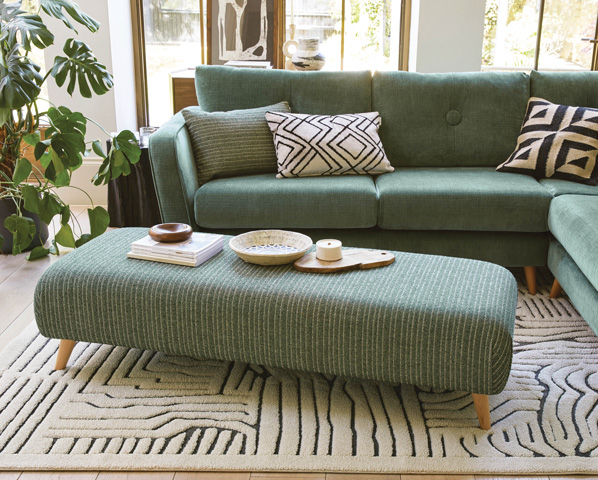
“Think about pieces that complement each other rather than match, and try out informal circular groupings anchored by a generous footstool to encourage lingering.”

Large rugs stretched across rooms are a simple and effective way to create a natural divide for seating, eating and working, suggests Clarke.

“And bespoke bookshelves as room dividers and cabinetry that contain pull-out desks are a useful design solution.”

GEORGE CLARKE ARCHITECT WINTER INTERIORS MCCARTHY HOLDEN
PHOTO: Sofology / PA

Put comfort first

“Comfort is king when it comes to the ideal living room,” underlines Clarke. “In fact, it was voted as the number one requirement by a long way in Sofology’s How We Live Now report which included independent consumer research, with the TV coming in as a not-so-close second.

“Whether you go for modernist-shaped seating, scrolled arms, button tuck detailing or tapered legs, it turns out the style of our seating is a matter of personal taste, but the feeling of wellbeing it elicits is non-negotiable.”

Modular sofas with flexible configurations work well, as does a selection of moveable furniture, including lightweight side tables that can be pulled into place for a spot of home-working, advises Clark.

“Task lighting that can be directed with ease, deep ottomans and plenty of plugs and USB ports,” he adds.

GEORGE CLARKE ARCHITECT WINTER INTERIORS MCCARTHY HOLDEN
PHOTO: DSF / PA

Entertain a seasonal cinemascape

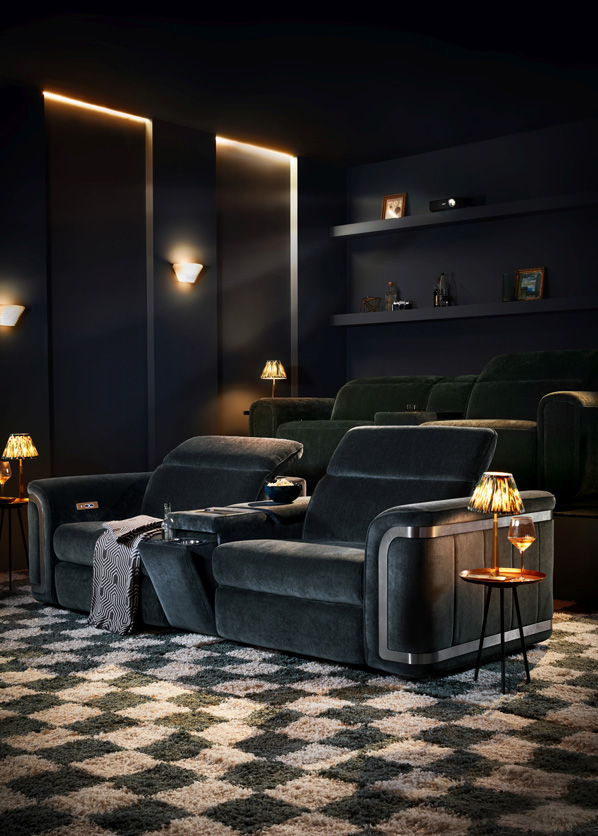
If the TV promises to be central to enjoying your living room over the winter, Clarke recommends switching things up with a more cinematic experience, depending on your budget.

“Although screening rooms are often found in basement spaces and middle rooms of period homes benefitting from reduced natural light, they can also work within a regular living space,” suggests Clarke.

If a cinema-style sofa isn’t on the cards this Christmas, he says to consider layering the seating you have – and surround it with sumptuous textures and rich colours to create a cosseting escape.

“There’ll be some classic movies showing at this time of year, and a comfortable set up will make long winter nights all the more enjoyable.”

GEORGE CLARKE ARCHITECT WINTER INTERIORS MCCARTHY HOLDEN
PHOTO; Sofology / PA

Get colour happy

As Clarke points out, incorporating bright colours and bold patterns adds depth and vibrancy that can help bring a welcome lightness to winter months.

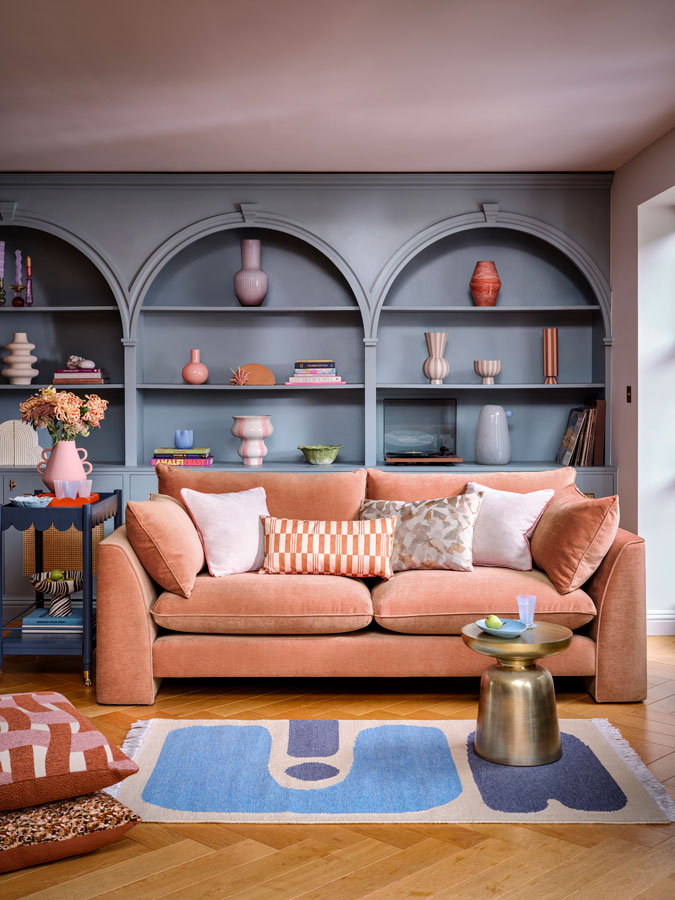
Most people opt for white or neutral walls to help make a room appear larger, notes Clarke, but a single colour wash wall or brightly painted shelving can help brighten things up.

“Stylists I’ve worked with in the past have said when it comes to colour and pattern, breaking the rules rather than following specific trends often produces the best results.”

“I love this idea, especially as one in five of us updates our living spaces on a yearly basis. Changing the colour of a living room doesn’t have to cost the earth or represent a long-standing commitment – and the results can be surprising.”

GEORGE CLARKE ARCHITECT WINTER INTERIORS MCCARTHY HOLDEN
PHOTO: Annie Sloan / PA

Think social

It’s the season for socialising and where better than in the comfort of your own home…

“Open plan kitchens-cum-living rooms are perfect for enjoying a more relaxed approach to hosting,” says Clarke. “We know people migrate to the living room in winter, so rethinking the space slightly to cater for this can really help take the stress out of having people over.

“Sitting rooms with alcoves offer a wealth of opportunity when it comes to socialising, so switch out books for something more appetising and useful,” suggests Clarke.

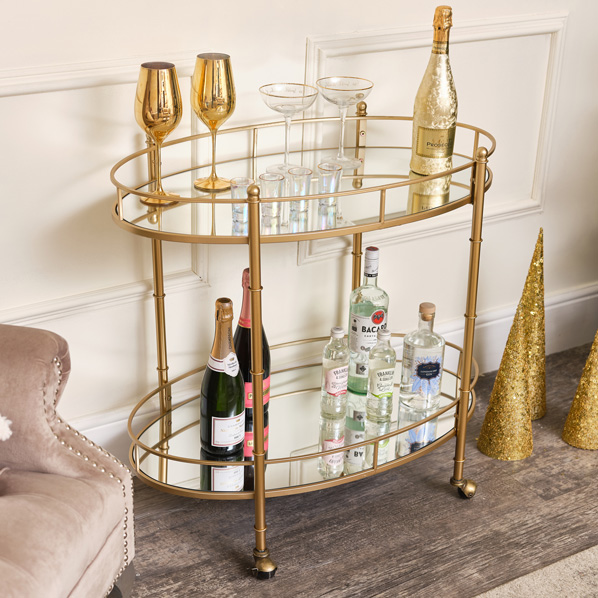
“Built-in bars might not be to everybody’s taste, but temporary pieces like a retro drinks trolley can help create a zone within a living room – offering much-needed storage and help bring the fun to an evening with friends.”

GEORGE CLARKE ARCHITECT WINTER INTERIORS MCCARTHY HOLDEN
PHOTO: Annabelle James / PA
GEORGE CLARKE ARCHITECT WINTER INTERIORS MCCARTHY HOLDEN
PHOTO: Melody Maison / Pa

Kevin McCloud on 25 years of Grand Designs: ‘It’s become me and I’ve become it’

The genial presenter reflects on a quarter of a century of clever, creative and sometimes ‘bonkers’ build projects. By Lisa Salmon.

With heroes in the shape of hard-working builders and clever designers, villains like mud, rain and running out of money, and a happy ‘home of your dreams’ ending – Grand Designs has all the ingredients for a fantastic story.

And for the Channel 4 show’s presenter Kevin McCloud, who’s guided us through intrepid homeowners’ attempts to create showstopping and quirky homes for the last 25 years, it’s a story that’s become part of his own.

“It’s become me, and I’ve become it,” declares McCloud, 65.

“I think it’s one of those big adventures we all imagine we might go on, even if we don’t. And it seems to tease out every human emotion, every human drive, the good and the bad. And that, I think, is why people watch – it’s storytelling.

“We have villains in the form of mud and money and rain, and then there are the heroes – the craftspeople, builders, inventors and engineers – who are just trying to do good stuff, and in that sense it’s no different to listening to somebody tell a story in a tribe 3,000 years ago, sat around a campfire.”

Now, 25 years since the show was first aired in 1999, McCloud is presenting a new series, preceded by a 25th anniversary special episode which took viewers through some of the show’s greatest and greenest self-build journeys.

Cementing the Grand Designs silver jubilee is a new book, Grand Designs At 25, featuring the most stand-out builds, chosen by McCloud.

He thinks the book’s turned out “wonderfully well” but hesitates to go as far as saying he’s proud of Grand Designs and what he and it have achieved over a quarter of a century, instead opting to say he’s “at peace with it”.

“I don’t see myself as any different from the audience. We all love design and making stuff and building and architecture and construction, and we all love, in a way, the mud and seeing something change for the better,” McCloud reasons.

“When I say I’ve made my peace with it, what I mean is I have no distinction. I just happen to be on that side of the camera, but we’re all sharing the same love and enthusiasm for the same things.”

So, what does the father-of-four think has changed most during the show’s 25 years?

He says architecture is much more accessible than it used to be, and adds: “Sustainability has become central to the agenda. It wasn’t part of government policy 25 years ago, but it now is.”

Costs have of course risen, and – often as a consequence of that – houses are taking much longer to build, McCloud observes. Aside from general inflation, he says the biggest price rises have been for land, and the increased cost of building materials as a result of the pandemic and Brexit.

“So 15 or 20 years ago, to build a decent self-build home from the slab up would cost about £3,000 per square-metre, and that was doing a nice job,” says McCloud, “Now it would be £4,500-£5,000 per square-metre. So in 15 years, it’s gone up by 50%, but the big hikes have happened in the last 10 years.”

Despite the price rises, people aren’t cutting corners on their Grand Designs.

“They’re thinking their way out of trouble,” McCloud explains. “Designing better buildings, making them a bit smaller, being careful and clever. But they’re taking much longer, that’s the trouble.”

He estimates that in the past, on average it took two to four years to build a Grand Designs house. “Now it’s taking four to six years, and all the projects we’re planning to air this year, it’s like, when is it going to be ready? So that’s had a big impact on us.

“What people are doing is trying to build for the same money, so they’re trying to do as much of it themselves as they can. They’re trying to rationalise their designs and preserve quality, and they’re taking forever.”

Another change he’s noticed has been the “increasing Americanisation” of housing, and this ‘bigger is better’ ethos is linked to a major bugbear of McCloud’s…

“I know people, when they build a grand design, often think the word ‘grand’ in the title refers to the size of the building – it’s got to be huge. And I didn’t used to have to do this, but I now go to great pains to say to people, ‘grand’ is all about the vision,” he explains.

“If you don’t have a vision for either the design or the technology, or for pushing boundaries, or trying stuff which nobody’s done before, then we’ll probably be less interested to make a programme.

“Size isn’t everything – size is almost irrelevant. It’s about the grand scale of imagination, not physical space. I think the one thing that architecture has shown me over my life is that size does not equal space.”

For example, you can create a small building with a lofty ceiling and “a view of the heavens that gives you contact with infinity”, he says, or a well-designed and ergonomic house can become “what seems like the most spacious home as a result”.

There’s no particular Grand Designs project that stands out above all others for McCloud, but he points out: “My favourite ones are always the most intriguing, difficult, the longest, the ones that are complex in terms of how they’re brought into being, but sometimes the simplest in design.”

He can’t deny that sometimes the projects are “a bit nuts” – but that is part of the lure.

“Sometimes I look at the project dispassionately and think I’ve got a job to communicate this idea without making it sound bonkers. But it’s entertaining if it is slightly bonkers.

“On the one hand, you want to make stuff accessible to viewers,” he adds. “On the other hand, so much of Grand Designs is about portraying eccentricity and people moving to the margins of society and doing their own thing. It’s important to remember that what they’re doing is a bit nuts, and the rest of us are at home on the sofa.”

And it’s hard not to admire people for following their dreams, even if their visions are a bit “bonkers”.

“There are plenty of people not suited to building their own home – it requires huge reserves of patience and stamina and tolerance, and you need to be a very adept human being.

“Of course, the vast majority of our viewers are not ever going to do this – but that’s not why they’re watching. They’re not watching because it’s a manual, they’re watching because they’re trying to understand the journey,” says McCloud.

“But I think most people are watching just for the craziness of it. Just for the, ‘What are they going to do next?’.”

The new series of Grand Designs starts on Channel 4 on Wednesday, September 25.

Grand Designs At 25 by Kevin McCloud is published by White Lion, priced £28. Available now.

Grand Designs Live is at the NEC in Birmingham from October 2-6.

11 budget-friendly home ideas from Instagram’s ‘Queen of Hacks’

‘Home inspo’ expert Tanya Mukendi shares some easy and cheap ways to clean, organise and improve your living space. By Lisa Salmon.

Tanya Mukendi happily describes herself as a “clean freak”, who has transformed her home through a multitude of clever hacks that she shares with her 4m followers on social media – where she’s known as ‘Queen of Hacks’.

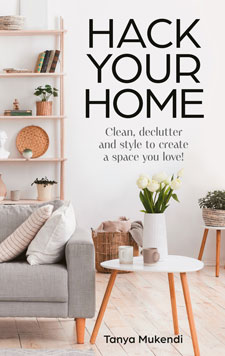
She’s now also put many of her ideas into a book, Hack Your Home, which outlines ways to organise your home without breaking the bank, along with tips to increase storage, easy cleaning hacks, and even ways to save on energy bills.

“I used to believe I couldn’t afford to spruce up my home, until I discovered some amazing budget-friendly tips and tricks,” says Mukendi. “With just a few simple tweaks and clever hacks, you can transform the look and feel of your home without breaking the bank – keeping your home clean, organised and cosy doesn’t have to cost a fortune.

“Whether it’s repurposing everyday items or getting creative with DIY solutions, there are plenty of cost-effective ways to enhance your living space.”

Here are a few of Mukendi’s budget-friendly hacks…

Cleaning hacks

1. DIY all-purpose cleaner

“One of my favourite ways to create your own all-purpose cleaner is not only cost-effective but also better for the environment,” says Mukendi.

Just mix 125ml of water, 125ml of white vinegar, and 1 teaspoon of washing-up liquid in a spray bottle. Add a few drops of essential oil for a pleasant scent, and voila! You have a budget-friendly cleaner that works wonders on multiple surfaces.

2. Shaving foam for urine smells

It might sound weird, but Mukendi says you can say goodbye to unpleasant bathroom odours with the help of ordinary shaving foam, which you just apply to the base of the toilet and the surrounding floor. “Let it work its magic for a few hours, and afterwards simply wipe it away for a bathroom that smells fresh and clean.”

This hack works by drawing out the urine and neutralising the ammonia, she explains.

3. Lemon and salt for chopping boards

To naturally clean and disinfect chopping boards, Mukendi suggests cutting a lemon in half, sprinkling coarse salt over the surface, and then using the cut side of the lemon to scrub the surface: “The combination of the lemon’s citric acid and the salt’s abrasiveness effectively removes stains and odours.”

4. Steam cleaning for microwaves

If your microwave has stubborn food splatters, an easy way to clean it is by using steam, advises Mukendi, who explains you need to fill a microwave-safe bowl with water and a few tablespoons of white vinegar, before placing it in the microwave and heating it until the mixture boils and creates steam.

“Let it sit for a few minutes to loosen the grime, then carefully remove the bowl and wipe the inside of the microwave with a clean cloth,” she says. “The steam makes it much easier to remove the stuck-on food.”

Organisation hacks

5. Declutter to clear your space

“A simple decluttering hack that always works for me is the ‘one in, one out’ rule,” says Mukendi. “Every time I bring a new item into my home, whether it’s a piece of clothing, a kitchen gadget, or a book, I make it a point to let go of something similar that I no longer need. This helps prevent clutter from accumulating and ensures my space stays organised.

“It’s a great way to make sure I’m only holding on to items I truly need or love, and it’s been incredibly effective in keeping my home clutter-free.”

6. Use vertical space with hanging planters

Repurpose hanging planters to organise and store items such as kitchen utensils, craft supplies or bathroom essentials, suggests Mukendi. “Hanging them on a wall or the back of a door creates additional storage. without taking up valuable counter or shelf space,” she points out.

7. Go paperless

Going paperless can be a great way to manage the constant influx of paperwork in your home, stresses Mukendi, who says you should begin by asking your banks and bill providers to switch to paperless statements. “For other documents, take a photo or scan them and store them digitally, allowing you to easily access them in the future while getting rid of the paper originals,” she suggests.

In addition, she says it’s a good idea to establish a system for organising digital files, emails and photos using folders, labels and cloud storage. “Regularly declutter your digital space to boost productivity and reduce stress, adjusting any systems that aren’t working for you.”

8. Reverse clothes hanger hack

Struggling to part with clothes you never wear? Mukendi suggests you try the reverse clothes hanger hack. “It’s a total game-changer,” she promises.

Simply flip all the hangers in your wardrobe around so they hang backwards on the rod. When you wear an item, turn the hanger back to the correct way. “Anything that’s still on a backward hanger at the end of the year reveals the clothes you haven’t worn, so then you can donate or sell them,” she says. “This simple trick makes decluttering fun, helping you free-up valuable space in your wardrobe.”

Home improvement hacks

9. Fresh coat of paint

One of the easiest and most budget-friendly ways to refresh your home is with a new coat of paint, and Mukendi suggests you look for discounted paint or consider mixing your own custom shades using leftover paint cans. “Whether it’s an accent wall or a piece of furniture, a fresh colour can breathe new life into any space.”

10. Peel-and-stick backsplash

Transform your kitchen or bathroom with the convenience and style of peel-and-stick backsplash tiles. “These cost-effective and user-friendly tiles are available in a wide range of designs, making it easy to enhance the aesthetic of your space without the permanence of traditional tiling,” she says, pointing out they’re also perfect for renters looking to upgrade their living space without making permanent changes.

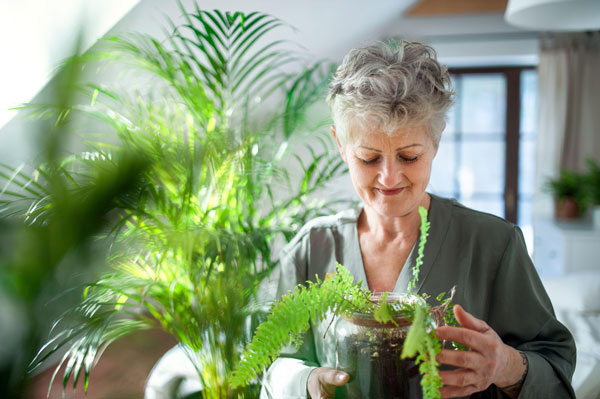
11. Add indoor plants

Incorporating indoor plants into your living spaces not only adds a touch of nature but also offers numerous health benefits, explains Mukendi. “Plants can improve air quality, reduce stress, and enhance the overall aesthetic of your home. From succulents to low-maintenance ferns, there are plenty of options to suit any lifestyle and décor,” she adds.

“When it comes to home improvement, many people think making big changes means spending big bucks. But that’s not always true.”

Hack Your Home by Tanya Mukendi is published by Thorsons on August 29, priced £14.99.

5 DIY jobs to mark the switch in season and spruce up your space

From upcycling a piece of furniture to painting the front door, these jobs can be done in a day or two, says Sam Wylie-Harris.

As we transition from summer to autumn, chances are you’re weighing up whether you’ve invested enough time in home improvements – and is there something you could be tackling over the weekend.

To help strengthen your curb appeal and give your interiors a lift, Jimmy Englezos, senior brand manager at Ronseal, has shared some easy projects to put you on the front foot…

1. Change the colour of your fence

A white picket fence may be the stuff of dreams, but even standard garden fencing can change the aesthetic of your home, creating boundaries and offering privacy.

However, fencing can often be overlooked when it comes to redecorating, says Englezos, with many homeowners often just sticking with its original colour.

And when it comes to maintenance, highlighting the grain of wood and ensuring its longevity, a fresh lick of paint can make the world of difference.

“There are two primary colour choices homeowners can go for, dark tones or light tones,” highlights Englezos.

“Darker tones absorb light to create a cosier atmosphere by making a garden space feel smaller and more intimate.

“Meanwhile, lighter tones reflect light, making the garden appear bigger by blurring the outer boundaries.”

And to point you in the right direction, green is trending big time, think forest green or sage; otherwise charcoal and black fencing creates a chic, contemporary vibe.

2. Spruce up the shed

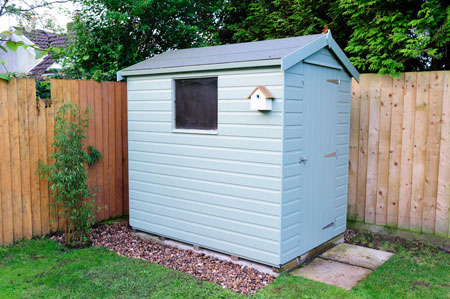
“Garden sheds can also be neglected, and in many cases, they often house valuable garden tools and equipment – and so should be maintained to prevent any damp or mould taking hold,” underlines Englezos.

Make sure to give the shed a good clean using a hard wire scrubber to remove any excess debris, cobwebs, mud, mould or anything else that’s been attracted to your shed over the years, advises Englezos. “And make sure any holes are filled in using wood filler.”

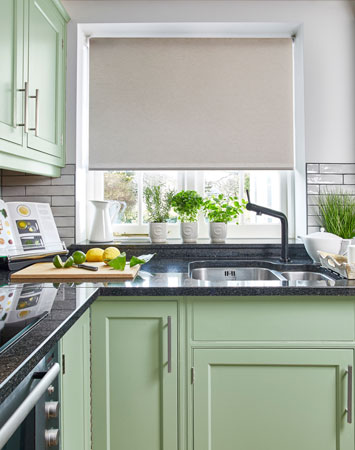
3. Paint kitchen cabinets

This is a great way to freshen up the appearance of a kitchen on a budget, suggests Englezos.

“Painting works best on wooden cabinets, but laminate ones can also be painted providing the laminate is in good condition – and not peeling.”

For best results, he says to use a paint roller to apply the paint to the surface as this will help create a smooth, even finish.

Again, green is super popular and a great choice to improve your indoor-outdoor flow for a seamless transition from the kitchen to the garden… and sense of harmony by connecting your indoor-outdoor living areas.

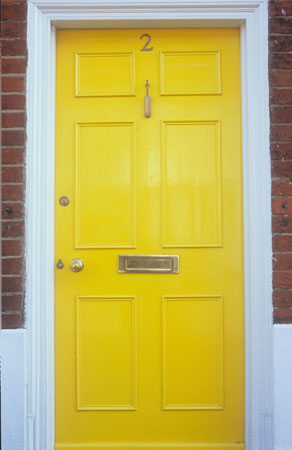
4. Paint the front door

“This is often the first thing people see when they come round to your home, so you want to keep it looking its best,” notes Englezos. “This can easily be achieved with a fresh coat of paint.”

Both wooden and composite doors can be painted, but he says to make sure to use the correct paint. Also make certain to thoroughly clean down the surface of the door beforehand using a household cleaner and warm soapy water.

“Apply the paint in the direction of the grain pattern with a synthetic brush and leave the first coat to dry for four hours.” He continues. “Apply the second coat before leaving to dry and then reattach the door hardware.”

5. Upcycle a piece of furniture

“Got an old bookcase or desk which doesn’t fit into the overall appearance of a room?

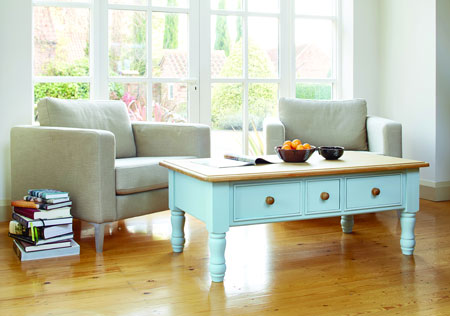
“A simple lick of paint can breathe a new lease of life into an old piece of furniture, and cover any scuff marks or stains to make it appear brand new.”

Moreover, it won’t test your DIY experience, promotes sustainability and comes with the satisfaction of completing a lovely project yourself.

“Simply lightly sand the surface using some sandpaper before giving it a wipe down with a damp cloth,” guides Englezos.

“Apply two coats of paint using a synthetic brush, making sure to paint in the direction of the woodgrain.” And there you have it.

How to keep your greenery thriving during late-summer getaways

Create a holiday haven for your plants and they will prosper, says Sam Wylie-Harris.

Whether you’re making the most of late-summer bloomers, or letting your houseplants sun themselves in the open air, chances are your greenery is glowing.

Only what if you’re escaping to your happy place in the sun?

As Julian Palphramand, head of plants at British Garden Centres points out: “Summer holidays bring visions of relaxation and adventure – but for devoted plant parents, the concern of leaving behind beloved plants can cast a shadow.”

“However, with a little preparation, your indoor and outdoor potted plants can thrive while you’re soaking up the sun on your getaway.”

To ensure your container garden and houseplants continue to flourish during your absence, here’s his comprehensive guide for lending a hand to green fingers…

Indoor houseplants

Ensure your houseplants thrive on your holiday with some pre-departure planning…

“Watering is paramount, so we recommend self-watering systems for convenience, or enlist a trusted friend or neighbour to water your plants once a week,” advises Palphramand.

“Light and humidity are also crucial for plant health whilst you are away. Move your plants to receive indirect sunlight so you don’t scorch delicate leaves.”

“To create a mini-humid microclimate, group your plants together,” says Palphramand. “You can also place a tray filled with pebbles and water near them to increase moisture levels.”

Before you leave, he says to adjust your feeding schedule to avoid overfeeding while you’re away. “Consider using slow-release fertilisers for a gradual nutrient supply.

“Inspect your plants thoroughly for signs of pests or diseases before you leave the house, and treat any issues promptly to prevent them from spreading in your absence.”

When returning from your holiday, give your plants some extra TLC, underlines Palphramand. “Remove dead leaves, prune overgrown branches, and check for any signs of stress or damage.”

Outdoor plants

Pre-holiday TLC…

Before you pack your bags, dedicate some time to ensuring your container plants are in peak condition, highlights Palphramand. “A healthy plant is better equipped to handle the stress of your absence.”

Feed: Give your plants a final meal with a feed rich in potash, says Palphramand. “Potash promotes flower and fruit development, ensuring your plants continue to produce vibrant blooms or delicious edibles while you’re away.”

Deadheading: “Remove spent flowers and wilting foliage before you go on holiday. This not only improves the overall appearance of your plants, but also encourages them to put their energy into new growth instead of sustaining old blooms.”

Prune on your return: Resist the urge to prune extensively before your trip, warns Palphramand. “Pruning can stress plants, making them more susceptible to dehydration during your absence – save any major pruning tasks for when you return.”

Managing whilst away…

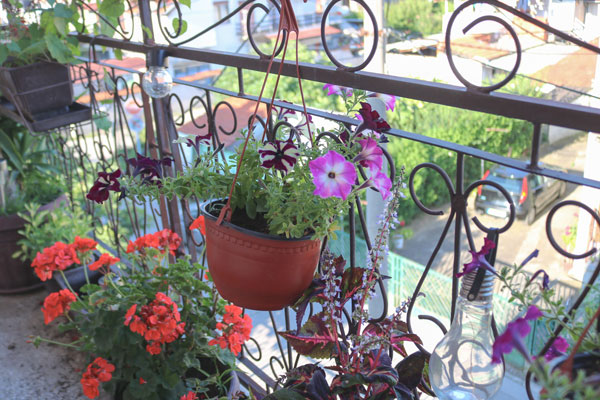
Shade: Anticipate hot spells and relocate your hanging baskets, window boxes and containers to a sheltered area with indirect sunlight, suggests Palphramand. “This will help prevent them from drying out too quickly.”

Cluster together: “Group your potted plants together to create a microclimate, where plants benefit from each other’s humidity and provide some mutual shade.”

Placement: While seeking shade, he says to avoid placing your containers directly against walls, fences, or under trees. “These locations might block essential rainfall.”

Watering: “Water is the lifeblood of your plants, and potted plants will require more watering compared to in-ground plants, notes Palphramand.

“The day before your departure, give your plants a thorough drenching. Water generously until water flows out the drainage holes.

“This creates a deep reservoir of moisture for your plants to tap into while you’re away. Fill your water butt before you leave.

“This provides a natural source of water for your plants, especially if a lucky rain shower arrives during your absence.”

Self-watering planters: Consider investing in self-watering planters, recommends Palphramand.

“These containers feature built-in reservoirs that automatically supply water to the plant’s roots as needed.

“They offer peace of mind and are perfect for extended getaways.”

Mulch: “Apply a layer of mulch (bark chippings, gravel, or slate chippings) around the base of your potted plants.

“Mulch acts like a mini blanket, helping to retain moisture in the soil and reducing evaporation – this can significantly extend the time between watering sessions while you are away.”

Delegate plant care: If you’re planning a longer holiday, he says to enlist the help of a trusted family member, friend or neighbour.

“Ask them to check on your plants every few days, especially during hot weather, and give them a quick watering if needed.”

Group thirsty plants together: “If you have plants with similar water requirements, group them together.” He continues. “This makes it easier to water them efficiently and ensures plants with higher water needs benefit from the increased humidity created by their neighbours.”

Look at the weather before you go: Keep an eye on weather forecasts for your area. “If heavy rain is predicted, consider moving your plants to a sheltered location to prevent them from becoming waterlogged.”

With a little pre-planning and strategic care, you can return home to a flourishing haven of greenery, ready to welcome you back from your adventures, says Palphramand.

“So, pack your bags, relax, and enjoy your well-deserved holiday – your plants will be waiting for you, happy and healthy!”

3 of the hottest interior design trends for the coming year

McCarthy Holden Interior Design

If you’re looking for inspiration to immerse yourself in the world of interiors, these style notes from one of the major events in the design calendar, 3 Days of Design, showcase some of the biggest influences.

The theme of this year’s event, Dare to Dream, attracted tastemakers and interior aficionados from around the globe who flocked to Copenhagen to ‘celebrate creativity’.

Daniela Venturini, Wayfair’s resident art director and trend forecaster, says: “As an interior enthusiast, I love to delve deep into the world of contemporary aesthetics and visionary craftsmanship.”

“3 Days of Design was not just an exploration of current trends, but an immersive experience that encouraged us all to dare to dream, push boundaries and see the future of design with endless possibilities.”

McCarthy Holden Interior Design
Daniela Venturini, Wayfair’s resident art director

She says the city, the creativity and the collective spirit of the event left an indelible mark, urging us all to dream bigger and design bolder.

“Incorporate these key trends into your home, even on a budget, and you too can embrace the cutting-edge of design – and make it your own.”

So, which trends can you take away to up your interior styling?

Sculptural Futuristic

“Metals sit centre stage with mesmerising, statement-making finishes,” highlights Venturini.

“Think high-shine, mirror-polish and textured surfaces, from burnt and oxidised to patinated and brushed.”

“The tactile finish of these pieces adds an unexpected warmth to traditionally industrial elements.” She continues. “Metals like brass, bronze and copper are mainstays, while cool silver tones are also angling for the spotlight.”

Venturini’s top tips…

“Keep an eye out for budget-friendly metallic accessories. Look for vases, candle holders or picture frames with oxidised or brushed finishes, effortlessly incorporating tactile richness into any space, without breaking the bank.”

If you love a DIY project, she says to consider adding a patina finish to inexpensive metal furnishings. “Online tutorials can guide you on how to achieve a burnt or oxidised effect on bulkier items like chairs and side tables.”

McCarthy Holden Interior Design

Luxury Nostalgia

As consumers seek more meaningful items with a genuine narrative, handcrafted details and heritage-driven designs are gaining popularity, notes Venturini.

“What we see, not only in Copenhagen, but also in trend-led hotels and on Pinterest, is a smorgasbord of retro and vintage-inspired pieces that shine a light on nostalgia, while maintaining current-day individuality,” she underlines.

“Rich materials from corduroy, boucle and walnut to burled wood, smoked glass, steel and leather graced numerous installations, blending traditional and modern effortlessly.”

Venturini’s top tips…

For vintage-inspired, retro pieces, she says to search for tactile fabrics, richly upholstered furniture, walnut-finish tables or rustic wood décor.

“Don’t underestimate the power of second-hand… find pre-loved pieces that can be upcycled with simple DIY projects, such as reupholstering a chair or refinishing a coffee table.”

.

McCarthy Holden Interior Design

Fun Fusion Digitopia

“Digitopia saw the meticulous merging of technology and creativity, creating surreal, transformative designs that challenged convention,” explains Venturini.

“Picture brightly coloured yet monochrome products, and geometric offerings presented in unconventional forms – and you get the idea.”

“These imaginative products were truly expressive, embodying idealised escapism, fun and abundance, promoting optimism, creativity and self-expression.

“Who wouldn’t want a bit of that?”

Venturini’s top tips…

She suggests introducing playful, vibrant accessories such as accent pillows, rugs or wall art, along with bold patterns and colours to lift the mood of any room.

“Incorporate smart home products that blend style and technology, such as stylish smart light fixtures or interactive décor pieces.” And there you have it.

McCarthy Holden Interior Design
×
Find a Property
M
Country & Equestrian
By submitting this form, you agree to McCarthy Holden using your personal data in accordance with our Privacy Notice.