
I’m a parent, how worried should I be about AI?

There is cause for concern, say the experts, but don’t panic.

Managing your child’s screen time and keeping the dinner table phone-free can feel like more than enough digital-related stress. AI though? That brings with it all new potential terrors that lots of parents would, understandably, rather ignore. But if we’re to protect our children and help them navigate AI, we must get to grips with it, say the experts.

“There is a fear of the unknown because AI is moving so quickly, potentially moving faster than childhood itself,” says Jake Moore, global cybersecurity advisor at software company ESET. “We’ve got parents who don’t necessarily understand AI, and then we’ve got children growing up with it.”

This leaves a gap, and parents can end up being “pushed further and further” away from the new technology. “We don’t want a world of technophobe parents,” says Moore. “We want parents to understand what their kids are going through.”

“Parents do need to be alert, but not alarmed [by AI],” says Yasmin London, child digital safety and wellbeing lead at digital safeguarding firm Qoria. “They need to develop their own AI literacy on what their kids might be exposed to.”

Four key concerns

With AI regulation from the Government lagging, parents need an idea of the risks their kids might face…

1. AI companions

Big tech used to be interested in the ‘attention economy’, but now it’s moving into the ‘attachment economy’, which is where AI companions come in. Sites like Nomi are being used by kids to “create any avatar they want and use that avatar as a friend,” explains London. “Kids perhaps who are vulnerable, feeling lonely, struggling with self-esteem or real-world relationships, might find themselves attracted to a chatbot like that because they constantly reiterate positive comments to them and mirror and validate them,” she continues. “While that can seem nice for them in the beginning, it can isolate kids further, and cause concerns around their critical thinking ability and relationship skills.”

2. Deepfakes

Parents might have heard about Grok, but kids have been using AI for some time to create images, “whether for fun or more malicious purposes, and sometimes those are sexual in nature, which could lead them down a very problematic route with legalities,” says London. “They’re not always intended to harm, but the outcome for a victim, if there’s a deepfake created of them in an embarrassing position, something that might perhaps even be defamatory, that can be a really big problem.”

3. Unrealistic beauty standards

“AI definitely disproportionately impacts young girls,” flags London. “A lot of them follow Instagram accounts that are just an AI avatar, but they look so hyper-realistic, girls still compare themselves to these unrealistic beauty standards.” This can “impact their worldview, their wellbeing”.

4. Misinformation

For boys, there’s fears around them being “sucked into a manosphere, radicalisation and incel culture”. “AI can certainly be used to scale harm in those ways, as well as to share fake information,” says London. “If a young person starts to search for that content over and over again, like any other AI, it will learn what they like, and start to share whatever information is fed into it, which may or may not be very accurate.”

How to protect your kids

The first thing to do, says Moore, is: “Download every app your kids are using, whether you like it or not. Start with things like Snapchat.” It might feel like you’re awkwardly trying to get down with the kids, but “if you adapt and communicate with your kids on the apps they are using, they will actually have more respect for you. And then, if you go through the settings, you might just be able to offer them a few tips on their privacy and security, which, if you’ve got the app, it’s much easier to talk about because you’re talking in their language and saying the right things”.

From there, you can move into trickier areas like AI. “Let’s all learn together, regardless of what generation you are,” says Moore.

London also recommends parents apply the ‘ABC model’. “A stands for managing access. So for kids, if they’re using an AI, firstly, let’s make sure it’s age-appropriate, so young kids certainly shouldn’t be using chatbots, ChatGPT and companion apps if we can avoid it,” she notes. “B stands for boundaries, and this is the difficult thing for all parents, but it’s about implementing and staying consistent with rules around technology use, whether it be AI, gaming or messaging.

“C is for communication,” she continues. “Having safe, trusted adults they can speak to is the number one protective factor when it comes to the online world.”

Try to be open to AI too. “Your children are likely going to have jobs that incorporate AI, so by learning it now, when they need your help, you’ll be able to understand what their troubles might be, or how to make their life more efficient,” encourages Moore.

And London warns against demonising new tech, as banning it can push your kids away from you, not AI. “We know that we thrive as humans when we’re active, out in nature, having a real life laugh with our friends,” she says. “It’s all about balance.”

10 ways to style winter berry shades in the home

INTERIORS

Seasonal and seductive, dark interiors are bearing fruit… so much so, we’re embracing shades of cassis, deep claret and plum, with winter berries are emerging as a firm favourite in the world of interiors.

Such is the surge in popularity, cookware, textiles and accent walls are being reimagined in rich berry tones – with new collections lending warmth, while creating an inviting atmosphere with a sense of luxury.

Indeed, leading interiors firm, Graham & Brown have named their Colour of the Year 2026 Divine Damson, which they describe as a “deep, timeless shade that evokes elegance, luxury and sophistication.”

Cited as a versatile and enduring colour, the inside team of designers say it “enriches a variety of styles and spaces,” and its versatility “makes it suitable all year-round, offering a cocooning, comforting feel in the colder months.”

While in summer, they say natural sunlight “brings out its vibrant depth allowing it to transition seamlessly across the seasons.”

Highlighting rich, bold hues, here’s what’s on our wish list…

INTERIORS
Cast Aluminium Casserole Dish in Burgundy, 2.7L, £35; Winter Berries Multi-Wick Candle, £8; rest of items from a selection, Dunelm

Think a comforting autumnal beetroot soup, or red wine casserole, and this is your new centrepiece to chime with supper parties and themed tablescapes. Style with burgundy velvet ribbons on stemware, and a bottle of bordeaux.

INTERIORS
Elements Ellis 4 Seater Round Dining Table in Burgundy, £449; Elements Cooper Dining Chairs, Tonal Boucle in Burgundy, £79 each; rest of items from a selection, Dunelm

As well as adding drama, colour and texture, this Scandi-style dining set makes for a conversation piece with its high-gloss finish, on-trend solid, pillar legs, and cool dining chairs… a dead cert for colour drenching.

INTERIORS
Graham & Brown’s Design of the Year 2026, Eternal Weave Black Wallpaper (Set of 2), £190 per set, Graham & Brown

This dark and moody motif features exotic birds, blooms and fauna for a dramatic backdrop – and generous dose of high drama. Said to be inspired by ancient textiles, nature and mythology, the design is produced as a double-width set; meaning you need two coordinating rolls for hanging the horizontal repeat pattern… frame the paper with a lick of Divine Damson to link the look

INTERIORS
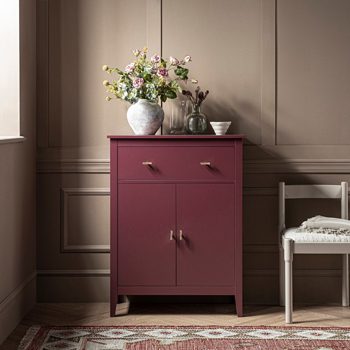
Oakham Small Sideboard with Drawer in Wild Cherry, £169.99, Daals

Chic and contemporary, this polished sideboard in a deep shade of cherry, topped with gold tone T-bar handles will enhance any aesthetic.

INTERIORS
Lottie Berry Red Fabric Bar Stools, £159 each, Danetti

Upholstered in a plush chenille, these modish bar stools will bring colour and comfort to a kitchen island or trendy home bar.

INTERIORS
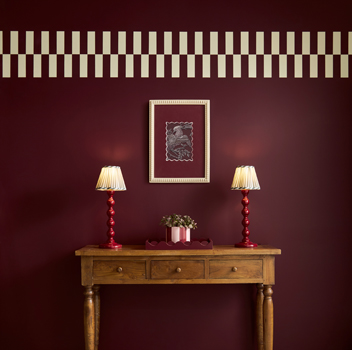
The Burgundy Fringed Lampshade, from £195, (Extra Small), Tinker & Tallulah

This vintage-inspired tassel lampshade shouts sumptuous, and can be used to dramatic effect with its gorgeous gold fringing, scalloped detail and rich, burgundy hue.

INTERIORS
Veeno Wine Glass Motif Wallpaper, £79 per roll, Bobbi Beck

More than a decorative afterthought, when you want to drink in a smooth merlot or cabernet sauvignon, set the scene for wining and dining with this whimsy wallpaper.

INTERIORS
Graham & Brown’s Colour of the Year 2026, Divine Damson Paint 1L Interior Eggshell, £36, Graham & Brown

This dark and moody motif features exotic birds, blooms and fauna for a dramatic backdrop – and generous dose of high drama. Said to be inspired by ancient textiles, nature and mythology, the design is produced as a double-width set; meaning you need two coordinating rolls for hanging the horizontal repeat pattern… frame the paper with a lick of Divine Damson to link the look.

INTERIORS
Luxury Marbles Christmas Bauble in Bitter Cherry, £29, Webb & Gray

This statement bauble will add instant charm to stylish place settings… and can double up as a napkin holder.

INTERIORS
Romance Ruffle Bed Linen Set in Berry Red, from £50, (Double), French Bedroom

Glamorous and romantic, ruffle-trimmed bedding in beautiful berry tones will luxe up any bedroom scheme – and who wouldn’t look forward to cocooning themselves in a delicious dark mulberry as we head into snuggle season?

Note – article by By Sam Wylie-Harris, PA. Prices correct at time of going to press but may have changed since.

3 new Mary Berry recipes to make this autumn

MARY BERRY

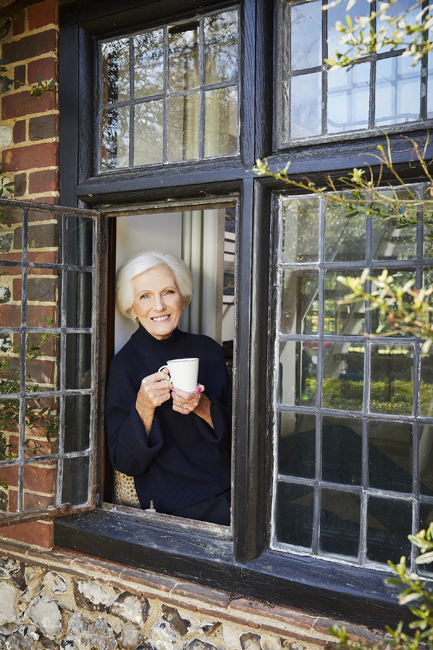
Mary Berry turned 90 this year and to celebrate, she has released a new cookbook, Mary 90 – aiming to give home cooks a ‘career-spanning’ collection of fuss-free recipes for many different occasions.

It accompanies a new BBC TV series, Mary at 90: A Lifetime of Cooking.

The TV chef shares a mixture of brand-new recipes and her nostalgic classics, with Berry saying it has been a “sheer joy” to write, and includes the baking she’s so known for, alongside tasty, easy mid-week meals and crowd pleasers.

Fragrant chicken traybake

Mary Berry

“An all-in-one dish, this delicious, aromatic chicken recipe is vibrant and full of flavour,” says Berry. “Serve with rice or a dressed salad.”

Ingredients:

(Serves 4–6)

1 large aubergine, sliced into half-moons

2 peppers, deseeded and sliced into large pieces

1 large onion, sliced

3tbsp sunflower oil

3 dried lime leaves

1 large stick of lemongrass, bashed

3 large chicken breast fillets, each sliced in half

2tbsp sweet chilli sauce

150g baby spinach leaves

Small bunch of Thai basil, chopped

For the fragrant sauce:

1 x 400ml can coconut milk

2tbsp Thai red curry paste

2 garlic cloves, crushed

2tsp freshly grated ginger

Juice of 1 lime

2tsp fish sauce

2tbsp sweet chilli sauce

Method:

1. Preheat the oven to 220°C/200°C Fan/Gas 7.

2. To make the sauce, mix all the ingredients together in a bowl.

3. Scatter the aubergine, peppers and onion into a large shallow roasting tin. Drizzle with 2 tablespoons of the oil and toss everything together. Pour over half of the sauce. Add the lime leaves and lemongrass to the tin and roast in the preheated oven for 15 minutes.

4. Toss the chicken in the remaining oil and the sweet chilli sauce, and season well. Place a large frying pan over a high heat until very hot. Add the chicken and brown very quickly until sealed and golden, stirring constantly.

5. Remove the roasting tin from the oven and pour over the remaining sauce. Place the chicken on top and return to the oven for about 15 minutes, or until cooked through.

6. Transfer the chicken onto a plate. Stir the spinach and Thai basil into the sauce and vegetables in the tin and gently warm over the hob until the spinach has wilted.

7. Serve the chicken traybake with rice.

Best made and served. Not suitable for freezing.

Skate wing with caper sauce and samphire

Mary Berry

“Hugely popular, skate wings are readily available and simple to cook. The sauce makes the dish extra special. Buy samphire from the fish counter in the supermarket or farm shop,” says Berry.

Ingredients:

(Serves 4)

4 x 400g skate wings, edges trimmed with scissors

100g butter, softened, plus a knob

Juice of ½ lemon

4tbsp capers

4tbsp finely chopped parsley

400g fresh samphire

Method:

1. Preheat the oven to 200°C/180°C Fan/Gas 6.

2. Lie the skate wings on a board and use half the butter to spread over both sides of the skate wings. Season well with salt and ground black pepper.

3. Heat a large frying pan over a high heat. When hot, brown the wings in batches for 2 minutes on each side until golden.

4. Place the browned wings in a large roasting tin and transfer to the preheated oven. Roast for about 15 minutes until cooked through (the translucent flesh will become opaque when it is done). To test for doneness, try to pull the flesh away carefully from the bones with a sharp knife – if it comes away easily, it is done. Place on a large platter and cover with foil. Leave to rest in a warm place.

4. Add the remaining butter to the frying pan and heat until nutty brown in colour. Add the lemon juice, capers and parsley and remove from the heat.

5. Meanwhile, cook the samphire in a large frying pan with a knob of butter and a splash of water over a high heat. Fry for a few minutes to heat through.

6. Divide the samphire between the plates and top each one with a skate wing. Pour over the caper butter sauce to serve.

Best made and served. Not suitable for freezing.

Carrot cake with frosting

Mary Berry

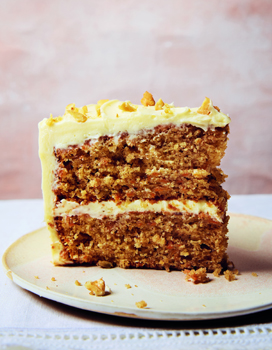
“A carrot cake is so popular, especially in coffee shops and bakeries,” says Berry. “My version includes my favourite spices. Carrot cake originated in the USA where they make cakes with oil, rather than our butter-based sponges. Use a flavourless oil, such as sunflower or vegetable.”
Ingredients:

(Serves 8–10)

4 large eggs

175g caster sugar

75g light muscovado sugar

250ml sunflower oil, plus extra for greasing

1tsp vanilla extract

2 ripe bananas, mashed

150g carrots, peeled and coarsely grated

275g self-raising flour

2tsp baking powder

1tsp ground cinnamon

1tsp ground ginger

½tsp mixed spice

55g walnuts or pecans, finely chopped, plus a few extra for decoration

For the cream cheese frosting:

250g butter, softened

2tsp vanilla extract

350g icing sugar

350g full-fat cream cheese

Method:

1. Preheat the oven to 180°C/160°C Fan/Gas 4. Grease and line the bases of 2 x 20cm (8in) loose-bottomed sandwich tins.

2. Break the eggs into a large bowl and beat with a fork to break up. Add the caster and muscovado sugar, oil and vanilla and mix well.

3. Add the remaining ingredients to the bowl and whisk using an electric hand whisk until just combined. Be careful not to over beat.

4. Divide the mixture between the two prepared tins and level the surface. Bake in the preheated oven for about 35–40 minutes until well risen and lightly golden. Leave to cool in the tins for 10 minutes, then transfer to a wire rack.

5. Meanwhile, make the frosting. Measure the butter, vanilla and icing sugar into a large bowl and whisk using an electric hand whisk until combined. Add the cream cheese and beat until creamy and light.

6. Peel the paper from the bases of the sponges and invert one onto a plate. Spread with frosting. Place the other cake on top and use the remaining frosting to cover the top and sides, leaving a pretty swirl on top. Decorate with walnuts or pecans to serve.

Can be made and assembled up to 8 hours ahead. Freezes well but best to ice on the day.

Mary Berry

Mary 90 – My Very Best Recipes by Mary Berry is published in hardback by BBC Books, priced £28. Photography by Tara Fisher. Available now

7 things to consider when downsizing later in life

Don’t rush into a decision and make sure you do your research. As we get older, it’s common to start rethinking where and how we live – and for many, that means considering a move to a smaller, more manageable home.

Age UK’s recent Late Movers report highlights some of the challenges older adults face when it comes to housing. A survey carried out by Opinium on behalf of Age UK in January 2025 of 2,500 people aged 66 and over, found that 36% worried about affordability, 42% about accessibility, and 35% about the condition of their home.

In addition, 72% of respondents aged between 66 and 74 said moving after the age of 75 would be difficult.

The charity warns that unsuitable housing in later life can place extra pressure on health and social care services – making early planning all the more important.

If you’re starting to think about your last big move, here are seven key things to consider when downsizing or relocating later in life…

1. Proximity to friends and family

“I often see couples moving down to Cornwall and becoming very isolated because they don’t really consider how far they are going to be from everyone,” says Cornwall-based estate agent Michael Kleinman. “They are often used to seeing their grandchildren every weekend and when they move to Cornwall, they only see them for a couple of weeks in the school holidays.

“So, it tends to be a much easier move if you stay local and have that familiarity and social network around you.”
However, if you are still keen to relocate, the estate agent highly recommends looking into the transport links of your potential new area.

“Think about transport links to and from where your family and your network are,” advises Kleinman. “If you move to a rural area, you might be 20 miles from a railway station and driving might be no longer an option.”
2. Emotional impact

Paperwork might seem like the hardest part about relocating, but many people underestimate the emotional toll downsizing can have.

“I think a lot of people don’t really consider the emotional side of moving from the family home where they have brought up all the kids,” says Kleinman. “Going from a four/five bedroom house down to a bungalow means all those years of accumulating stuff has to be condensed down and a lot of people don’t really think about the ramifications of the emotional side and the logistical difficulties of what goes and what stays.

“You have to be very brutal and ruthless about it and that’s often easier said than done. A lot of downsizers start the process and then give up and stay where they are for another year or two because they didn’t realise how hard it was going to be mentally and emotionally.”

3. Logistics

“Another thing that many people don’t consider is how different moving house is now, compared to 40/50 years ago with things like EPCs (Energy Performance Certificates) and online ID checks,” says Kleinman. “The process can be very overwhelming if you aren’t overly tech savvy. People often start the process and get a few weeks or months into it and then find it overwhelming, so take their house off the market and have a rethink.”

Finding a good real estate agent who has the time to sit, listen and guide you through this can help make it less daunting.

“Work with an independent local estate agent and someone who can actually come around to your house and go through it with you,” advises Kleinman.

4. Location

Make sure you do your research before making a commitment to a new location.

“If you are thinking about moving to a different area, talk to local people in person or on social media groups to really get an understanding of that area,” recommends Kleinman. “I am often dealing with clients who are moving to an area where they don’t know anyone, have never been there before or have only been there once or twice on holiday.

“Cornwall, for example, is very different in the winter compared to the summer. If you have been on holiday there in July or August, you will get a very different experience in January. So, it’s important to do your research to see what it’s actually like to live there all-year round.”

5. Convenience of health services and local amenities

Think carefully about what type of amenities and local services are going to be crucial to you as you grow older.

“Think realistically about how far away the nearest inpatient hospital facilities are, how near the local GP and NHS dentists are and find out if they are taking on any new patients,” advises Kleinman. “Also, think about how easy or difficult it is to get to those services, as well as the normal town-centre facilities that you might need.”

6. Accessibility

Make sure your new home is going to be adaptable and functional for future you.

“Bungalows and apartments are the normal go-to and I think it’s particularly good to look for very new bungalows,” says Kleinman. “The reason being is that building regulations now have to follow rules set out by the Disability Discrimination Act, so many new bungalows have to have things like wheelchair access, wider doorways and plug sockets higher up the wall – features you won’t get in most Seventies bungalows.”

7. Maintenance

“None of us knows what’s around the corner and how long we’re going to be mobile for, so you really need to think about practical living,” says Kleinman. “Do you want a large garden? Is it going to be practical and manageable? When does the boiler need replacing? Will the house need frequent external painting?

“I would always guide clients towards a more modern property that is low maintenance. Lots of people think about how they are today, rather than what it is going to be like for them in 10/20 years’ time.”

7 of the best ways to adapt your home for multigenerational living

Multigenerational living is on the rise – Lisa Salmon asks experts about the best way to adapt a home so all family members can live happily together.

Multigenerational living is on the rise – although by how much depends on which research you choose.

A new study by homelifts specialist Uplifts found 49% of 2,000 UK adults questioned lived in households spanning multiple generations, and more than a third (34%) of these households had made changes to better accommodate all the generations of their family.

However, the Centre for Ageing Better points out that in the most recent Census, in 2021, just 2.1% of households in England and Wales were multigenerational, an increase from 1.8% in 2011.

But whatever the true figure, academics believe households that span multiple generations are definitely an increasing trend. Prabash Edirisingha, a consumer researcher at Northumbria University who studies family consumption patterns across generations, says: “My research into multi-generational households reveals they are now the fastest-growing household type in England and Wales.

“While the emotional and economic advantages are undeniable, families must remain realistic about the challenges. Different generations often bring diverse expectations, lifestyles and values into shared spaces – differences that can lead to tension if not thoughtfully managed.”

While the increase in multigenerational living is, in part, due to financial necessity, with many young people unable to afford to buy their own homes and their grandparents not wanting to spend their savings on care home costs, the Uplifts research found there are other reasons for the increase too.

Although saving money was a key advantage for 39% of those questioned, more than half (55%) cited stronger family bonds as the primary benefit.

Kate Sheehan, an occupational therapist specialising in housing adaptations, stresses that the key to successful multigenerational living is not only taking what each member of the family wants and needs into consideration, but also being aware of how those needs might change over time.

“Achieving positive and harmonious multigenerational living begins with understanding the unique needs of each family member, anticipating future changes, and responding with both functional and attractive design solutions,” she says. “It’s essential that everyone in the household can access all areas of the property, ensuring it truly feels like home for all.”

Millie Brown, deputy director for homes at the Centre for Ageing Better, explains that only one in eight homes in this country currently has all four key accessibility features for elderly family members: namely a ground-floor toilet, sufficiently wide doorways, circulation space for a wheelchair, and no steps at the front door.

“Multigenerational living, and supporting older people to age in place, can be hugely beneficial to families and can help to reduce pressures on social care,” she says.

“But many families will find a key barrier to establishing these arrangements is the unsuitability of their own home for older people.”

She also points out that financial support for homeowners who want to adapt their homes for multigenerational living has declined substantially in recent years.

“The other barrier many people are likely to find in creating a multigenerational home is the support on offer to make improvements and adaptations,” she says. “Grants for home improvement support have shrunk by more than £2 billion over the last decade, and the range of support available to people is variable from one place to another.

“We need a network of good home hubs – local one-stop shops offering comprehensive advice and support on all aspects of home improvement.”

Finances permitting, Sheehan says the most common and most necessary adaptations for a multigenerational home are…

1. Wider doorways

If a family member needs a wheelchair, widening doorways will make life at home much easier.

“Installing wider doorways markedly improves movement throughout the house, not only for accessibility, but also for practical tasks like moving furniture,” says Sheehan. “Such thoughtful choices enhance comfort and convenience for everyone.”

2. Good lighting

While younger members of the family might prefer more subdued lighting, particularly when they’re entertaining friends, brighter lighting is a necessity for older relatives whose eyesight may be failing, so bright lights with a dimmer switch, or plenty of lamps that can make a room brighter, may work for everyone.

“Proper lighting is crucial, especially in spaces like staircases and bathrooms, where slips and trips are common hazards for both young and old,” points out Sheehan.

3. Downstairs bedrooms

The Uplifts research found 28% of families questioned had added ground-floor bedrooms to their home for an elderly relative. But such a modification goes hand-in-hand with adding a downstairs toilet if the home doesn’t already have one.

4. Separate living rooms

Nearly a third (32%) of the multigenerational householders surveyed had created separate living areas in their homes – modifications that provide privacy and independence for both young and old, if space allows it.

“In a multigenerational household, personal space is crucial for individual comfort and overall harmony,” Sheehan explains. “Even when space is limited, providing a dedicated area, such as a chair in a bedroom, can greatly enhance the household’s ability to coexist successfully.”

5. New bathroom/bathroom adjustments

The Uplifts research found one of the most common adaptations was a new bathroom, which was added by 32% of multigenerational households. But if a whole new bathroom is too expensive, Sheehan suggests installing a wetroom-style shower in your existing bathroom, and reinforcing walls to enable future fitting of grab rails (which 22% of the survey respondents said they’d installed), or a wall-mounted shower seat.

She says: “Whenever possible, fit the bathroom door to open outwards – this small adjustment can make a significant difference in an emergency, providing swift access if assistance is needed.”

6. Adding a lift

Because elderly family members may struggle with stairs, adding either a stairlift or a home lift is the ultimate accessibility feature, added by 15% of the multigenerational homeowners surveyed.

“Stairs can become challenging with age, whether due to physical limitations or simply fatigue from an active daily routine,” comments Sheehan. “Installing a homelift or stairlift can greatly ease movement between floors. And these solutions aren’t just for older adults – a lift can be invaluable for gently transporting a sleeping child upstairs without disturbance, demonstrating how inclusive design supports the needs of every generation.”

7. Kitchen modifications

Older people with mobility/balance issues may struggle to stand while cooking, so consider installing a lower worktop to allow them to sit and help with food preparation, says Sheehan, who also suggests fitting an instant hot tap. “This will reduce the need to lift and carry hot water – not only is it quicker, it’s more energy-efficient.”

Swallowfield Show 2025

Make a diary note for this showcase event!

The Swallowfield Show is a fantastic event and McCarthy Holden is pleased to play a small sponsorship part in what is a massive two day event run by volunteers for the benefit of the community and to raise funds for local charities.

Take a look at their web site to discover what’s on at the Swallowfield Show this August, which will take place on Sunday 24th and Monday 25th of the August Bank holiday from 10:00am to 5:30pm.

Last year’s Swallowfield Show, boasted over 8,000 visitors, mostly returning patrons, who once again enjoyed a fun-filled family day out. Some of the activitie to see include:

  • Amazing Main Arena acts throughout the day
  • Their new Activity Zone including Circus Skills Workshops, hands-on experience of traditional skills, Dinosaurs and lots more!
  • Live music acts & performers in our Village Green area
  • Over 100 trade, craft & artisan food stalls
  • Dog show
  • Horse show
  • Display of over 200 classic vehicles & machinery
  • Exhibition of horticultural, craft, cookery and art competition entries
  • On-site food and drink to suit all tastes

Last year, the high level of visitors at their 2024 show enabled them to donate just over £30,000 to local charities and good causes. Outstanding – Just like the show.

Take a look at their web site https://www.swallowfieldshow.co.uk

TV presenter Matt Baker on Channel 4’s National Trust: Our Dream Farm.

Matt Baker editorial McCarthy Holden

By Yolanthe Fawehinmi, PA…

Matt Baker’s dream farm looks like the traditional hill farm he grew up on in the Durham Dales.

But when the 47-year-old British TV presenter thinks about the 600-acre farm in Eryri, (formerly Snowdonia), North Wales, that tenant farmers (people who rent land from a landlord and work the land) compete for in the second season of Channel 4’s National Trust: Our Dream Farm With Matt Baker, it’s a close second.

“I’m very fortunate to have grown up on a very traditional hill farm in Durham Dales. That’s the farm that I love. I love a mixture of landscapes as well. Welsh farms are very similar to the kind of farms that we have in the Durham Dales, but thankfully, my dream farm is the farm I grew up on,” says Baker, a former presenter on children’s television show Blue Peter from 1999 until 2006.

“It’s the world I know and love. It’s where I feel comfortable in that kind of landscape with lots of dry stone walls and older buildings, but also more modern buildings that you can drive tractors in and get all of your stock in if needs be. I love a hardy, rugged farm with a good yard and some modern barns.”

In the documentary-style series, seven shortlisted candidates are put under the watchful eye of the National Trust as they complete real-life farming tasks in the hope of becoming the new tenants of a unique hill farm in the national park, with a four-bedroom farmhouse at its heart, for the next 15 years.

Matt Baker editorial McCarthy Holden
Photo from National Trust: Our Dream Farm with Matt Baker and contestants.

The National Trust have a lot more applicants for their farms than they have to give.

So in National Trust: Our Dream Farm With Matt Baker, contestants will be judged on how well they maximise the opportunities that the farm has to offer.

This can be anything from tourism, how innovative or business savvy they are to how they prioritise environmental sustainability.

Across eight episodes, prospective tenants will be eliminated one by one until only two hopefuls are left and invited to have a final meeting with the National Trust. But only one person can win and become the proud owner of the farm.

“For me, any show that puts our agricultural world front and centre is absolutely vital, as far as I’m concerned. Not a lot of people know of the world of tenant farming, and the fact that a third of British farmers are tenant farmers. I think you only have to go out into the countryside and be so thankful that it looks the way that it does because of our farmers,” says Baker, who shares two teenage children, Luke and Molly, with his wife, physiotherapist Nicola Mooney.

“Not only are they producing our food, but they’re looking after our environment. I think we should shed light and can gather as much support as possible for the farming community, and show people what goes on and how challenging it is.

“Our farmers have to be jacks of all trades, you got to be so independent, and they’re providing all of the time. People need to be more grateful to our British farmers for producing our food and looking after our environment. In my eyes, it’s our farmers that make Britain what it is.”

From 2009, Baker looked into people, places and stories making news in the British countryside, whilst he co-presented BBC One’s Countryfile.

The following year, he stood in for English comedian and presenter Jason Manford, 43, as a guest presenter on BBC One’s magazine programme The One Show.

But when Manford resigned in November 2010, Baker was promoted to a more permanent position as a co-host with Welsh TV presenter Alex Jones, 47 – the same year he came second place on the eighth series of Strictly Come Dancing with Russian-Kazakh ballroom dancer Aliona Vilani, 40.

In the first episode of the new Channel 4 series, Baker says that if he were the winning tenant of the farm, he would be bursting with ideas and know exactly where to start.

Matt Baker editorial McCarthy Holden

“What is unbelievable is that the lake [on the farm] is where the legend of the red dragon from Wales comes from, which is incredible. There’s a legend that’s told actually in the series where the white dragon and the red dragon had a battle, and basically, the white dragon leaves and the red dragon remains. And that’s why the Welsh dragon is on the Welsh flag, it comes from that lake, which is just unbelievable,” he says.

“So I would certainly feature that heavily, I would key into that because a farm like this is so hard to come by. It’s one of the most nature-rich farms the National Trust have in Wales.

“I’ll certainly keep up with all of the grazings they do up on the mountain pasture, honestly, the nature there is everything. I love that side of things as well.

“But I’d be welcoming people from all over to come and immerse themselves in that kind of world. I would certainly lean into all of the heritage that’s there, including the walling. There are a lot of foundations around the 600 acres that reflect the things that have gone by over the years and the way that the shepherds used to work the land. So I’d look at reinstating some of those.

“I’d also keep on with those heritage animals, the stock that’s there, the Welsh Black cattle and the mountain sheep. I would run it very traditionally, but I’d invite people to come and experience that world.”

So what misconceptions does Baker think people have about countryside life and farming?

“It’s maybe a bit rose-tinted,” Baker admits. “It’s not as bucolic as people imagine. Our countryside goes on in winter. The tougher months are really challenging. People think things only happen in springtime, when the birds are tweeting and the flowers are out, the lambs are bouncing around.

“But let me tell you, it’s very hard work, it’s a tough life, and it’s not a job, it’s a lifestyle. Families are wrapped up in this constantly, and they work together. I think the togetherness and the community are very strong in the rural community.

“I think the biggest misconception is that people don’t understand where our food comes from or how it’s produced and the effort level. You only have to try and grow cress (an edible herb) on the window, think about a bit of food production, and then ask yourself the question, are you still doing it?

“And if you’re not still growing cress on the window, why not? A lot of people can’t be bothered, so be thankful to the people that are producing your food.”

National Trust: Our Dream Farm With Matt Baker cames to Channel 4 on Saturday, March 15

Saturday Kitchen’s Matt Tebbutt: TV bloopers and three great recipes

Saturday Kitchen’s Matt Tebbutt editorial at McCarthy Holden

BBC Saturday Kitchen star Matt Tebbutt says one of his biggest challenges is not swearing because “you forget you’re on TV” – and over eight years he’s made a few blunders.

“You have to remember you’re on telly, and you can get very comfortable and act and say things you would in your own kitchen with your friends – you could easily swear, because I’m quite sweary” says the 50 year old, who replaced James Martin as presenter in 2016.

“I called Peter Gordon [a New Zealand chef] an f****** genius, under my breath. I had to apologise, I was mortified.”

Funnily enough, Tebbutt says he later received an email from Gordon’s PA thanking him for the mention on Saturday Kitchen in 2017. “[They said], ‘Our website has crashed, would you like to come for lunch?’

“I was told off quite rightly, but since then, I always try to have a little word myself before [going live].”

Tebbutt says that while the guests do wine tastings alongside tucking into the dishes cooked up on the show, he’s careful with alcohol while on air.

“What I’ve realised very quickly is that if I drink half a glass of wine, suddenly the autocue moves around, you’re not very good at linking words together. So if I drink like a centimetre of wine in the whole show, I’d be surprised.

“We taste a lot in rehearsals,” he adds.

Saturday Kitchen’s Matt Tebbutt editorial at McCarthy Holden
Matt Tebutt

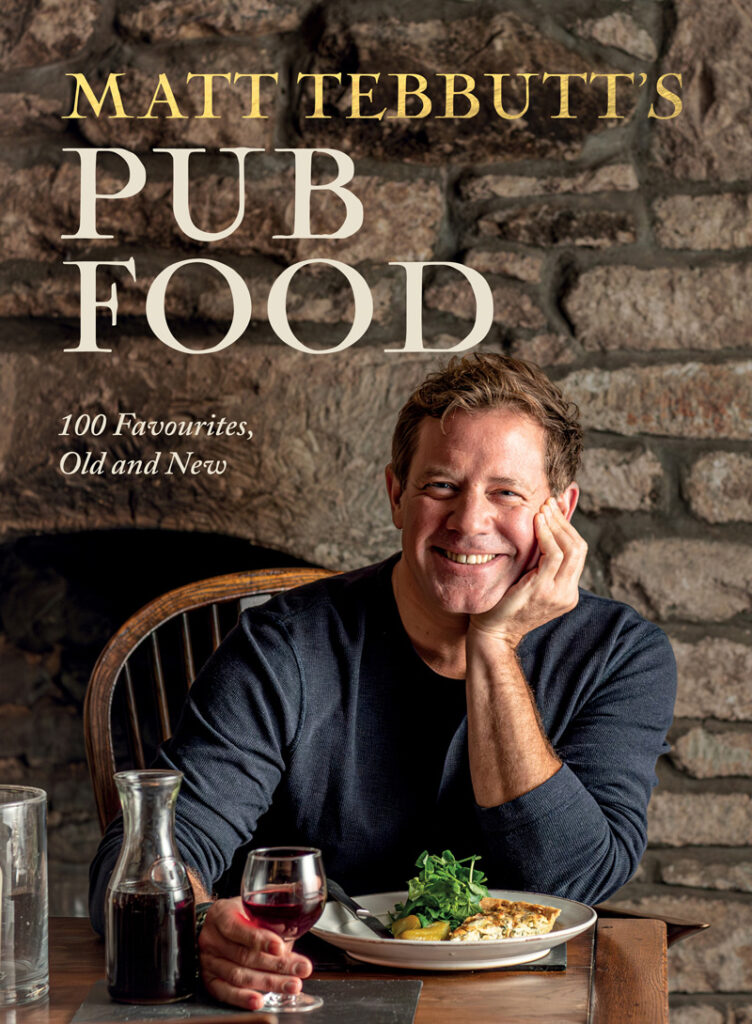
Tebbutt has just released his latest cookbook, Pub Food, a collection of elevated pub dishes – think mussels cooked in beer with crispy monkfish cheeks, and rump of Welsh lamb with spiced aubergine, mint and yoghurt – as well as a celebration of British pubs in general.

They are “one of the last melting pots there are in life”, says the chef, who also presents Food Unwrapped on Channel 4. “I will disappear on a Friday and go and do Saturday Kitchen. And then I’ll meet some quite famous faces sometimes, get back to the pub [near his home in Monmouthshire], and nobody gives a monkey’s! They really don’t care, and it’s great.

“You can be in the same place with very wealthy people and farmers, and the guy who empties the bins, all on the same level, and you’re all having a chat- there’s very few places you can do that anymore.

“Then if you throw good beer and conversation in the mix, and good food, I think they’re really special places.”

But local pubs are “having a really s*** time at the moment”, Tebbutt says. “They are struggling, the prices are going through the roof, energy costs, food costs, staffing. It’s all hindering the growth – they’re shutting by stupid numbers per week. I think it’s a real shame and it’s something worth trying to save.

“People need to remember that they’re not going to always be there. And if you’ve got a good one then go and support it.”

Tebbutt and his wife Lisa ran the Foxhunter Inn, Monmouthshire, for 14 years, where they championed sustainable, local fare – something that’s still his M.O. “In the mid Nineties [when working in London] seasonal and local weren’t really such a big thing. Then I moved out, set up my own place, and it seemed obvious because A, it’s going to be cheaper, and B, it’s going to be at its best.”

People are “much more in tune” with sustainable eating now, he notes.

Many of the recipes in the new book are influenced by the local produce of Monmouthshire and what he used to be on the pub menu. “Obviously, [there’s] a lot of lamb, a lot of mushrooms through foraging, crayfish dishes – because we get crayfish in the rivers – wild samphire, eel, black pudding,” Tebbutt says.

Eventually, he burned out running his own pub. “It was a very different sort of relentless business. We didn’t take a break – we did it for 14 years. I was juggling TV and the restaurant for quite some time, and then reached a point where I didn’t think it was sustainable, because I was knackered.

“Little country pubs, as lovely as they are, and everyone wants them on their doorstep, they’ve got to be supported because they’re bloody hard work to keep going.”

Tebbutt originally learned his trade in Michelin star kitchens in London, training under Marco Pierre White and Sally Clarke. And despite having to get up at 5am to film Saturday Kitchen, the hours are “a walk in the park” compared to life in a professional kitchen.

“When I first got into TV and you do 10-hour days or something, and you’d have people saying, ‘Are you OK?’, ‘Do you need to sit down?’, ‘Do you need a drink?’ – no, I’m fine! When you’re used to working 18-hour days in sometimes horrible conditions, everything [else] is a breeze.”

Tebbutt was first attracted to life in the kitchen after reading White Heat by Marco Pierre White when he was 16. “It just made chefs look really cool and sexy and really, really rock and roll. It was the first cookbook that had this dirty-looking, kind of rugged chef producing the most beautiful place of food.

“That juxtaposition between the sweat and the blood and tears at the back of house and the control at the front – I just kind of fell in love with it.

“Kitchens, they’re a bit like joining the army. You go in at the bottom, you keep your head down, you find your way and you slowly build yourself up. It’s brutal but you learn a lot.”

But some head chefs do take it too far. He remembers going to eat in one restaurant when he was working in London by a very famous chef at the time; “They had an open door and we saw this chef absolutely, continually tearing his kitchen staff apart. To the point where it was all heads down, they looked broken.

“And then you get the food, it looks beautiful, but you don’t want to eat it because of the misery that’s gone into it.

So now, “I don’t like the chef, I won’t eat their food.”

Matt Tebbutt’s Pub Food by Matt Tebbutt is published in hardback by Quadrille on August 29, priced £26. Photography by Chris Terry.

Saturday Kitchen’s Matt Tebbutt editorial at McCarthy Holden

And Now Some Recipes From Matt

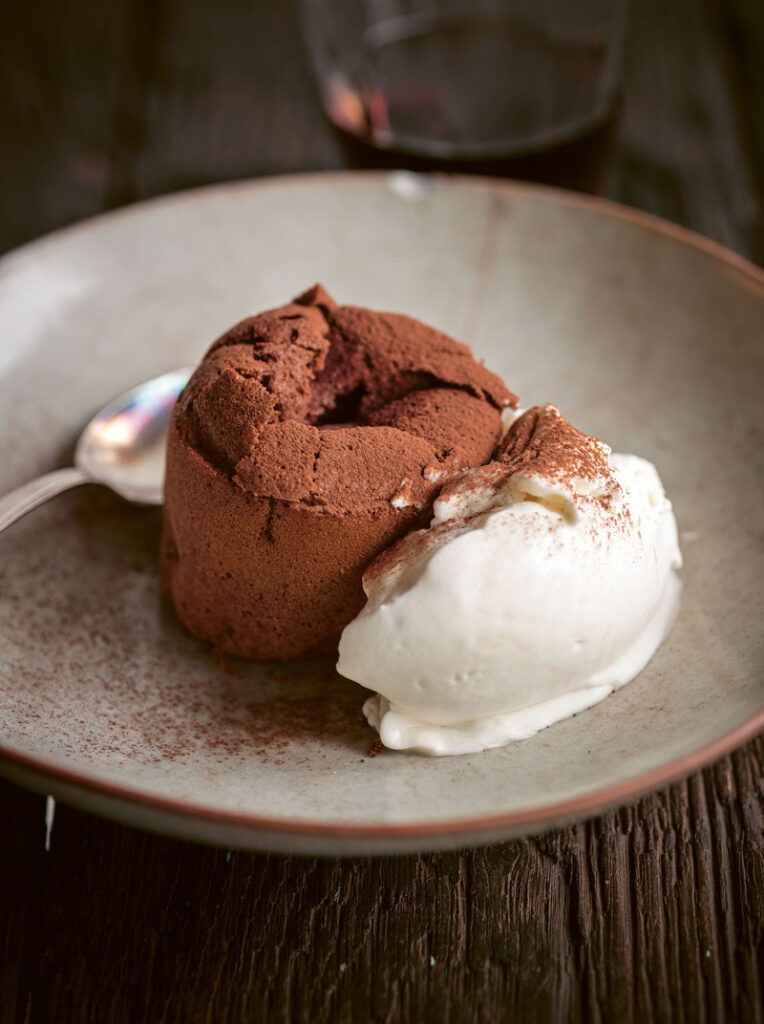
Matt Tebbutt’s chocolate pudding and mascarpone ice cream recipe

By Lauren Taylor

“This is quite a light, delicate chocolate cake, with a deliciously molten interior. The star anise is optional if you’re not a fan,” says TV chef Matt Tebbutt.

Chocolate pudding and mascarpone ice cream

Ingredients

(Makes 10-12 little puddings)

For the mascarpone:

350ml water

150g caster sugar

Finely grated zest and juice (about 75ml) of 2 unwaxed lemons

400g mascarpone cheese

For the chocolate puddings:

250g dark chocolate, broken into pieces

250g unsalted butter

125g caster sugar

1 tsp freshly ground star anise, sieved (remove the seeds from the pod, and crush in a pestle and mortar), optional

5 medium free-range eggs

5 medium free-range egg yolks

50g plain flour

a pinch of salt

Good-quality cocoa powder, to serve (optional)

Method

1. Start both the ice cream and cake the day before. For the ice cream, simply boil the water, sugar and lemon zest in a saucepan. Once the sugar has dissolved, remove from the heat and stir in the mascarpone with the lemon juice. Cool and chill in an ice-cream maker (be careful not to over-churn). Freeze in a suitable container.

2. For the chocolate pudding, melt the chocolate and butter in a bowl over a saucepan of hot water. In a bowl, whisk the sugar, powdered anise, whole eggs and egg yolks until light and pale. Slowly add the melted chocolate to the egg and sugar mixture. Carefully fold in the flour and salt. Pour the mixture into little 200ml non-stick moulds, filling them halfway. Chill in the fridge overnight.

3. Next day, preheat the oven to 180°C/350°F/Gas 4.

4. Remove the pudding batter from the fridge, bring to room temperature and bake in the preheated oven for 10 minutes, no longer. The outside of the cake mix should be set firm yet the middle will remain molten.

5. Serve the cake hot with the mascarpone ice cream and a dusting of cocoa powder, if liked.

Saturday Kitchen’s Matt Tebbutt editorial at McCarthy Holden

Matt Tebbutt’s smoked haddock souffle tart

By Lauren Taylor

“Lighter than a traditional quiche, but just as satisfying. Always source naturally smoked haddock,” says TV chef Matt Tebbutt.

Smoked haddock souffle tart

Ingredients

(Serves 4)

2 smoked haddock fillets

1.5 litres whole milk

1 bunch fresh dill, chopped

60g unsalted butter, melted

50g strong Cheddar, grated

1 tbsp crème fraîche or double cream

3 free-range eggs, separated

1 ready-made 22cm round shortcrust pastry case

Salt and pepper

To serve:

Mixed green salad dressed with olive oil and lemon juice

Lemon wedges

Method

1. Preheat the oven to 200°C/400°F/Gas 6.

2. Place the haddock and milk in a large saucepan and poach for 8–10 minutes or until cooked through.

3. Remove the fish, leave to cool and break the haddock into flakes. Place the haddock in a bowl and stir in the dill, melted butter, cheese and crème fraîche and season with salt and pepper. Add the egg yolks and mix to combine.

4. In a separate bowl, whisk the whites until stiff peaks form. Fold the egg whites gently through the haddock mixture.

5. Spoon the haddock mixture into the tart shell and bake for 35 minutes or until the filling has risen and the pastry is golden.

6. Serve the tart in slices with a green salad, and a lemon wedge for squeezing over.

Saturday Kitchen’s Matt Tebbutt editorial at McCarthy Holden

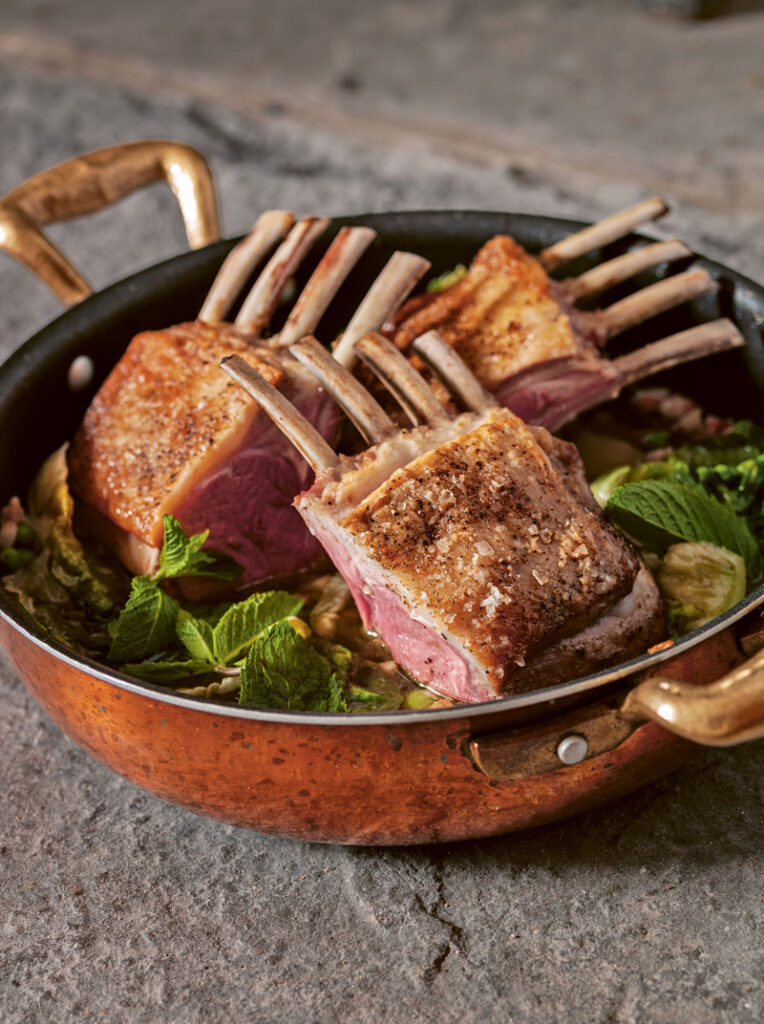
Matt Tebbutt’s rack of lamb recipe

By Lauren Taylor, PA

“I don’t really need to comment much on this one – it’s heavenly, early summer on a plate!” says TV chef Matt Tebbutt.

Rack of lamb with baby gem lettuce, peas, mint and bacon.

Ingredients

(Serves 4)

Olive oil

2 x 8-bone racks of lamb

Salt and pepper

4 sprigs fresh thyme, leaves picked

75g unsalted butter

4 medium baby gem lettuces, halved

200g pancetta or bacon, diced

4 garlic cloves, peeled and thinly sliced

100g fresh shelled peas, blanched and refreshed

800ml lamb stock

4 sprigs fresh mint, leaves picked and torn, plus extra to garnish

Method

1. Preheat the oven to 200°C/400°F/Gas 6.

2. Heat 1 tablespoon of olive oil in a large frying pan. Season the lamb fat with salt and pepper, then fry fat side down for a few minutes over a high heat until browned.

3. Turn over, put into a roasting tin and sprinkle with some of the fresh thyme. Roast in the preheated oven for 15–20 minutes or to your liking. Leave to rest for 10 minutes before serving.

4. In another frying pan, add 15g of the butter and colour off the baby gem lettuces, cut side down, in the foaming butter. Throw in the diced pancetta, the garlic and remaining thyme, and sauté for a few minutes until coloured. Add the peas and pour in the lamb stock. Bring to the boil and simmer for 2–3 minutes to warm everything through.

5. Cut the lamb into chops and place on a large serving dish. Throw the mint into the simmering stock along with the remaining butter. Stir in to enrich the sauce and give it a good sheen. Season carefully, as the pancetta may already have seasoned the stock sufficiently. Spoon around the lamb racks and serve garnished with the extra mint.

Saturday Kitchen’s Matt Tebbutt editorial at McCarthy Holden

Caroline Quentin: Being an actor and a gardener is not a happy combination

Caroline Quentin Gardening McCarthy Holden

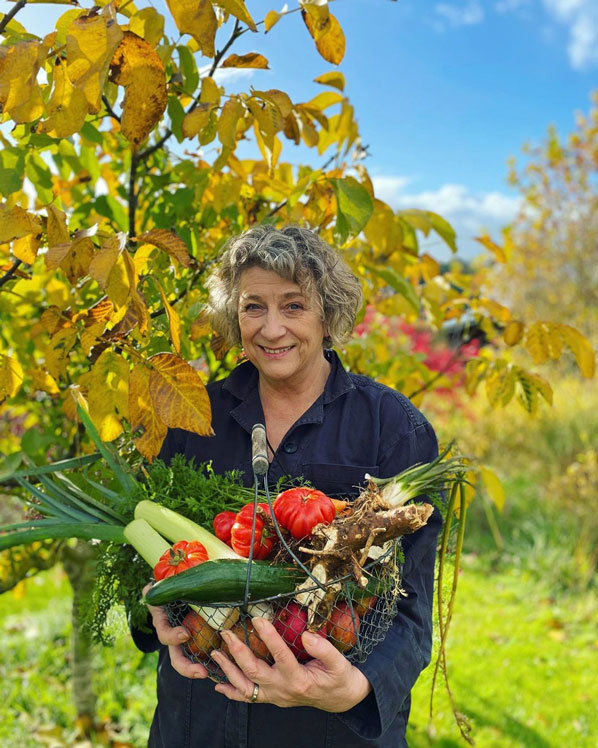
The Men Behaving Badly and Life Begins star, who recently appeared in Sky sci-fi series The Lazarus Project, also offers a wealth of advice and tips to her 150k followers on Instagram (@cqgardens).

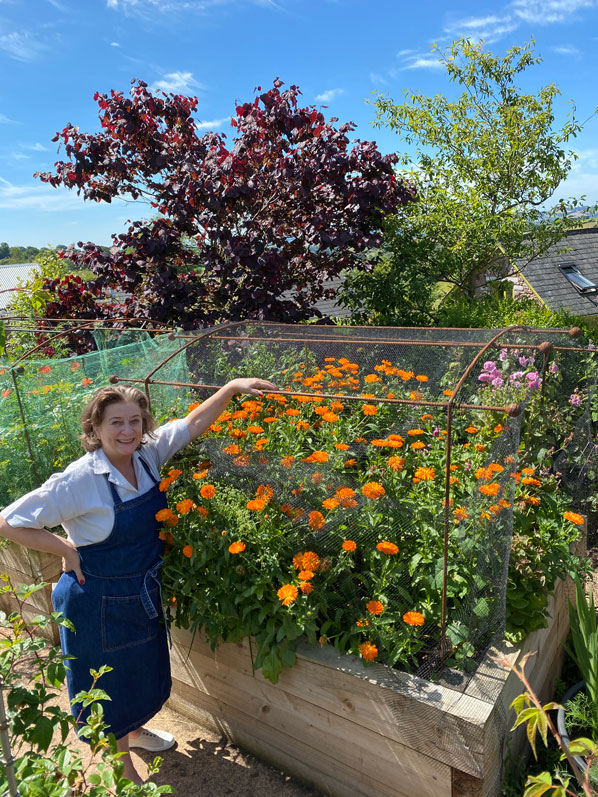
Her husband, Sam, does much of the filming when she invites followers into her home near Tiverton in Devon, where she makes all sorts of dishes from ingredients she has grown, and shows us what she’s up to in her two-acre garden – which features an orchard, pond, greenhouse, raised vegetable beds and a flower garden, where the magic takes place..

Caroline Quentin Gardening McCarthy Holden

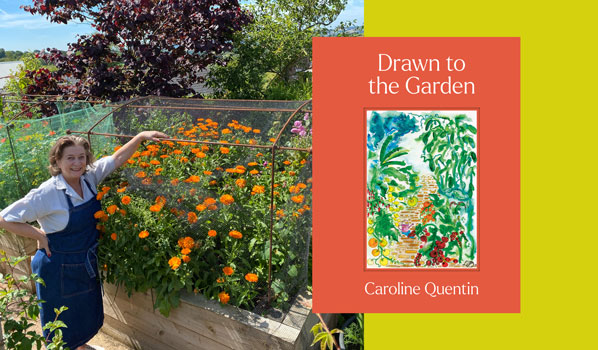
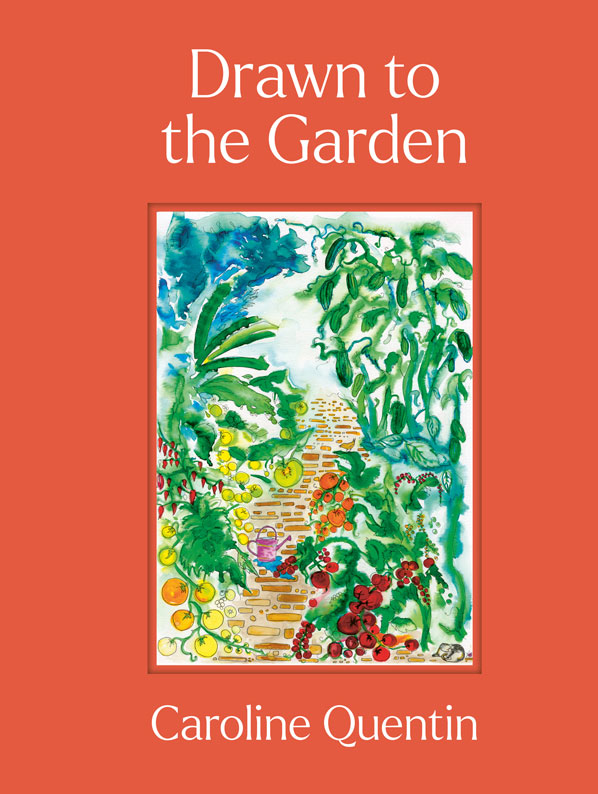
Now, Quentin has written – and illustrated – a new book, Drawn To The Garden. It’s part memoir, part guide, with chapters on seeds, salads, fruit and veg, water, herbs, pets and pests, memories and anecdotes meandering through each section.

Her garden, she says, is “not immaculate”. Weeds haven’t taken over, but she allows some buttercups and daisies to encourage bees.

“By my nature, I’m quite a chaotic person, so I don’t need things to be immaculate, but my vegetables are in a rotational system. I’ll mow a path through the grass rather than cut all the grass. I garden organically.”

The book also features a chapter on wellbeing, an important element to Quentin, whose mother suffered from bipolar disorder and spent periods in a psychiatric hospital, she recalls in the book.

When she was allowed to visit, she’d spend time in the hospital gardens, surrounded by marguerites, which she still loves.

“I genuinely believe that growing things, watching the birds, smelling the roses, eating the green stuff and drawing and painting, all help keep me this side of sanity and one step away from the big dark house on the hill,” she writes.

Here, she tells us more…

Caroline Quentin Gardening McCarthy Holden

How much has gardening benefited your mental health?

“I consider it responsible for my wellbeing. I am by nature someone who goes up and down. I have mood swings, I get low. And if I do feel low, the first thing I turn to is my garden, or if I can’t be near my garden, the nearest open space or natural environment.”

Did you always have access to a garden?

“As a little girl, we had a long strip of suburban terraced house lawn. It was not really a gardening space. Nobody in my house was particularly interested in gardening.

“I wouldn’t say I was a gardener when I was young but at primary school, I’d put a seed on a bit of blotting paper or a bulb in a jam jar with water underneath and it was fascinating. The whole optimism about growing things is always a good thing.”

What was your garden in Devon like when you first moved there?

“It was a derelict property, with just a field and a trickle of stream at the bottom. There was no garden. That was about 17 years ago.

“I put the pond in first because I knew when you put water into a garden, nature comes, and that was what I was most interested in. It was one of the most exciting things I’ve ever done with a garden. I swim in it too.”

How do you juggle your acting career with looking after the garden?

“You tend to film in the summer months, and gardening obviously happens a lot in the summer months as well. So I tend to be in the greenhouse in January, February and March, getting everything ready, sowing my seeds, getting the garden ready, and then suddenly the phone will ring and I’ll need to be away from the garden when everything needs to go in and be planted out. Being an actor and a gardener is not really a happy combination. The time balance is somehow wrong.

“I’m filming two dramas this year. I do get homesick. I’m really bad at being away from home, which is weird given that I do it for 90% of my life. But it’s a small price to pay for what has been a very enjoyable career.”

Do you have help?

“Sam will water for me, but he’s not a gardener. Anthony (her gardener) has helped me over the years. He comes in for a morning a week.”

Caroline Quentin Gardening McCarthy Holden

How do you maintain your wellbeing in the garden?

“I hug trees, I talk to trees, I spend as much time as I can in woodland. They call it forest bathing. It’s a deeply rooted human thing to want to be in the shade or dappled light of a tree on a summer’s day.

“I don’t formally meditate, but I do have a process where I try to breathe well when I’m outside if I’m feeling stressed or trying to learn some lines and they’re not going in, or there’s too much to do. I do a little bit of yoga every day. In the summer, I can do that outside and get my breathing organised to just slow my heart rate down and breathe in some good air.”

What’s next?

“I’m planning to downsize and start a new garden (in Devon). My children (Will and Rose) have left home and we have a big house and big plot of land. I’m getting older and maybe it’s time for me to start thinking about a garden for someone in their 60s. I want to make my next garden as well, I don’t want to inherit one. At the moment I’m fixated on having bees. So I’m thinking of an orchard with bees in it, and possibly some wildflowers.”

What will you take from your old garden to your new garden?

“Probably water. What’s brought me the most joy is watching swallows over the pond on a summer’s evening. I would definitely grow apples again and I would have maybe three or four raised beds, and a greenhouse or potting shed.”

Drawn To The Garden by Caroline Quentin is published by Frances Lincoln on February 15, priced £20.

Caroline Quentin Gardening McCarthy Holden

Ella Mills’ creamy black bean and harissa stew

Ella Mills Deliciously Ella McCarthy Holden news item

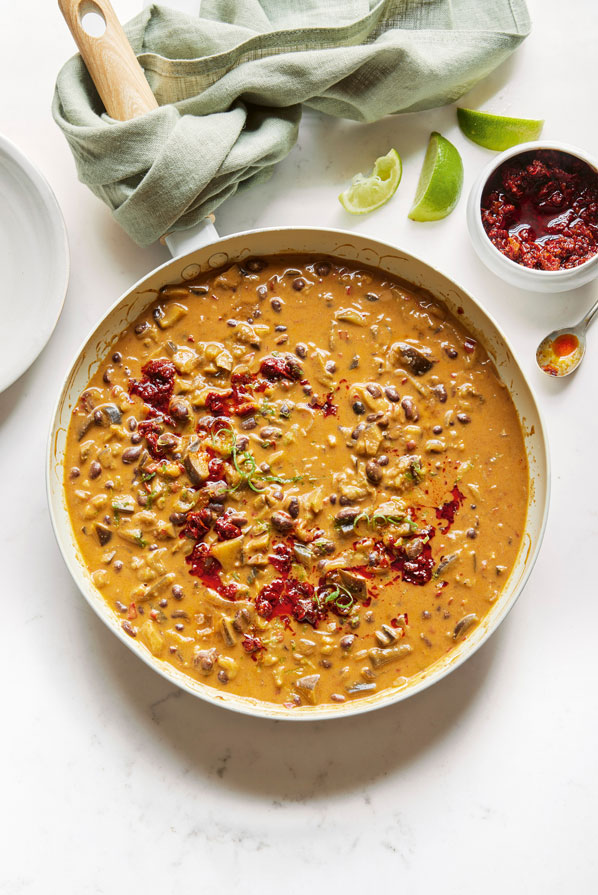
“The best thing about batch cooking is that the flavours of the dish tend to get better the longer they marinate, so the leftovers are always a real treat, and this is certainly the case in this recipe,” says Ella Mills, the brains behind Deliciously Ella.

“It’s hearty and cosy, with lovely spices from the harissa, sweetness from the coconut and maple syrup, and a delicious nutty flavour from the almonds. The aubergine gives it great texture, while the beans ensure it really fills you up. It’s great on its own for a light supper, or for something a bit more substantial serve it with jasmine rice, jacket potatoes or crispy roast cauliflower.”

Creamy black bean, harissa and almond butter stew

Ingredients:

(Serves 4)

1tbsp olive oil

2 shallots, halved and finely sliced

1 aubergine, finely diced into 1cm cubes

4 garlic cloves, crushed

1 × 400g tin of black beans, drained and rinsed

3tbsp harissa, plus extra to serve

1 × 400ml tin of coconut milk

400ml hot vegetable stock

2 heaped tbsp smooth almond butter

2tsp maple syrup

Grated zest and juice of 2 juicy limes

Sea salt and black pepper

Method:

1. Put the olive oil into a large frying pan over a medium heat, add the shallot and aubergine and a pinch of salt and fry for five minutes, until soft. Add the garlic, black beans and harissa and fry for two minutes, until fragrant.

2. Pour in the coconut milk, stock, almond butter and maple syrup. Bring to a boil, then put the lid on the pan and turn the heat down to a simmer. Cook for 15 minutes, until the sauce has thickened.

3. Stir in the lime zest and juice and season with salt and pepper to taste. Swirl an extra tablespoon of harissa through the stew to serve (if you’d like a little extra spice).

Note: To make crispy roast cauliflower, simply chop your cauliflower into small florets, place them on a baking tray with a tablespoon or so of olive oil and a sprinkling of salt and roast in an oven preheated to 200ºC fan for about 20–25 minutes, until golden and crispy.

My girls love this recipe too, so when I’m cooking it for the family I hold off on the harissa and stir it into the adult portions once I’ve served the little ones.

Ella Mills Deliciously Ella McCarthy Holden news item
Ella Mills’ creamy black bean and harissa stew

Deliciously Ella: Healthy Made Simple by Ella Mills is published by Yellow Kite, priced £22. Photography by Clare Winfield. Available now.

Ella Mills Deliciously Ella McCarthy Holden news item
×
Find a Property
M
Country & Equestrian
By submitting this form, you agree to McCarthy Holden using your personal data in accordance with our Privacy Notice.