7 Things you Need to Know When Considering a Loft Conversion

Loft conversions can add more space and value but there's a lot to think about first. Sam Wylie-Harris seeks some expert advice.

It’s safe to say our homes have seen a lot of action over the past few months. So much so that some of us may be thinking about going up in the world – with a loft conversion, to create extra living space without having to move.

Savvy as it may sound, large construction jobs come at a price and there’s lots to consider. To help, we turned to trades site myjobquote.co.uk for insight into some of the key things to think about if you’re considering a loft conversion…

1. Hiring an architect

When planning a loft conversion, it’s best to hire an architect to design and draw up the plans. This means the loft conversion will certainly be safe, and there’s a clear plan for contractors to follow to save any confusion, time and money. Architect fees need to be considered and added to any budget for a loft conversion.

2. Planning permission and building regulations

Most loft conversions don’t need planning permission, however it’s always recommended you double-check. An architect or builder will have more of an idea whether you need to apply for planning permission, but it’s also good to research yourself. For a terraced house, you won’t need planning permission for adding 40m3 of space, and for semi-detached and detached houses, it’s 50m3 of space. You can find out more at the planning portal (planningportal.co.uk).

Even if your loft conversion doesn’t need planning permission, it will still need to adhere to building regulations and guidelines. Both contractors and architects should ensure all work being carried out follows building regulations. Not following regulations can lead to fines and even knocking down conversions that aren’t up to scratch.
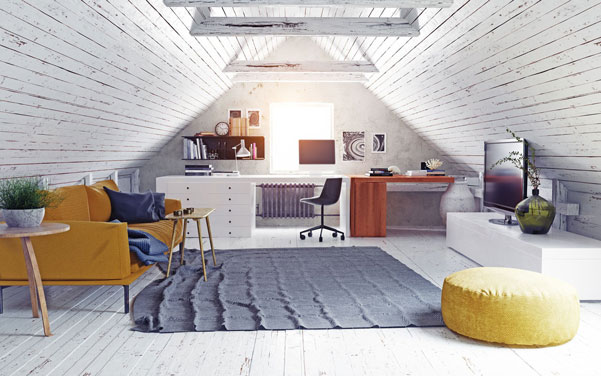
3. Type of loft conversion

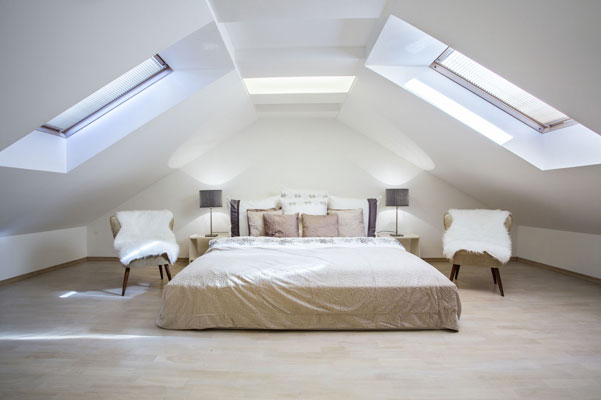
There are a number of different kinds of loft conversion, and it’s always good to have an idea of what type you can have in your property and what outcome you want. This will also give you an idea of what budget you’ll need too.

For example, if you’re looking for a cheaper loft conversion, a roof light loft conversion is the most affordable option, whereas a mansard loft conversion is the most expensive type. The type of loft conversion you have can also be dictated by what type and size of space you have available.

Roof light loft conversion: This is the most affordable option, as no construction is carried out on the roof, but windows are added to let in light. They don’t provide as much space as other conversions because the roof is left where it is, so if you want more space, other loft conversions may be ideal.

Dormer loft conversion: A dormer conversion increases the amount of head space in your loft, so you’ll have more space to play around with than a roof light conversion. Extra space is added by extending from the roof, and a dormer window is then added.

Hip-to-gable loft conversion: A hip-to-gable loft conversion changes the shape of a property’s roof entirely. This will give a lot of extra room to a home, but usually can only be built on semi-detached and detached houses as a sloping roof is changed to a vertical roof.

Mansard loft conversion: This type of loft conversion will give a property the most space, as the roof is completely altered (most of the time to become a flat roof) and new walls are added too.

4. Budget

Having a clear budget to stick to helps you decide what loft conversion you can afford, and what finishes and furnishing you can afford too. There are a lot of options out there to choose from, from door handles to windows, and having a budget can help you make decisions and ensure you’re not left out of pocket.

The size of your loft conversion can have a massive impact on your budget. Smaller loft conversions can cost around £15,000, whereas a larger loft conversion can cost up to £40,000 – so you definitely need to consider what size loft conversion you need and what you can afford.
5. Staircase

Think about where you can put a staircase and how much space is available for it. This is an important part of the build as you need the loft conversion to link with the rest of the house, so the property’s layout flows naturally and the conversion doesn’t create a disjointed space. There’s a range of staircases available, even for the smallest spaces, but having a plan is a must.

6. Head space needed

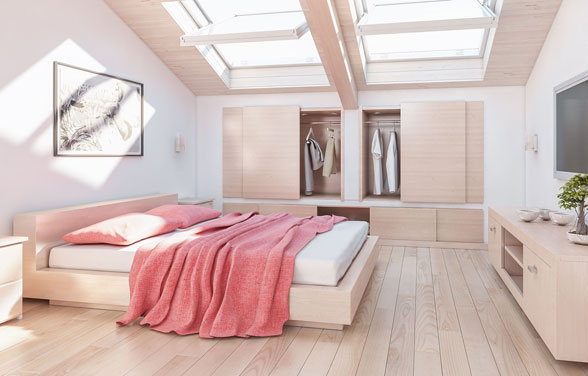
The space between the ceiling and floor in your loft will give you an idea on whether your loft can be converted comfortably. The minimum height for a loft conversion is about 2.2 metres, so if your loft is smaller than this, you may not be able to convert it, or you may need extra construction work to create enough head space.
7. Increased house value

Building a loft conversion could increase your home’s value by up to 22%, according to a survey conducted by Nationwide Building Society, so it’s often well worth the time, effort and money. It’s generally the best value-for-money option to add value to your home, rather than extensions and garage conversions. However, if your main aim is to increase your property’s value, make sure you do your research first on houses in your area, as there always a ceiling price on properties and you don’t want to overspend.

There are more advantages to building a loft conversion than disadvantages, as long as you do your research, keep within your budget and work with trusted contractors; there will be no unwanted surprises. It’s always recommended that you thoroughly research any significant decisions before beginning any building work.

Stamp Duty Changes To Boost House Market

Prior to today’s announcement the market was doing rather well post lockdown, so the new stamp duty announcements will boost house sales further.

Nearly nine in 10 people getting on or moving up the property ladder where stamp duty applies will not need to pay the tax at all while a temporary holiday applies.

From July 15 until March 31 2021, buyers will pay no stamp duty on the first £500,000 of their purchase when they move home.

The measure, which temporarily increases the “nil rate” band of stamp duty from £125,000 to £500,000, will reduce the average stamp duty bill for a main home from £4,500 to zero. Buyers can potentially save up to £15,000.

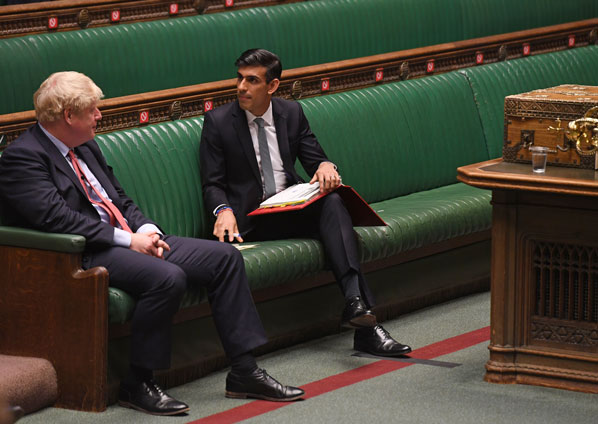
Announcing the move, Chancellor Rishi Sunak said: “Nearly nine out of 10 people buying a main home this year will pay no stamp duty at all.”

Stamp duty applies in England and Northern Ireland and people usually pay the tax on homes priced above £125,000. Some stamp duty discounts were already in place for first-time buyers.

There are already signs that the stamp duty holiday is helping to reboot the property market.

In the first half hour after the announcement was made on Wednesday, traffic to property website Rightmove jumped by 22%.

See this range of recommended properties for purchasers looking up to around £500,000

Start your property search here.

stamp duty changes estate agents Hampshire

Renting your Home to Holidaymakers – Here’s what you Need to Know

rent your holidayhome

Lots of people now rent out their own properties to make extra cash while they're away. Lisa Salmon finds out more

Many of us would love to make a bit of extra cash – but could you be sitting on an easy money-making opportunity right now? We’re talking about your own home.

Renting out your home, or just a room, can earn you anything from about £15 a night to more than £4,000 a month, depending on its size, location and facilities, and whether you’re just renting out a room or the whole property – and you don’t have to be a second-home-owner to do it. A number of people now rent out their homes while they’re away on holiday themselves, or rent out a room to travellers while they’re still there.

rent your holidayhome

Your home doesn’t need to be in a typical tourist destination to be worth renting either: holiday rental companies like HomeAway.co.uk and Airbnb.co.uk point out that people may need somewhere to stay because of a family event nearby for example, or if they have business in a particular area and don’t want/can’t find a room in a hotel.

“Owning a property, whether a secondary home or the home you live in, is an opportunity to tap into an additional income channel,” says Karen Mullins, HomeAway regional director UK & Ireland. “Property owners are in an ideal position to make financial gains through short-term rentals. If you ensure you’re compliant with local laws and regulations, it’s a great opportunity to earn additional income to assist in paying off the mortgage, making home improvements, funding the children’s education or even funding your own holidays.”

Here, Mullins and Jeroen Merchiers, Airbnb’s Europe, Middle East and Africa regional director, answer some of the questions homeowners may have about offering some or all of their property as a holiday rental…

rent your holidayhome

1. Does location matter – what if you don’t live in a tourist destination?

Mullins says: “If you’re the legal owner of the property, you’re able to rent it out to holidaymakers – even if it’s outside of popular tourist destinations. Holiday rentals provide holidaymakers with the opportunity to experience destinations and neighbourhoods they want to visit no matter what the occasion, for instance a family visit or a family event.

“If you’re near local amenities, either walking distance or a short drive, make it clear on your property page. Whether that’s local shops, restaurants, pubs or attractions, this will be very attractive to families who want to stay within the area. There are also families who are looking to escape the hustle and bustle of reality and enjoy the peace and quiet of a secluded area.”

Merchiers adds: “Guests booking on Airbnb are discovering more than the traditional tourist areas, thanks to locals opening up their homes and unique spaces, allowing people to travel in previously undiscovered areas.”

rent your holidayhome

2. What facilities do you need to offer?

Hosts should check everyday appliances in the property – like the fridge, oven, microwave and kettle – are in good working order, clean and ready for use. Ensure there’s hot and cold running water, and provide basics like tea, coffee, sugar and store cupboard supplies, advises Mullins. She also suggests hosts should also consider leaving washing-up liquid, dishwasher tablets and toilet roll.

It’s also worth providing a welcome pack, including information like where to find extra towels, bedding and kitchen utensils, etc. “A welcome pack gives your home a personal touch,” says Mullins.

Impress guests further by including home comforts like TV subscriptions, and it won’t hurt to offer little extras like toys for kids, treats for pets, or a welcome gift for grown-ups like a bottle of wine. “You’ll make your guests’ stay extra-special and inspire them to leave a positive review,” Mullins points out.

“And make sure you have Wi-Fi – children, teenagers and parents will want to know they’re connected. And for parents, that could mean total sanity, relaxation and peace.”

In addition, Merchiers suggests hosts provide safety essentials such as a fire extinguisher, smoke alarm, first aid kit and a carbon-monoxide detector, as well as fundamental amenities. “These are the items guests tell us they consider important for a comfortable and safe stay,” he says.

rent your holidayhome

3. How much money can you make?

Airbnb and HomeAway hosts set their own prices. Airbnb charge 3% commission, plus guests pay a service fee of up to 13% on top of their booking total. HomeAway charge 5% if hosts choose their pay-per-booking option, plus a 3% payment processing fee.

To help decide what price to set, hosts can search for comparable listings in their area, or use tools such as HomeAway’s online calculator (homeaway.co.uk/lyp), or Airbnb’s online calculator (airbnb.co.uk/host/homes) to help determine the going rate.

HomeAway data shows average nightly rates for full holiday home rental in the UK, for example, range from around £84-£500, and nightly rates for a private room rented through Airbnb range from around £15-£30.

rent your holidayhome

4. What time period can you rent a room/house out for?

“Hosts manage their own calendar so they can host at times convenient to them,” explains Merchiers. “Some hosts list their space when they go on holiday, some when their children fly the nest, some ahead of major events in their area, and some for a little extra income.”

rent your holidayhome

5. How do you protect valuable possessions in your home?

There are several options for how to store your valuables if you’re renting your home while you’re away, says Mullins, such as a lockable pantry, bedroom or cupboard.

“If you don’t want to do that, store them with family members close by or trustworthy neighbours,” she suggests. “Renting your house or flat while you’re away also helps to make the property less of a target for burglars, because your home isn’t empty for days or even weeks.”

6. What safeguards are there?

Before you rent your property to holidaymakers, make sure it’s not in breach of your lease or mortgage agreement. Airbnb and HomeAway provide hosts with up to $1 million USD (approx £768,000) of property damage protection and third party insurance to cover stays reserved through them.

7 Ways to Add Value to your Home

add value to home

From ambitious building projects to timely tidying up, Luke Rix-Standing looks at how to boost the value of your property.

add value to home

Keen to add value to your home? Whether you’ve just moved into a decrepit bedsit, or have lived in a mansion for years of domestic bliss, there is still plenty of mileage to adding value to your property.

Doing so could help improve your own quality of life while you’re still in the property (if buyers find something appealing, odds are you might too), and keep you well placed on the property ladder, regardless of whether you’re currently looking to sell.

From five-year plans to on-the-day dust-ups, here’s seven ways to add value to your home…

add value to home

1. Loft conversion

Perhaps the gold standard of home improvements, loft conversions are not for the faint of heart, but can come with major domestic and financial rewards if done well. Adding square footage is a guaranteed value-boost, while the market fixation with number of bedrooms means that adding one can practically ensure a hefty payday when it comes to selling.

“The average loft conversion costs around £40,000,” says Chris Smith, regional director at estate agents Yopa, “but can increase your property value by an estimated 21%. They’re usually more of a long-term strategy, so you might not see all the money back if you sell immediately.”

Loft conversions are not cheap – and not suitable for every property of course – but they often perfectly prove that old adage, that you have to spend money to make money.

add value to home

2. Brush up on kerb appeal

First impressions matter, and putting your best foot forward is key to getting customers through the door. “We estimate that simply by improving your property’s ‘kerb appeal’, with a freshly painted exterior, clean windows, a tidy driveway and a new front door, can boost the value of a property by up to 10%,” says Smith. “The outside of your property is the first thing potential buyers will see, both when browsing online and in person at a viewing.”

On modern properties, buyers may probably expect double glazing – a savvy way to save on your energy bill in the meantime – along with up-to-date security and draught-proofing.

add value to home

3. Go for open-plan living

Open-plan living has been in vogue for some years now, and it’s clearly not going anywhere anytime soon. Most modern house-hunters are looking for spaces that are practical and adaptable, and it seems distinctly old-fashioned to cook your food in one room and then have to transport it to another to eat it.

Open-plan living spaces don’t have to be giant, or rectangular – you’re looking to create areas that are connected but distinct. Consider sliding doors or curtains that can pull back during the day, waist or shoulder-high partitions, or doorway-like arches that demarcate your space.

These are the golden rules of open-plan living: separation without isolation; continuity without uniformity.

add value to home

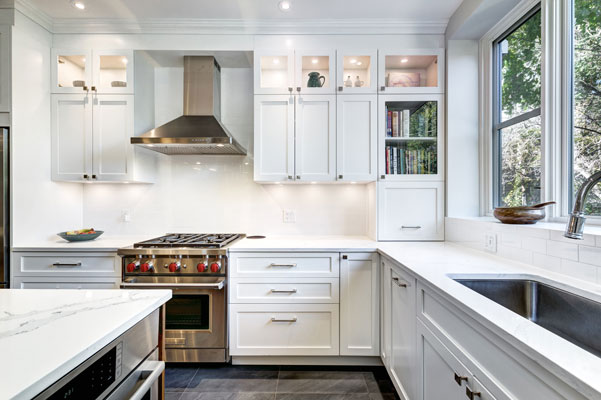
4. Refurbish the kitchen

A recent report by Norton Finance mapped out the most expensive home improvements performed by homeowners in their first year in a new property, and kitchen renovation ranked second only to furniture.

The centrepiece to so many homes, it’s no surprise that the kitchen commands so much attention both before and after a sale, and a well-designed room can easily pull in extra thousands.

“If your budget can only stretch to renovating one room, that room should be the kitchen,” says Smith. “You can cut costs by painting cupboard doors yourself and adding new, fashionable handles.”

add value to home

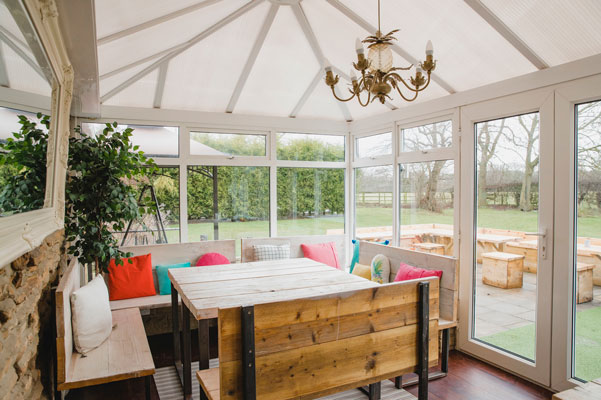
5. Add a conservatory

The stars have to align somewhat for conservatories to be sensible investments, but if the cap fits, they can enhance a property with ease. Aside from the necessary financial clout, homeowners will need to ensure proper planning permission, while those with smaller gardens might want to think twice before sacrificing valuable yard space.

Though often associated with summer, conservatories really earn their keep during the winter months, when they provide a portal to the outside world, free from the cold, damp and dark.

“The addition of a traditional British conservatory typically costs around £5,000,” says Smith, “and can increase the value of a property by around 10% when done well. To add real value, make sure your conservatory is fully glazed and blends in with the style of the rest of the property.”

add value to home

6. Redecorate

Consider any second-hand shop – regardless of what it sells – and consider the price difference between products marked ‘used’, and products marked ‘like new’. This one’s a no-brainer, and just a fresh lick of paint can make pokey rooms immediately more marketable.

Your house isn’t new – but it’s new to your potential buyers, and you’ll be doing your bank balance a favour if you can make it look that way from the moment they cross the threshold.

add value to home

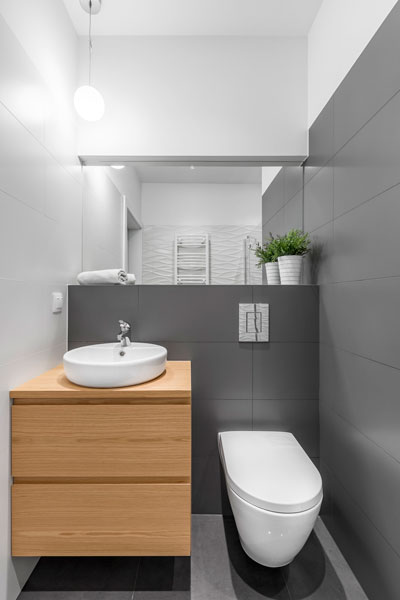
7. Add an extra bathroom

As with bedrooms, the number of bathrooms appears like a ranking next to your property, and it’s a crucial integer in the valuation equation. Broom closet, pantry, cupboard under the stairs – a small downstairs loo doesn’t take much, and it can be a delightfully canny way to carve profit out of otherwise wasted space.

“You can add up to 5% value to your property by adding a second bathroom,” says Smith. “An average bathroom costs £4,500, and according to NAEA Propertymark, 70% of estate agents say an additional loo helps to sell a house.”

Virginia Water New Homes Sales Uptake

VIRGINIA-WATER-FOR-SALE-PROPERTY-HANNOVER-header-image

Hannover House is an exclusive development of exquisite one and two bedroom apartments, in the heart of Virginia Water which is a most sought after area in Surrey.

Created by Sunningdale House Developments, this impressive development benefits from secure gated under-croft parking, lifts to each core and full height windows which maximise the light inside the luxurious apartments.

Hannover House is conveniently located a short walk away from Virginia Water train station providing quick and easy access into London.

Near TASIS and trains to Waterloo

Hannover House is conveniently located a short walk away from Virginia Water train station providing quick and easy access into London, and TASIS (The American International School in England) is nearby.

Show home now reserved

The show apartment has just been reserved, so if you want to see how you could furnish and add interior design flair to your chosen apartment, then view the show apartment in January 2020.

VIRGINIA-WATER-FOR-SALE-PROPERTY-HANNOVER 1

Selected apartments feature terraces or juliet balconies and each home has been designed with meticulous attention to detail.

The show apartment is featured in this brochure, and potential buyers are welcome to arrange a viewing with the selling agents. Floor plans and a guide to sizes of individual apartments are shown on pages 13 to 28 of the pdf brochure.

VIRGINIA-WATER-FOR-SALE-PROPERTY-HANNOVER-2

Virginia Water has excellent shops for day to day needs, restaurants and mainline railway station with a fast service of trains to Waterloo in approximately 43 minutes.

Neighbouring towns such as Ascot, Windsor Weybridge and Chobham are within easy reach , and central London is about 30 miles. Junction 13 of the M25 is just 3.5 miles away giving access to London, Heathrow and the motorway network.

Country clubs in the area include world-renowned Wentworth Club, Foxhills, Queenwood, Sunningdale and the Royal Berkshire. Walks can be enjoyed around Virginia Water Lake which leads up to the Polo fields at Smiths Lawn and is adjacent to Savill Gardens and Windsor Great Park beyond for riding.

The area is well catered for by a choice of private prep schools, as well as two international schools, ACS in Egham and TASIS in Thorpe which is less than 3 miles away. Heathrow Airport is about 13 miles.

7 Remaining For Sale - Arrange a Viewing

With the sale uptake in December 2019, we highly recommend early viewing in 2020, so please contact our Hartley Wintney branch or telephone 01252 842100 to arrange to view Hannover House. Next re-open days for McCarthy Holden after Christmas are Friday 27th and Saturday 28th (both 10-2) Apartment Three Details – Guide £400,000 Apartment Eight Details – Guide £425,000 Apartment Five Details – Guide £550,000 Apartment Seven Details – Guide £550,000 Apartment Four Details – Guide £575,000 Apartment Six Details – Guide £595,000 Apartment Ten Details – Guide £595,000 Apartment Fourteen Details – Guide £795,000
×
Find a Property
M
Country & Equestrian
By submitting this form, you agree to McCarthy Holden using your personal data in accordance with our Privacy Notice.