
If you long for a sense of being at one with nature, green could be your go-to hue this springtime.
And if you’re looking to give your interiors a quick refresh and switch things up as the seasons change, there really is no more suitable shade than serene green.
Whether you want to create a tranquil scheme to sink into at the end of the day, or breathe new life into your decor for chilled-out get-togethers, here are some of our top picks…
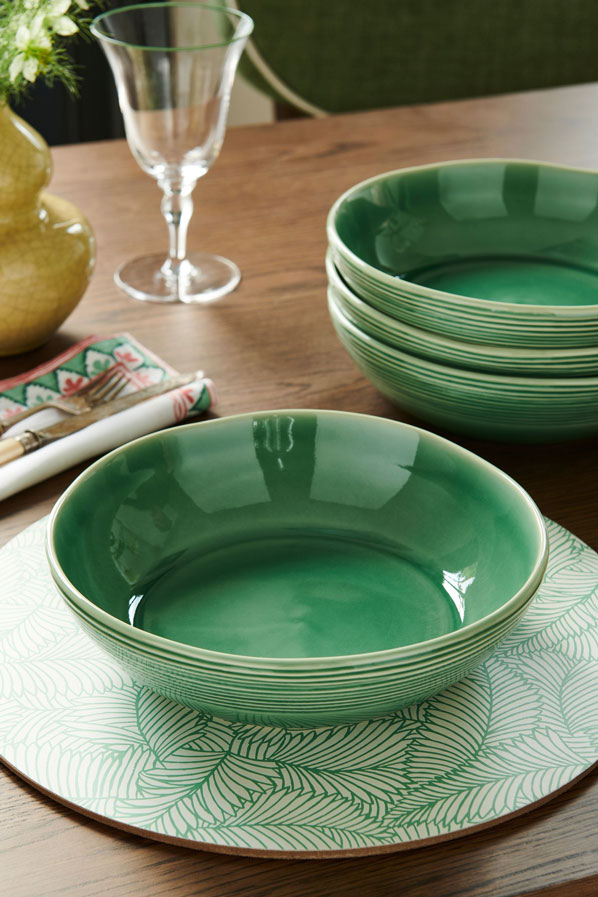
1. Nina Campbell Set of 4 Meadow Pasta Bowls, Green, £45, Next
This eye-catching stoneware with glossy green glaze will make everything look that much lovelier… think creamy spinach pasta sauce for small soirées.
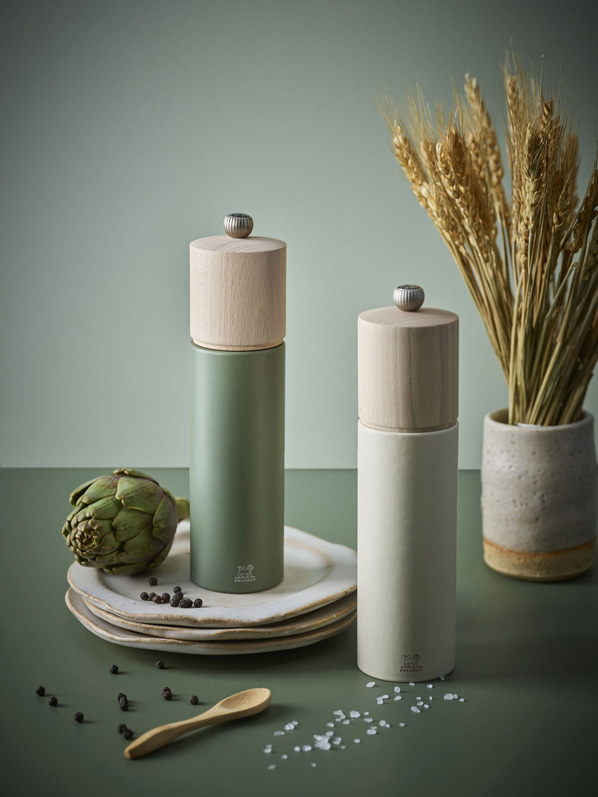
2. Manual Beech Wood Pepper Mill in Fern Green (available soon), and Boreal Manual Beech Wood Salt Mill in Sage Green, £44.99 each, Peugeot Saveurs.
A swanky salt mill and plush pepper mill to spice up your spring tablescape. We’re in – and these soft shades will complement any kitchen style.
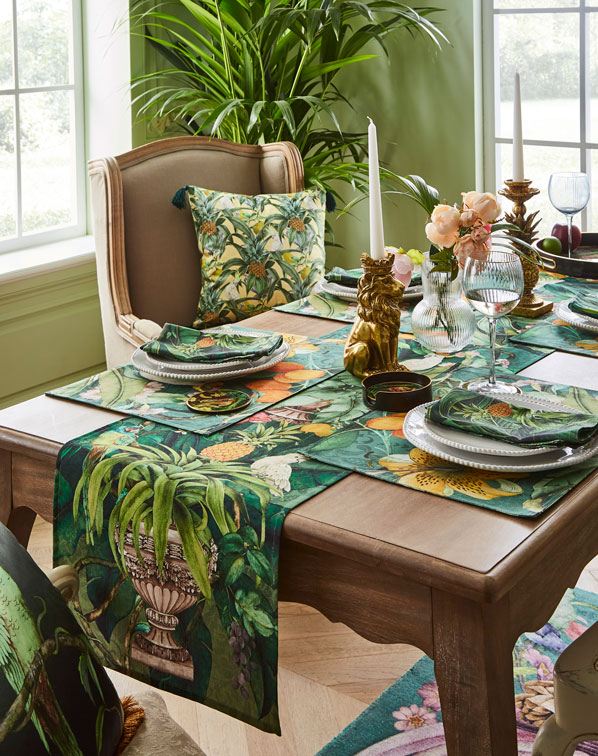
3. Totally Tropical Table Runner, £25, Totally Tropical Pack of 4 Placemats, £25, and Perfect Pineapple Pack of 4 Napkins, £15 (items from a selection), Joe Browns
We’ve gone Tropiloco over this exotic tableware collection, with its lush palm leaves, verdant vegetation and prize pineapples to signal salsa dishes.
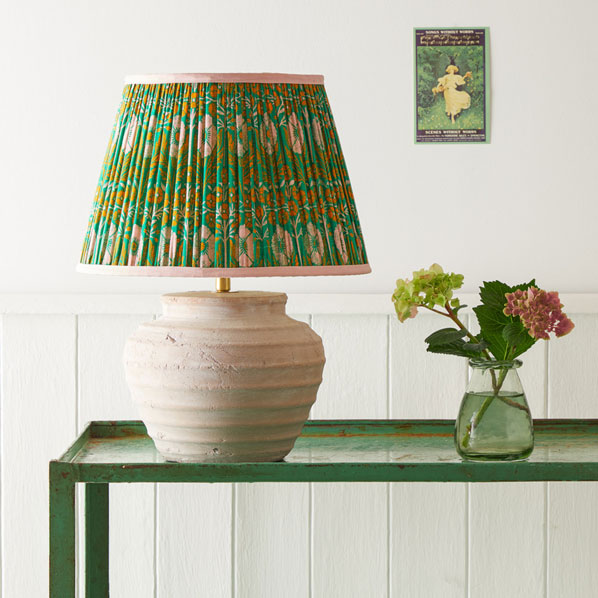
4. Green ‘Poppies’ 30cm Straight Empire Printed Cotton Shade by Ellen Merchant, £51 (lamp from a selection), Pooky
Even if you think you’re lighting is spot on, the longer, balmy days ahead call for a stylish table lamp to highlight all your details and decos.
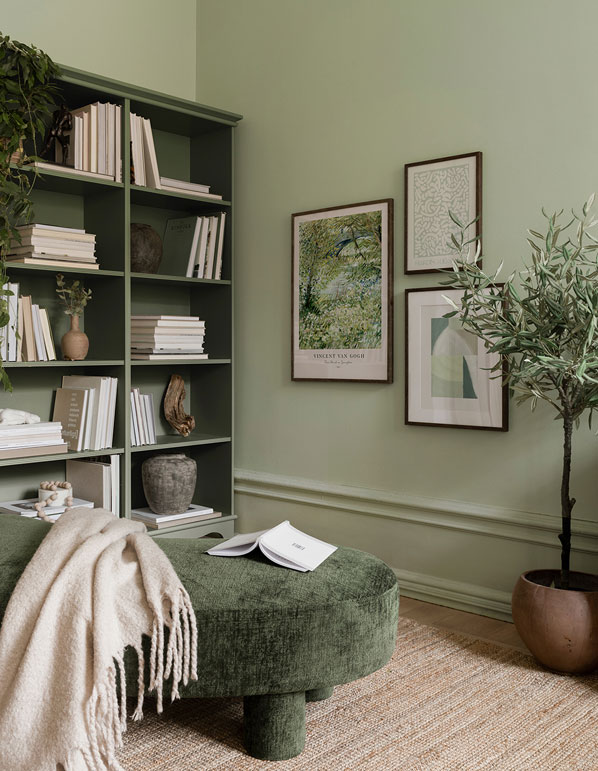
5. Graphical Green Gallery Wall – featuring: Il Giardino Dei Sapori Poster (30 x 40cm), Green Colour Blocks Poster (30 x 40cm), Van Gogh – River Bank In Springtime Poster (50 x 70cm), with Dark Oak Frames, currently £113.94 (was £146.65), Desenio
A favourite for feel-good vibes, colour drenching a room in the same green accents and creating a gallery wall themed to botanical plants is a fast route to style and positive energy.
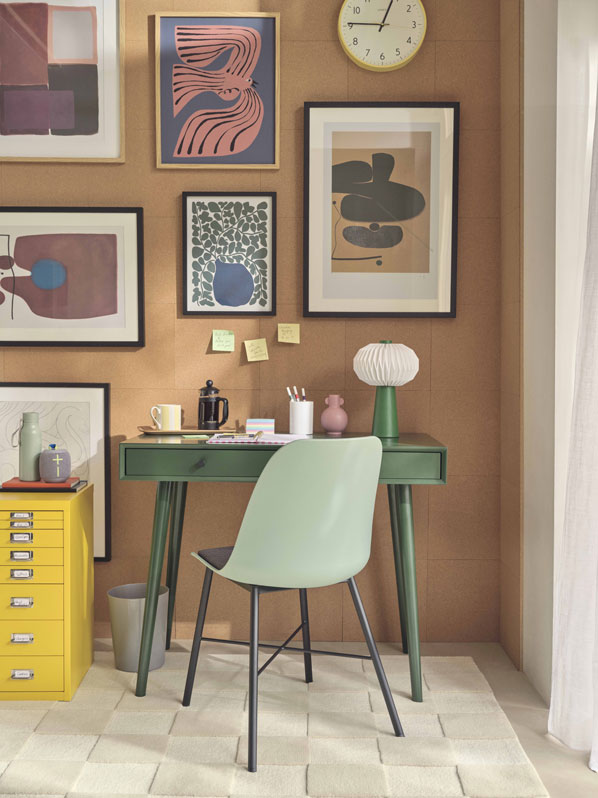
6. John Lewis ANYDAY Spindle Desk in Bowling Green, £159.20, and ANYDAY Whistler Dining Chair in Bowling Green, £99, John Lewis
Whether you’re in the throes of a spring clean and reorganising your WFH space, or introducing a cosy corner aesthetic for managing life admin and hobbies, this bijoux desk will make it all a breeze.
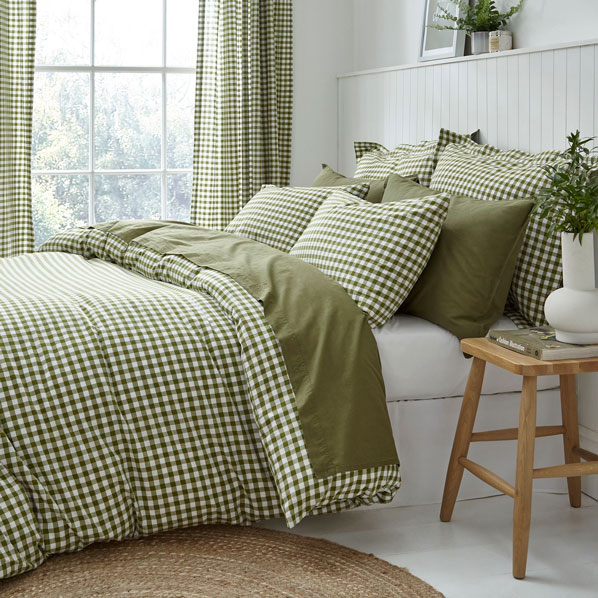
7. Portloe Woven Gingham Green Duvet Cover & Pillowcase Set, from £30-£50, Dunelm
A green gingham check has lots to offer, especially when teamed with co-ordinating solids and matching curtains, against a backdrop of bleached wood and mini olive trees for a dreamy, Mediterranean ambiance. Made from 100% washed cotton.
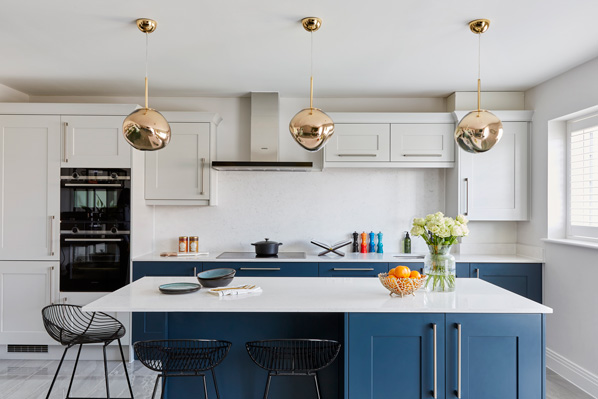
When looking to transform your home, one of the first things that comes to mind is the kitchen – after all, it’s the hardest-working room in the house.
And with sustainability high on the agenda, chances are eco-friendly choices are right up there.
Indeed, according to the latest kitchen trends survey by home renovation and design platform, Houzz, it’s overwhelmingly a priority for homeowners, with the vast majority incorporating sustainable features during their renovation (93%).
Interestingly, the majority do so because of the long-term cost-effectiveness (75%). So how do you tackle your kitchen renovation in the most sustainable way?
By Sam Wylie-Harris, PA
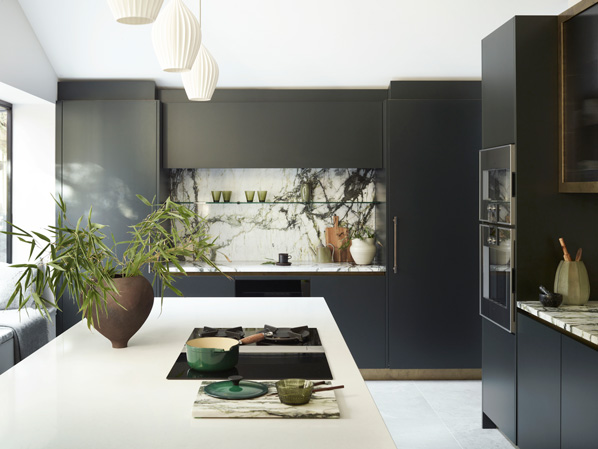
Why it’s important
“A kitchen renovation is often a big project,” says Amanda Pollard, senior editor, Houzz. “It’s likely to create significant amounts of waste and will involve choosing numerous different materials and elements, which will all have an impact on the environment.”
The kitchen industry consumes a lot of virgin raw materials to produce all of the different elements, such as wood products for cabinetry, metals for appliances and stone for worktops, explains Mark Byers, director of Oliver Green Kitchens.
“Fortunately, the industry has reacted to the high demand for raw materials by embracing recycling,” says Byers. “But consumers also have a part to play by making good material choices when replacing or updating their kitchen.”
As Felicity White, director of Felicity White Interiors, points out: “Kitchen renovations are typically the most expensive area of the home to renovate, so creating a kitchen that’s going to stand the test of time is also important financially.”

The main things to think about
“There are three things to consider when choosing materials,” highlights Byers. “The first is whether it contains any recycled content, the second is its durability and the third is its end-of-life.”
Manufacturers play a big part in producing items that incorporate recycled elements, but we as consumers should be asking the question of how much, if any, recycled material is used in a product, advises Byers.
Secondly, considering the items’ durability means not buying products just based on price. “The cheapest products will often end up costing more over time because they simply don’t last,” says Byers.
“Sadly, the cheapest products are also the least likely to incorporate any recycled material and often cannot be easily recycled themselves,” notes Byers. “So being able to recycle, refurbish or repurpose products when you’re done with them is an important final consideration,” he adds.
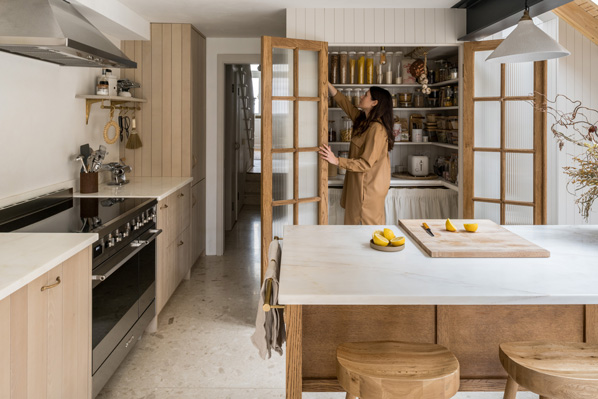
One of the first questions we ask our clients is whether they can keep any elements of their old kitchen, says White. “Sometimes the cabinet carcasses are well-constructed and it’s a case of replacing the cabinet fronts and handles, or even wrapping the cabinet fronts to save throwing them away.”
However, if you’re planning a complete overhaul, and the existing kitchen is in good enough condition, she says it may also be possible to sell it through second-hand kitchen vendors, such as Rehome.”
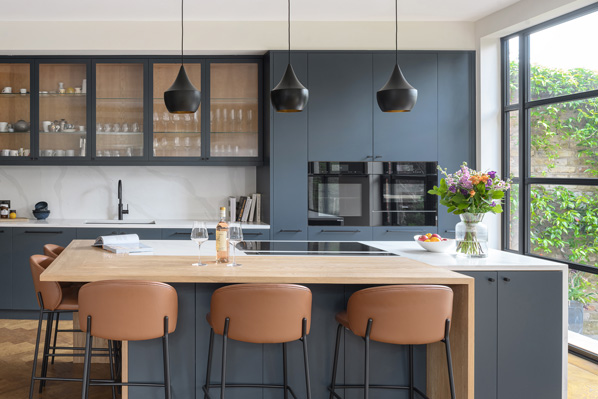
What materials are best?
White says to aim for natural materials. “For cabinets and door fronts, FSC timber and plywood are better options than particle board or MDF options you typically find with large kitchen retailers.”
“With the right construction and treatment, natural wood can last longer as it’s stronger and can be repaired, whereas engineered wood can’t. Engineered wood can also contain high levels of formaldehyde, which can be nasty if it gets into the air, she adds.”
One material to use less of, or not at all, is MDF, warns Byers. “As it’s difficult to recycle, most MDF products at the end of their life are used for fuel, which releases carbon and other [unpleasant] chemicals into the atmosphere.”
“Laminate worktops are also not great,” he notes. “Not surprisingly, both these products are heavily used in the kitchen industry because they’re cheap. As a broad guide, the best products to use are those that can be recycled and used in new products or can be refurbished or repurposed.”
When choosing materials for your new kitchen, experts on Houzz advise researching where the item is coming from, how it has been made and what is in it, says Pollard. “It’s also best to source items as locally as possible and keep chemicals to a minimum.”

“I make a variation of this for my kids a lot, using whatever greens I have in the fridge – green beans, asparagus, spinach etc. It’s exceptionally simple yet super-satisfying,” says Ella Mills, the brains behind Deliciously Ella.
Lemony pea and broccoli pasta
Ingredients:
(Serves 2)
2 servings of pasta; I like orecchiette in this dish (about 75g per person)
1 small head broccoli (about 300g) cut into small florets
100g frozen peas
Large handful of cashews (about 50g, see note below)
1 vegetable stock cube
1tsp Dijon mustard
1tbsp nutritional yeast
Grated zest and juice of 2 lemons
1 × 400g tin of butter beans, drained and rinsed
Sea salt and black pepper
Method:
1. Bring a large saucepan of salted water to the boil and add the pasta. Cook according to the instructions on the pack, adding the broccoli and frozen peas for the last three minutes of the cooking time. Cook until the pasta is al dente, the broccoli is tender, and the peas are defrosted, then drain and return to the pan.
2. Meanwhile, put the cashews and stock cube into a bowl with 100 millilitres boiling water, let the stock cube dissolve and the cashews soak for five minutes.
3. Put the mustard, nutritional yeast, the juice of both lemons and half the zest, and half the tin of butter beans into a high-speed blender along with the cashews and their soaking liquid. Blend until you have a smooth, creamy sauce. Season with salt and pepper to taste.
4. Pour the sauce over the drained pasta and veg, adding the last half of the butter beans. Stir to combine and top with a little extra lemon zest.
Note: To make this nut-free, swap the cashews for sunflower seeds.
Deliciously Ella: Healthy Made Simple by Ella Mills is published by Yellow Kite, priced £22. Photography by Clare Winfield. Available now.


When Your Deposit Or Completion Monies Could Be At Risk!
With cybercrime increasing the need to be vigilant is becoming more and more important, especially when it come to purchasers and vendors being asked to transfer substantial funds to their solicitors at crucial points in the house sale process, such as at exchange or completion.
In 2023 McCarthy Holden have observed some attempts by cybercriminals to defraud people of deposit or completion money, so we felt it was worth flagging up this potential risk to our readers. Fortunately none of the attempts which we became aware of to steal money were successful because of good security systems, but the fact criminals are trying this suggests they could one day be successful.
To bring the subject alive, think for a moment about a house buyer being asked by email from their solicitor to transfer say £100,000. On the surface a perfectly reasonable and indeed expected event as part of the house purchasing process at exchange of contracts for example.
Now think how easy it is for cybercriminals to imitate your solicitors email if your home computer has been hacked for example. The criminal’s email could so easily look genuine, using your solicitors name and contact information and the solicitors company logo, and of course details of a bank account to transfer your money into.
It could be very difficult to spot the signs of a fraud, so we recommend that if you are buying or selling property that when your solicitor asks for the transfer of exchange or completion monies, you phone your solicitor and speak to them direct to check not only if the request is genuine, but also a double check on the solicitors bank account details.

Our Fleet team were yet again recognised by Rightmove as a top performing branch, so the team got a bit carried away with their social media video.
Would love to see the out-takes!

With October showing a lates season up-tick in house sales activity, who knows what might be encountered on a house viewing during the days around Halloween celebrations (October 31).
Chances are there will be a few spine-chilling encounters, so the only question is do you dare take a look?
To find your perfect Halloween home start your property search here.
And don’t forget, at McCarthy Holden we do accompanied viewings.
By Hannah Stephenson, PA
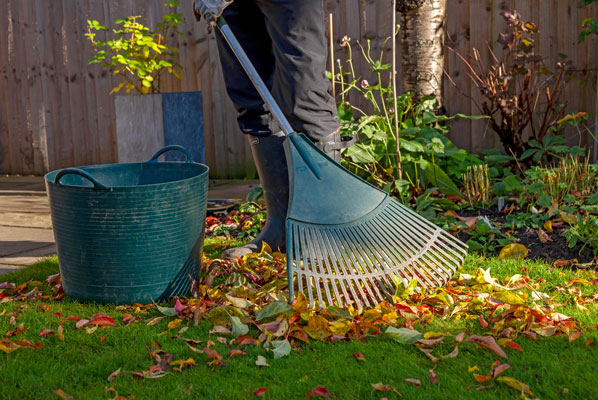
It’s time for the great autumn clear-up in your garden, when furniture and tools are put away, leaves are raked and perennials cut back. But experts are advising gardeners not to tidy up too much.
Some of your debris could be left to provide food and shelter for overwintering insects, birds and mammals, so before you start raking, clearing away prunings and starting that autumn bonfire, spare a thought for our native wildlife.
Pile up your leaves
“Hibernating mammals, such as hedgehogs, frogs or toads will use leaf piles to create a nest where they will stay throughout winter, while insects and invertebrates will love the dark, damp nooks and crannies that it has to offer,” Eric Michels, head of pro at CJ Wildlife advises.
“In turn, this will encourage birds such as robins and sparrows to visit your garden to forage for worms and bugs in the leaf layer.
“Simply gather the leaves and dead organic matter from your garden or outdoor space and arrange them in a pile – don’t worry if your pile looks rustic, as long as it is large enough to allow wildlife to burrow within the materials, animals will love it!
“If you have any logs or fallen branches, place these next to the leaf pile to provide additional shelter and security, and make sure it is located in a quiet corner of the garden where visitors can stay undisturbed throughout winter. Come springtime, remember to check leaf piles for any animals before moving or mulching.”

Leave seedheads
At this time of year, you may be tempted to chop down all your spent perennials, but leave seedheads on plants such as rudbeckia, echinacea, teasels and helenium, because they will provide food for the birds, the RSPB advises.
Stems can also hold insect larvae and eggs, and shield the soil from the winter elements, the charity adds.
Let wildlife shelter in log piles
“Broken twigs and old logs make an ideal shelter for many species, the rotting wood and brittle bark create cosy gaps for insects to hide in, while offering mammals a dry and secure habitat over the winter,” says Michels.
“Log piles also provide birds and amphibians with a source of food, as they search the debris for any insects which might be lurking inside.
“It’s important to keep the log pile in a quiet and sheltered part of the garden, as many species won’t stay if it is too noisy or there is too much activity nearby. A variation of small twigs and large logs creates the best shelter and larger logs can be wedged into the soil so they stay damp.”
Bring insect hotels indoors
“Insect hotels are a great way to offer bugs refuge through the summer, but many people don’t know that they should be kept in dry places over the winter months, like in the shed. This helps keep the hotels dry and in good condition, it also helps prevent fungal infections for bees that might be nesting inside,” says Michels.
“Do not be tempted to bring the insect hotel into the house though – the warmth of our homes might encourage bees to emerge from their nest early. The insect hotel can be placed back into the garden around March once the weather is warmer.”

Avoid bonfires
You may want to burn your garden debris, but bonfire sites, which are often set up a few days in advance, provide a hedgehog hideaway for hibernation as well as shelter for amphibians and reptiles.
So if you really have to build it beforehand, surround it with newt fencing and make sure there’s no hedgehog sheltering in it before you start, advises campaign group Hedgehog Street.
Let ivy grow
It can be the bane of a gardener’s life, but ivy is an essential food source for birds and provides shelter for insects and bats in the autumn and winter months, says The Woodland Trust.
If you leave ivy to do its thing, its autumn flowers provide a haven to butterflies such as red admiral and moths, while it will produce calorie-rich berries in November which will attract song thrush, redwing and blackbird among others, as well as shelter for brimstone butterflies and small bats.
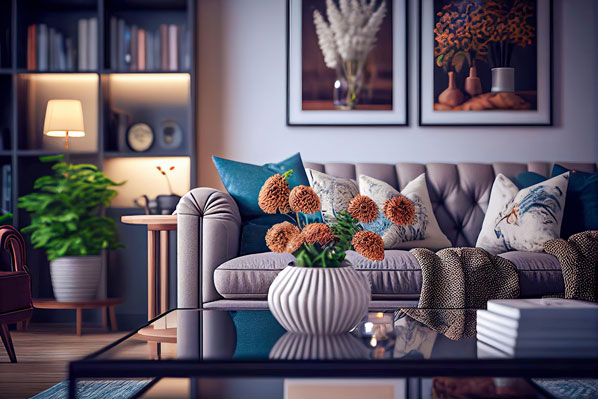
With a nip in the air and change in seasons comes a new dawn – and a natural desire to create a comfy, snug space ahead of the cooler months.
Alongside sumptuous textures, polishing up warm woods and ambient lighting, now’s also the time for seasonal candles.
Here, experts share their top tips for an autumnal aesthetic…
Forage for farmers’ market-style floral displays
“As we prepare for colder, darker months, it’s all about getting cosy and adding some extra touches that will make you feel cocooned and comforted,” says Charlotte Reddington, one half of styling and organising duo, Style Sisters. She says one of her favourite things things about autumn is the rich variety of textures and tones, from crunchy leaves to the abundance of changing colours in parks and gardens.

“Be inspired inside your home and think about how you can weave these elements into rooms,” suggests Reddington.
“This can be through the addition of a statement autumnal floral display, including a rich array of crimson reds, dark greens and burnt orange.”
And with pumpkin season in full swing, don’t forget this colourful squash can be styled with foliage, berries and autumn wreaths.
Embrace cosier fabrics
“Shorter daylight hours mean only one thing – cups of guilt-free hot chocolate and plenty of movie marathons,” says Dani Burroughs, head of product for Snug.
“To get into the autumnal spirit, start by swapping out summer fabrics for cosier ones, like soft velvets or fuzzy boucle,” enthuses Burroughs.
“Bring in warm, inviting colours – think rich browns, deep reds and rustic oranges. Not only will they help transition from summer to autumn, they’ll also create a relaxing and warm feeling that’s perfect for those lazy evenings on the sofa.”
Introduce ambient lighting
Clever lighting can totally transform a room and the overall atmosphere, highlights Reddington.
“A harsh overhead light isn’t always the cosiest for an autumn evening at home on the sofa! Think about placing a large floor lamp or table lamps for some mood lighting, which will create a calming ambience.”
She continues: “And with darker evenings as the clocks go back, it’s an important factor to consider for maximum home comfort.”
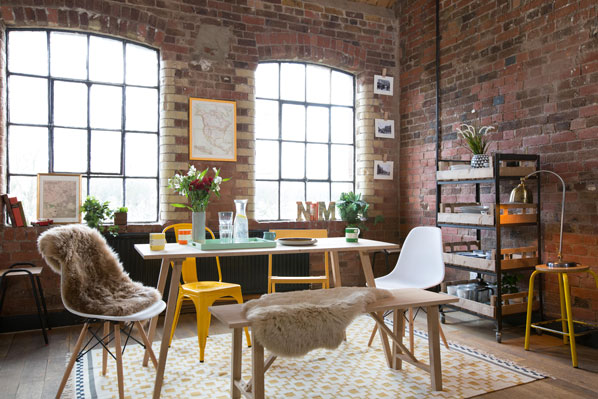
Dec out your dining room to combine function with beauty
Look to Scandinavian-inspired styles for a mindful, minimalist and meaningful take on autumn decor, suggests Francesca Hadland, interiors expert for Bridgman.
“Choose linen tablecloths and napkins, cutlery in classic styles and simple crockery while keeping to a colour scheme of just one or two main shades that imbue your space with warmth,” says Hadland. “Whether that’s a rust red or forest green.”
Ahead of the festive season, she says to make sure your guests feel comfortable with upholstered dining chairs – a personal favourite.
“Whether modernised by a metal frame or softened by a wooden leg, an upholstered chair is a beautiful way to ensure a sublime seating experience, while also adding an extra pop of colour to your dining room décor scheme,” notes Hadland.
Embrace the biophilic trend
“Bring some new life into your home ahead of the colder months by incorporating air-purifying houseplants into décor,” says Rikki Fothergill, bathroom expert at Big Bathroom Shop.
Especially in bathrooms and kitchens, which she says is hugely beneficial for improving the quality of indoor air, regulating humidity levels and reducing the risk of more serious problems, like damp or even mould.
“Look to include species like ivy and fern as these are known to be great for maintaining air quality”, suggests Fothergill. “Spider plants are perfect too, and make for a great addition to any bathroom touching on the biophilic trend.”
Scent the season
One of the very first things you notice (sometimes unknowingly) when you enter a room isn’t just how it looks, but how it smells, notes Reddington.
“Scent can evoke memories, elevate an atmosphere, and help to change your mood – from energising and lifting, to relaxing and even aiding sleep… we really think it’s one of the most important aspects of a home.”
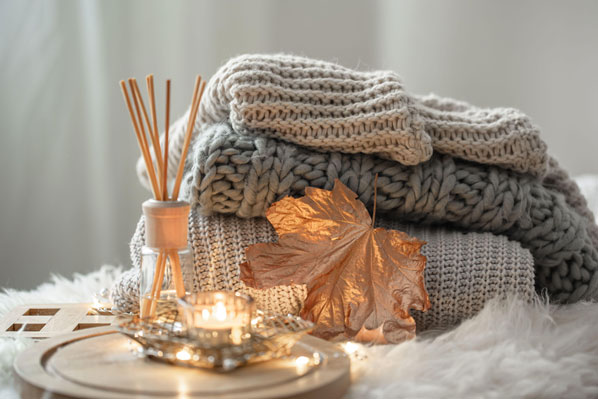
Candles and diffusers are the most popular and easy addition, says Reddington. “Not only can they smell amazing, but the design can add a stylish decorative touch to a mantlepiece or coffee table.
“An absolute autumn home essential,” she adds.
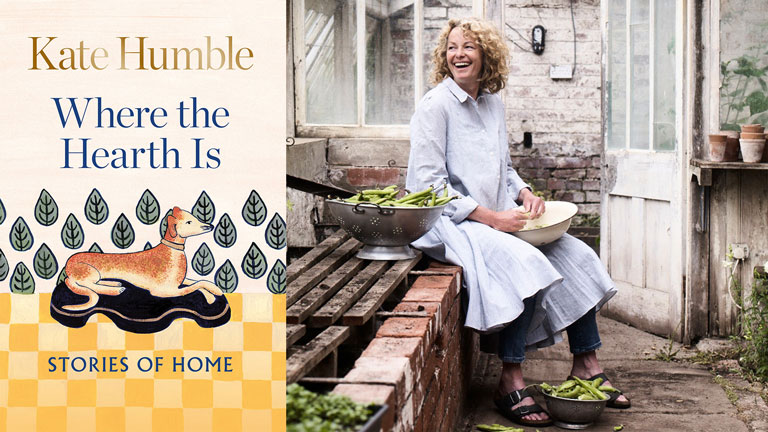
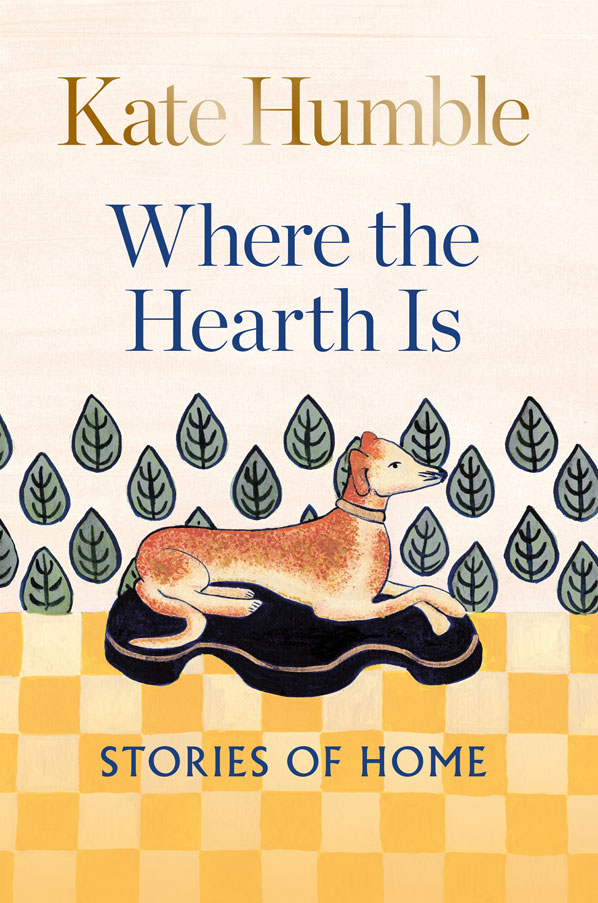
What makes a house a home? Is it the building itself, the possessions inside, the people that live there, the location or community?
It’s probably all of these to some degree, says Kate Humble, who delved into the topic for her new book, Where The Hearth Is – sparked by the TV presenter’s own quest to understand why a London Victorian terraced property she thought would be her ‘dream home’ never really felt like it, but the Welsh farmhouse she later moved to did.
“Before I moved to Wales, my husband and I had bought a derelict house in London. We spent 18 months sleeping on kind friends’ sofas, giving everything we earned to the builders to try and make it un-derelict and create what we thought was going to be our absolutely perfect house, with a lovely kitchen, all our bookshelves and pictures on the walls, and all the elements we believed would make it the perfect, happy home,” explains Humble, 54.
“And what was really odd and actually rather distressing was the day we moved in and unpacked, we thought that instantly it would be home. It wasn’t. And it never felt like home, and I couldn’t work out what we’d done wrong.”
She repainted walls, moved pictures, furniture and even walls in a bid to fix the issue: “I drove my husband completely mad. For the whole seven years we were there, I basically battled to try and make this house a home.”
She eventually realised the problem wasn’t so much the house, but the location. “The reason that poor house was never going to be home was that I wanted it to make me believe London was home, and it couldn’t do that.”
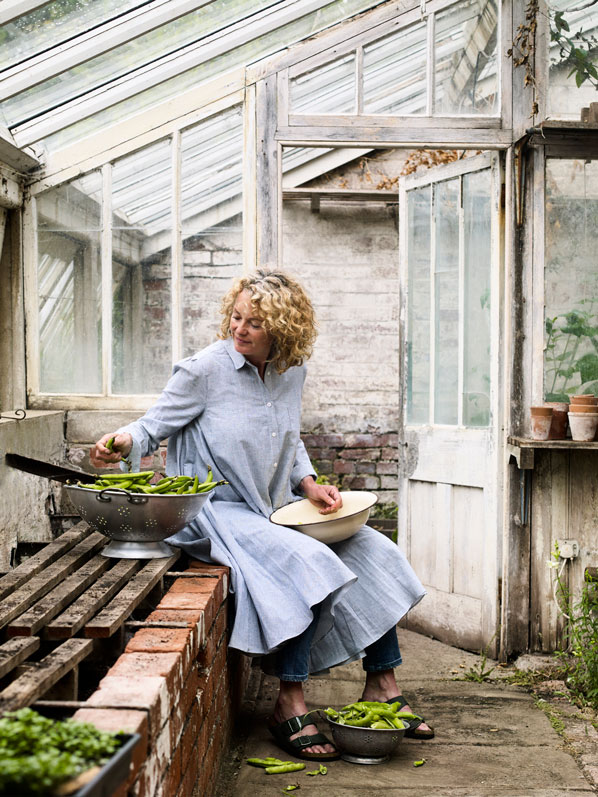
Humble’s TV career has always focused on the countryside and nature, with shows like Springwatch and Countryfile, and for a long time she’d harboured a desire to live in rural Wales.
“I was never a city girl, I was brought up in the countryside,” she explains. “I had for quite a long time wanted to be back in the country, but because of my job, doing things like Springwatch, lots of wildlife programmes and programmes that took me out into the countryside, I could manage coming back to London. But it just ceased to feel like home.
“I had this weird, inexplicable – and I still haven’t worked out why this was the case – longing to live in Wales, even though I have no family history in Wales or heritage, and I hadn’t even really been on holiday there. I didn’t really have a connection. But for some inexplicable reason, I really, really wanted to live in Wales.”
Then, “completely out of the blue” in 2007, Humble’s TV producer husband Ludo was offered a job in Cardiff. “It was like fate was intervening.”
The couple bought an old stone farmhouse with four acres of land in the Wye Valley. “As soon as I got there, I knew I had found my home,” she recalls. “There are many elements of that, but I think it was instant because I was back in the countryside, and those were my roots, even though it wasn’t geographically where I’d grown up, I had grown up in a rural area – and I was back in a rural area and suddenly I felt like I belonged again.”
Yet although Humble, her husband and their dogs have lived happily in the farmhouse in Wales for the last 16 years, running the Humble by Nature working farm and rural skills centre nearby, they may still not be in their ‘forever home’ – which is what sparked the idea for the book.
“For a long time, I’ve wanted to build a house of my own,” she reveals. “I’ve got the design in my head – I’ve always been fascinated by the idea of creating the place that I end up living.
“But the thing that worries me is, I might build this house one day that I think is perfect – but what will it be that turns it from a building I’ve imagined in my head, a physical thing, into the nebulous but nonetheless essential thing that makes it a home? What will shift it from simply being a building with furniture and a bed, into the place where you feel safe and secure and at home? What do I need to do to make sure that I don’t repeat the experience I had in London?”
Humble was so worried about this, she wrote long lists of the sort of people that might be able to give her insight into what makes a house a home. “I started off by thinking that would help me build a thesis, a kind of Humble theory of what makes a home, if you like.”
She spoke to many people, compiling stories for the book – ranging from brother and sister Willie and Ruby Brown, both in their late 70s, whose home (a 150-year-old family stone croft on the west coast of Shetland, where they’d been born and raised) was struck by lightning and destroyed, to a Syrian woman who lost not just her home in the war, “but her community, her culture, her language, everything she knew”, explains Humble.
“She had to start from scratch, trying to make a home in a country that wasn’t hers, and the thing she said made the UK feel like home was the kindness of people.
“What I learned was home doesn’t stop or start when you walk into the front door – it’s more than that,” Humble adds. “And for a lot of people – and I would include myself in this – community is really important, what’s around you, what do you look out at through your window?
“Of course, there’d be things that all of us, if they were lost through fire, flood or whatever, we’d probably mourn. But ultimately, possessions are ephemeral – one day they’ll fade, fall apart, or get lost. Whereas the people in your life are the fabric of your home. When I walk around my house and think what would I grab if the house was on fire, I think, well I’d grab my husband and my dogs,” Humble reflects.
“What I discovered is what makes a home is incredibly personal and individual to each person. But if you have a place you can genuinely call home, where you feel safe and secure and it’s your refuge, actually, you’re very lucky.
“Through talking to all these people and putting this book together, I realised how precious home is.”
Where The Hearth Is: Stories Of Home by Kate Humble is published by Aster, priced £22. Available now.
Thinking about giving your home a mini makeover?
When it comes to creating your own personal style, there are a few principles which come in super handy when you’re about to embark on a new project… and take your first foray into the world of interior design.
(By Sam Wylie-Harris, PA)
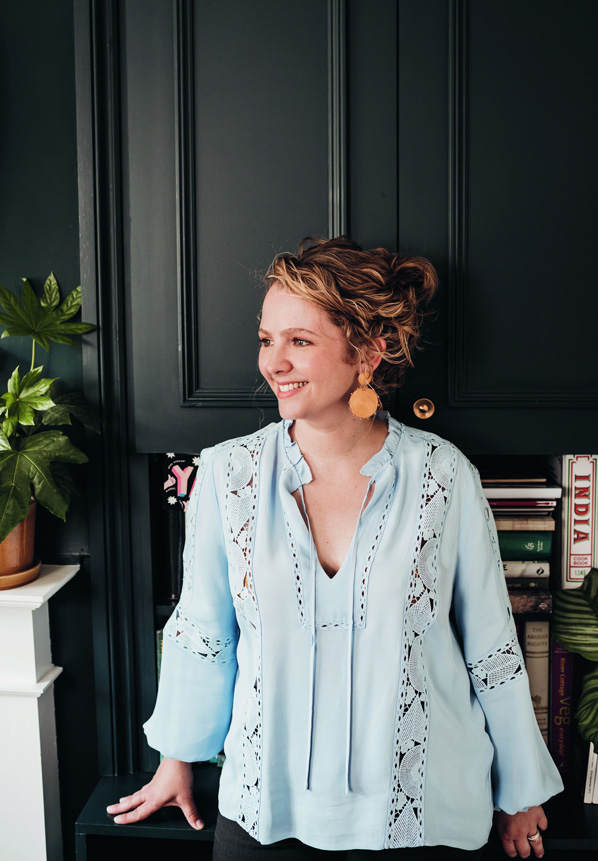
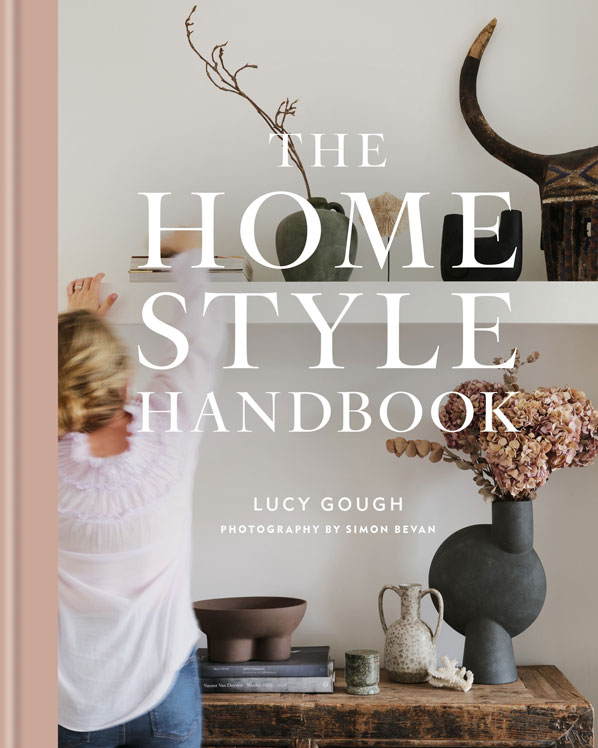
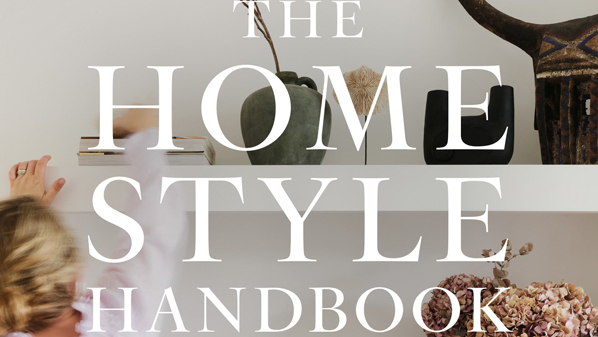
“It’s not rocket science that if you wake up in a home or room you love, which makes you feel happy and calm and brings a smile to your face, then you will start your day with a more positive mindset,” Lucy Gough writes in her new book, The Home Style Handbook.
“And it doesn’t have to cost the earth either. Paint, wallpaper, upcycling, second-hand furniture, along with a new cushion or two, can go a long way in transforming your home,” she suggests.
Currently living in Sydney, Australia, and head stylist at Home Beautiful magazine, Gough says she feels it’s important as a stylist and freelance creative director to be able to turn your hand to any aesthetic a client asks of you.
“Us stylists need to be truly versatile!” enthuses Gough.
Here, she shares her insider tips on how to style your home like it is second nature, which is sure to put you in a positive frame of mind…
Make a mood board
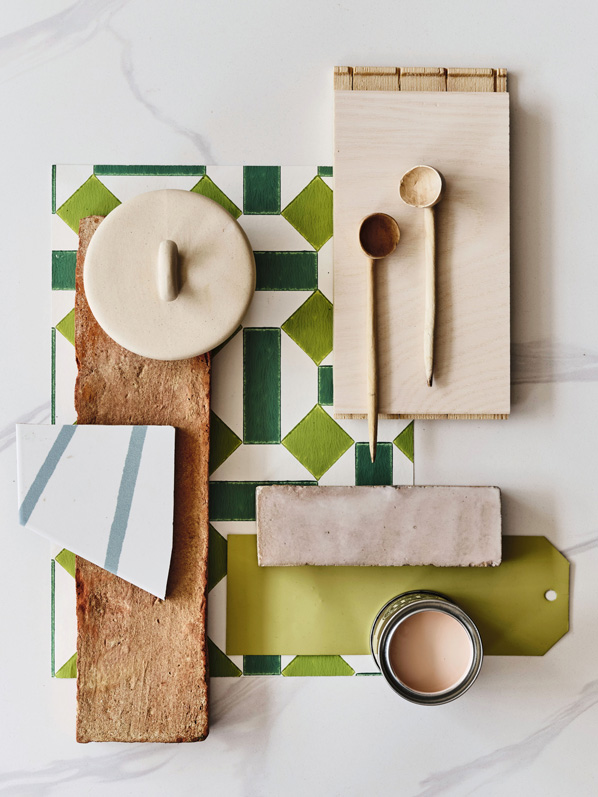
“All wonderful interiors schemes are pulled together in the beginning stages using a mood board,” says Gough.
“Not only are they important in helping pull together all your creative thoughts and ideas,” she continues. “But they are fun to make and a great mindful task for you to play around with at the beginning of the project, to make sure you get it right first time.”
Create continuity of colour
“If you can decide on your colour and texture palette before you embark on picking up a paintbrush, your home will feel cohesive,” notes Gough. “And might trick people into thinking a professional has helped you!”
A thread of colour throughout your home is so important for it to feel like you have considered your ideas before implementing them, she adds
Tell a story
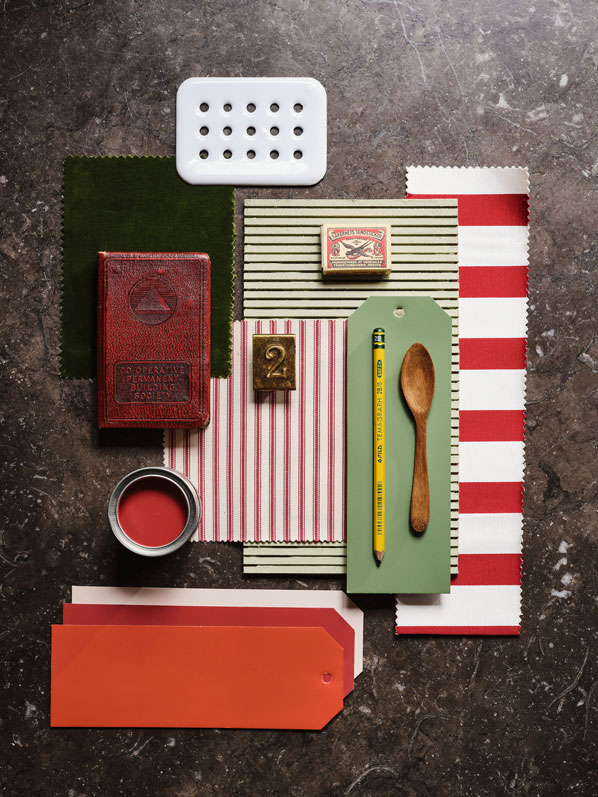
Not only should you consider your palette but also think about a theme, says Gough.
“Now, I’m not talking about a Disney theme here! I mean a thread forming around your love of antiques, family treasures, a dark palette or coastal look for example.
“Something that makes your heart sing when you walk in your home!”
Then add colours you love and bring these together with surface samples and foliage, she writes in The Home Style Handbook. If you decide to go with two or more bold colours, Gough says to add some soft tones in between to give them space to breathe.
Style your space in sections
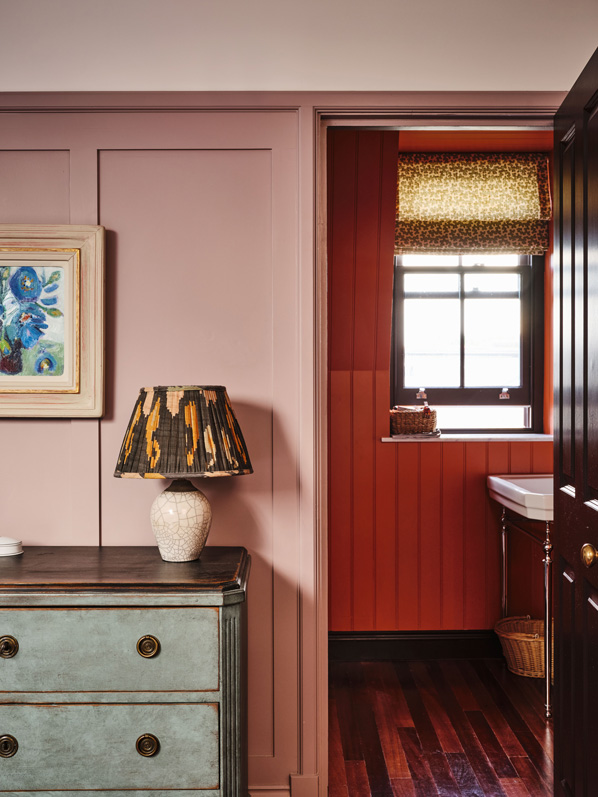
“I suggest approaching your room as a series of vignettes,” encourages Gough.
“Sometimes, if you’re not a professional it can be overwhelming to think about styling a whole room at a time. Instead, think of each room as a series of smaller spaces.
“Look through your phone screen and break it down into smaller photographable corners and sections,” advises Gough.
“For example, style the sofa area first then the TV unit area second, and the corner with the armchair and mirror third.”
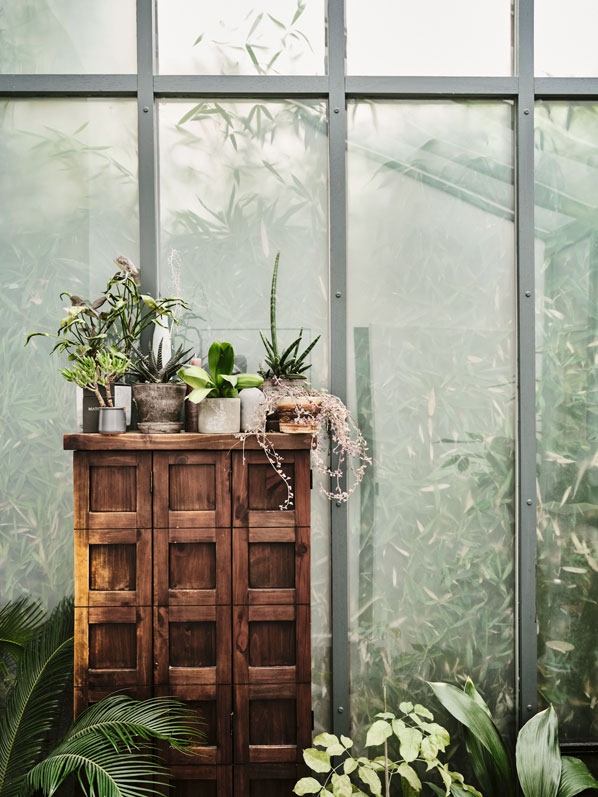
And when it comes to the finishing touches, such as styling your succulents, she writes: “Notice how the objects and plants on the cabinet (pictured) are higher in the top left and then go down at an angle to the bottom right.”
Visualise a triangle formation
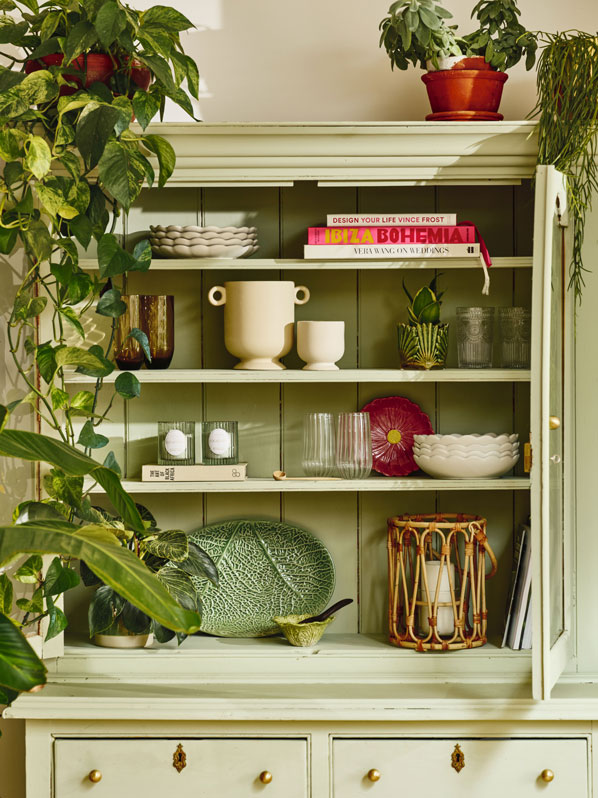
“When I am styling bookshelves, I like to style using a visual triangle formation,” says Gough. “I never style with symmetry – although there is nothing wrong with doing so.”
She continues: “I prefer the more relaxed look and find creating triangular shapes between items helps aesthetically.
“And don’t pack things in too tightly,” says Gough. “You should give things room to breathe!”
The Home Style Handbook by Lucy Gough, published by Mitchell Beazley, priced £30. Photography by Simon Bevan. Available now.