
Want to Turn your Home into a Botanical Bolthole? Here’s how 3 Plant Experts Transformed a Hotel

botanical hotel into your home

As the UK's first 'jungle hotel suites' are opened, Hannah Stephenson finds out how to turn your own living spaces into leafy havens.

Three designers have come together to show how people can create a horticultural haven in their homes, using tropical flora and fauna.

Award-winning biophilic designer and architect Oliver Heath, This Morning’s ‘Mr Plant Geek’ Michael Perry and Nik Southern, creative designer and founder of innovative plant and florist shop Grace & Thorn, have transformed three hotel suites into urban jungles where guests can stay, in an initiative from the The Joy Of Plants (thejoyofplants.co.uk) and Leman Locke hotel in London.

The buzzword is ‘biophilia’ – the technique of incorporating plants and other natural elements in our homes to reconnect with nature. Each of the suites has been adorned with carefully selected houseplants to help boost productivity, ignite passion, and bring peace and tranquillity.

So, what can we do to create our own biophilic design at home?
botanical hotel into your home

Perk up your productive space

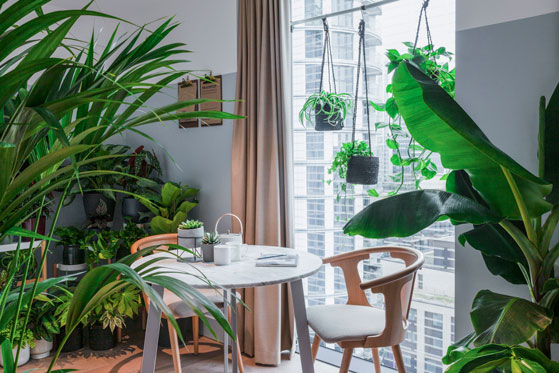
Heath has created a productivity suite adorned with Boston ferns, peace lilies and snake plants – all renowned for their productivity-inducing properties.

Feathery-leaved Boston ferns create a natural jungle look and inject instant energy with their powerful air-purifying properties, while snake plants, native to tropical West Africa, produce sword-like foliage bringing a raw edginess to any environment.

Their distinctive leaves are said to provide protective energies to shield negative Chi, while they also have air-purifying properties. Studies have found they can also help remove toxins such as formaldehyde from the environment.

Heath says: “Research suggests that a combination of sheltered spaces, access to nature and species-rich spaces will create the most restorative environment for a stressed individual, so the tucked-away sofa with a lot of plant fringing is the perfect opportunity for relaxation. Boston ferns and dwarf mountain palms introduce lots of natural movement, which has been shown to help us relax and restore focus.”
botanical hotel into your home

Create a cascading canopy in the bedroom

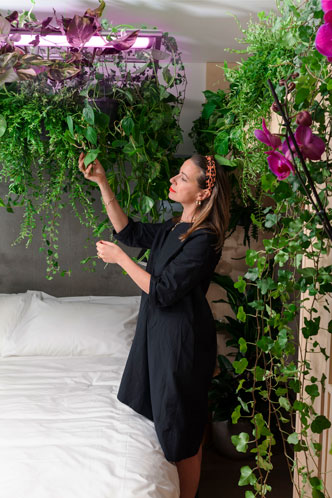
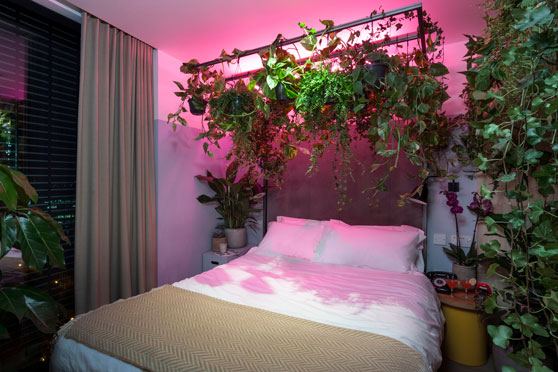
Southern has created a botanical canopy over the bed, in a heady romantic respite. Imagine enjoying the intimacy that will cocoon you and your partner in a lush green blend of cascading plants.

Signature bedroom plants she uses include Anthurium ‘Black Love’ (Anthurium hybrid), a black-to-dark chocolate-flowering variety which is low-maintenance, and Epipremnum ‘Marble Queen’, an easy-care variety with green and white marbled trailing foliage which creates a romantic vibe.

Southern says: “It might seem ambitious to create a canopy in your own home but there are plenty of hacks to make something similar. You could hang a traditional pulley clothes airer to the ceiling and attach plants with vines such as devil’s ivy and strings of hearts to create a dramatic canopy. Make sure you choose the right planters that will prevent water leaking below.”

Alternatively, create a living love seat in her design in your sofa area, using banana plants and rubber tree plants to create a cosy, intimate area in an open-plan room, she suggests.
botanical hotel into your home

Escape to your urban jungle spa room

Perry, aka Mr Plant Geek, has packed his suite with tropical plants, creating an oasis of calm in the city, showing that people can enjoy a forest-bathing experience at home.

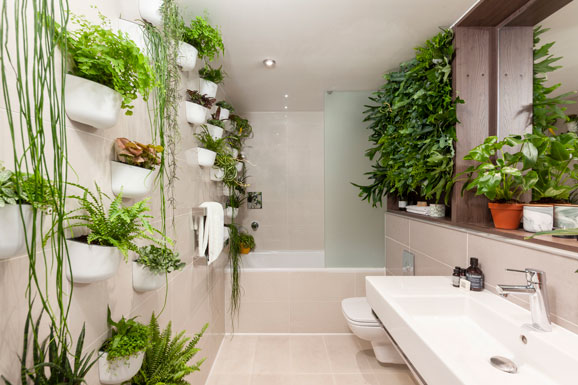
His design features houseplants such as bromeliads and a variety of monsteras (Swiss cheese plant), from deliciosa to obliqua, while in the bathroom there’s a dedicated plant meditation space and a clean sleep zone containing the world’s most air-purifying plants.

He says to create a spa room, ideally you want to have the feeling of being completely surrounded by plants. Calming ferns, helxine and fittonia offer jungle vibes while bromeliads punctuate the setting with colour.

Perry says: “Suction pots allow you to easily hang plants from wall surfaces, without creating any fixings and are incredibly versatile. Bromeliads are used to rainforest conditions and thrive in bathroom environments – a quick spritz of water every few days is all the moisture they need.”

He also advises using ferns in low light level rooms but avoid using succulents and cacti in spa rooms, as they prefer a drier environment.

And don’t forget that any potted plants will need drainage, so put in a layer of gravel at the bottom of the pot and keep a check on watering.

The indoor plant jungle hotel will be open for bookings until November 10, 2019. To book your stay, email thejoyofplants@lockeliving.com.
botanical hotel into your home

Flights of Fancy: How to Make the Most of your Staircases, Without Compromising on Safety

stunning stairs without compromising safety

The aesthetic qualities of the humble staircase are too often underrated, says Luke Rix-Standing.

stunning stairs without compromising safety

Something of a no-man’s land within the home, it’s easy to see why staircases are so often overlooked on the interior style front. Rarely more than a means of getting from A to B, why would you choose to spend time and money on stairs, when it could instead be spent on key living spaces elsewhere?

But these thoroughfares inevitably see high footfall and are important for safety as well as style – and even if it’s not your first thought when planning your decor, they do have a big visual impact too.

So, with this in mind, apartment dwellers and bungalow owners look away now – here’s how to make sure your stairs work well for both eyes and feet…

stunning stairs without compromising safety

Safety first

First things first, it’s important to keep in mind that the run-of-the-mill staircase can be one of the most dangerous obstacles you negotiate during your day. According to statistics, there is a fall on Britain’s staircases approximately every 90 seconds, while staircase-related incidents account for roughly 250,000 trips to A&E every year.

The Health and Safety Executive (HSE) has a checklist of conditions to help you practice safe stairs, asserting that they should be well-lit, have handrails at appropriate heights, have good ‘slip resistance properties’, and be free of trip hazards.

The ‘nosing’ of a step (aka the edge), should be well-defined and ideally square, to stop the stairs blurring into one. Just as important is consistency, as research has shown that even small variations in angle or distance between steps can cause a topple.

Those with small children face an obvious extra risk, and baby gates are a must for both the top and bottom. Do not attempt to vault the gate out of laziness – it’s ironically common for adults to injure themselves by misusing gates put in place to protect their kids.

Of course, structural changes only go so far, and human factors play a determining role in most stair-related incidents. Residents are far more at risk if they’re rushing, distracted, or carrying heavy loads without a free hand to grab the rail or banister.

stunning stairs without compromising safety

Step up the style

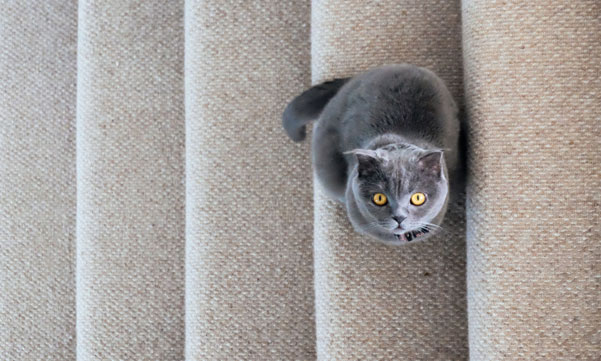
Now that we’ve got function and safety out of the way, we can turn our attentions to fashion. The staircase may not seem a natural place for prize pieces of art, but, like your bathroom or loo, it’s a quick way of making sure everybody sees your carefully-chosen pieces. Try to limit yourself to small decorations like miniature frames or photos, and line them up gallery-style at the same gradient as the stairs.

As with all constricted areas, your biggest challenge is creating a sense of space. Avoid claustrophobic dark colours where possible, and use a lighter shade on walls and ceilings to help draw the eye upwards.

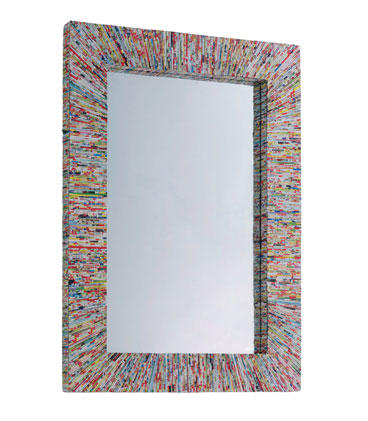
As with any space, mirrors provide the illusion of depth, and don’t be afraid to go big on the lighting. Utilise ‘accent’ lighting – focused light sources creating contrast – rather than a solitary overhead bulb (just remember those safety rules!). The result should be less subterranean tunnel, more breezy indoor boulevard.

As for the stairs themselves, your main allies are the risers – the vertical slats between each step. You can apply wallpaper, paint them to match the walls, or pattern them to match your lower floor.

For those wedded to quirk, you can fashion your steps as piano keys, book spines, or bands of the rainbow. Just be sure to consider the look from every angle before laying down your first brushstroke – no one wants a staircase that looks like a work of art from the ground floor, and a cubist mess from the first.

Otherwise, carpets remains the most popular add-on. Option number one is full carpeting: 100% coverage of a stairway that can obscure unsightly surfaces but can be comparatively complex and costly to install.

Option number two is to use carpet runners – a wide strip of carpet running down the centre of the stairs, held in place with slim poles affixed to the join between riser and tread. Cheaper and simpler than full carpeting, generally speaking, the different textures can fit really well into a broader aesthetic.

stunning stairs without compromising safety

Starting from scratch

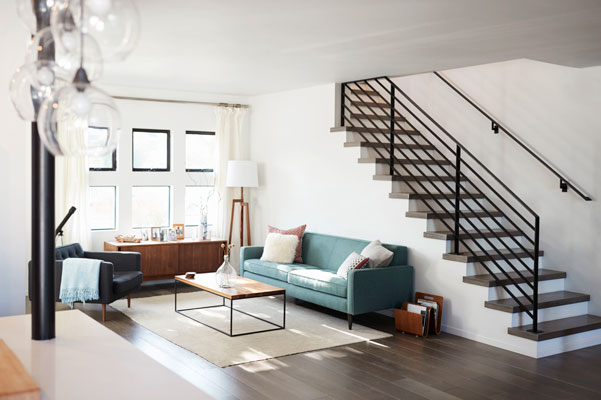
Of course, if you’re overseeing major structural renovations, you may have the chance to design your staircases anew. We’re not going to delve into the engineering – that depends entirely on the specs of your dwelling – but there are a few styles finding particular prominence in modern homes.

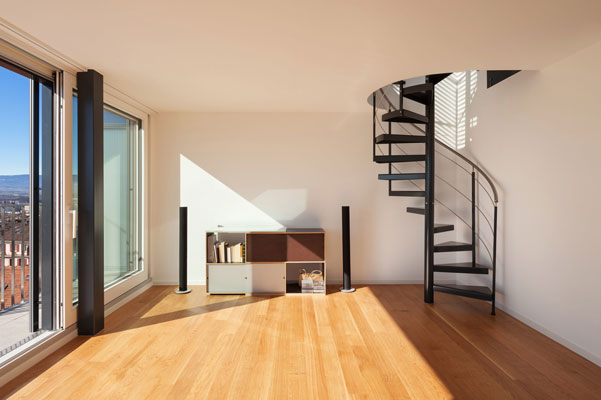
For space-starved householders, consider the spiral staircase – an aesthetic, self-contained unit that can easily be erected in the corner of the room. So-called ‘floating staircases’ are increasingly popular in modern minimalist homes – isolated blocks without risers protruding straight out of the wall. They’re obviously not as stable as their banister-ed cousins, and are not for those with uncertain step (i.e. large swathes of the population).
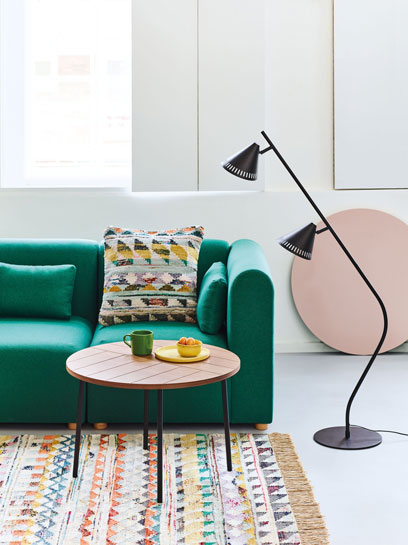
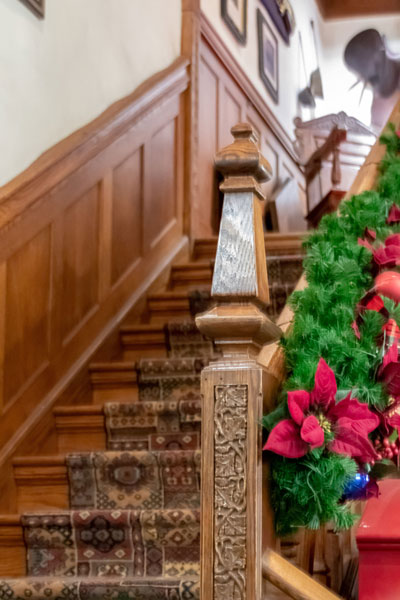
We can’t imagine many houses will have room for grand medieval stairwells, but you can still channel a country house aesthetic with elaborate hand rails and metalwork panelling.

For the very chicest in staircase design, consider installing light sources – under-lit bulbs that emit a warm glow from beneath the tread. These not only look lovely during the long winter evenings, they may also stop you coming a cropper when you get up to go to the loo.

Outstanding Selection Of New Homes Property For 2020

new homes 2020 form McCarthy Holden Estate Agents Hampshire

As we prepare for 2020, McCarthy Holden are pleased to be offering our best selection of new homes in amazing locations form rural Eversley in Hampshire, to Virginia Water in Surrey.

The developers we will be representing in 2020 are as diverse in size and their personal history as you can imagine, but they all share the same passion for creating beautiful homes and leaving a legacy to their brand and reputation.

Finding Best Buyer Engagement

Key to our agency appointments, is the delivery of property marketing with professional video content which increases the level of buyer engagement online.

From short video PR following an open day event, through to a comprehensive video tour with a presenter the outcome for the developer is outstanding marketing and PR as can be seen in the samples below.

Another key aspect of our agency appointment is of course the fact we supply experienced personnel to manage and service the needs of our new homes clients.

Delivering Engaging Video Content

Our marketing for developers is enhanced by quality video production from johnjoe.co.uk who are leading the way in property video marketing, with added benefits from voice over artist Drew Campbell.

New Homes Developments

Some of the sites to be offered in the year ahead include….

Virginia Water, Surrey – Perfectly located for train travel to London and not far from TASIS the American school in England, these high end apartments are simply stunning. Prices range from £425,000 to £1.25m.(enquiries 01252 842100)

Bagshot, Surrey – The first of these new homes will be available to view soon, and prices range from around £450,000. (enquiries 01252 842100).

Eversley, Hampshire – A small select development of 6 luxury homes by Aspire. Plot 5 is shown below and is on the market at £1.125m.

North Warnborough, Hampshire – You can’t help fall in love with this area, steeped in history with beautiful old historic buildings and places of interest such as King John’s Castle and a lovely pub and restaurant which was a watermill just across the road from this site
Castlebrook.

This is a small select development of 11 homes, 7 of which are new build and 4 highly individual and intriguing conversions. Prices yet to be release, so for now a broad guide is that buyers looking from say £500,000 to £750,000 should consider registering interest in these new homes by contacting the selling agents on 01256 704851

Wrecclesham, Near Farnham, Surrey – An outstanding high specification property in an exclusive development of just twelve new homes located on the outskirts of the historic town of Farnham. Prices from £475,000.

Hook, Hampshire – With 5 new builds and a character house conversion, the new homes at this site will follow on from the success of the T A Fisher site at Castlebrook in North Warnborough.

Acorn House Hook Plan McCarthy Holden Estate Agents Hampshire

Hartley Wintney, Hampshire – Shapley Grange is an exclusive development of 3 and 4 bedroom homes, built to a high specification on a small site of only seven houses in a prime location less than a mile from the village of Hartley Wintney. Prices range for around £470,000 to £1.0m.

Winchfield, Hampshire – Winchfield Lodge is a unique refurbishment majestically situated in the centre of a development of new-build houses. A total of four 3 and 4 bedroom homes have been superbly modelled inside the existing shell of The Lodge House, reportedly designed and built by the Victorian Architect William Burges.

Winchfield View, Hampshire – Winchfield View is a select development of stunning high specification new homes by Sunningdale House Developments, in a fine location with pleasing views situated about two miles from the village of Hartley Wintney in Hampshire. Prices from around £575,000 to £1.7m., but nearly all sold as we close 2019.

Contact the McCarthy Holden new homes department at our Hartley Wintney branch for information about land and new homes – 01252 842100.

7 of the Hottest Homeware and Interior Design Trends of 2020

interior trends 2020

From gleaming metals and rich opulence, to unfussy, functional pieces, the dawn of a new decade has something for everyone, says Sam Wylie-Harris.

It may only be autumn, but interior designers are already predicting how we’re going to be dressing our homes in 2020.

So, how’s it looking? To find out, we’ve gone behind the scenes at Top Drawer, the UK’s leading design-led trade event, where Louise Healy-Adonis – trend forecaster and senior strategist at Flamingo – shares her insider insights for the coming seasons.

These items aren’t available to buy yet – but keep an eye out for designs inspired by these themes in stores and online throughout 2020.

From the finest fabrics to brilliant basics, here, Healy-Adonis reveals the key features of 2020’s hottest-tipped interior design and homeware trends, and how we can get the look…

interior trends 2020

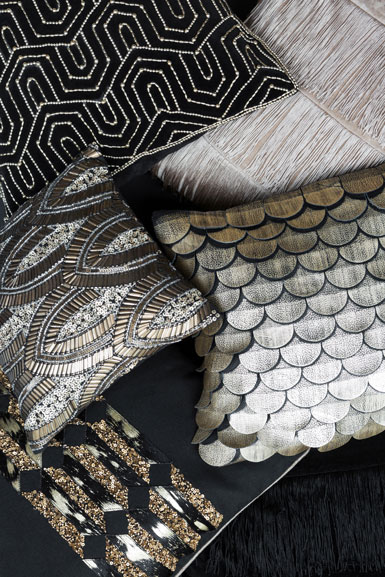
1. Modern Relics

A contrast of delicate and strong shapes and details, with mixed textures. The idea of unearthed antiques interplays with modern materials to create future heirlooms.

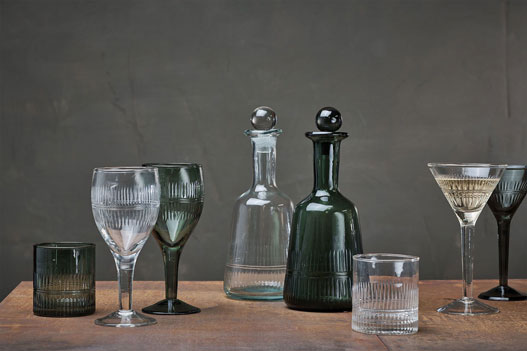
“This trend sees classic shapes given a contemporary look through new digital techniques and traditional etched surfaces. Rich textures and luxe gleaming metals add sumptuous elements to rough and irregular black surfaces of unearthed pasts. Add finishing touches to the home to complement the trend such as cushions, glassware or vases,” suggests Healy-Adonis.

interior trends 2020

2. Introspection

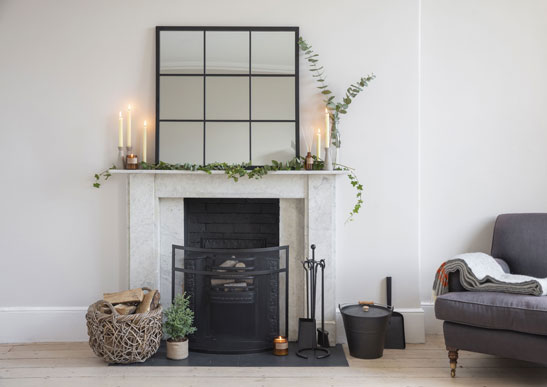
This trend sees muted, multiple inputs from our surroundings, dialled down into introspective subdued colours and calm tonal blocking. This is not stark minimalism – think meditative and calming with multi textures.

“Soft winter pales and warm neutrals create meditative, clean palettes that are grounded in natural materials,” says Healy-Adonis. “Mixed textures and serene scenes are seen in calm tonal blocking. Colours to invest in include whites, softened teals and olives, dusky pinks and light grey.”

interior trends 2020

3. Grounded Rituals

This one’s all about a natural autumnal, earthy, tactile vibe that’s tied to nature and wellbeing. These everyday items are elevated through the craft of honest materials and the uniqueness of nature. Answering the need for quiet restorative rituals.

“This trend brings the grounding of nature into the home through raw materials and handmade pieces. One-of-a-kind products are formed in metal accents, woven textiles and tactile wood. This restrained detailing and pared-back palette will enhance the sanctuary of the home,” Healy-Adonis notes.

interior trends 2020

4. Soft Assembly

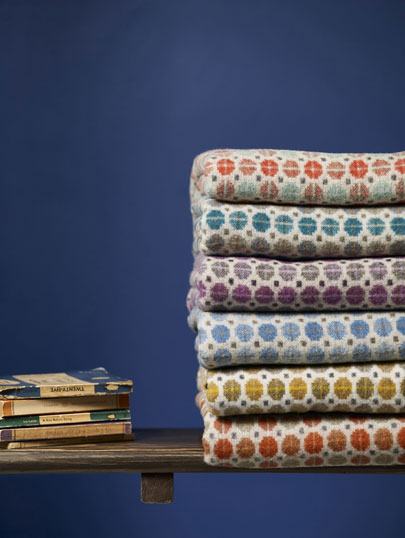
The retro modern feel combines reassuring nostalgia with playful rounded shapes and graphic prints. Imperfect outlines are key in mid-tone brights, anchored in rich navy and coffee tones.

“Irregular graphics and mid-tone brights will add the modern retro feel to the home. Look out for organic shapes with a sophisticated crafty feel. This will be seen through dining wear, throws and cushions, and decorative items,” explains Healy-Adonis.

interior trends 2020

5. Bio Flux

This trend speaks to the mix of organic and hyper-real, where natural looks sci-fi and bio-design is the future, today.

Healy-Adonis says: “This scientific and sterile trend sees a mix of organic shell-like dark tones and iridescence modernise ombre styles. The unique and free-form nature of the materials offer interesting overlays of organic colours.”

interior trends 2020

6. Sublime Opulence

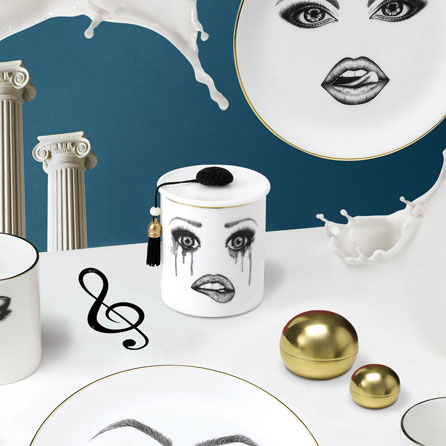
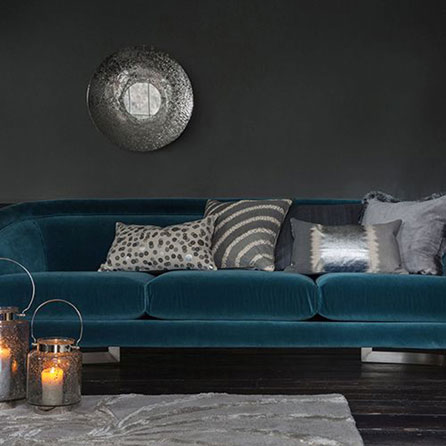
Maximalism is muted with a restrained palette of deep blues and yellow golds. Plush velvets and textured metallics reference historical detailing and add a luxurious serenity.

“Tonal blues are still a key trend for 2020, moving into a more yellow tone, adding warmth, calmness yet opulence to the home,” explains Healy-Adonis. “Historical detailing stylised with modern twists including gold-edged art prints, this is a key trend which is staying around for another season.”

interior trends 2020

7. Industrial Organics

This trend speaks to the in-between space of man-made and organic, of the chunkiness of old machinery, but with the ease and simplicity needed for an uncomplicated life.

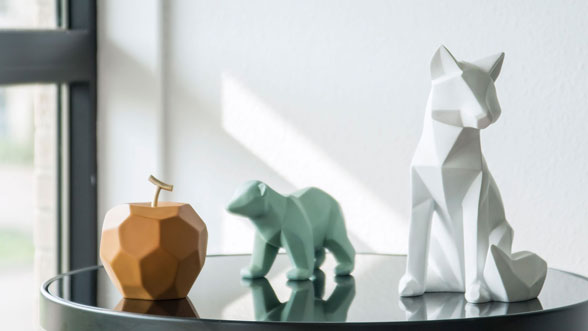
“With the focus on unfussy functional pieces, this trend includes asymmetric bold shapes contrasted with soft tones. Pale dusty pinks and mints, rust, ochre and blues are grounded by warm naturals and stark black,” suggests Healy-Adonis.

JAY RAYNER: ‘The Best Foods Operate as a Time Machine’

jay rayner

The restaurant critic discusses memory, food and Dairylea with Ella Walker, on the release of his latest book.

“People have this image of me, face down in whatever’s available,” explains restaurant critic and MasterChef judge Jay Rayner, somewhat irked.

He admits that, to an extent, he does play up to that assumption, but beneath all the fork-wielding bravado, he is trying to impart that food “really isn’t just about how things taste. It goes into every part of our lives; it’s about politics and the environment, sex, relationships, family, and history – you can investigate the world through what’s on your plate.”

So accuse him of just stuffing his face for a living and he’ll tell you, “You don’t understand – it’s a subject as deep as the ocean”.

His new memoir-menu hybrid, My Last Supper: One Meal, A Lifetime In The Making, deep-dives into the bit of culinary ocean associated with him; 53-year-old, London born and bred Jay Rayner, father-of-two, radio presenter, jazz pianist, and garlic butter-drenched snails fanatic.

And yet it also asks a very fundamental question of us all: Imagine you’re on death row, what would your final meal be? It’s a question that’s been levelled an absurd number of times at Rayner, yet his usual quip (“I’d have lost my appetite”) doesn’t quite capture what’s really going on.

jay rayner

“What you’re really being asked is, ‘If there were no consequences, if nobody was watching, if you didn’t have to hate yourself in the morning, what would you have?'” he explains. “That struck me as interesting, because actually what you’re talking about is the foods that matter to you, that make you who you are.

“It’s about memory. The foods we love are not just to do with flavour and aesthetics, they’re to do with when you first tasted them and why, and what mood you were in.”

He recalls a tweet someone sent him about their own last meal: “[He wrote] ‘I’d go and knock on the door of what was my gran’s house, and ask if I could sit on the back step and eat a Dairylea triangle’.

“I thought, ‘Oh bless you, that’s absolutely lovely’ – now, is Dairylea the finest cheese in the world? No, but for that person, do they remind him of somebody he loved and who loved him, and loss, and all of that? Yes, they absolutely do, and in a way, the best foods operate as a time machine.”

My Last Supper tracks Rayner as he defines, and then serves, his own last meal – featuring those garlicky snails, as well as oysters and chips (his top five ‘fried-potato experiences are suitably ranked’) – while he is “still in a good enough state to enjoy it”. He takes stock of his life as he goes.

It is by turns exposing (“quite literally so,” he says of an instant in a brothel that turned into a bath-based interview), indulgent, envy-inducing, peppered with recipes, and unexpected – for him as well as the reader.

jay rayner

For instance, the chapter on alcohol and his “appalling booze choices over the years” (Thunderbird made it into his final dinner, not that we’re judging) “was actually about my control issues” he says, while to the consternation of many – particularly his younger son – salad features in what you’d think would be a wholly decadent dinner.

“I realise it’s because it reminds me of who I am,” says Rayner sincerely. “I love having salad at the end of a meal, and also it’s about self-care – which is a term I only came to understand very recently. It’s how you look after yourself, you’ve only got one body and all that sort of stuff.” And yes, you can find him in the gym quite regularly.

When asked what he learned about himself writing the book he pauses, then says, without bitterness or malice, that what “did strike me was that drama and adventure slightly comes to an end when children arrive”.

“I suppose that makes absolute sense,” he says, noting his sons are now 20 and 15. “The first 25 years of my life I did some outrageous things.”

“You need to embrace that period of your life when you are freer,” he adds. “I’m not always sure I did embrace it with enough commitment.”

jay rayner

He mentions his regret over not going to Berlin to witness the fall of the Berlin Wall, “because I was 23 and an important freelance journalist with too many deadlines – for god’s sake!” he says, laughing at himself with a certain amount of despair. “I was quite grandiose as a young man.”

Throughout the book he is frank, both in his recollections and his assessment of his life and tastes. (“The very least you owe the reader is to be honest and to be open.”)

“This is my last supper, it’s not anyone else’s,” he says, to the point of bluntness. “This is not a menu recommendation, and certainly, the last supper menu that comes out of it – please, don’t try this at home kids! It’s an insane meal in many ways, but that’s because it’s mine, it’s made up of my stories and my passions.”

So whatever your own ‘last meal’ might be (and whether or not it would include Dairylea), remember says Rayner: “It’s all so emotional, it’s about neighbourhoods, it’s about the people who feed you, it’s about memory.”

My Last Supper: One Meal, A Lifetime In The Making by Jay Rayner is published by Guardian Faber, priced £16.99. Available now. Visit jayrayner.co.uk/live-shows for My Last Supper live show details.

As Grand Designs Turns 20 Kevin McCloud Shares his Favouite Simple Builds

grand design favourite builds

From an underground bolthole in Peckham, to an eco-build on the Isle of Skye, Luke Rix-Standing discovers them all.

Television isn’t famous for job security, unless, that is, your name is Kevin McCloud. The veteran presenter has fronted Channel 4 property programme Grand Designs since its inception in 1999, and he has no intention of quitting anytime soon. “It’s become me,” he says, “I don’t even question it.”

In 20 years, McCloud has seen plenty of structural success stories, but also his fair share of domestic duds. “The real horror shows are the ones that never make it to the screen,” he says, “out of the 200 or so projects we’ve filmed, there have been maybe eight or 10 that we’ve had to abandon after one day of filming, after investing so much time and money.”

With more projects under his belt than most architects, McCloud knows a thing or two, because he’s seen a thing or two. “People fall down because they fail to prepare,” he says. “The design, the detail, the fine drawing – all that stuff needs to be done before it touches the sides.

To celebrate two decades of Grand Designs, here’s McCloud’s favourite simple builds from his time on the show…

grand design favourite builds

Lucie Fairweather – Suffolk, Season 10

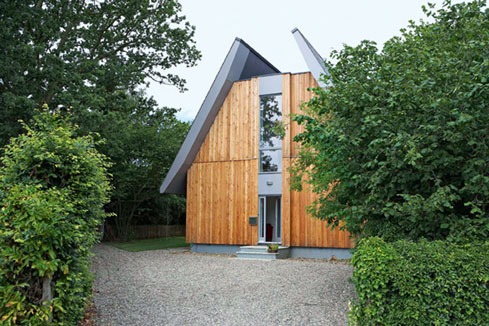
Lucie and her partner Nat McBride bought this plot in Woodbridge in 2006, and were granted planning permission in 2007. Nat was diagnosed with cancer and passed away a year later, but Lucie saw through their shared vision of building a house that was as aesthetically attractive as it was environmentally sustainable.

Kevin says: “I’m really fond of these small, inexpensive projects – they’re more important as Grand Designs, than the big, show-off things people often think of. It’s here that the innovation happens, when people push with small budgets to deliver great experiences.”

“Lucie’s was just fantastic. It was a wonderful story about redemption, and about her taking her late husband’s vision and building a house for her small children. It was tinged with tragedy and sadness, but also with the tremendous friendship of Jerry Tate, a great friend of her and her husband’s. He not only designed the home for her, but held her hand through the whole process.

“It was an exemplary, three bedroom suburban home, but Lucie is a primary school teacher and she didn’t have a lot of money. The takeaway is that it’s not about buying stuff – if she can do it, anyone can.”

grand design favourite builds

Rebecca and Indi Waterstone – Isle of Skye, Season 12

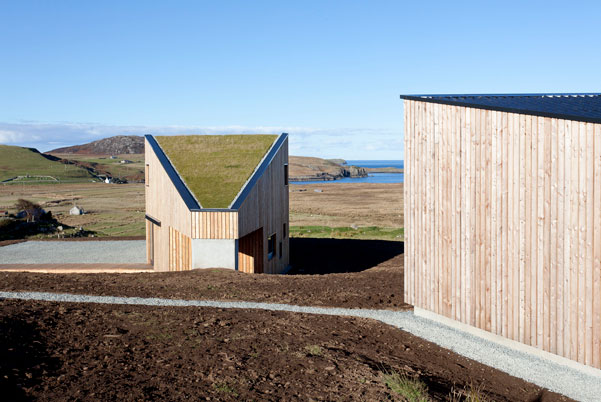
An ultra energy-efficient, 90 sqm home of the Hebridean island of Skye, residents Rebecca and Indi pay just £50 a year in bills, despite the exposed location and the bitter winters. An exceptionally well-organised project, it took them 10 years to fund and just nine months to build.

Kevin says: “I loved this project for a lot of reasons. The Isle of Skye is just beautiful, and when we filmed it, the island was basking in sunshine while the rest of the country spent a summer in the rain. I could drink whiskey, have fantastic food, and see fantastic wildlife – whales, sea eagles, skuas…

“In the midst of it all was this tiny little jewel – an example of how to be sensitive to beautiful landscape, but contemporary as well. It goes to show that if you go somewhere and invest in it – build a house, live there, and make a contribution to the local economy – people respect you for it.

“The Isle of Skye is full of holiday lets owned by people that don’t live there, but Indi and Rebecca moved to live there all year round. Objections to their planning application were from people that didn’t live there, who wanted the place to remain populated by picturesque crofters’ cottages. Anyone who lived on the island loved what they were trying to do.”

grand design favourite builds

Monty Ravenscroft – Peckham, Season 5

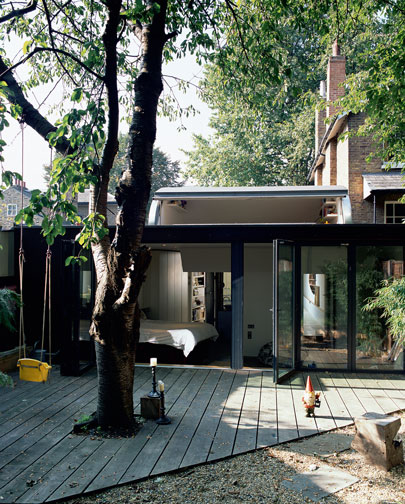
A £220,000 home in South London with a sub-subterranean floor, this inventive build features a 10 sqm retractable glass roof, an LED light fitting that doubles as a shower, and a bed that slides away, revealing a bath. Construction wasn’t quick, but planning permission took two and a half years.

Kevin says: “Monty’s an actor and musician, so he’s a bit of a Renaissance man, and he built this very cheap house in South London for himself and his wife Claire. It was a long time ago now – during filming Claire was expecting a baby who’s now a young man.

“It’s a great project about one guy experimenting with all the ideas he’s ever had, with so much excitement. Monty was such a bundle of energy and so lovely to be around. He collaborated with an architect called Richard Paxton, himself a great inventor and a very inspirational man. He sadly passed away, so whenever I think about Monty’s project, I think about him.

“It’s a highly personal project for me, and it demonstrated that you don’t need much money. You need a bit of guts and an inventive mind, and if you haven’t got an inventive mind, find a mate who has. It’s not about reaching for the chequebook to solve a problem, it’s about reaching for the pencil and figuring problems out.”

grand design favourite builds

Theo and Elaine Leijser – Stirling, Season 6

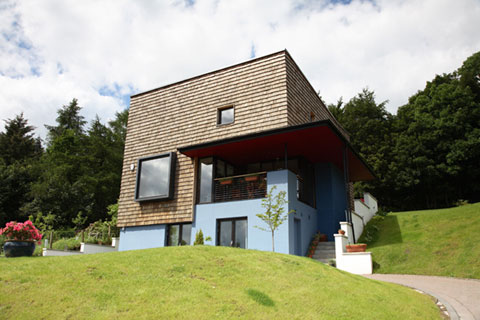
A cedar-clad home in central Scotland overlooking the picturesque Campsie Fells, Theo and Elaine used clever design to funnel all the views from their house onto the fells, and away from a nearby main road.

Kevin says: “This project was all about delivering the experience of big, expensive architecture at a small scale. It was a beautiful, quick-to-put-up little box built onto a hill, and it had this amazing gallery above the ground floor.

“Whenever you were at the front of the house, you saw this fantastic arrangement of landscape and nature, because of the way the building was organised. It had this lovely little corridor from the kitchen that was low, narrow and compressed, and then suddenly the living room released you.

“It comes back to that point about shopping – it’s to do with the building organising your life and your daily activities in a way that brings you joy.”

Kevin McCloud will be appearing at Grand Designs Live at The NEC, from October 9-13, 2019. For more information and tickets visit www.granddesignslive.com

These are the Tools you Need to Make Light Work of Autumn Jobs

Whether you're digging, cutting back, planting bulbs or trimming hedges, we select the right tools for autumn tasks.

What are the must-have tools for autumn jobs? There’s an array of leaf blowers, rakes, spades, forks and hand tools on offer, but what shouldn’t you be without as you take on new season tasks?

With help from Louise Golden, gardening expert at Dobbies Garden Centres, these are the right tools for the right jobs…

best autumn tools

1. Winter digging

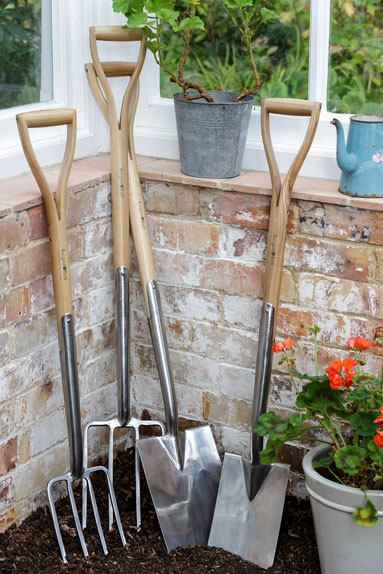
You’ll need a good fork to break up the ground and a good spade to clear any old, dusty soil before adding a good dose of organic matter such as compost or well-matured manure to the area.

Try quality spades and forks from Burgon & Ball (burgonandball.com) available in lightweight versions (£39.99 each) ideal for a smaller garden, or regular digging size (£42.99).

If you’re creating a new bed or need to clear a lot of ground, consider the new Ego (egopowerplus.co.uk) multi-tool cultivator attachment with a 24cm cutting width (£149).

It provides an easier way to prepare soil for planting. Its rotating teeth remove weeds and aerate the soil, doing all the hard work so you don’t have to.

Golden also advises giving your lawn some TLC to see it through winter by aerating it with a garden fork to reduce compaction, and scarifying it with a springtine rake to remove moss.

2. Clearing leaves

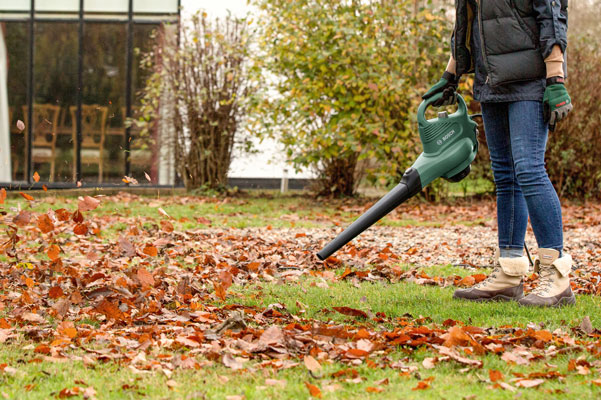
Clear away leaves from pathways and patios before they become too soggy to rake and make the ground really slippery. If you have a small area you can make do with a standard rake, but if there are a lot of leaves on your lawn, go for a rake such as the Fiskars Gardening Action Xact Leaf Rake (RRP £31.99, available from DIY retailers including B&Q and Homebase and all good garden centres).

Alternatively, go for a combined leaf blower and sucker such as the Bosch UniversalGardenTidy blower-vacuum (£109.99, shop.bosch-do-it.com), a three-in-one gizmo which can blow, vacuum or shred, disposing of leaves and other garden debris.

If you can bear a slightly less pristine garden, leave leaves in your borders, which act as a mulch and can help protect overwintering creatures.

3. Planting bulbs

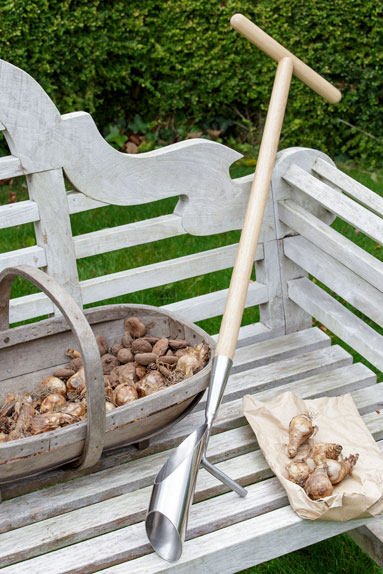
“Planting spring flowering bulbs is a major autumn task, and so a handy tool to use is a bulb planter,” says Golden. “They make light work of the task and speed up the process, particularly when planting lots of bulbs to naturalise in grass.”

Now’s a good time to plant narcissi, crocuses and hyacinths, so make life easy by investing in a long-handled bulb planter (£34.99, burgonandball.com) with a tough footbar to allow you to go easily to the maximum depth, instead of struggling on your hands and knees with a trowel that will make hard work of digging deep enough.

4. Hedge trimming

“Early autumn is the perfect time to trim evergreen hedges and shrubs for a neat finish that will remain crisp all winter long,” says Golden. “Hedging shears are ideal, whether hand, electric or motor, depending on the size of the task in hand.”

If you’ve followed RSPB advice not to cut hedges between March and August – the main breeding season for nesting birds – now may be a good time to tidy up hornbeam, beech, Leyland cypress and thuja hedges. Fast-growing hedges such as privet or the evergreen honeysuckle can also be cut now, but no later than the end of September.

For smaller hedges you could do the job with a decent pair of shears such as Kent & Stowe hedge shears (£17.99, dobbies.com). For larger hedges, battery power may be the way to go.

5. Pruning

“The end of summer is when we should think about tidying the border by cutting back spent perennials,” says Golden. “A good pair of secateurs will do the trick, and you don’t need to break the bank to get cracking.”

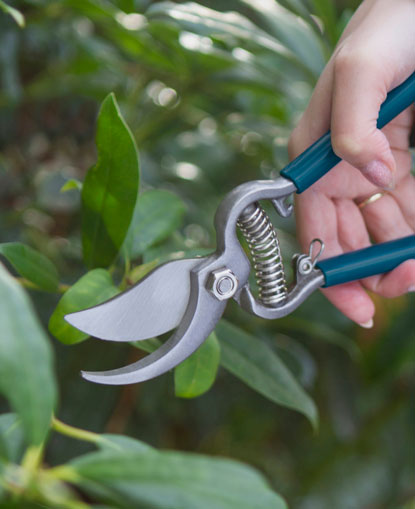
You’ll need a good set of cutting tools for clipping overgrown shrubs and perennials which have finished flowering. Sarah Raven’s new range of tools includes steel-bladed bypass pruners (£19.95, sarahraven.com) with non-slip grips and a quick-release locking mechanism.

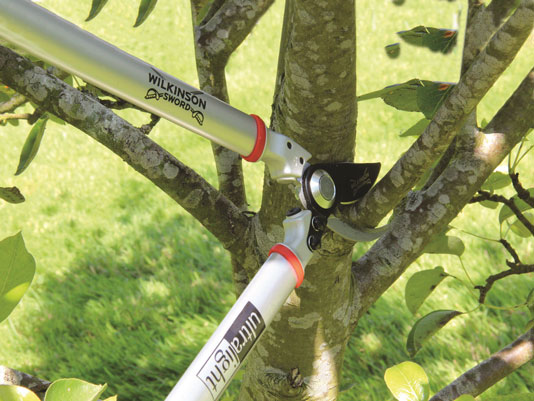
You’ll need loppers to tackle thicker branches, and if you don’t like heavy kit, go for Wilkinson Sword’s Ultralight Bypass Loppers (£27.99, wilkinsonsword-tools.co.uk) to help to cut back overhanging vegetation. The non-stick coated blade cuts through young and green wood, while the loppers are 50% lighter than standard, saving arm strain when working for long periods of time.

Eco-Friendly Decorating Ideas for a more Planet-Friendly Home

eco designer homes

Want your homeware and decor choices to be more sustainable? From reclaimed timber to recycled kitchen tops, Gabrielle Fagan checks out the options.

We’re all aware of the need to look after our environment – and where better to start than at home?

Luckily, more and more companies are embracing eco-friendly approaches and solutions, and designers are becoming ever-more inventive and innovative in their use of recycled materials to create desirable homeware – so you don’t have to sacrifice your style for your principles.

“Year-round, we consistently see people searching for inspiration on Pinterest to shop and live in ways more mindful of the environment,” says Enid Hwang, culture and community manager at Pinterest, who’ve seen a 108% increase in searches for sustainable lifestyle this year.

The site notes that September, when summer holidays are over, is the ‘back to life’ period – when, feeling renewed and refreshed, people look for ways to make small changes in their lives, such as recommitting to their environmental efforts.

“We’ve seen that reflected in searching for sustainable items for their homes, like recycled materials, eco paint and even bamboo bedding. Sustainable lifestyle choices are now a major theme for many Pinners,” notes Hwang.

Need some inspiration? From wallpaper and paint, to furniture and accessories – follow our guide to creating a home to match your values…

eco designer homes

Paint it green

Some house paints use casein – a protein derived from milk or beeswax as a binding agent – while others use ingredients that have been tested on animals.

Mindful of this, the Duke and Duchess of Sussex chose Auro, a non-toxic vegan paint which is also child-friendly, when they decorated baby Archie’s nursery. Auro Coloured Emulsion, from £48 for 2.5L; Wood Paint – Satin, from £16 for 375ml, AuroPaint.co.uk.

A lot of paints contain high levels of VOCs (volatile organic compounds), which emit solvents into the air that are associated with causing dizziness and headaches, and may affect those with allergies.

Crown’s Breatheasy Coloured Emulsion range is 99.9% solvent-free and certified under the asthma & allergy friendly Certification Program.

The Breatheasy range starts from £14 for 2.5L of emulsion and, a further plus, comes in containers made of 100% recycled plastic, which are fully recyclable once empty and clean.

eco designer homes

Paper and plant

The desire for wallpaper with good eco-credentials is growing, and Little Greene not only has great designs, but sources and uses paper from certificated sustainable forests.

“We manufacture our wallpapers in the UK and for every tree used four more are planted,” says Ruth Mottershead, Little Greene marketing director.

“Wallpapers are printed using non-toxic pigments and our high-quality wallpaper paste contains no solvent.”

Their London Papers V range, a collection of authentic heritage designs, starts from £73 a roll.

eco designer homes

Recipe for eco cooks

If you want to cook up a storm but reduce your carbon footprint, sustainable timber is a good choice for kitchen units, worktops and flooring.

Deforestation is a major environmental issue that’s contributing to global warming, so look for the FSC (Forest Stewardship Council) ‘tick tree’ logo, which signifies it is certified timber that comes from well-managed forests and/or recycled materials.

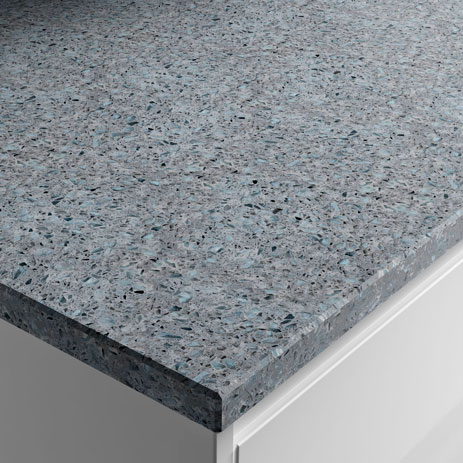
Make sure worktops don’t let the side down. Wickes offers worktops made from recycled materials in its range of kitchens.

Details count and bamboo kitchen containers are an excellent alternative to plastic (they look lovely too). Bamboo is a highly renewable, fast-growing natural material with antibacterial, anti-fungal properties, and it’s biodegradable.

eco designer homes

Lie back and think of the planet

You’re setting the bar higher if you want a purely vegan lifestyle – but it’s perfectly possible according to Jo Peters, author of new book, Vegan Life: Cruelty-Free Food, Fashion, Beauty And Home (Summersdale, £12.99).

“Vegans prefer to avoid using materials that come from animals, which can make home furnishing seem like a challenge at first,” she acknowledges.

“But, as with stocking your fridge, once you’ve sussed out what to avoid – and found some reliable suppliers of alternatives – you’ll be able to make ethical choices in every room.”

In her handy guide, she highlights the main culprits to avoid in home furnishings: Leather (and suede), wool (and felt), silk, down, fur and cowhide. She also points out that “when choosing a new couch, remember that you’ll need to consider the padding materials as well as the cover.”

That said, it’s useful to remember that making use of pre-existing leather, wool, etc, items that are still in good condition, is generally more planet-friendly than throwing things away only to replace them with new plastic ones!

eco designer homes

Reclaim and rejoice in style

“As everybody becomes more eco-aware, the demand for sustainable furniture that is kinder to the planet is on the rise,” says Ben Adams, co-founder and master craftsman of Rust Collections, creators of sustainable rustic-luxe reclaimed pieces made from locally salvaged timber. They also use oak certified by the FSC.

“By using local recycled wood, we keep transportation miles down and give new purpose to a material that’s already had a life, and in doing so, the carbon footprint is kept very low,” explains Adams.

“Keeping the use of freshly-milled timber to a minimum also means putting less pressure on our natural timber resources, preserving more for future use.”

eco designer homes

Material concerns

“Over the last few seasons at Habitat, we’ve seen a definite increase in demand from shoppers who are obviously interested in purchasing designs made using recycled and sustainable base materials,” says Siobhan McMillan, head of buying for Habitat.

“In textiles, we’re working with suppliers to increase the amount of designs made from fabric that is recycled from the fashion industry. Fabric off-cuts that would have otherwise been thrown away are instead re-dyed and woven to create new rugs and cushions, and we’ve increased the amount of patterns available.”

In lighting, she notes, there’s a growing demand for designs made from sustainable, fast-growing rattan and bamboo, with three-out-of-five of Habitat’s current bestselling shades made from these natural base materials.

eco designer homes

Got a Garden for the First Time? 9 of the Easiest Things Beginners Should Start With

beginners gardening tips

BBC Gardeners' World presenter Mark Lane shares advice for gardening newbies to live by. By Lauren Taylor.

If you’ve never had a garden before, it’s a real revelation when you finally move into somewhere with a patch of grass to call your own – space to potter around in, barbecues in the summer and drinks in the fading evening light.

But for people who’ve never so much as bought a pair of garden gloves and pulled a weed out, suddenly having to care for and nurture a garden year-round can be daunting.

So before the autumn threatens to dump an additional leaf problem on your garden, here are some of the simplest ways you can take control of your new patch of land – and engage in a spot of therapeutic outdoor activity.

BBC Gardeners’ World presenter Mark Lane shares his advice for newbies…

beginners gardening tips

1. Don’t do anything right away

Lane says: “Wait and see where the sun rises and sets, where the shade lies, where the wind blows, and if you are moving into an established garden, what plants come up before you change anything.”

2. Check your soil

The key to a blooming garden is a healthy soil, so what are the signs that it’s unhealthy? “If it looks light in colour and full of sand and is lightweight, or heavy and full of clay,” Lane says. “Check to see if your soil is full of worms. If so, then it’s probably teaming with life, which is a good thing.”

But the easiest thing to do is buy a pH soil tester at your local garden centre. “This will establish whether your soil is acidic, neutral or alkaline, to work out which plants will thrive. Magnolias, rhododendrons, camellias all prefer slightly acidic soils,” says Lane. “Garden centres will usually signpost which plants like which soils to make buying easy.”

beginners gardening tips

3. Know when to mow

Looking out onto a neat, luscious green lawn is probably probably one of the reasons you wanted a garden in the first place, so how do you get it looking tip-top? Well, how often you mow will depend on the time of year and the weather.

“If in doubt, mow once a week during spring and autumn, and twice weekly during summer – although once a week from spring to autumn may suffice. Mowing is not necessary during winter, especially not if the ground is frozen,” says Lane. “Aim to cut no more than a third of the leaf blade, and don’t set the mower too low or scalp the turf.”

4. Plant in groups

“Keep things simple and aim to plant in blocks of three, fives or seven of the same type of plant to create wonderful blocks of colour and texture,” he suggests.

“All plants like free-draining soils, which can also hold some moisture. Add homemade (ideal) or bought compost before planting – this will help improve drainage on clay soil and encourage moisture retention on sandy soils.

“Mulch after planting – by covering the soil with a 5cm layer of compost around the base of the new plants. Then water well.”

beginners gardening tips

5. Sow seeds

You can’t go wrong here. “If you’re on a tight budget, sow seeds. Follow the instructions on the packets as to how you prepare your soil, and you can create an almost instant garden for around £10,” he says.

6. Start with easy-to-grow veg and herbs

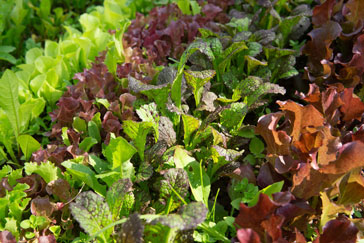
If you fancy yourself as a bit of a kitchen gardener, Lane says radish, carrots and lettuce are the quickest and simplest to grow.

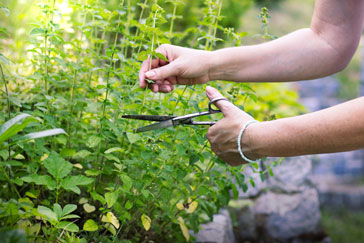
“Oregano is great for cooking and attracting wildlife, and thyme, sage and chives,” he says. “Generally, herbs like a gritty compost so add plenty of horticultural grit when planting, while vegetables prefer nutrient-rich soils with no stones.”

beginners gardening tips

7. Flowers aren’t tricky either

Don’t just choose whatever looks pretty – there are other factors to consider. “Try nepeta (catmint) as a brilliant alternative to lavender, which can often get a bit woody,” Lane suggests, “Rudbeckia (coneflower) and sunflowers too.”

He says herbaceous perennials (a plant whose growth dies down annually but whose roots or other underground parts survive) like nutrient-rich soils that will not dry out with a pH of 6.5, while wildflowers like low-nutrient soil (i.e. the subsoil) and most will grow with a neutral pH7.

8. Choose these easy-to-care-for shrubs

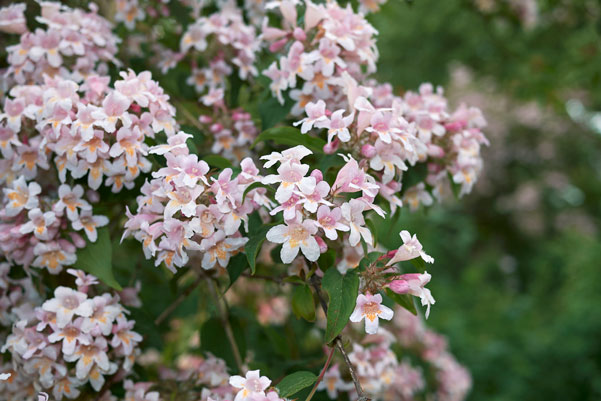
“Abelia x grandiflora, which flowers from June to September, is a wonderful evergreen shrub,” says Lane. “It’s semi-evergreen, so will give shape and texture even during the winter months and the flowers are also fragrant. Grow it in the shelter of a wall or towards the back of a border.

“Choisya x dewitteana Aztec pearl is fully hardy, evergreen, and flowers in May and often late summer. It can also be grown in partial shade. The leaves get damaged by exposure to strong winds or frost, but this won’t kill the plant.

“Pyracantha, again, is fully hardy and evergreen, with small white flowers in late spring and fantastic berries in autumn that attract birds and wildlife.”

All three are easy to care for and can be pruned to keep their shape. “If a shrub has got too large for its spot, or branches are crossing, dead, diseased or damaged then prune to keep the plants in shape and healthy. You want to have an open middle so that air can pass through the shrub, to help prevent pests and diseases.”

beginners gardening tips

9. Don’t over water

Most people over water, Lane says. If a plant needs water it might be wilting or have flowers hanging downwards. “If in doubt, dig a small ‘pit’ next to the plant and fill with water – see how quickly the water drains away,” he adds.

“If planting a dry garden, which will require less watering, then go for plants that will thrive in dry, arid conditions, such as Achillea, Artemisia, Agapanthus.

“If you’re feeling more adventurous, then divide the garden into different zones and grow plants with similar growing conditions in each zone.”

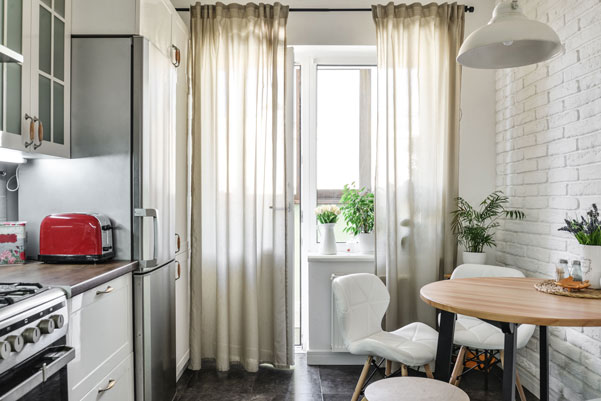
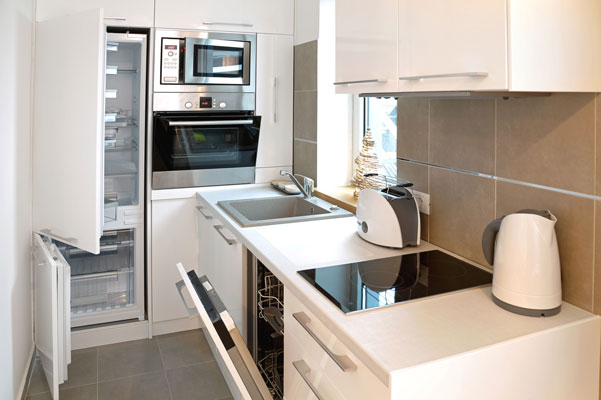
9 Top Tips to Make the Most of a Small Kitchen

small kitchen tips

Small can be beautiful and - crucially in this case - functional too. By Luke Rix-Standing.

In the modern world of cramped shoe-box flats and sardine-tin apartment blocks, space is a rare and valuable commodity.

Wave goodbye to extended worktops, double-door refrigerators, and luxurious kitchen islands – particularly in urban areas, these are now myths from a bygone age for many of us.

When space is scarce, kitchens are often the first to feel the squeeze – there’s no headline floor-filler in this room, like a sofa or bed – but there’s no need to let that cramp your cooking.

Here’s how to keep livin’ it large, even with the most modest kitchen…

small kitchen tips

1. Purge the unnecessaries

Be totally honest with yourself – do you really need that candy floss maker, that ‘pizza oven’ that’s actually just a small oven taking up half the counter top, or that margarita maker you used once back in 2013?

“It’s the number one mistake people make,” says professional organiser, Vicky Silverthorn (youneedavicky.com). “Putting the contents of a four-bedroom house into a two-bedroom house, and keeping gadgets that come out only occasionally. The fondue set, the avocado slicer, the large dinner platters for people that don’t have dinner parties… Ask yourself what you’d prefer – the space, or the appliance you use once a year?”

2. Think vertically

Floor space is not the be all and end all, and for those blessed with high ceilings, it’s crucial to cash in. Add extra shelves above your cupboards, or use the tops of your cupboards as extra storage space.

Time and budget allowing, you could install a vertical, sliding drawer, which may single-handedly take the place of a pantry. Think of your kitchen like a maths question – you’re calculating the volume, not just the floor area.

small kitchen tips

3. Use your corners

Corners are notoriously difficult to utilise, but unless you’re living in a water tower, every room has at least three or four of them. Wraparound corner shelves are shoo-ins for storage-starved kitchens, while floor lights and tables can be slotted in with ease. In most rooms, corners are dead space; in a small kitchen, they’re an opportunity.

4. Store in adjacent rooms

If your home is relatively spacious, and it’s just your kitchen feeling the squeeze, you can always store non-perishables elsewhere. There’s just no need to clog your kitchen cupboards with piles of pasta and tinned beans, when they could live just as happily somewhere else in the house.

small kitchen tips

5. Keep it tidy

Kitchens are supposed to be functional, efficient spaces, tailored to minimise the inherent pressures of cooking – and to keep a clear head when things get steamy, you need a clear work surface.

“It’s about putting the items that you have in the correct spaces,” says Silverthorn, “and there is no one-size-fits-all. Look out for gimmicky plastic containers that only contain a few tins – not everything needs to live in a basket, despite what Instagram says. Get stackable storage containers, or containers that fit inside each other when they’re not being used.”

6. Clever colours

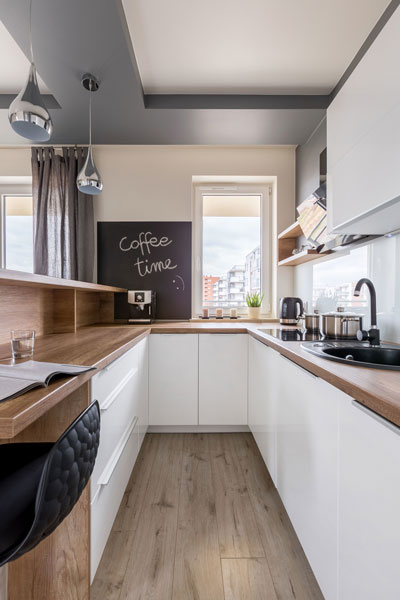
Just because your kitchen is small, doesn’t mean it has to look small. Consistent colouring helps a room feel fluid, while bright blocks of contrast colour can quickly become claustrophobic (although there are no hard and fast rules!), so consider keeping your scheme to a two-colour maximum.

Lighter colours invariably feel airier – whitewashed kitchens are increasingly common – while reflective surfaces like mirrors lend depth.

small kitchen tips

7. Tactical lighting

How large a room looks is as much about your perception as its actual size. Natural light bathes your kitchen in a vivid glow, imitating the wide open spaces of the great outdoors, while poorly-lit areas very quickly feel poky.

Artificial light is where the buck stops after-hours, and you want to mix up overhead sources with table lamps or wall lights. Accent lighting lends contrast between different parts of a room, which inevitably leaves your kitchen looking larger and more varied.

“I love lights that dim in a kitchen,” says Silverthorn. “It gives the bright, vibrant light for the morning and afternoon but can then turn cosy for when you’re winding down.”

8. Space-saving gizmos

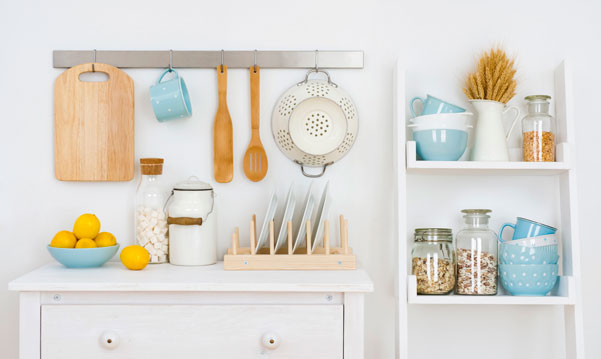
Extravagant gadgetry generally takes up more space than it saves, but there are a few specific products that earn their place. Try a magnetic knife holder – a strip on the wall that holds knives and other metallic implements – or pick up a chopping board that sits atop your sink.

Anything that can be hung should be hung. Hooks on the undersides of shelves are a go-to for mugs, while large utensils can be well catered for with rails and racks.

small kitchen tips

9. Double up

Going back to gadgetry, even seemingly sensible tools can often be economised, and canny buyers can squeeze two tools into the space of one. “Employ multi-purpose kitchen utensils,” says Silverthorn, “you’re automatically saving space.

“I’ve been working with Brabantia (brabantia.com/uk),” she adds, “and their new Tasty+ range is full of them. There’s a spatula that’s also a fork, a skimmer that’s also a ladle, a spaghetti spoon that’s also got a measuring tool in it. You’re instantly halving the utensils in your kitchen.”

×
Find a Property
M
Country & Equestrian
By submitting this form, you agree to McCarthy Holden using your personal data in accordance with our Privacy Notice.