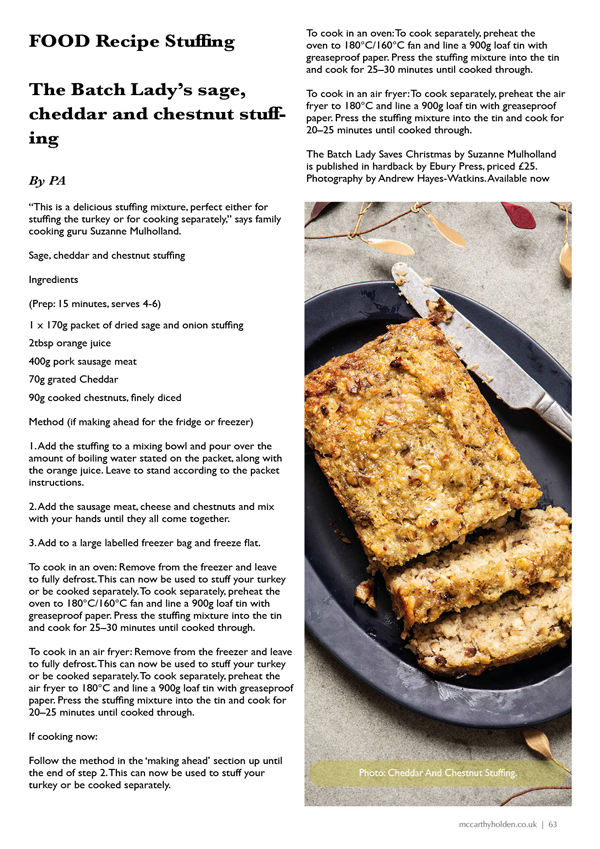
How to make Christmas stress-free by preparing food in November

BATCH LADY

Suzanne Mulholland once declared she ‘hated’ Christmas Day – she was the person who ended up organising the entire event, from presents, to decorations and, of course, the food.

“When the kids were little, I actually didn’t like Christmas. I didn’t feel it was my day. I felt like it was everybody else’s day,” the 49-year-old says. “I look back on it now and think I really did miss some key moments where I would have loved being the one sitting just helping build Lego, or whatever it was, but I felt tied to the kitchen.”

To make a busy life with children easier Mulholland started batch cooking, and after sharing videos on YouTube and Instagram, ‘The Batch Lady’ Instagram account was born. With it, the mum-of-two was able to transform Christmas so she wasn’t cooking all day.

“I started to change gradually. I would make sure my roast potatoes were done, but I always felt like there was quite a lot that maybe I couldn’t do in advance. And then over the years, I’ve actually managed to do it all in advance. Everything.

“If you happen to have a Friday morning or a Tuesday evening in November where you’re not doing anything, you can think, actually, I might get four recipes done for Christmas.”

BATCH LADY
Suzanne Mulholland, aka, The Batch Lady.

November is the perfect time to start, she says, and buying a lot of your Christmas food in November can help spread the cost.

“You can do it all in November, when you don’t have every other activity going on, like the Christmas fete at school, your kids Carol concert and your work night out. December becomes really busy for us.”

So, getting ahead for the festive period isn’t just about prepping the Christmas Day meal, Mulholland also batch cooks plenty of one-pot meals to freeze and reheat during December.

Mulholland has two types of recipes – “Either you ‘cook ahead’ – which means cooking it and putting it in the freezer, or ‘grab and cook’ which means you’re making it up raw, and then you’re putting it in the freezer,” she explains.

Here’s how to make it work for you this Christmas…

‘Cook ahead’: What to cook, freeze and reheat on the day

Mulholland says accompaniments like bread sauce and cranberry sauce, as well as sides like roast potatoes and Brussel sprouts, can be fully cooked and frozen – far in advance. “I do a lovely shredded Brussels sprout with pancetta, and you actually make that in advance, because it shreds, it lasts.”

Homemade Yorkshire puddings make well in advance to freeze, or try Mulholland’s recipe for mulled wine red cabbage. While the method works well for starters too, think parsnip and apple soup, or desserts like panettone bread and butter pudding.

“The whole point of freezer cooking is that you use recipes that are meant to be frozen. Those recipes are specifically created to make sure that they’re going to be delicious.”

And freezing doesn’t take away from the flavour. “People would be so surprised to know that in the absolute top-end restaurants [chefs] prep in advance. A lot of that will come out of freezers and fridges that have been prepped in advance. A lot of things actually taste better if you’ve cooked them in advance.”

‘Grab and cook’: What to prepare ahead, freeze but cook on the day

While some parts of Christmas can be completely made and frozen, her methods aren’t about doing that for the entire meal. “We’re still cooking Christmas dinner. We’re just not prepping everything from scratch,” explains Mulholland.

“Prepping ahead is really that you’re getting it ready, but you’re not necessarily cooking it. You’re just getting all the ingredients ready together,” she says, for example, mixing the stuffing ingredients and putting into balls, before freezing uncooked, or wrapping the bacon around sausages for pigs in blankets.

“In November, I will make the herby butter [to use under the turkey skin] and wrap it up. I’ll get the pack of streaky bacon and put it beside the herby butter. I’ll make my stuffing mix. Then I’ll get my frozen turkey from the shops and I’ll put it next to it. So I’ve really created this meal prep kit that when I bring it out, it’s defrosting, and I know that everything’s there.

“Roast veg – you parboil them, cover them in oil, put your lovely seasoning over it, and then you flash freeze it [putting it in the freezer for two hours]. You’ve part cooked them. You haven’t cooked [them] to the end and then re-cooked. It’s about prepping everything so it’s ready to come out and be cooked from frozen, but it is being cooked on the day.”

Do this for starters and nibbles too, like pork and stilton sausage rolls, and cheese and chutney straws.

Cold starters, such as chicken liver pate or mushroom and tarragon pate, make easy freezer items too.

Batch cook some additional ‘December dinners’

Make December extra easy by making and freezing some nutritious meals you can take out of the freezer whenever life gets a bit busy. Think pork, parsnip and mustard traybake, Cajun-spiced chicken, or coconut and butternut squash curry.

“[If you know] ‘I’ve got a fish pie in the freezer, and I’m going to put it in the oven tonight’ – that is the easiest thing ever, because you can make a fish pie in three minutes. But if you haven’t done that, your headspace is ‘I don’t know what I’ve got in the house, I don’t know who’s in or who wants to eat. I’ll stop at the shops, I’ll grab whatever, or I’ll grab a takeaway’

“It’s automatically going to cost you more money – and that’s a normal work day. So you take that tenfold into the busiest December, and you are racking up a lot of money and a lot of stress.”

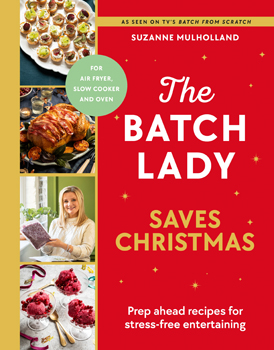
The Batch Lady Saves Christmas by Suzanne Mulholland is published by Ebury Press, priced £25. Photography by Andrew Hayes-Watkins, available now
BATCH LADY

Some Links To Batch Lady Recipes....

BATCH LADY
Click image to see recipe in online magazine
BATCH LADY
Click image to see recipe in online magazine
BATCH LADY
Click image to see recipe in online magazine

3 new Mary Berry recipes to make this autumn

MARY BERRY

Mary Berry turned 90 this year and to celebrate, she has released a new cookbook, Mary 90 – aiming to give home cooks a ‘career-spanning’ collection of fuss-free recipes for many different occasions.
It accompanies a new BBC TV series, Mary at 90: A Lifetime of Cooking.

The TV chef shares a mixture of brand-new recipes and her nostalgic classics, with Berry saying it has been a “sheer joy” to write, and includes the baking she’s so known for, alongside tasty, easy mid-week meals and crowd pleasers.

Fragrant chicken traybake

Mary Berry

“An all-in-one dish, this delicious, aromatic chicken recipe is vibrant and full of flavour,” says Berry. “Serve with rice or a dressed salad.”

Ingredients:

(Serves 4–6)

1 large aubergine, sliced into half-moons

2 peppers, deseeded and sliced into large pieces

1 large onion, sliced

3tbsp sunflower oil

3 dried lime leaves

1 large stick of lemongrass, bashed

3 large chicken breast fillets, each sliced in half

2tbsp sweet chilli sauce

150g baby spinach leaves

Small bunch of Thai basil, chopped

For the fragrant sauce:

1 x 400ml can coconut milk

2tbsp Thai red curry paste

2 garlic cloves, crushed

2tsp freshly grated ginger

Juice of 1 lime

2tsp fish sauce

2tbsp sweet chilli sauce

Method:

1. Preheat the oven to 220°C/200°C Fan/Gas 7.

2. To make the sauce, mix all the ingredients together in a bowl.

3. Scatter the aubergine, peppers and onion into a large shallow roasting tin. Drizzle with 2 tablespoons of the oil and toss everything together. Pour over half of the sauce. Add the lime leaves and lemongrass to the tin and roast in the preheated oven for 15 minutes.

4. Toss the chicken in the remaining oil and the sweet chilli sauce, and season well. Place a large frying pan over a high heat until very hot. Add the chicken and brown very quickly until sealed and golden, stirring constantly.

5. Remove the roasting tin from the oven and pour over the remaining sauce. Place the chicken on top and return to the oven for about 15 minutes, or until cooked through.

6. Transfer the chicken onto a plate. Stir the spinach and Thai basil into the sauce and vegetables in the tin and gently warm over the hob until the spinach has wilted.

7. Serve the chicken traybake with rice.

Best made and served. Not suitable for freezing.

Skate wing with caper sauce and samphire

Mary Berry

“Hugely popular, skate wings are readily available and simple to cook. The sauce makes the dish extra special. Buy samphire from the fish counter in the supermarket or farm shop,” says Berry.

Ingredients:

(Serves 4)

4 x 400g skate wings, edges trimmed with scissors

100g butter, softened, plus a knob

Juice of ½ lemon

4tbsp capers

4tbsp finely chopped parsley

400g fresh samphire

Method:

1. Preheat the oven to 200°C/180°C Fan/Gas 6.

2. Lie the skate wings on a board and use half the butter to spread over both sides of the skate wings. Season well with salt and ground black pepper.

3. Heat a large frying pan over a high heat. When hot, brown the wings in batches for 2 minutes on each side until golden.

4. Place the browned wings in a large roasting tin and transfer to the preheated oven. Roast for about 15 minutes until cooked through (the translucent flesh will become opaque when it is done). To test for doneness, try to pull the flesh away carefully from the bones with a sharp knife – if it comes away easily, it is done. Place on a large platter and cover with foil. Leave to rest in a warm place.

4. Add the remaining butter to the frying pan and heat until nutty brown in colour. Add the lemon juice, capers and parsley and remove from the heat.

5. Meanwhile, cook the samphire in a large frying pan with a knob of butter and a splash of water over a high heat. Fry for a few minutes to heat through.

6. Divide the samphire between the plates and top each one with a skate wing. Pour over the caper butter sauce to serve.

Best made and served. Not suitable for freezing.

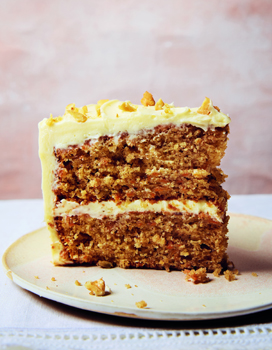
Carrot cake with frosting

Mary Berry

“A carrot cake is so popular, especially in coffee shops and bakeries,” says Berry. “My version includes my favourite spices. Carrot cake originated in the USA where they make cakes with oil, rather than our butter-based sponges. Use a flavourless oil, such as sunflower or vegetable.”

Ingredients:

(Serves 8–10)

4 large eggs

175g caster sugar

75g light muscovado sugar

250ml sunflower oil, plus extra for greasing

1tsp vanilla extract

2 ripe bananas, mashed

150g carrots, peeled and coarsely grated

275g self-raising flour

2tsp baking powder

1tsp ground cinnamon

1tsp ground ginger

½tsp mixed spice

55g walnuts or pecans, finely chopped, plus a few extra for decoration

For the cream cheese frosting:

250g butter, softened

2tsp vanilla extract

350g icing sugar

350g full-fat cream cheese

Method:

1. Preheat the oven to 180°C/160°C Fan/Gas 4. Grease and line the bases of 2 x 20cm (8in) loose-bottomed sandwich tins.

2. Break the eggs into a large bowl and beat with a fork to break up. Add the caster and muscovado sugar, oil and vanilla and mix well.

3. Add the remaining ingredients to the bowl and whisk using an electric hand whisk until just combined. Be careful not to over beat.

4. Divide the mixture between the two prepared tins and level the surface. Bake in the preheated oven for about 35–40 minutes until well risen and lightly golden. Leave to cool in the tins for 10 minutes, then transfer to a wire rack.

5. Meanwhile, make the frosting. Measure the butter, vanilla and icing sugar into a large bowl and whisk using an electric hand whisk until combined. Add the cream cheese and beat until creamy and light.

6. Peel the paper from the bases of the sponges and invert one onto a plate. Spread with frosting. Place the other cake on top and use the remaining frosting to cover the top and sides, leaving a pretty swirl on top. Decorate with walnuts or pecans to serve.

Can be made and assembled up to 8 hours ahead. Freezes well but best to ice on the day.

Mary Berry

Mary 90 – My Very Best Recipes by Mary Berry is published in hardback by BBC Books, priced £28. Photography by Tara Fisher. Available now

How to grow a bumper crop of strawberries to rival Wimbledon

As the tennis championships approach, all thoughts are on this favourite summer fruit.

It’s strawberry season, and British strawberries are off to a great start, with British Berry Growers reporting one of the most promising early seasons in recent memory, thanks to warm days, cool nights and the highest sunshine levels in over 100 years.

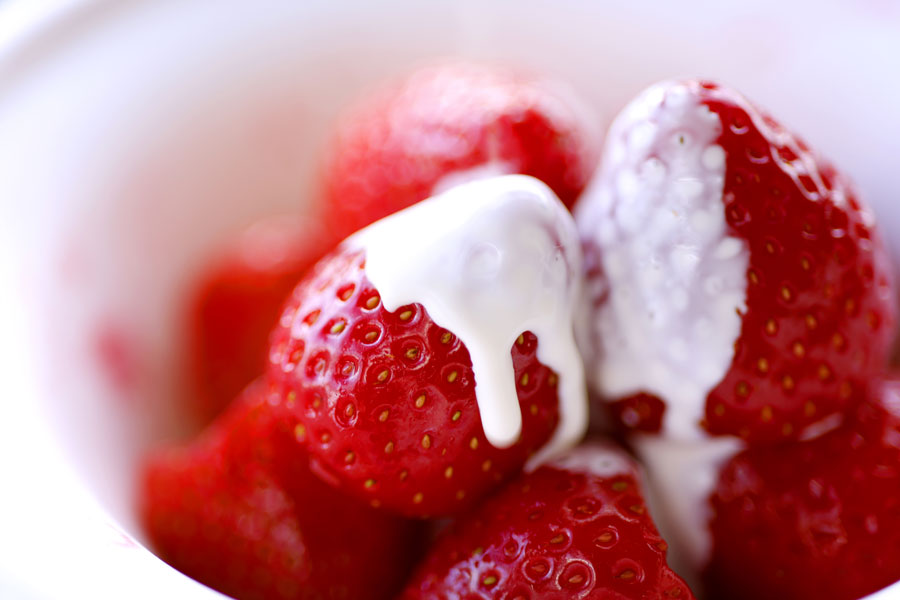
And nothing shines a light more on this delicious fruit than the Wimbledon Tennis Championships. On average, 200,000 portions of strawberries and cream are enjoyed during the fortnight.

But there’s nothing quite like the taste of home-grown strawberries picked fresh from the plant to add to your summer desserts – and they are not that difficult to grow. So you could already be thinking about next year’s crop.

The weather makes a difference

“The weather has been very kind to all growers,” says Jim Floor, managing director of berry growers Hall Hunter. “We had a very cold February and March, then from April onwards it’s been sunny – and strawberries love sunshine.

“The nights have been quite cool and the perfect environment for strawberries is 20 degree days and 10 degree nights.”

Plenty of bees help

If you have a garden with plenty of plants which attract pollinators, such as open-flowered geum, iberis, cranesbill geraniums, lavender and heathers, you’re likely to get better crops because the bees will pollinate the strawberry flowers.

For the biggest harvests…

You’ll need plenty of space for a strawberry patch if you want a huge crop, and will need to plant numerous plants. Alternatively, you can grow strawberries in pots but because of the limited number of plants you can accommodate, your yield may be limited.

Many types produce new runners after flowering, which create new plantlets on their own.

You can also plant different varieties of strawberries to extend the season – summer-fruiting types, perpetual strawberries which produce a smaller quantity of fruit from summer until autumn, and Alpine, or wild, strawberries, which bear small crops of tiny berries spasmodically during summer.

How to grow

Plug plants are a good bet and are available in garden centres and nurseries from late spring onwards, or alternatively you can buy bare-root plants, known as runners, which look like root clumps, in late summer or early autumn, and again in spring.

Plant in full sun or in polytunnels where they will be warm and won’t become damp, or if outside a raised bed or grow bag is a good option, Floor suggests.

“I grow them in a hanging basket (at home) because they tend to do much better if they’re not (at ground level) in the soil, where there are lots of pests and diseases.”

During the growing season, make sure they are fed and watered regularly. “I would recommend a balanced multi-purpose liquid feed.

“If you want sweeter strawberries you might want to put more potassium in, but you need to be careful because any overfeeding of potassium, calcium or nitrogen could give you a problem.

“Calcium can burn the leaves, potassium could potentially kill the plants and (overfeeding with) nitrogen, you will get 100% leaves and no fruit.

Possible problems

Slugs are a threat, he warns. “Last year because of the mild winter and the wet year the problem was slugs, particularly if you were growing strawberries in the ground.

“This year it’s been about keeping everything irrigated. As long as the plants have plenty of water, they will do well.”

Birds may also feast on the fruits, so it would be wise to cover your strawberries with netting if you need to keep them at bay.

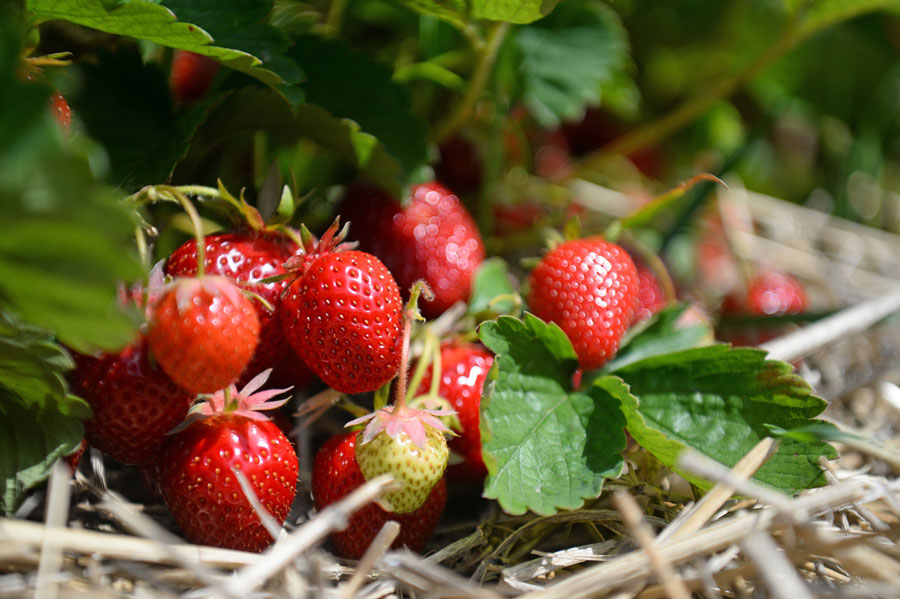
As the fruits emerge, place straw underneath them so the fruits don’t brush against the ground and rot.

When are they ready to pick?

When they are evenly red, he says. “They don’t necessarily come off the stem quite easily. If the fruit comes off easily it may be over-ripe.”

After fruiting

“De-leaf the plants a little bit, getting rid of the debris and dead leaves, and there’s no reason why they couldn’t be kept for another year,” he suggests.

Good varieties

Strawberries which have received the RHS Award of Garden Merit include ‘Hapil’, which produces large red fruits and is lauded for its vigorous growth and is well-suited to light or drier soils and to containers; and the late season ‘Florence’ which has ‘exceptional disease resistance’ and whose large dark red fruits are produced in mid-July.

Saturday Kitchen’s Matt Tebbutt: TV bloopers and three great recipes

Saturday Kitchen’s Matt Tebbutt editorial at McCarthy Holden

BBC Saturday Kitchen star Matt Tebbutt says one of his biggest challenges is not swearing because “you forget you’re on TV” – and over eight years he’s made a few blunders.

“You have to remember you’re on telly, and you can get very comfortable and act and say things you would in your own kitchen with your friends – you could easily swear, because I’m quite sweary” says the 50 year old, who replaced James Martin as presenter in 2016.

“I called Peter Gordon [a New Zealand chef] an f****** genius, under my breath. I had to apologise, I was mortified.”

Funnily enough, Tebbutt says he later received an email from Gordon’s PA thanking him for the mention on Saturday Kitchen in 2017. “[They said], ‘Our website has crashed, would you like to come for lunch?’

“I was told off quite rightly, but since then, I always try to have a little word myself before [going live].”

Tebbutt says that while the guests do wine tastings alongside tucking into the dishes cooked up on the show, he’s careful with alcohol while on air.

“What I’ve realised very quickly is that if I drink half a glass of wine, suddenly the autocue moves around, you’re not very good at linking words together. So if I drink like a centimetre of wine in the whole show, I’d be surprised.

“We taste a lot in rehearsals,” he adds.

Saturday Kitchen’s Matt Tebbutt editorial at McCarthy Holden
Matt Tebutt

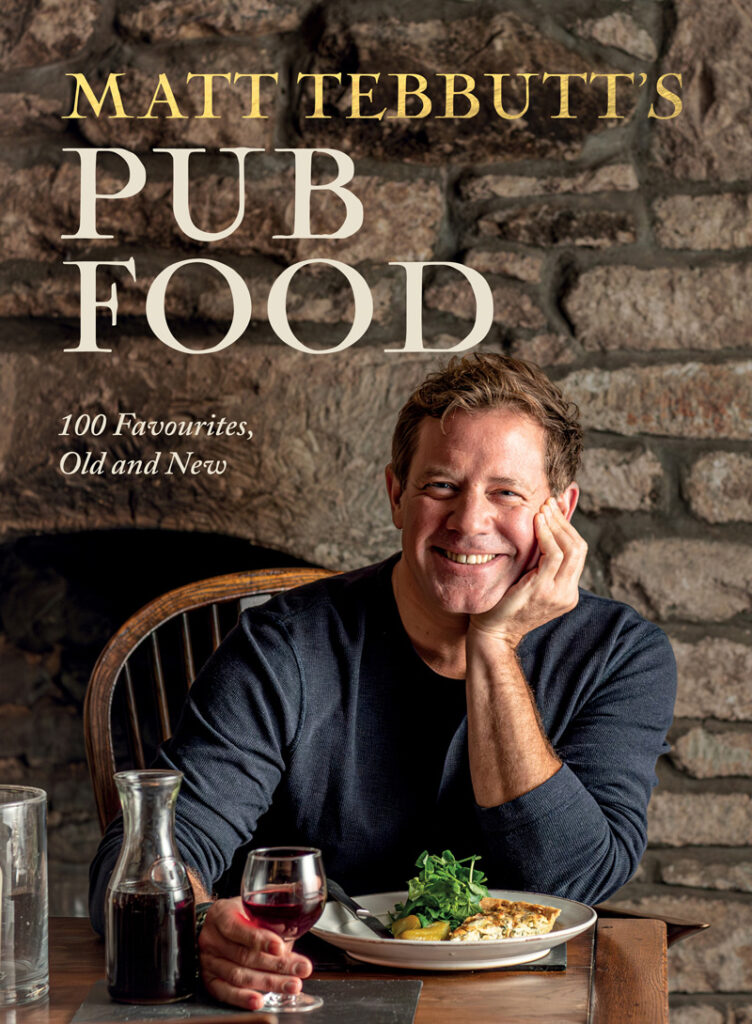
Tebbutt has just released his latest cookbook, Pub Food, a collection of elevated pub dishes – think mussels cooked in beer with crispy monkfish cheeks, and rump of Welsh lamb with spiced aubergine, mint and yoghurt – as well as a celebration of British pubs in general.

They are “one of the last melting pots there are in life”, says the chef, who also presents Food Unwrapped on Channel 4. “I will disappear on a Friday and go and do Saturday Kitchen. And then I’ll meet some quite famous faces sometimes, get back to the pub [near his home in Monmouthshire], and nobody gives a monkey’s! They really don’t care, and it’s great.

“You can be in the same place with very wealthy people and farmers, and the guy who empties the bins, all on the same level, and you’re all having a chat- there’s very few places you can do that anymore.

“Then if you throw good beer and conversation in the mix, and good food, I think they’re really special places.”

But local pubs are “having a really s*** time at the moment”, Tebbutt says. “They are struggling, the prices are going through the roof, energy costs, food costs, staffing. It’s all hindering the growth – they’re shutting by stupid numbers per week. I think it’s a real shame and it’s something worth trying to save.

“People need to remember that they’re not going to always be there. And if you’ve got a good one then go and support it.”

Tebbutt and his wife Lisa ran the Foxhunter Inn, Monmouthshire, for 14 years, where they championed sustainable, local fare – something that’s still his M.O. “In the mid Nineties [when working in London] seasonal and local weren’t really such a big thing. Then I moved out, set up my own place, and it seemed obvious because A, it’s going to be cheaper, and B, it’s going to be at its best.”

People are “much more in tune” with sustainable eating now, he notes.

Many of the recipes in the new book are influenced by the local produce of Monmouthshire and what he used to be on the pub menu. “Obviously, [there’s] a lot of lamb, a lot of mushrooms through foraging, crayfish dishes – because we get crayfish in the rivers – wild samphire, eel, black pudding,” Tebbutt says.

Eventually, he burned out running his own pub. “It was a very different sort of relentless business. We didn’t take a break – we did it for 14 years. I was juggling TV and the restaurant for quite some time, and then reached a point where I didn’t think it was sustainable, because I was knackered.

“Little country pubs, as lovely as they are, and everyone wants them on their doorstep, they’ve got to be supported because they’re bloody hard work to keep going.”

Tebbutt originally learned his trade in Michelin star kitchens in London, training under Marco Pierre White and Sally Clarke. And despite having to get up at 5am to film Saturday Kitchen, the hours are “a walk in the park” compared to life in a professional kitchen.

“When I first got into TV and you do 10-hour days or something, and you’d have people saying, ‘Are you OK?’, ‘Do you need to sit down?’, ‘Do you need a drink?’ – no, I’m fine! When you’re used to working 18-hour days in sometimes horrible conditions, everything [else] is a breeze.”

Tebbutt was first attracted to life in the kitchen after reading White Heat by Marco Pierre White when he was 16. “It just made chefs look really cool and sexy and really, really rock and roll. It was the first cookbook that had this dirty-looking, kind of rugged chef producing the most beautiful place of food.

“That juxtaposition between the sweat and the blood and tears at the back of house and the control at the front – I just kind of fell in love with it.

“Kitchens, they’re a bit like joining the army. You go in at the bottom, you keep your head down, you find your way and you slowly build yourself up. It’s brutal but you learn a lot.”

But some head chefs do take it too far. He remembers going to eat in one restaurant when he was working in London by a very famous chef at the time; “They had an open door and we saw this chef absolutely, continually tearing his kitchen staff apart. To the point where it was all heads down, they looked broken.

“And then you get the food, it looks beautiful, but you don’t want to eat it because of the misery that’s gone into it.

So now, “I don’t like the chef, I won’t eat their food.”

Matt Tebbutt’s Pub Food by Matt Tebbutt is published in hardback by Quadrille on August 29, priced £26. Photography by Chris Terry.

Saturday Kitchen’s Matt Tebbutt editorial at McCarthy Holden

And Now Some Recipes From Matt

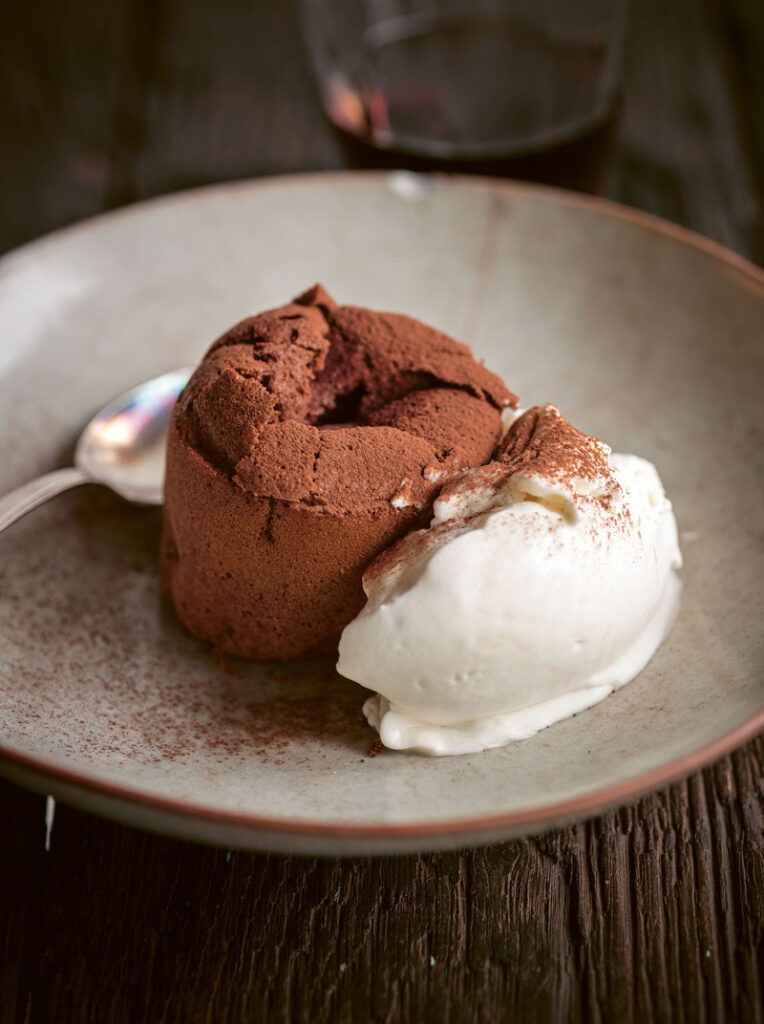
Matt Tebbutt’s chocolate pudding and mascarpone ice cream recipe

By Lauren Taylor

“This is quite a light, delicate chocolate cake, with a deliciously molten interior. The star anise is optional if you’re not a fan,” says TV chef Matt Tebbutt.

Chocolate pudding and mascarpone ice cream

Ingredients

(Makes 10-12 little puddings)

For the mascarpone:

350ml water

150g caster sugar

Finely grated zest and juice (about 75ml) of 2 unwaxed lemons

400g mascarpone cheese

For the chocolate puddings:

250g dark chocolate, broken into pieces

250g unsalted butter

125g caster sugar

1 tsp freshly ground star anise, sieved (remove the seeds from the pod, and crush in a pestle and mortar), optional

5 medium free-range eggs

5 medium free-range egg yolks

50g plain flour

a pinch of salt

Good-quality cocoa powder, to serve (optional)

Method

1. Start both the ice cream and cake the day before. For the ice cream, simply boil the water, sugar and lemon zest in a saucepan. Once the sugar has dissolved, remove from the heat and stir in the mascarpone with the lemon juice. Cool and chill in an ice-cream maker (be careful not to over-churn). Freeze in a suitable container.

2. For the chocolate pudding, melt the chocolate and butter in a bowl over a saucepan of hot water. In a bowl, whisk the sugar, powdered anise, whole eggs and egg yolks until light and pale. Slowly add the melted chocolate to the egg and sugar mixture. Carefully fold in the flour and salt. Pour the mixture into little 200ml non-stick moulds, filling them halfway. Chill in the fridge overnight.

3. Next day, preheat the oven to 180°C/350°F/Gas 4.

4. Remove the pudding batter from the fridge, bring to room temperature and bake in the preheated oven for 10 minutes, no longer. The outside of the cake mix should be set firm yet the middle will remain molten.

5. Serve the cake hot with the mascarpone ice cream and a dusting of cocoa powder, if liked.

Saturday Kitchen’s Matt Tebbutt editorial at McCarthy Holden

Matt Tebbutt’s smoked haddock souffle tart

By Lauren Taylor

“Lighter than a traditional quiche, but just as satisfying. Always source naturally smoked haddock,” says TV chef Matt Tebbutt.

Smoked haddock souffle tart

Ingredients

(Serves 4)

2 smoked haddock fillets

1.5 litres whole milk

1 bunch fresh dill, chopped

60g unsalted butter, melted

50g strong Cheddar, grated

1 tbsp crème fraîche or double cream

3 free-range eggs, separated

1 ready-made 22cm round shortcrust pastry case

Salt and pepper

To serve:

Mixed green salad dressed with olive oil and lemon juice

Lemon wedges

Method

1. Preheat the oven to 200°C/400°F/Gas 6.

2. Place the haddock and milk in a large saucepan and poach for 8–10 minutes or until cooked through.

3. Remove the fish, leave to cool and break the haddock into flakes. Place the haddock in a bowl and stir in the dill, melted butter, cheese and crème fraîche and season with salt and pepper. Add the egg yolks and mix to combine.

4. In a separate bowl, whisk the whites until stiff peaks form. Fold the egg whites gently through the haddock mixture.

5. Spoon the haddock mixture into the tart shell and bake for 35 minutes or until the filling has risen and the pastry is golden.

6. Serve the tart in slices with a green salad, and a lemon wedge for squeezing over.

Saturday Kitchen’s Matt Tebbutt editorial at McCarthy Holden

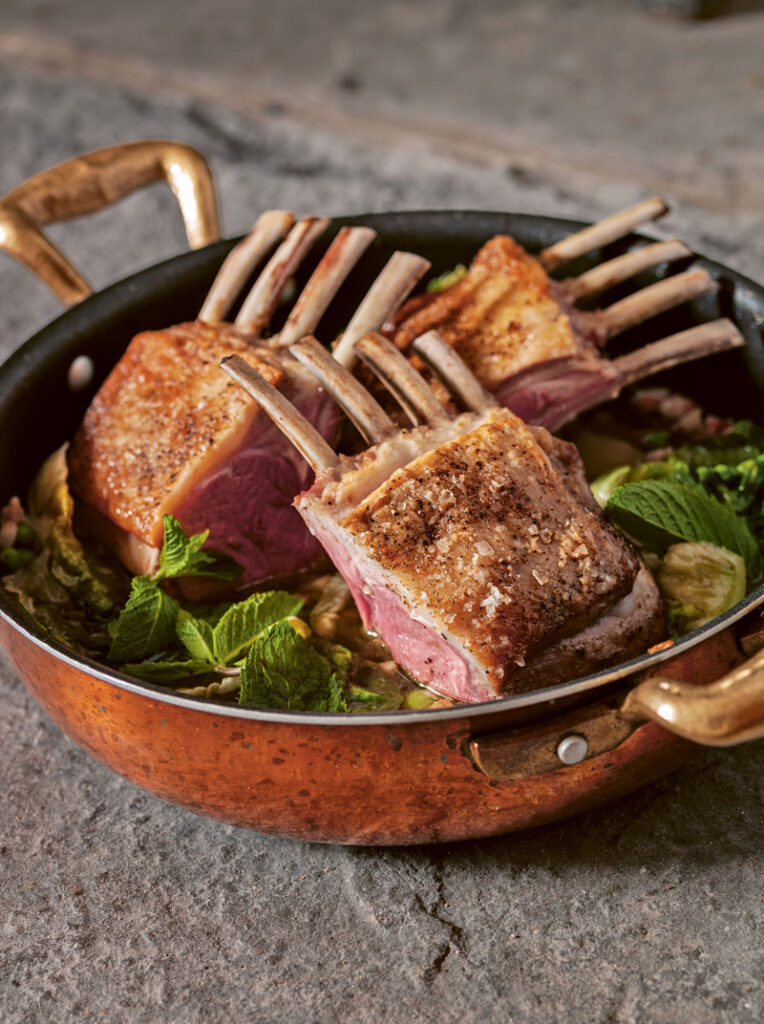
Matt Tebbutt’s rack of lamb recipe

By Lauren Taylor, PA

“I don’t really need to comment much on this one – it’s heavenly, early summer on a plate!” says TV chef Matt Tebbutt.

Rack of lamb with baby gem lettuce, peas, mint and bacon.

Ingredients

(Serves 4)

Olive oil

2 x 8-bone racks of lamb

Salt and pepper

4 sprigs fresh thyme, leaves picked

75g unsalted butter

4 medium baby gem lettuces, halved

200g pancetta or bacon, diced

4 garlic cloves, peeled and thinly sliced

100g fresh shelled peas, blanched and refreshed

800ml lamb stock

4 sprigs fresh mint, leaves picked and torn, plus extra to garnish

Method

1. Preheat the oven to 200°C/400°F/Gas 6.

2. Heat 1 tablespoon of olive oil in a large frying pan. Season the lamb fat with salt and pepper, then fry fat side down for a few minutes over a high heat until browned.

3. Turn over, put into a roasting tin and sprinkle with some of the fresh thyme. Roast in the preheated oven for 15–20 minutes or to your liking. Leave to rest for 10 minutes before serving.

4. In another frying pan, add 15g of the butter and colour off the baby gem lettuces, cut side down, in the foaming butter. Throw in the diced pancetta, the garlic and remaining thyme, and sauté for a few minutes until coloured. Add the peas and pour in the lamb stock. Bring to the boil and simmer for 2–3 minutes to warm everything through.

5. Cut the lamb into chops and place on a large serving dish. Throw the mint into the simmering stock along with the remaining butter. Stir in to enrich the sauce and give it a good sheen. Season carefully, as the pancetta may already have seasoned the stock sufficiently. Spoon around the lamb racks and serve garnished with the extra mint.

Saturday Kitchen’s Matt Tebbutt editorial at McCarthy Holden

Latest Property Magazine & Market Insights

Magazine Icon McCarthy Holden

We are please to create our latest edition of In The Country & Town, providing an opportunity to provide our readers with market insights and also showcase some great properties to buy or to rent for those starting their 2024 property search this month.

In January and early February 2024 the house market has moved quickly with positive buyer activity turning into a healthy amount of new property sales, confirming in our view that house buyers believe that the best in house buying opportunities will be during the first six months of 2024.

For market insight and our advice to buyers and sellers, just click on the image below.

There are many fine properties to see within the pages of our magazine and you will see the wonderful interiors of some of the finest properties on the Berkshire / Hampshire borders, including a preview of the property shown below which is not yet on the open market. If you click on the image you will see more details and a video tour embedded in the magazine.

And here is another magazine preview exclusive, Situated within the sought after village of Herriard.

This exquisite three bedroom detached family home built in 2020 by Forays Homes, is located within an exclusive development of just three detached properties.

Benefits to this property include a detached double garage with ample driveway parking, air source heat pump, dressing room, underfloor heating, and wonderful countryside views.

Click on them image below for more details. 

Why not indulge in looking at our 90 pages magazine and see the wonderful interiors of some of the finest properties on the Berkshire / Hampshire borders.

We also hope you will enjoy reading some of the editorial features, including recipes from new chef Big Zuu, Caroline Quentin on her gardening experience, Paloma Faith: Becoming a mum, why going plant-based could transform your health, Michael Sheen on why he hopes The Way ‘gives voice’ to Port Talbot, TV & Film on One Love star Kingsley, how to renovate your kitchen sustainably, and motoring. 

Click image below for a full read.

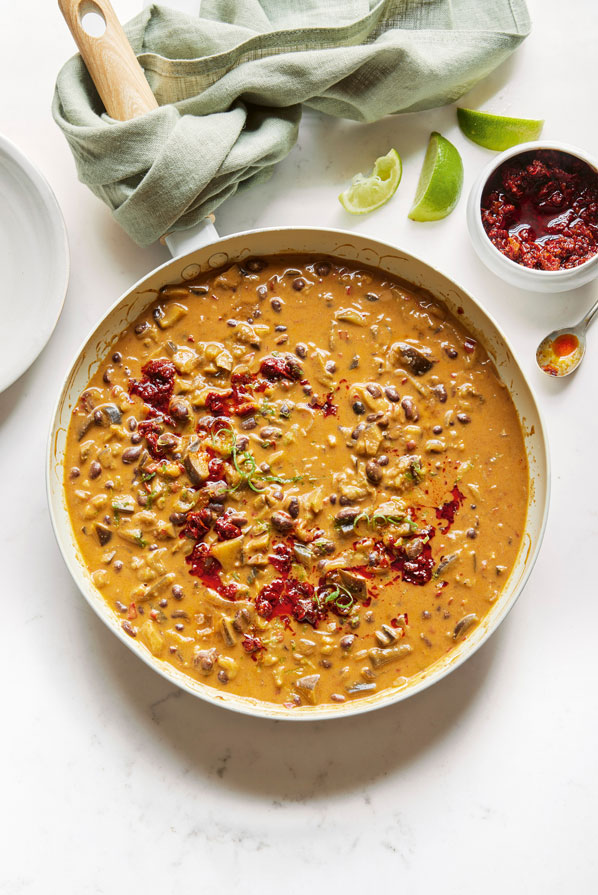
Ella Mills’ creamy black bean and harissa stew

Ella Mills Deliciously Ella McCarthy Holden news item

“The best thing about batch cooking is that the flavours of the dish tend to get better the longer they marinate, so the leftovers are always a real treat, and this is certainly the case in this recipe,” says Ella Mills, the brains behind Deliciously Ella.

“It’s hearty and cosy, with lovely spices from the harissa, sweetness from the coconut and maple syrup, and a delicious nutty flavour from the almonds. The aubergine gives it great texture, while the beans ensure it really fills you up. It’s great on its own for a light supper, or for something a bit more substantial serve it with jasmine rice, jacket potatoes or crispy roast cauliflower.”

Creamy black bean, harissa and almond butter stew

Ingredients:

(Serves 4)

1tbsp olive oil

2 shallots, halved and finely sliced

1 aubergine, finely diced into 1cm cubes

4 garlic cloves, crushed

1 × 400g tin of black beans, drained and rinsed

3tbsp harissa, plus extra to serve

1 × 400ml tin of coconut milk

400ml hot vegetable stock

2 heaped tbsp smooth almond butter

2tsp maple syrup

Grated zest and juice of 2 juicy limes

Sea salt and black pepper

Method:

1. Put the olive oil into a large frying pan over a medium heat, add the shallot and aubergine and a pinch of salt and fry for five minutes, until soft. Add the garlic, black beans and harissa and fry for two minutes, until fragrant.

2. Pour in the coconut milk, stock, almond butter and maple syrup. Bring to a boil, then put the lid on the pan and turn the heat down to a simmer. Cook for 15 minutes, until the sauce has thickened.

3. Stir in the lime zest and juice and season with salt and pepper to taste. Swirl an extra tablespoon of harissa through the stew to serve (if you’d like a little extra spice).

Note: To make crispy roast cauliflower, simply chop your cauliflower into small florets, place them on a baking tray with a tablespoon or so of olive oil and a sprinkling of salt and roast in an oven preheated to 200ºC fan for about 20–25 minutes, until golden and crispy.

My girls love this recipe too, so when I’m cooking it for the family I hold off on the harissa and stir it into the adult portions once I’ve served the little ones.

Ella Mills Deliciously Ella McCarthy Holden news item
Ella Mills’ creamy black bean and harissa stew

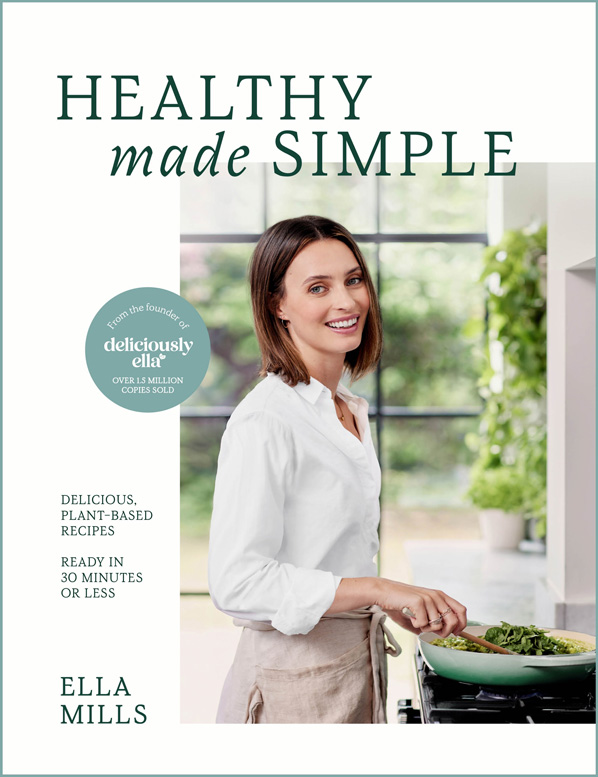
Deliciously Ella: Healthy Made Simple by Ella Mills is published by Yellow Kite, priced £22. Photography by Clare Winfield. Available now.

Ella Mills Deliciously Ella McCarthy Holden news item

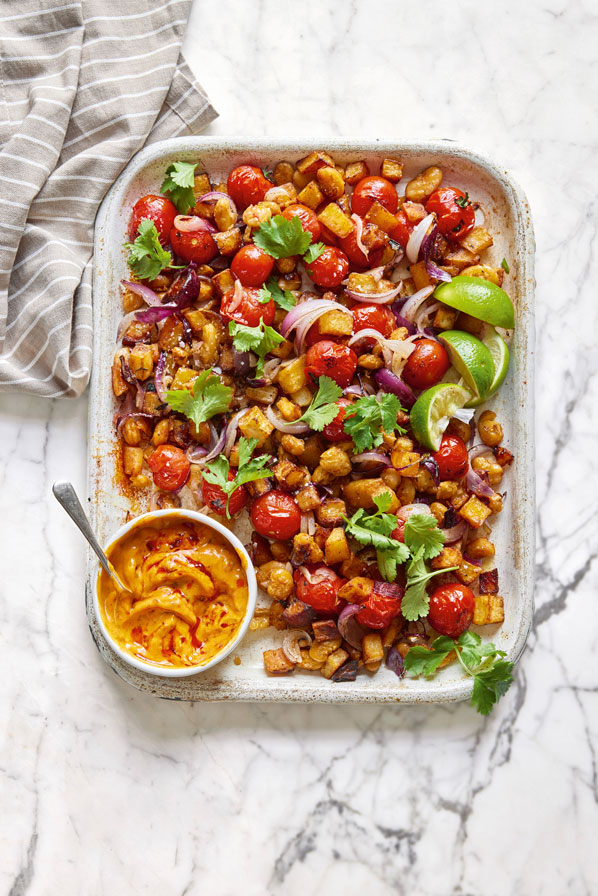
Ella Mills’ crispy potato and paprika tray bake recipe

Ella Mills Deliciously Ella McCarthy Holden news item

“Crispy, crunchy, hearty and super-simple, this tray bake is the ideal recipe when you want something satisfying without lots of prep, mess or brain space!” says Ella Mills, the brains behind Deliciously Ella.

“The zesty harissa yoghurt is really versatile too; it makes for a great dip or dressing with any veg.”

Crispy potato and paprika tray bake

Ingredients:

(Serves 2)

3 floury potatoes, such as Maris Piper (about 350g), with their skin

½tbsp olive oil

2 red onions, halved and finely sliced

2tsp paprika

1 punnet of cherry tomatoes (about 200g)

1 × 400g tin of butter beans, drained

½ bunch of coriander (about 10–15g), roughly chopped

Sea salt

For the harissa yoghurt:

4tbsp coconut yoghurt

2tbsp harissa

Grated zest and juice of 2 limes, plus wedges to serve

Method:

1. Preheat the oven to 220°C fan and bring a large saucepan of salted water to the boil.

2. Cut the potatoes into one-centimetre cubes then add them to the boiling water. Meanwhile, put the olive oil into a large flat baking tray and place in the oven to heat up. Simmer the potatoes for five minutes, until softened slightly and a knife pierces them easily, then drain well and add them to the preheated tray along with the onion, paprika and a pinch of sea salt. Toss to combine, then bake for 20 minutes, tossing occasionally so that the potatoes cook evenly.

3. Add the cherry tomatoes and butter beans to the tray and cook for a further five minutes until the tomatoes are soft and the potatoes are crisp.

4. Meanwhile make the harissa yoghurt by mixing the coconut yoghurt, harissa, lime zest and juice together in a small bowl, seasoning with salt to taste, then transfer to a small serving bowl.

5. Once the potatoes are ready, remove from the oven, sprinkle over the coriander and serve with the harissa yoghurt on the side.

Ella Mills Deliciously Ella McCarthy Holden news item
Ella Mills’ crispy potato and paprika tray bake

Deliciously Ella: Healthy Made Simple by Ella Mills is published by Yellow Kite, priced £22. Photography by Clare Winfield. Available now.

Ella Mills Deliciously Ella McCarthy Holden news item

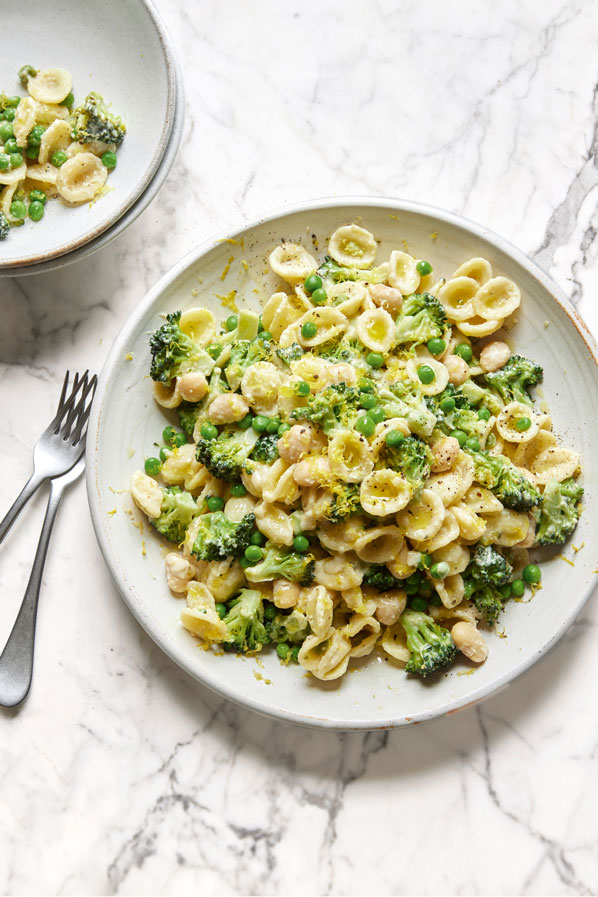
Ella Mills’ lemony pea and broccoli pasta recipe

Ella Mills Deliciously Ella McCarthy Holden news item

“I make a variation of this for my kids a lot, using whatever greens I have in the fridge – green beans, asparagus, spinach etc. It’s exceptionally simple yet super-satisfying,” says Ella Mills, the brains behind Deliciously Ella.

Lemony pea and broccoli pasta

Ingredients:

(Serves 2)

2 servings of pasta; I like orecchiette in this dish (about 75g per person)

1 small head broccoli (about 300g) cut into small florets

100g frozen peas

Large handful of cashews (about 50g, see note below)

1 vegetable stock cube

1tsp Dijon mustard

1tbsp nutritional yeast

Grated zest and juice of 2 lemons

1 × 400g tin of butter beans, drained and rinsed

Sea salt and black pepper

Method:

1. Bring a large saucepan of salted water to the boil and add the pasta. Cook according to the instructions on the pack, adding the broccoli and frozen peas for the last three minutes of the cooking time. Cook until the pasta is al dente, the broccoli is tender, and the peas are defrosted, then drain and return to the pan.

2. Meanwhile, put the cashews and stock cube into a bowl with 100 millilitres boiling water, let the stock cube dissolve and the cashews soak for five minutes.

3. Put the mustard, nutritional yeast, the juice of both lemons and half the zest, and half the tin of butter beans into a high-speed blender along with the cashews and their soaking liquid. Blend until you have a smooth, creamy sauce. Season with salt and pepper to taste.

4. Pour the sauce over the drained pasta and veg, adding the last half of the butter beans. Stir to combine and top with a little extra lemon zest.

Note: To make this nut-free, swap the cashews for sunflower seeds.


Ella Mills Deliciously Ella McCarthy Holden news item
Ella Mills’ lemony pea and broccoli pasta recipe

Deliciously Ella: Healthy Made Simple by Ella Mills is published by Yellow Kite, priced £22. Photography by Clare Winfield. Available now.

Ella Mills Deliciously Ella McCarthy Holden news item
Healthy Made Simple by Ella Mills

These are the foods to eat to avoid colds and flu this winter

By Lauren Taylor, PA

Nutritionist to the stars, Gabriela Peacock, has revealed the immune-boosting foods to get into your diet this winter, if you want to starve off dreaded colds and bugs.

A lot of people don’t realise just how interlinked winter health and nutrition are, says the 44-year-old, but our immune system “is directly dependant on what we put within the body to create a chemical reaction – it’s really, really important”.

Here are Peacock’s hero foods your body needs this winter…

Fermented food – “Digestion support is incredibly important for immunity – 70 to 80% of our immunity actually lies within a digestive system,” says Peacock, whose celebrity clients include Princess Beatrice, Joan Collins, Jodie Kidd and Amber Le Bon.

She recommends eating live yoghurts, kefir, kombucha, sauerkraut, kimchi and tofu. “They directly increase the beneficial bacteria in your intestine, which supports the healthy microbiome – and the healthy microbiome will in turn support our immunity.” They also contain protein. “Protein is really important for any kind of repair within the body, so when you have a cold, when you scratch your arm, when you need more hormones to be produced.”

How to add it: Peacock recommends using live yoghurt as a base for homemade ice cream with a dash of agave syrup.

“Sauerkraut goes really nicely with any kind of rich foods, which is what we tend to eat around this time, quite heavy and oily meals, sauerkraut cuts through it,” she says. “Kombucha is just a nice alternative when you get a bit bored of drinking water. Most of them are really, really low in sugar.”

Green tea – “This would be one of my one of my hero drinks, especially over this period of the year because tea is nice and warming. Green tea contains catechins which are polyphenols,” explains Peacock.

“Polyphenols are phytochemicals – plant chemicals that have numerous health benefits. One of the main benefits is immunomodulating properties [which] stimulate our immune system and decrease the chronic inflammation. Basically, when you’re looking at the immunity, you want to decrease the inflammation.”

How to add it: If you drink coffee, Peacock suggests sticking to one or two a day and then switching to green tea afterwards.

“A really good to tip is to put lemon in green tea – you increase the absorption of the catechins, plus it gets rid of the bitter taste. Don’t make the tea too hot because the heat will kill the vitamin C.”

Matcha tea – powdered green tea – is another great way to get the nutrients but is higher in caffeine. “I would recommend thinking about it as a caffeine supplement [to coffee],” she says.

Pigmented fruits – “We are looking for the dark pigments, [they] will contain the polyphenols which will directly stimulate the immunity. So think about black blackberries, red raspberries, red peppers, green kale, orange or yellow pumpkins – if and you see these saturated colours, they are really beneficial. “Eat the rainbow – beige food is not good for us. The pigment is the polyphenol.”

How to add it: “I would recommend doing smoothies because you are keeping the fibre inside [as opposed to juicing]. If you’re doing smoothies I always recommend adding some greens that are lying in your fridge. You will not taste it at all but you increase your colours, you increase your fibre,” Peacock says.

“I don’t dislike juicing but I would never have juice on an empty stomach. You should have it with foods or have it after foods. Think of it as more of a vitamin boost – as apposed to food.”  You can buy supplements of red and green superfood powder too, which she recommends adding to smoothies, live yoghurt or soup.

Omega-3-packed fish, nuts and seeds – “Essential fatty acids are incredibly important – the reason they’re called essential is because your body cannot produce them by itself, you need to obtain them by diet,” says Peacock. “Omega-9 and omega-6 we tend to be OK with [obtaining] but most people struggle with omega-3 because we just don’t eat enough of it. This would be oily fish; salmon, mackerel, sardines, a bit of tuna, also a vegetarian source; nuts and seeds.

“We need to at least three to four portions of oily fish per week in order to cover your basic baseline.”

Seeds, in particular, are really high in omega-3, says Peacock. “Pumpkin seeds, sunflower seeds, flax seeds, hemp seeds, also a nice variety of nuts is really important. Omega-3 is directly anti-inflammatory. They’re [also] really important for our skin, our hair, our hormonal balance, for the way our cells communicate with each other. But the prevention of chronic inflammation is one of the main benefits.”

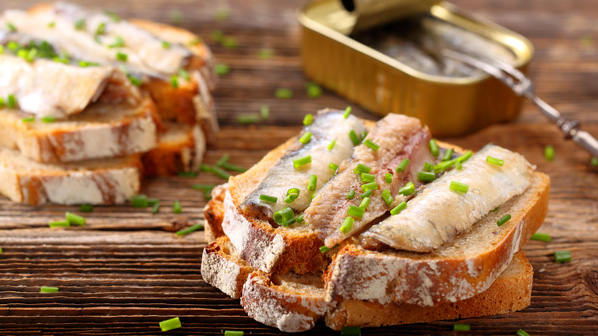
How to add it:  “You know what’s really good and really cheap – mackerel and sardines in a can. They’re kind of unattractive but I absolutely love them. You can get mackerel in a spicy tomato sauce [in a tin] – absolutely delicious.”

She suggests tinned sardines on toast, keeping bowls of seeds on your kitchen counter to add to everything (especially soups and porridge) and carrying nuts in your handbag. “Food source would be preferential but you can get supplements of omega-3 – 99% of my clients need supplementation.”

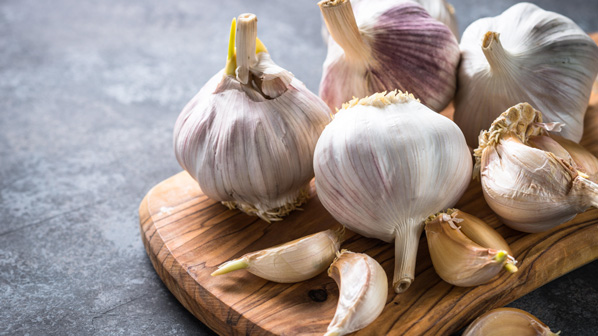
Garlic – Garlic contains sulphur (as do onions, leeks and eggs). “Sulphur is incredibly important because they stimulate the liver detoxification processes and that in turn will have a really positive effect on immunity.” Peacock says.

How to add it: “I would add it into everything really – include it as much as possible. With garlic, you only release the sulphur-containing compounds when you crush it, so it does need to be crushed down and not cooked for too long. Add garlic very last minute. The cooking process helps for the absorption but if you overcook it, if you deep-fry garlic, it will definitely reduce its properties.”

Cruciferous vegetables – Including broccoli, cauliflower, cabbage, Brussel sprouts and kale – are really important for immunity, Peacock says, and it’s “probably the best liver-supporting group of vegetables”. They contain liver-friendly sulphur, polyphenols and are high in fibre – which is “fantastic for digestion” (immunity and digestion are very much linked).

How to add it: Include different kinds in your Sunday roasts, she suggests. “If some clients of mine don’t like the taste or texture of cabbage or kale [I suggest] cutting them into really small pieces – you get exactly the same benefits and you don’t [notice] the texture.”

Citrus – Vitamin C is very important this time of year. “It’s a direct antioxidant, in order to fight free radicals, which is essentially what makes us sick. If you increase antioxidants in your diet, you’re increasing the protection, you’re giving your immune system protection,” Peacock says.”Grapefruit is high in vitamin C.”

How to add it: “If you want to increase your hydration (because not many people drink enough water), add a teeny bit of grapefruit juice to a lot of other water,” she suggests, “I use it for the kids’ water bottles. It’s important for it to be fresh [citrus] so you can get as much vitamin C as possible.”

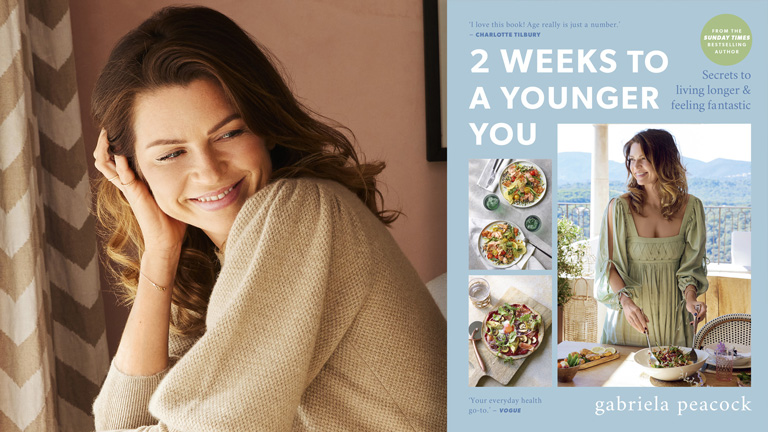
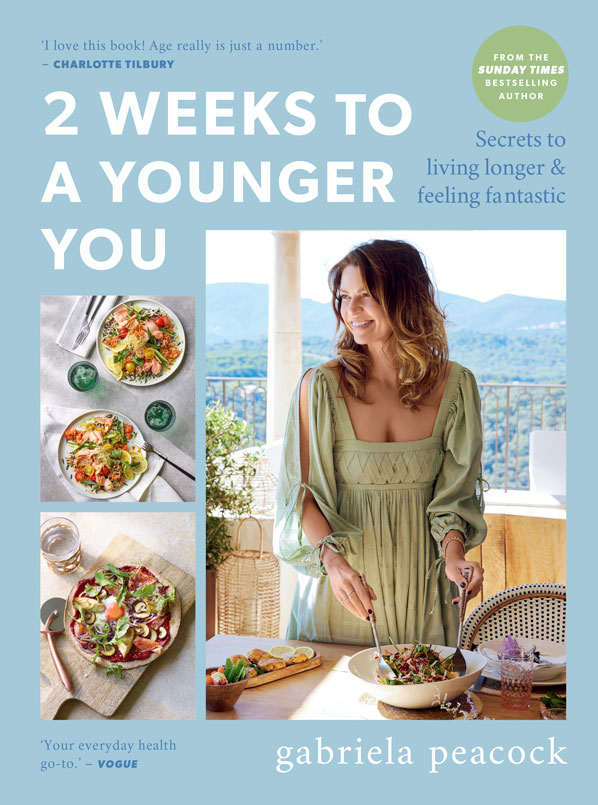
These principles are incorporated in Gabriela Peacock’s latest book, 2 Weeks to a Younger You, (Kyle Books, £25). Supplements are available at GP nutrition.

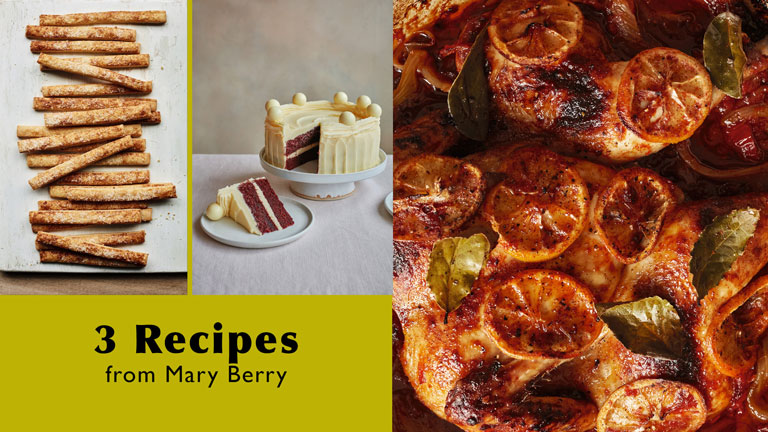
Three Recipes From Mary Berry

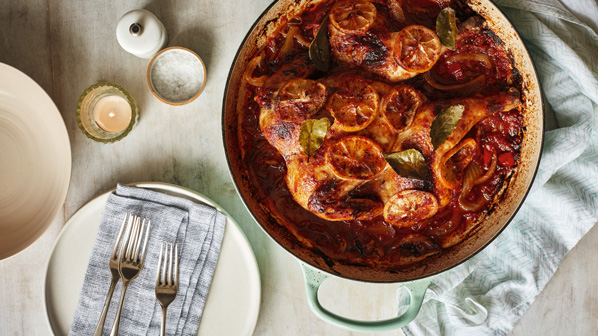
Mary Berry’s easy-peasy one-pot chicken

By Katie Wright, PA

“A whole spatchcock chicken with Mediterranean-style vegetables, this is a healthy and hearty all-in-one dish made in a casserole or deep saucepan,” says iconic TV cook Mary Berry.

“Removing the backbone of the chicken makes it a spatchcock and it is easier to arrange in the pot and to carve or joint. Double up for eight people, if you wish, and arrange two chickens in a large roasting tin, covered in foil.”

Easy peasy one-pot chicken (Serves 4-6). Ingredients:

2 tbsp olive oil

1 large onion, thinly sliced

1 large fennel bulb, thinly sliced

1 red pepper, deseeded and diced

3 large garlic cloves, finely grated

100ml (3½fl oz) white wine

1 x 400g tin chopped tomatoes

2 tbsp sun-dried tomato paste

2 tsp Worcestershire sauce

1 small whole chicken (about 1.25kg/2lb 12oz)

5 bay leaves

1 lemon, thinly sliced into rounds

1 tsp paprika

1 tbsp runny honey

Method:

1. Preheat the oven to 200°C/180°C Fan/Gas 6.

2. Heat the oil in a deep lidded casserole or large, lidded, ovenproof frying pan over a high heat. Add the onion, fennel and pepper and fry for about 3–4 minutes, stirring regularly. Add the garlic and fry for 30 seconds. Pour in the wine and boil to reduce by half.

3. Stir in the chopped tomatoes, sun-dried tomato paste and Worcestershire sauce, and season with salt and black pepper.

4. Meanwhile, put the chicken upside down on a board. Remove the backbone by cutting either side of the bone with scissors. Turn over and press down on the breastbone to flatten the bird; it is now a spatchcock chicken. Arrange the lemon slices and bay leaves over the chicken.

5. Put the chicken, breast-side up, on top of the vegetables in the casserole or frying pan. Season and bring up to the boil. Cover with a lid and transfer to the preheated oven for about 35 minutes.

6. Remove the lid and sprinkle the paprika over the chicken and drizzle with the honey. Return to the oven, uncovered, for about 30 minutes to brown and finish cooking.

7. To serve, spoon the vegetables on to a hot platter and joint or carve the chicken before arranging the chicken on top of the vegetables.

Mary Makes it Easy is published by BBC Books, priced £28. Photography by Laura Edwards. Available now.

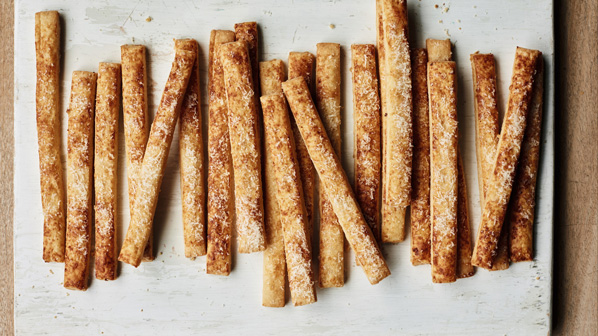
Mary Berry’s Somerset cheddar cheese straws

“Cheese straws are so delicious, but can be tricky to make if the proportions are not quite right,” says iconic TV cook Mary Berry.

“We tested these every week for a month, just to make sure they were perfect – and because they are so moreish, too!”

Somerset cheddar cheese straws (Makes 50)

Ingredients:

250g (9oz) cold butter, cubed

55g (2oz) semolina

400g (14oz) plain flour

1 tsp mustard powder

¼ tsp cayenne pepper

150g (5oz) mature Somerset Cheddar, coarsely grated

150g (5oz) Parmesan, coarsely grated, plus about 4tbsp finely grated, to garnish

1 egg, beaten

A little milk

Method:

1. Preheat the oven to 200°C/Fan 180°C/Gas 6. Line 2 large baking sheets with non-stick baking paper.

2. Measure the butter, semolina, flour, mustard powder, cayenne pepper and a little salt into a food processor. Whizz until the mixture looks like breadcrumbs.

3.  Add the Cheddar, Parmesan and egg and whizz again for a short time, just until the dough comes together.

4. Remove the dough from the processor, divide into two equal pieces, and shape each one with your hands on a floured work surface into a rectangle. Roll each piece of dough to a rectangle about 46 x 16cm (18 × 6½in) and about 8mm thick.

5. Brush the milk over the top of the dough and sprinkle with the finely grated Parmesan. Slice each rectangle into roughly 25 strips.

6. Carefully lift each straw on to the prepared baking sheets and bake in the preheated oven for about 18 minutes, or until golden brown. Leave to cool on the baking sheet until the straws have hardened and are easy to handle.

7. Serve cold.

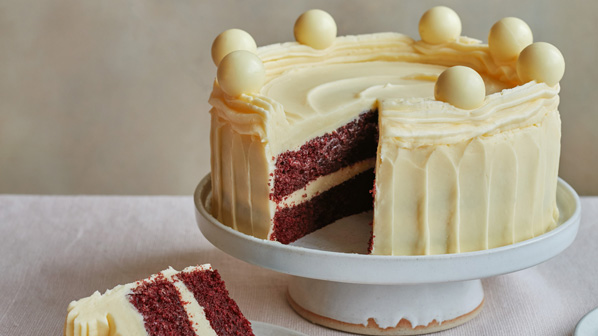
Mary Berry’s red velvet sandwich cake

“An impressive, but easy cake,” is how iconic TV cook Mary Berry describes this bake.

“Use a professional food colouring paste, if you can; a natural liquid colouring won’t work and may turn the sponge green,” she recommends.

“For a particularly elegant finish, you could make extra icing and crumb coat the sponge before applying the top layer of icing.”

Red velvet sandwich cake

Ingredients:

(Serves 8)

Butter, for greasing

250g (9oz) plain flour

1 tbsp cocoa powder

2 tsp baking powder

1 tsp bicarbonate of soda

250g (9oz) light muscovado sugar

200ml buttermilk

150ml (¼ pint) sunflower oil

2 tsp vanilla extract

1 tbsp red food colouring gel or about ¼ tsp food colouring paste

2 large eggs

8 white chocolate truffle balls, to decorate

For the buttercream icing:

250g (9oz) butter, softened

2 tsp vanilla extract

300g (10½oz) icing sugar

250g (9oz) full-fat mascarpone cheese

Method:

1. Preheat the oven to 180°C/160°C Fan/Gas 4. Grease and line the bases of 2×20cm (8in) sponge sandwich tins with non-stick baking paper.

2. Measure the flour, cocoa powder, baking powder, bicarbonate of soda and sugar into a bowl and mix well.

3. Mix the buttermilk, oil, vanilla, food colouring and 100ml (3½fl oz) water in a jug. Add the eggs and whisk until smooth. Pour the wet ingredients into the dry ingredients and whisk until combined. The mixture should be bright red; it will get a little darker as it cooks. If it’s not as vivid as you’d like, add a touch more colouring.

4. Divide the mixture evenly between the two prepared tins and level the surfaces. Bake in the preheated oven for about 25–30 minutes, or until well risen and shrinking away from the sides of the tins. Cool in the tins for 10 minutes, then turn out, peel off the paper and leave to cool completely on a wire rack.

5. To make the buttercream icing, place the soft butter and vanilla extract in a large bowl and sift in half the icing sugar. Mix with an electric whisk until smooth. Sift in the remaining icing sugar and mix again. Add the mascarpone to the bowl and gently stir with a spatula until smooth (don’t beat with a whisk as it may split). Put a fluted nozzle in a piping bag and spoon about 150g (5oz) of the buttercream into the bag.

6. To assemble the cake, sit one of the sponges on a cake plate and spread a third of the buttercream over the cake, then sit the other cake on top. Ice the cake by first spreading a thin layer of icing – a crumb coat – over the whole cake before chilling for 30 minutes. Then pile the remaining icing from the bowl on top and spread over the top and around the edges to completely cover the cake. Make sure that the icing is smooth around the edges before starting to create lines up the sides. Using a small palette knife, make wide lines up the sides and swirl the top. Pipe a rope design around the edge of the top of the cake and decorate with the eight chocolate truffles to finish.

×
Find a Property
M
Country & Equestrian
By submitting this form, you agree to McCarthy Holden using your personal data in accordance with our Privacy Notice.