7 of the best ways to adapt your home for multigenerational living

Multigenerational living is on the rise – Lisa Salmon asks experts about the best way to adapt a home so all family members can live happily together.

Multigenerational living is on the rise – although by how much depends on which research you choose.

A new study by homelifts specialist Uplifts found 49% of 2,000 UK adults questioned lived in households spanning multiple generations, and more than a third (34%) of these households had made changes to better accommodate all the generations of their family.

However, the Centre for Ageing Better points out that in the most recent Census, in 2021, just 2.1% of households in England and Wales were multigenerational, an increase from 1.8% in 2011.

But whatever the true figure, academics believe households that span multiple generations are definitely an increasing trend. Prabash Edirisingha, a consumer researcher at Northumbria University who studies family consumption patterns across generations, says: “My research into multi-generational households reveals they are now the fastest-growing household type in England and Wales.

“While the emotional and economic advantages are undeniable, families must remain realistic about the challenges. Different generations often bring diverse expectations, lifestyles and values into shared spaces – differences that can lead to tension if not thoughtfully managed.”

While the increase in multigenerational living is, in part, due to financial necessity, with many young people unable to afford to buy their own homes and their grandparents not wanting to spend their savings on care home costs, the Uplifts research found there are other reasons for the increase too.

Although saving money was a key advantage for 39% of those questioned, more than half (55%) cited stronger family bonds as the primary benefit.

Kate Sheehan, an occupational therapist specialising in housing adaptations, stresses that the key to successful multigenerational living is not only taking what each member of the family wants and needs into consideration, but also being aware of how those needs might change over time.

“Achieving positive and harmonious multigenerational living begins with understanding the unique needs of each family member, anticipating future changes, and responding with both functional and attractive design solutions,” she says. “It’s essential that everyone in the household can access all areas of the property, ensuring it truly feels like home for all.”

Millie Brown, deputy director for homes at the Centre for Ageing Better, explains that only one in eight homes in this country currently has all four key accessibility features for elderly family members: namely a ground-floor toilet, sufficiently wide doorways, circulation space for a wheelchair, and no steps at the front door.

“Multigenerational living, and supporting older people to age in place, can be hugely beneficial to families and can help to reduce pressures on social care,” she says.

“But many families will find a key barrier to establishing these arrangements is the unsuitability of their own home for older people.”

She also points out that financial support for homeowners who want to adapt their homes for multigenerational living has declined substantially in recent years.

“The other barrier many people are likely to find in creating a multigenerational home is the support on offer to make improvements and adaptations,” she says. “Grants for home improvement support have shrunk by more than £2 billion over the last decade, and the range of support available to people is variable from one place to another.

“We need a network of good home hubs – local one-stop shops offering comprehensive advice and support on all aspects of home improvement.”

Finances permitting, Sheehan says the most common and most necessary adaptations for a multigenerational home are…

1. Wider doorways

If a family member needs a wheelchair, widening doorways will make life at home much easier.

“Installing wider doorways markedly improves movement throughout the house, not only for accessibility, but also for practical tasks like moving furniture,” says Sheehan. “Such thoughtful choices enhance comfort and convenience for everyone.”

2. Good lighting

While younger members of the family might prefer more subdued lighting, particularly when they’re entertaining friends, brighter lighting is a necessity for older relatives whose eyesight may be failing, so bright lights with a dimmer switch, or plenty of lamps that can make a room brighter, may work for everyone.

“Proper lighting is crucial, especially in spaces like staircases and bathrooms, where slips and trips are common hazards for both young and old,” points out Sheehan.

3. Downstairs bedrooms

The Uplifts research found 28% of families questioned had added ground-floor bedrooms to their home for an elderly relative. But such a modification goes hand-in-hand with adding a downstairs toilet if the home doesn’t already have one.

4. Separate living rooms

Nearly a third (32%) of the multigenerational householders surveyed had created separate living areas in their homes – modifications that provide privacy and independence for both young and old, if space allows it.

“In a multigenerational household, personal space is crucial for individual comfort and overall harmony,” Sheehan explains. “Even when space is limited, providing a dedicated area, such as a chair in a bedroom, can greatly enhance the household’s ability to coexist successfully.”

5. New bathroom/bathroom adjustments

The Uplifts research found one of the most common adaptations was a new bathroom, which was added by 32% of multigenerational households. But if a whole new bathroom is too expensive, Sheehan suggests installing a wetroom-style shower in your existing bathroom, and reinforcing walls to enable future fitting of grab rails (which 22% of the survey respondents said they’d installed), or a wall-mounted shower seat.

She says: “Whenever possible, fit the bathroom door to open outwards – this small adjustment can make a significant difference in an emergency, providing swift access if assistance is needed.”

6. Adding a lift

Because elderly family members may struggle with stairs, adding either a stairlift or a home lift is the ultimate accessibility feature, added by 15% of the multigenerational homeowners surveyed.

“Stairs can become challenging with age, whether due to physical limitations or simply fatigue from an active daily routine,” comments Sheehan. “Installing a homelift or stairlift can greatly ease movement between floors. And these solutions aren’t just for older adults – a lift can be invaluable for gently transporting a sleeping child upstairs without disturbance, demonstrating how inclusive design supports the needs of every generation.”

7. Kitchen modifications

Older people with mobility/balance issues may struggle to stand while cooking, so consider installing a lower worktop to allow them to sit and help with food preparation, says Sheehan, who also suggests fitting an instant hot tap. “This will reduce the need to lift and carry hot water – not only is it quicker, it’s more energy-efficient.”

How to grow a bumper crop of strawberries to rival Wimbledon

As the tennis championships approach, all thoughts are on this favourite summer fruit.

It’s strawberry season, and British strawberries are off to a great start, with British Berry Growers reporting one of the most promising early seasons in recent memory, thanks to warm days, cool nights and the highest sunshine levels in over 100 years.

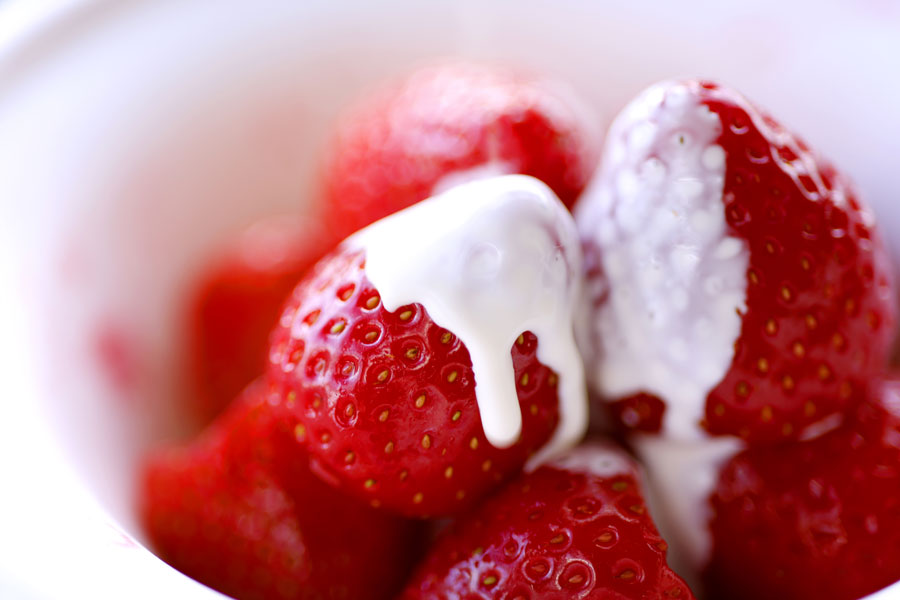
And nothing shines a light more on this delicious fruit than the Wimbledon Tennis Championships. On average, 200,000 portions of strawberries and cream are enjoyed during the fortnight.

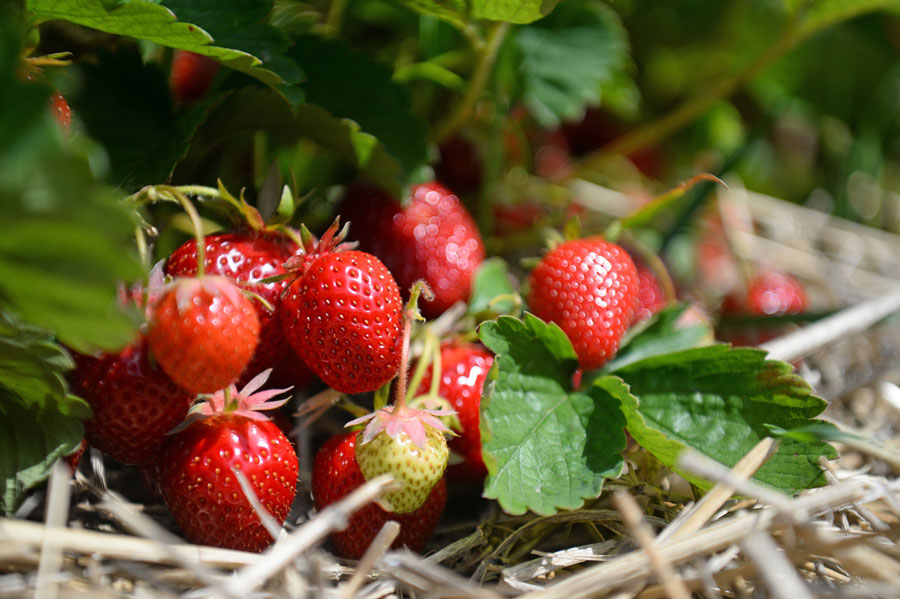
But there’s nothing quite like the taste of home-grown strawberries picked fresh from the plant to add to your summer desserts – and they are not that difficult to grow. So you could already be thinking about next year’s crop.

The weather makes a difference

“The weather has been very kind to all growers,” says Jim Floor, managing director of berry growers Hall Hunter. “We had a very cold February and March, then from April onwards it’s been sunny – and strawberries love sunshine.

“The nights have been quite cool and the perfect environment for strawberries is 20 degree days and 10 degree nights.”

Plenty of bees help

If you have a garden with plenty of plants which attract pollinators, such as open-flowered geum, iberis, cranesbill geraniums, lavender and heathers, you’re likely to get better crops because the bees will pollinate the strawberry flowers.

For the biggest harvests…

You’ll need plenty of space for a strawberry patch if you want a huge crop, and will need to plant numerous plants. Alternatively, you can grow strawberries in pots but because of the limited number of plants you can accommodate, your yield may be limited.

Many types produce new runners after flowering, which create new plantlets on their own.

You can also plant different varieties of strawberries to extend the season – summer-fruiting types, perpetual strawberries which produce a smaller quantity of fruit from summer until autumn, and Alpine, or wild, strawberries, which bear small crops of tiny berries spasmodically during summer.

How to grow

Plug plants are a good bet and are available in garden centres and nurseries from late spring onwards, or alternatively you can buy bare-root plants, known as runners, which look like root clumps, in late summer or early autumn, and again in spring.

Plant in full sun or in polytunnels where they will be warm and won’t become damp, or if outside a raised bed or grow bag is a good option, Floor suggests.

“I grow them in a hanging basket (at home) because they tend to do much better if they’re not (at ground level) in the soil, where there are lots of pests and diseases.”

During the growing season, make sure they are fed and watered regularly. “I would recommend a balanced multi-purpose liquid feed.

“If you want sweeter strawberries you might want to put more potassium in, but you need to be careful because any overfeeding of potassium, calcium or nitrogen could give you a problem.

“Calcium can burn the leaves, potassium could potentially kill the plants and (overfeeding with) nitrogen, you will get 100% leaves and no fruit.

Possible problems

Slugs are a threat, he warns. “Last year because of the mild winter and the wet year the problem was slugs, particularly if you were growing strawberries in the ground.

“This year it’s been about keeping everything irrigated. As long as the plants have plenty of water, they will do well.”

Birds may also feast on the fruits, so it would be wise to cover your strawberries with netting if you need to keep them at bay.

As the fruits emerge, place straw underneath them so the fruits don’t brush against the ground and rot.

When are they ready to pick?

When they are evenly red, he says. “They don’t necessarily come off the stem quite easily. If the fruit comes off easily it may be over-ripe.”

After fruiting

“De-leaf the plants a little bit, getting rid of the debris and dead leaves, and there’s no reason why they couldn’t be kept for another year,” he suggests.

Good varieties

Strawberries which have received the RHS Award of Garden Merit include ‘Hapil’, which produces large red fruits and is lauded for its vigorous growth and is well-suited to light or drier soils and to containers; and the late season ‘Florence’ which has ‘exceptional disease resistance’ and whose large dark red fruits are produced in mid-July.

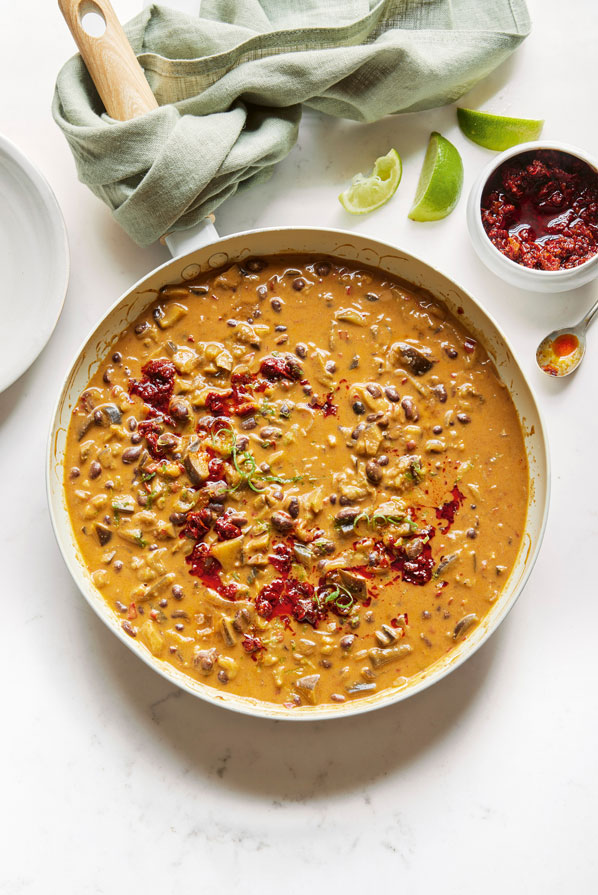
Ella Mills’ creamy black bean and harissa stew

Ella Mills Deliciously Ella McCarthy Holden news item

“The best thing about batch cooking is that the flavours of the dish tend to get better the longer they marinate, so the leftovers are always a real treat, and this is certainly the case in this recipe,” says Ella Mills, the brains behind Deliciously Ella.

“It’s hearty and cosy, with lovely spices from the harissa, sweetness from the coconut and maple syrup, and a delicious nutty flavour from the almonds. The aubergine gives it great texture, while the beans ensure it really fills you up. It’s great on its own for a light supper, or for something a bit more substantial serve it with jasmine rice, jacket potatoes or crispy roast cauliflower.”

Creamy black bean, harissa and almond butter stew

Ingredients:

(Serves 4)

1tbsp olive oil

2 shallots, halved and finely sliced

1 aubergine, finely diced into 1cm cubes

4 garlic cloves, crushed

1 × 400g tin of black beans, drained and rinsed

3tbsp harissa, plus extra to serve

1 × 400ml tin of coconut milk

400ml hot vegetable stock

2 heaped tbsp smooth almond butter

2tsp maple syrup

Grated zest and juice of 2 juicy limes

Sea salt and black pepper

Method:

1. Put the olive oil into a large frying pan over a medium heat, add the shallot and aubergine and a pinch of salt and fry for five minutes, until soft. Add the garlic, black beans and harissa and fry for two minutes, until fragrant.

2. Pour in the coconut milk, stock, almond butter and maple syrup. Bring to a boil, then put the lid on the pan and turn the heat down to a simmer. Cook for 15 minutes, until the sauce has thickened.

3. Stir in the lime zest and juice and season with salt and pepper to taste. Swirl an extra tablespoon of harissa through the stew to serve (if you’d like a little extra spice).

Note: To make crispy roast cauliflower, simply chop your cauliflower into small florets, place them on a baking tray with a tablespoon or so of olive oil and a sprinkling of salt and roast in an oven preheated to 200ºC fan for about 20–25 minutes, until golden and crispy.

My girls love this recipe too, so when I’m cooking it for the family I hold off on the harissa and stir it into the adult portions once I’ve served the little ones.

Ella Mills Deliciously Ella McCarthy Holden news item
Ella Mills’ creamy black bean and harissa stew

Deliciously Ella: Healthy Made Simple by Ella Mills is published by Yellow Kite, priced £22. Photography by Clare Winfield. Available now.

Ella Mills Deliciously Ella McCarthy Holden news item

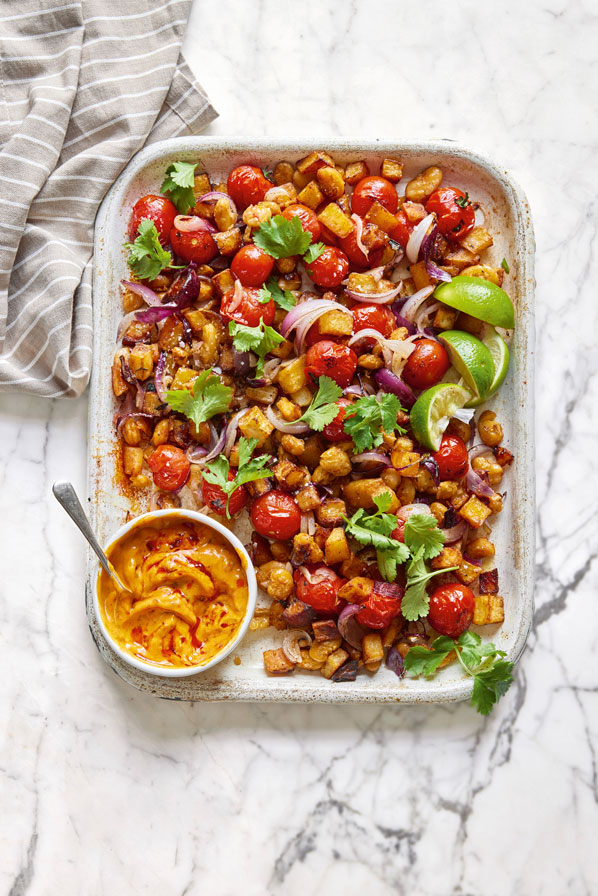
Ella Mills’ crispy potato and paprika tray bake recipe

Ella Mills Deliciously Ella McCarthy Holden news item

“Crispy, crunchy, hearty and super-simple, this tray bake is the ideal recipe when you want something satisfying without lots of prep, mess or brain space!” says Ella Mills, the brains behind Deliciously Ella.

“The zesty harissa yoghurt is really versatile too; it makes for a great dip or dressing with any veg.”

Crispy potato and paprika tray bake

Ingredients:

(Serves 2)

3 floury potatoes, such as Maris Piper (about 350g), with their skin

½tbsp olive oil

2 red onions, halved and finely sliced

2tsp paprika

1 punnet of cherry tomatoes (about 200g)

1 × 400g tin of butter beans, drained

½ bunch of coriander (about 10–15g), roughly chopped

Sea salt

For the harissa yoghurt:

4tbsp coconut yoghurt

2tbsp harissa

Grated zest and juice of 2 limes, plus wedges to serve

Method:

1. Preheat the oven to 220°C fan and bring a large saucepan of salted water to the boil.

2. Cut the potatoes into one-centimetre cubes then add them to the boiling water. Meanwhile, put the olive oil into a large flat baking tray and place in the oven to heat up. Simmer the potatoes for five minutes, until softened slightly and a knife pierces them easily, then drain well and add them to the preheated tray along with the onion, paprika and a pinch of sea salt. Toss to combine, then bake for 20 minutes, tossing occasionally so that the potatoes cook evenly.

3. Add the cherry tomatoes and butter beans to the tray and cook for a further five minutes until the tomatoes are soft and the potatoes are crisp.

4. Meanwhile make the harissa yoghurt by mixing the coconut yoghurt, harissa, lime zest and juice together in a small bowl, seasoning with salt to taste, then transfer to a small serving bowl.

5. Once the potatoes are ready, remove from the oven, sprinkle over the coriander and serve with the harissa yoghurt on the side.

Ella Mills Deliciously Ella McCarthy Holden news item
Ella Mills’ crispy potato and paprika tray bake

Deliciously Ella: Healthy Made Simple by Ella Mills is published by Yellow Kite, priced £22. Photography by Clare Winfield. Available now.

Ella Mills Deliciously Ella McCarthy Holden news item

These are the foods to eat to avoid colds and flu this winter

By Lauren Taylor, PA

Nutritionist to the stars, Gabriela Peacock, has revealed the immune-boosting foods to get into your diet this winter, if you want to starve off dreaded colds and bugs.

A lot of people don’t realise just how interlinked winter health and nutrition are, says the 44-year-old, but our immune system “is directly dependant on what we put within the body to create a chemical reaction – it’s really, really important”.

Here are Peacock’s hero foods your body needs this winter…

Fermented food – “Digestion support is incredibly important for immunity – 70 to 80% of our immunity actually lies within a digestive system,” says Peacock, whose celebrity clients include Princess Beatrice, Joan Collins, Jodie Kidd and Amber Le Bon.

She recommends eating live yoghurts, kefir, kombucha, sauerkraut, kimchi and tofu. “They directly increase the beneficial bacteria in your intestine, which supports the healthy microbiome – and the healthy microbiome will in turn support our immunity.” They also contain protein. “Protein is really important for any kind of repair within the body, so when you have a cold, when you scratch your arm, when you need more hormones to be produced.”

How to add it: Peacock recommends using live yoghurt as a base for homemade ice cream with a dash of agave syrup.

“Sauerkraut goes really nicely with any kind of rich foods, which is what we tend to eat around this time, quite heavy and oily meals, sauerkraut cuts through it,” she says. “Kombucha is just a nice alternative when you get a bit bored of drinking water. Most of them are really, really low in sugar.”

Green tea – “This would be one of my one of my hero drinks, especially over this period of the year because tea is nice and warming. Green tea contains catechins which are polyphenols,” explains Peacock.

“Polyphenols are phytochemicals – plant chemicals that have numerous health benefits. One of the main benefits is immunomodulating properties [which] stimulate our immune system and decrease the chronic inflammation. Basically, when you’re looking at the immunity, you want to decrease the inflammation.”

How to add it: If you drink coffee, Peacock suggests sticking to one or two a day and then switching to green tea afterwards.

“A really good to tip is to put lemon in green tea – you increase the absorption of the catechins, plus it gets rid of the bitter taste. Don’t make the tea too hot because the heat will kill the vitamin C.”

Matcha tea – powdered green tea – is another great way to get the nutrients but is higher in caffeine. “I would recommend thinking about it as a caffeine supplement [to coffee],” she says.

Pigmented fruits – “We are looking for the dark pigments, [they] will contain the polyphenols which will directly stimulate the immunity. So think about black blackberries, red raspberries, red peppers, green kale, orange or yellow pumpkins – if and you see these saturated colours, they are really beneficial. “Eat the rainbow – beige food is not good for us. The pigment is the polyphenol.”

How to add it: “I would recommend doing smoothies because you are keeping the fibre inside [as opposed to juicing]. If you’re doing smoothies I always recommend adding some greens that are lying in your fridge. You will not taste it at all but you increase your colours, you increase your fibre,” Peacock says.

“I don’t dislike juicing but I would never have juice on an empty stomach. You should have it with foods or have it after foods. Think of it as more of a vitamin boost – as apposed to food.”  You can buy supplements of red and green superfood powder too, which she recommends adding to smoothies, live yoghurt or soup.

Omega-3-packed fish, nuts and seeds – “Essential fatty acids are incredibly important – the reason they’re called essential is because your body cannot produce them by itself, you need to obtain them by diet,” says Peacock. “Omega-9 and omega-6 we tend to be OK with [obtaining] but most people struggle with omega-3 because we just don’t eat enough of it. This would be oily fish; salmon, mackerel, sardines, a bit of tuna, also a vegetarian source; nuts and seeds.

“We need to at least three to four portions of oily fish per week in order to cover your basic baseline.”

Seeds, in particular, are really high in omega-3, says Peacock. “Pumpkin seeds, sunflower seeds, flax seeds, hemp seeds, also a nice variety of nuts is really important. Omega-3 is directly anti-inflammatory. They’re [also] really important for our skin, our hair, our hormonal balance, for the way our cells communicate with each other. But the prevention of chronic inflammation is one of the main benefits.”

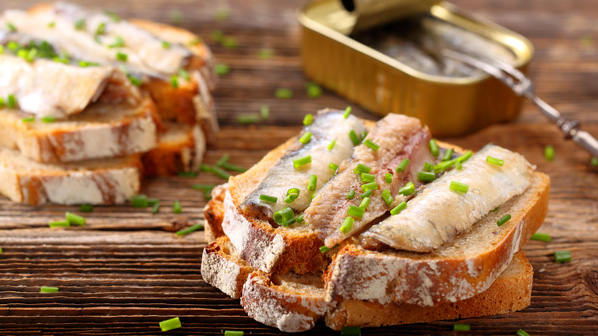
How to add it:  “You know what’s really good and really cheap – mackerel and sardines in a can. They’re kind of unattractive but I absolutely love them. You can get mackerel in a spicy tomato sauce [in a tin] – absolutely delicious.”

She suggests tinned sardines on toast, keeping bowls of seeds on your kitchen counter to add to everything (especially soups and porridge) and carrying nuts in your handbag. “Food source would be preferential but you can get supplements of omega-3 – 99% of my clients need supplementation.”

Garlic – Garlic contains sulphur (as do onions, leeks and eggs). “Sulphur is incredibly important because they stimulate the liver detoxification processes and that in turn will have a really positive effect on immunity.” Peacock says.

How to add it: “I would add it into everything really – include it as much as possible. With garlic, you only release the sulphur-containing compounds when you crush it, so it does need to be crushed down and not cooked for too long. Add garlic very last minute. The cooking process helps for the absorption but if you overcook it, if you deep-fry garlic, it will definitely reduce its properties.”

Cruciferous vegetables – Including broccoli, cauliflower, cabbage, Brussel sprouts and kale – are really important for immunity, Peacock says, and it’s “probably the best liver-supporting group of vegetables”. They contain liver-friendly sulphur, polyphenols and are high in fibre – which is “fantastic for digestion” (immunity and digestion are very much linked).

How to add it: Include different kinds in your Sunday roasts, she suggests. “If some clients of mine don’t like the taste or texture of cabbage or kale [I suggest] cutting them into really small pieces – you get exactly the same benefits and you don’t [notice] the texture.”

Citrus – Vitamin C is very important this time of year. “It’s a direct antioxidant, in order to fight free radicals, which is essentially what makes us sick. If you increase antioxidants in your diet, you’re increasing the protection, you’re giving your immune system protection,” Peacock says.”Grapefruit is high in vitamin C.”

How to add it: “If you want to increase your hydration (because not many people drink enough water), add a teeny bit of grapefruit juice to a lot of other water,” she suggests, “I use it for the kids’ water bottles. It’s important for it to be fresh [citrus] so you can get as much vitamin C as possible.”

These principles are incorporated in Gabriela Peacock’s latest book, 2 Weeks to a Younger You, (Kyle Books, £25). Supplements are available at GP nutrition.

Joe Wicks on how to make moving your body a non-negotiable

Prudence Wade chats to the Body Coach about the mental benefits of exercise – why this is more important than ever right now.

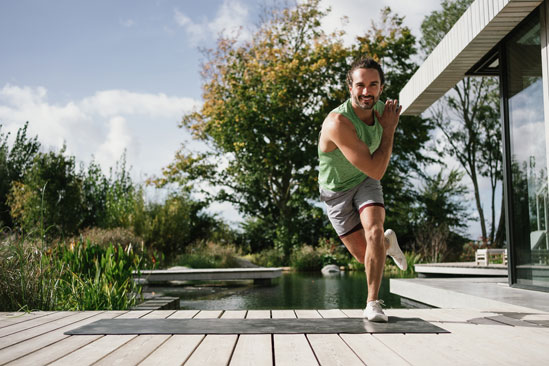
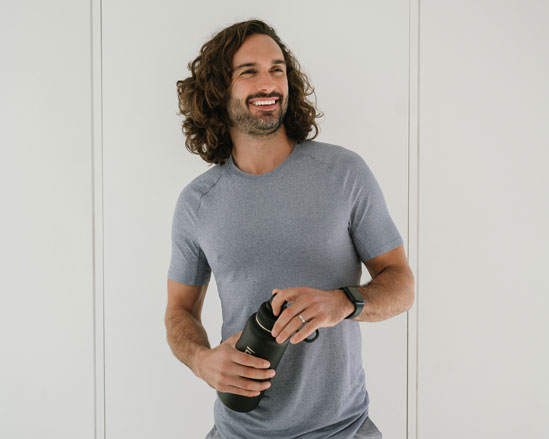
Fitness might be Joe Wicks’ job, but even he’s not always ready and raring to work-out.

“I definitely have days where I feel flat and I feel stressed, or I can’t be bothered today,” admits the father-of-three. However, the difference for Wicks, 37, is that moving his body has become a non-negotiable.

“If I don’t wake up and exercise, I hold that tension and that stress in my body,” he explains. “So I always see exercise as like a stress relief valve, like a pressure cooker. So when I move my body, I know I’m going to feel so much better at the end of it.

“It’s habit and discipline, as opposed to being genuinely lit up with motivation every day. I know how much my life improves – my relationships, my friendships, my kids and everyone around me benefit when I’m keeping active.

“It’s non-negotiable. It’s a priority for me.”

If you’re at the start of your fitness journey or out of the swing of things, making exercise a priority can seem like an uphill battle. Here’s how Wicks suggests going about it…

Don’t do too much, too soon

If your New Year’s resolution is to adopt the training plan of a professional athlete, you could be setting yourself up for failure.

“Ultimately, the first and most important thing is you don’t do too much at once,” Wicks advises. “Don’t try and go to the gym five days a week from zero, or put pressure on yourself to build a certain diet, or a low-calorie restrictive diet.

“I know this is so cliché and it’s easier said than done – it’s just doing things you can actually sustain, that isn’t overwhelming, that isn’t stressful, that is enjoyable.”

Remove the friction

Does life constantly seem to be getting in the way of your exercise goals? You might want to rethink how you’re doing things.

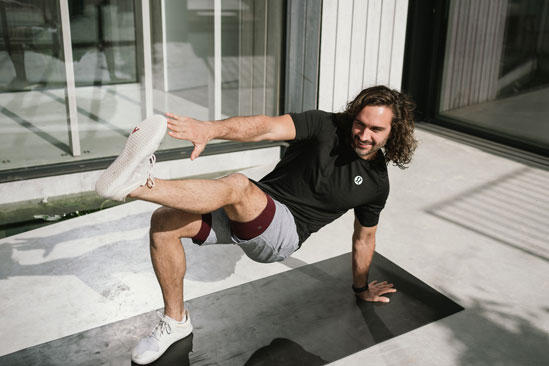
“I’m a big fan of home workouts,” says Wicks. “Remove the friction of getting childcare, or getting to the gym and finding that hour where you commute. Imagine if your living room was your gym, and you had a pair of dumbbells and a kettlebell – you can have a great workout in 25 minutes, and actually get it done.

“You’ve got to make your life easy – set yourself up for success,” Wicks adds.

Focus on the mental benefits

Wicks knows exercise is a game-changer for his mental health – and if you start experiencing the same benefits, you might find yourself even more committed to moving your body.

“The Body Coach was originally about HIIT training, about body image and losing weight. Over the years, I’ve really shifted my belief and narrative around it, because I realised that people often start to lose weight – but what keeps them coming back really is the mental health benefits of exercise and how their life improves, their relationships improve.”

And with the cost-of-living crisis making things seem pretty bleak this January, Wicks believes movement is more important than ever.

“Last year, people were thinking about [exercise] a bit – it was optional. This year it’s essential, because life’s overwhelming, life feels really stressful,” he reflects.

“And if you don’t take care of yourself physically and you don’t lift your mood mentally, you’re going to be overwhelmed and things can really get on top of you. So see exercise as an essential part of your happiness and make it a priority.”

Prioritise sleep

Wicks is currently finding this one tricky – his youngest child, Leni, is four months old, and her tired dad says: “She’s doing this sleep regression thing, where she’s awake for like half an hour, every night, all through the night.

“Your eyes are stinging, you wake up really thirsty, you’ve got a headache – it really makes you realise how sleep is everything, it’s the foundation,” he adds. “I’m making not great food choices, I’m not really exercising – so it definitely affects me.”

When Leni isn’t waking him up throughout the night, Wicks calls sleep “the number one priority for me, over anything”. He continues: “Certain things knock you back, and I realised just how important sleep is – if there’s one message I’d like to share with people it’s this year, really prioritise sleep.

“When you’re well slept, everything else can fall into place a lot easier. I really think we’re under slept, we sleep-deprive ourselves. We sit up on our phones, we watch Netflix until 3am – we’re doing it to ourselves. So try to focus on sleep, and eating and exercise will come a lot easier.”

Find your tribe

If you have the time and resources, training with a group of like-minded people might be the extra boost of motivation you need.

“I started as a personal trainer and I used to do boot camps, and I always got much more of a buzz from group fitness,” explains Wicks. “Training with people and as a group, it’s more of an energy and you push a bit harder. You feel like you’re not on your own when you’re struggling and people are cheering you on – it feels nice to be part of a little community.”

That’s why Wicks has set up The Body Coach Studios – a pop-up space for a few days in January where Wicks and trainers from his app will teach in-person classes.

“Rather than it being about a ‘before and after’ transformation on Instagram, imagine meeting someone who’s come back from depression, or who’s come back from an injury… and now they’re this really fit, motivating human being. I think that rubs off on people.”

The Body Coach Studios’ is the first ever fitness studio from Joe Wicks’ The Body Coach app. To find out more and book tickets for January 20-22, head to thebodycoach.com/studios

How to give your wellbeing a refresh this autumn

A shift in seasons signals all sorts of swaps, says Sam Wylie-Harris.

Much as we love the blue skies, beach vibes and long, lazy days of summer, there’s something about the first signs of autumn that stirs the senses.

Whether it’s the chill in the air as you step into the low autumn sun, the first stroke of a woolly jumper, or that back-to-school, slightly nervy, excited feeling – it’s time to press the refresh button and show yourself a little self-love.

Indeed, Marisa Peer, therapist, relationship expert and bestselling author, says more people are starting to think of September as a better time to make resolutions than New Year.

“The summer holidays are over and it’s the beginning of the new academic year – think back to the reboot this offered you as a child – new uniform and shoes, new pencil case and stationery, plus a move into another year group or different school completely.

“The perfect time to start over and reinvent yourself,” says Peer.

From finding purpose to taking a holistic approach, experts share their top tips for making the most of the transition…

Set some goals

“As the days get shorter, people find they have more time on their hands as everyone retreats indoors,” notes Peer. “Instead of binge-watching the latest Netflix series or giving in to snacking temptations, use it as a springboard to reset your mental and physical wellbeing.”

Begin by writing down and reassessing any goals you set for yourself at the start of the year, she suggests. Ask yourself what worked and what didn’t.

“Think about the reasons behind not achieving these – perhaps you were over-ambitious and gave yourself too many? This can feel overwhelming and set you up for failure from the start. Or perhaps you couldn’t muster up the willpower to see it through.”

Peer suggests writing these blockers down and, against each one, think of a solution to them. Then choose one or two goals that seem the most attainable and focus on those.

Even think about making a vision board, using pictures to reflect your goals.

“Not only will this help keep you going, but it can represent the start of a commitment to journaling, which is recognised as having a positive impact on mental wellbeing,” she continues. “Vision boards are very motivating and help you work towards and manifest your goals.

Enjoy a healthy relationship with food

Peer points out lots of us try to lose weight for our holidays – but once summer’s over and we can hide behind oversized jumpers, it’s tempting to revert to comfort eating.

“One of the biggest reasons diets fail is that our motivation is about what we look like, rather than what we feel like,” she observes.

“Vegetarians don’t have a high failure rate, as the motivation to be vegetarian is rarely to do with physical appearance.

“Focus on health, vitality and energy, then it becomes who you are – and not what you do,” says Peer. “Now is the time to make healthy eating a consistent part of your life, rather than considering it something you do just to lose weight. This approach will boost both your mental and physical wellbeing.”

Re-evaluate friendships

When it comes to decluttering, we usually think about this in relation to our homes or wardrobes, says Peer, but she thinks a friendship declutter is something worth considering – even if it sounds a little harsh.

“If you find yourself involved with toxic people or those you’ve outgrown, you’re not doing your wellbeing any favours by feeling obligated to them.”

“It’s a mistake to gauge our self-worth and popularity by the number of friends we have – friendship is all about quality and not quantity,” says Peer.

She says friends should be people who respect our boundaries, don’t take offence easily if we turn down an invite and who we trust with our secrets.

“We look forward to spending time with them, but it doesn’t feel like a duty. The litmus test is to ask whether we enjoy a friend’s company or whether we feel drained of energy after spending time with them – nothing influences you like the company you keep.”

She continues: “And it’s OK to grow apart from people. Now is a good time to rethink your friendship groups. It’s also a good time to make new friends, as many evening classes or local groups start up in September after a summer break.”

Walk in nature and learn from its changes

Mariel Witmond, yoga instructor and founder of wellbeing platform Mindful Sonder, advises we all head outside this autumn.

“By walking around the changing trees, we can learn to stand firmly grounded, unphased by our falling leaves, as unobstructed views give us a renewed perspective on things we may have previously missed, or forgotten.

“When we learn to get in tune with nature, we can start to move more freely through the inevitable changes both life and each season brings,” suggests Witmond. “Autumn is a season of transformation; a time of letting go, surrender.”

She says surrender is what happens when we let go of the notion we ‘should’ be able to manage and control our situation. It happens when we release the belief that things should be different to how they are.

“We let go of our thoughts of the future and allow ourselves to be fully rooted in the present moment,” says Witmond. “To many, surrender is a sign of vulnerability, when in fact it takes a lot of strength and courage for us to truly surrender, and this doesn’t mean giving up.”

Quite the contrary. She says surrender teaches us to be present, to process, to allow what we cannot control, or change, to be – and through this, we regain our power, propelling us to action.

“Be with nature to embrace the vulnerability of the season,” encourages Witmond.

Find your inner rhythm

Meanwhile, Sophie Kerr of Soulful Living, a holistic wellbeing practitioner, says the seasons have a beautiful way of mirroring our own lives.

A subtle reminder the only constant is change – and how nature teaches us all we need to know to find our rhythm and flow.

“In the same way animals and plants use their own biological clocks to know when to hibernate, us humans have circadian rhythms.

“By working in harmony with the sleep-wake cycle, our sleep improves, increasing mental wellbeing and energy levels, as well as improving our immune system.”

Kerr says to boost your circadian rhythm and get a restful and restorative sleep (aim for seven to nine hours per night), it’s important to get plenty of natural daylight, which will also give your vitamin D a boost.

“Get up at the same time every day,” she suggests. “Exercise – outside if possible. Avoid caffeine after noon. Switch off from tech in the evening. Eat at regular mealtimes and limit food or alcohol before bed.”

Sabrina Ghayour’s tahini cinnamon swirls recipe

Cinnamon Swirls post McCarthy Holden estate agents

“I love cinnamon in pastry and desserts. There really is no sweet treat that doesn’t work with a little cinnamon in it, and these swirls have always been a favourite of mine,” says Sabrina Ghayour.

“The tahini really enriches them, giving them a lovely nutty flavour that is something quite different and pleasing. They are great with coffee or served with vanilla ice cream. You can also freeze a whole roll of prepared pastry for later use, then cut and bake from frozen for an extra couple of minutes.”

Cinnamon Swirls post McCarthy Holden estate agents

Tahini cinnamon swirls recipe

Ingredients:

(Makes 12)

1 x 320g ready-rolled puff pastry sheet

4–5tbsp tahini (make sure it’s not too thin, and avoid using excess oil)

3tbsp golden granulated sugar

2tsp ground cinnamon

Method:

1. Preheat the oven to 200°C (180°C fan), gas mark 6. Line a large baking tray with baking paper.

2. Lay the pastry sheet on your work surface.

3. Mix the tahini with the sugar and cinnamon in a small bowl. Spread the mixture evenly all over the pastry sheet, leaving a two centimetre clear border along one long edge. Starting from the opposite long edge, roll up the pastry tightly.

4. Cut the roll into four, then cut each section into three equal slices. Lay the slices with the swirl facing up on the lined tray, spaced slightly apart, and flatten each one gently. Bake for 20–22 minutes until nicely browned on top. Remove from the oven and leave to cool on the tray before serving.

Persiana Everyday by Sabrina Ghayour is published by Aster, priced £26. Photography by Kris Kirkham. Available now.

Article By Prudence Wade, PA


Footnote – If your looking for a fabulous kitchen to cook in why not try this property

Tips and tasks for greenhouse growing in the height of summer

Expert Matthew Biggs offers advice on how to keep your glasshouse plants in tip top shape.

If you have a greenhouse, the likelihood is it will be pretty warm in there over the summer, particularly with the extreme temperatures we’ve been having.

So, how do you stop your plants wilting, make sure your fruit and veg are thriving and halt greenhouse pests in their tracks during the hot summer months?

TV garden expert Matthew Biggs, gardening writer for historic glasshouse manufacturer Hartley Botanic (hartley-botanic.co.uk), offers the following advice:

1. Keep it ventilated

“When temperatures run high, watering and ventilation are top of the list. Open greenhouse vents early in the morning, as temperatures will soon rise (you should also have some form of shading in place by now), water preferably in the evening or early morning and check plants several times a day to ensure that they don’t dry out.”

2. Be waterwise

“Consider using ‘grey’ water from the shower, bath, kitchen or from washing machine rinse cycles on ornamental plants in the greenhouse,” he suggests. Keep detergent levels like shower gel to a minimum and don’t store grey water for longer than 24 hours. Softened tap and dishwasher water are useful, but only as a very temporary measure and water containing bleach and disinfectants are a ‘no no’, of course.

“It is at times like these when past efforts you put into collecting rainwater really pay off so don’t waste it. Water at the base of the plant around the roots, not over the leaves, learn to estimate how much each pot needs and store your watering cans under the greenhouse bench to catch any drips draining through. When you carry the can from tap to greenhouse you are more careful with the water you use.

“Keep your greenhouse pots and borders weed free, so the plants, not weeds, use the water and when the rains arrive again, flush out the compost with fresh, unadulterated rainwater.”
3. Keep your cool over edibles

Keep twining cucumber stems round their supports and cut back the side shoots two leaves beyond the flowers and fruits, to increase airflow and reduce chances of mildew – keeping foliage dry, the plants well-watered and mulching also reduces the risk of mildew.

“It is well worth growing resistant varieties like ‘Carmen’, ‘Passandra’ and ‘Bella’. Harvest cucumbers when fruits are about 30cm long and water with high potash fertiliser to encourage further fruiting.

“Feed fruiting crops like sweet peppers and chillies according to the manufacturer’s instructions, continue removing side shoots from tomatoes, tap the open flowers to encourage pollination and tie the stems to canes or supporting string as they grow. Keep the compost moist as erratic watering causes splitting and ‘blossom end rot’.”

4. Keep control of pests

“Check regularly for signs of pests, like whitefly and red spider (or ‘two spotted’) mite. Before introducing biological controls use environmentally friendly sprays containing fatty acids, plant invigorators, plant extracts or plant oils as others leaving chemical residues will kill them.

“Whitefly can then be controlled using Encarsia formosa, red spider mite by increasing humidity around the plant or introducing predators like the mite Phytoseiulus persimilis.

“To maintain hygiene, keep the greenhouse free from damaged or diseased material and sweep the paths as plant debris can harbour pests and diseases, it looks more professional, too and when you have finished all of this, sit out in the garden and enjoy the sunshine.”

For more information visit hartley-botanic.co.uk/magazine/ .

Camping out this summer? Where to see some of the most beautiful stars in the UK, Ireland and Europe

Imy Brighty-Potts discovers some of the best places to go star spotting.

Gazing up at a star-filled sky before falling asleep in your tent beneath the Milky Way is one of the real joys of summer.

And next time you pitch your tent, think of this mind-boggling fact as you stare upwards: the European Space Agency (ESA) has just released a treasure trove of data on almost two billion stars in the Milky Way. How insignificant does that make most everyday problems feel?

To see the stars in all their glory, there are a few simple things to remember. Jonathan Knight, UK manager of outdoor stays provider Hipcamp, says: “Your eyes need time to fully adjust to the darkness of the night sky, but your night vision can be ruined by one flash of bright light.

“Turn your headlights off, put out that campfire, and avoid using any flashlight with white light. Instead, use a red-filtered headlamp or flashlight to navigate in the dark and save your eyes from frequent adjustments.”

Downloading a star map app might also be a good idea, he suggests. “Whether you’re just observing with your naked eye or through a powerful telescope, your smartphone can guide you around the night sky, show you what you’re looking at, and help you find constellations like the Big Dipper and Orion.”

Inspired? Here are some of the best spots across Europe, the UK and Ireland to enjoy gazing at beautiful stars in a clear sky.

1. Canary Islands, Teide National Park

The Teide National Park in Tenerife has been recognised as a “Starlight Tourist Destination” by the Starlight Foundation, an organisation which aims to protect the night sky – meaning this is an place where light pollution is controlled and visitors should have excellent conditions for stargazing.

Lisa Francesca Nand, travel journalist and host of The Big Travel Podcast (thebigtravelpodcast.com) says: “With moonscape mountains and clear skies, Tenerife’s interior is one of the world’s best stargazing destinations.

“For breath-taking vistas of the constellations, there are several round-trip tours offering professional guides to help explore the stars, stories and myths of the universe. Or stay over at the Parador de Las Cañadas del Teide, a mountain lodge with spectacular views.”

Nand points out that wild camping is not permitted but says: “You’ll find several dedicated campsites around the area where you can switch off your torch and lie back for one of the most awe-inspiring views of earth.”

2. Any of the Scottish islands

Scotland is the most remote part of the UK and rewards you with the darkest skies.

James Warner-Smith, Camping Expert at Hipcamp, advises: “Head out to the islands and glamp somewhere remote like Runach Arrain or try Badrallach Campsite, which is eight miles from the nearest main road and a 14 mile hike from the nearest shops so can guarantee you minimal light pollution.”

3. Scandinavia

A great spot to see The Northern Lights, or aurora borealis, Scandinavia has vast expanses of unpolluted land and skies. The Danish islands of Møn and Nyord have been named as some of the best spots in the world to stargaze by the International Dark-Sky Association.

Wild camping is highly restricted in Denmark but there are campsites on both islands with tent and van pitches in gorgeous rural spots.

Similarly, Kiruna is the northernmost town in Sweden and is home to the Esrange Space Center, the Institute of Space Physics and Spaceport Sweden. There is a popular campsite in Kiruna called Camp Ripan which has an on site restaurant and spa for a more luxurious experience.

4. Valentia Island, Ireland

Valentia Island, off the south-western coast of Ireland, has very low light pollution, and is a tranquil spot to see the stars. Part of the Kerry International Dark-Sky Reserve, it is one of the best places to see the night sky.

Travel guide The Irish Road Trip advises checking the position of the moon before you visit, saying: “The moon’s cycle is 28 days, so each month has only seven dark nights with no moonlight to interfere with your view of the heavens above.”

For camping, check out Valentia Island Caravan & Camping Park. Situated at the top of Knightstown village, you will wake up to views of the Kerry mountains and Valentia Harbour.

5. Northumberland

Northumberland National Park was named England’s first International Dark Sky Park in 2013 by the International Dark Sky Association.

Warner-Smith says: “Walkmill Campsite is a great option there, nice and secluded and back-to-basics with no light pollution but also a good campsite in its own right with good access to Warkworth and the coast.”

Stargazers should head to Kielder Observatory. In summer, you can view star clusters, shooting stars and the moon’s surface.

×
Find a Property
M
Country & Equestrian
By submitting this form, you agree to McCarthy Holden using your personal data in accordance with our Privacy Notice.