
From Crazy Paving to Patios: Gardening Trends Through the Decades

garden trends

As Southport Flower Show turns 90, garden designer and broadcaster Matthew Wilson looks at how tastes and trends have evolved. By Hannah Stephenson.

Who remembers when rock gardens were fashionable? Or perhaps at one point in your green-fingered life you attempted to paint your garden fence sky-blue, or adorn your patio with crazy paving?

These are just some of the trends remembered by award-winning garden designer and TV expert Matthew Wilson, a regular on BBC Radio 4’s Gardeners’ Question Time, who will be judging at Southport Flower Show later this month.

And this year mark’s the show’s 90th anniversary – so what better time to glance back at the go-to gardening looks we’ve seen come and go over the years?

Here, Wilson takes us down memory lane with a look at horticultural fads and fashions through the decades…
garden trends

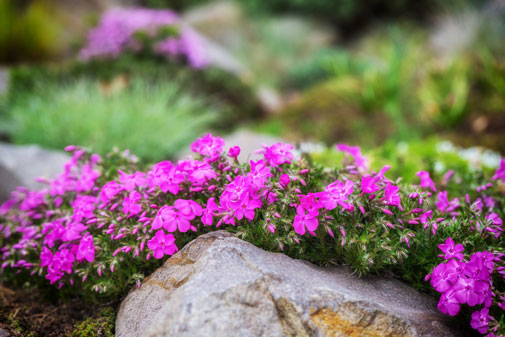
1920s: The rock garden

In the 1920s, rock gardens were the height of fashion. You hardly see them these days, although there are still some designers who produce them.
garden trends

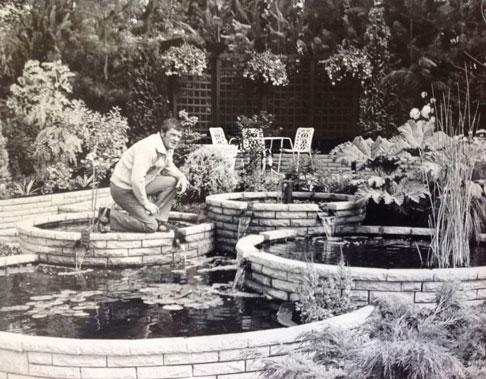
1930s: Art deco designs

As art deco architecture came into fashion, the style often extended into gardens. Exotic plants and evergreens were shown off in simple white-walled plots or within curved brick designs.

A great deal of creative effort was put into the paving, with highly stylised patios and paths.
garden trends

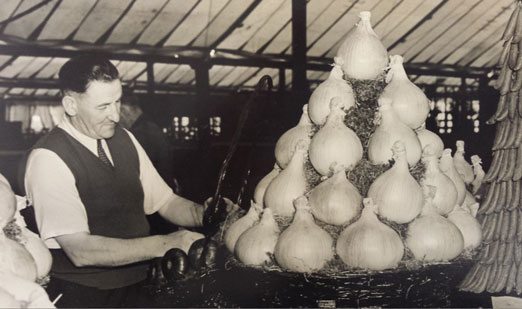
1940s: Grow your own

After the war, rationing continued for many years and the ‘grow your own’ movement was a necessity, rather than a fashion.

Ornamental gardens were dug up to make vegetable patches. Even football pitches were turned into allotments, and London’s Hyde Park had a huge allotment garden.

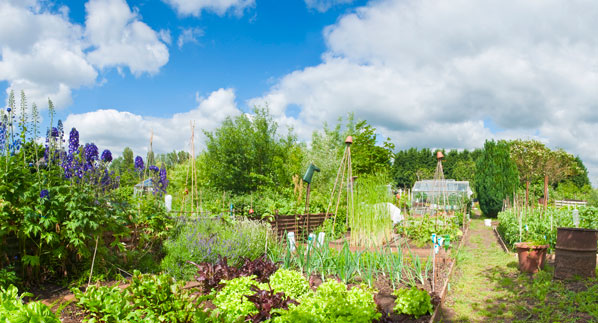
This trend continued into the 1970s, as seen on TV in The Good Life, and then fell out of fashion – but is very much back on the agenda for very different reasons right now, linked to the concern about the environment, food miles and agricultural additives. It’s come full circle.
garden trends

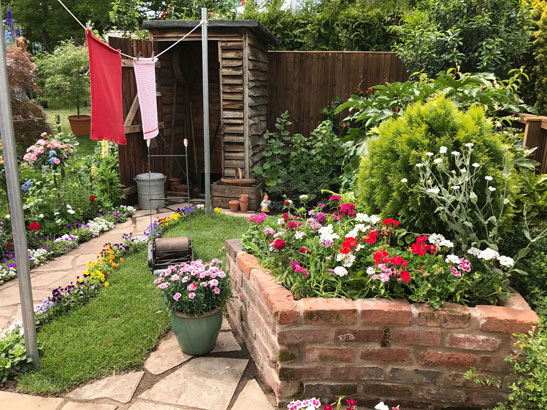
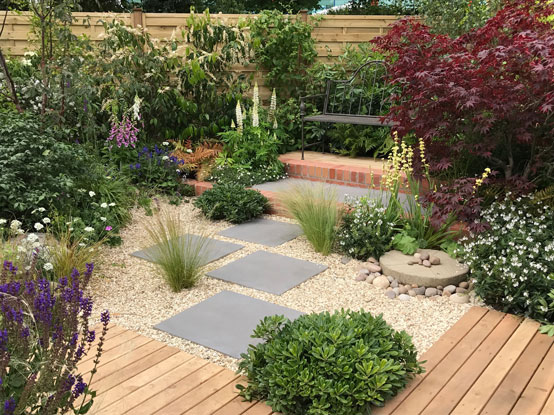
1950s: Rose gardens

There was a massive interest in rose breeding in the 1950s, with growers trying to produce new and exotic coloured colours. People tried to grow blue roses, which actually cannot exist in nature but have since been grown using genetic modification.

The Royal National Rose Society had more than 100,000 members by the 1970s. People still love roses, but few would have a rose garden that is solely roses and nothing else today.

It was also the start of the British love affair with the well-tended garden lawn, as new weed-killers, mowers and products came on the market, and the 1950s was the decade when the first garden centre opened in the UK.
garden trends

1960s: Mini conifers and heathers

In the late 1960s, there was a trend for mini-conifers and heathers in Britain’s gardens. They were popular because they were fairly low-maintenance and looked good all year round.

“Like many trends, they went completely out of fashion, but I think in the next few years we will start to see a renewed interest in conifers,” says Wilson.
garden trends

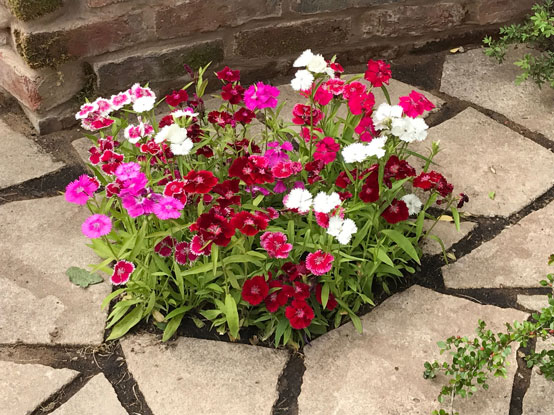
1970s: Crazy paving

Crazy paving was big in gardens in the 1970s. It was popular because it gave people a unique design in their garden, often in pink or yellow, and was also cheaper than conventional paving.
garden trends

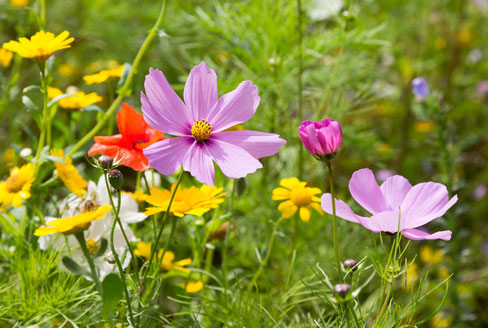
1980s: Wildlife gardening

The 1980s saw a surge of interest in wildlife gardening, with households encouraging wildflowers to grow in their gardens as concerns grew about the environment.

Chris Baines’ 1985 book, How To Make A Wildlife Garden, shot to the bestseller lists – telling people how to make their gardens a haven for wildlife. The trend of gardening with nature, rather than fighting against it, has continued and is now arguably one of the most important aspects of modern gardening.

garden trends

1990s: The TV makeover

The 1990s was the decade when gardening became prime-time TV, with shows like Ground Force with Alan Titchmarsh and Charlie Dimmock encouraging householders to give their gardens a dramatic makeover.

Decking and other recreational features became popular, as more people made the barbecue and patio table and chairs the focus of their outdoor space.

garden trends

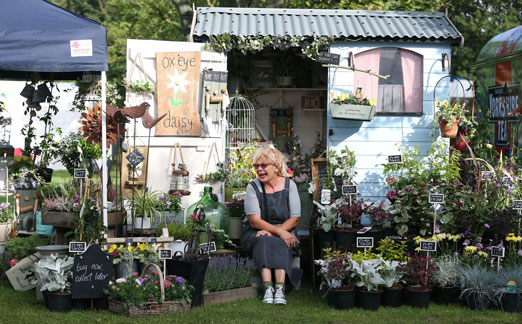
2000s: Naturalistic planting

The new century saw the popularity of ‘naturalistic’ planting start to grow, inspired by designers such as James van Sweden in the US and Piet Oudolf from the Netherlands.

In Essex, Beth Chatto had created the influential ‘Gravel Garden’, and flower shows began to feature planting schemes that had more in common with meadows than traditional flower beds.
garden trends

2010s: Green gardening

Gardeners became far more conscious of the environment. ‘No-dig’ gardening is a big part of what we do now, and is going to become even bigger. It is a less intensive way of cultivating the soil, that prevents damage to the soil flora and fauna that are so important to plant health.

There is a big concern these days about water use and the environment, and this is driving the way we garden. Coastal towns are always drier, so building zero-irrigation gardens – for instance, thinking about the right plants for the right place – is also big.

Southport Flower Show runs from Aug 15-18. For tickets and further information, see southportflowershow.co.uk.
Allotment Challenge: 3 Easy Veg for Beginners and 3 Trickier Crops for Seasoned Growers

allotment veg challenge

Choosing the right veg for your experience level can make a world of difference. Hannah Stephenson shares her top picks.

National Allotments Week is approaching (August 12-18), with gardeners being encouraged to share their harvests and exchange tips.

And if you’re relatively new to the grow-your-own scene, it’s always handy to hear about what’s easy and what’s not – and which crops to tackle once you’ve got a bit more experience under your belt.

Here are three easy veg for beginners, and three more challenging crops for the seasoned allotment holder…

allotment veg challenge

EASY:

1. Onions

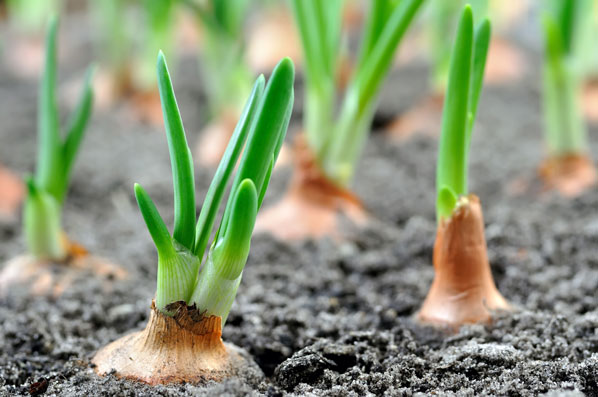
The great thing about onions is you can be harvesting them from February to September, if you plant different types.

For the quickest results, grow onions from sets (small bulbs), planting summer (maincrop) types in March and April, in well-cultivated, weed-free ground, pushing the sets gently into the soil so the tips are level with the surface. Spacing depends on the size of the set, so for small bulbs, plant them 2.5cm apart in rows 15cm apart.

Just keep plants watered in dry spells and you could have a succession of onions for much of the year. Spring onions can be harvested as soon as they are big enough to use, while maincrops will be ready in August and early September, when the leaves turn yellow.

Top tip: Keep on top of weeding because onions can’t compete. You’ll need to hoe or hand-weed regularly.

allotment veg challenge

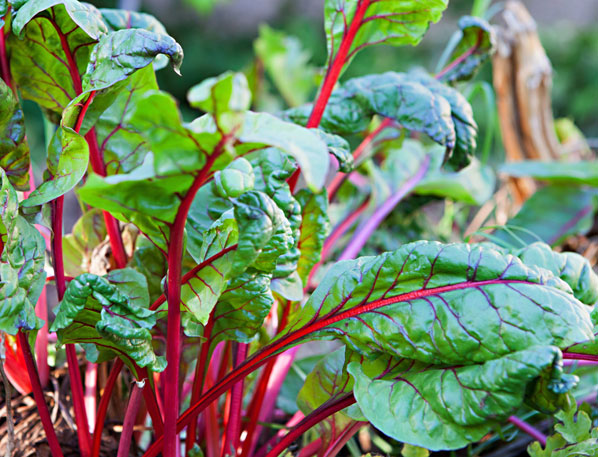
2. Swiss chard

This veg not only tastes good but also makes a great ornamental addition, as there are several types with coloured stalks which add vibrancy to any veg patch or potager.

Related to leaf beet, you can sow it from April to mid-July in rows outside, then thin the seedlings out to 15cm apart, allowing 30cm between rows. The only thing you need to do is keep it well watered in dry spells and free from weeds. It should be ready for picking from July to October.

Top tip: Swiss chard doesn’t travel well as the leaves look sorry a day after picking, so use it fresh.

allotment veg challenge

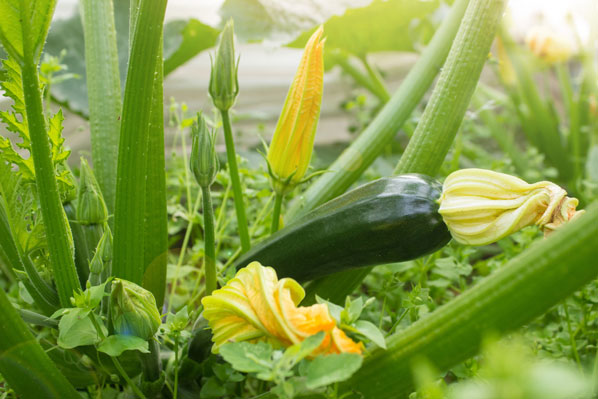
3. Courgettes

These wonderful summer veg, great grilled on the barbecue or sliced thinly in salads, are easy to grow, provided you give them enough space (one plant will fill a large container). Their yellow flowers are also edible and can add colour and mild flavour to salads.

They need to be started off indoors in spring, sowing singly in pots on a windowsill in April, and then hardening off outside before you plant them after the last frost has passed, at the beginning of June.

Prepare the soil by filling a hole with compost and topping it off with soil to create a low mound, so excess rainwater runs away from the base of the plant, helping prevent stem rot. Space them 60cm in each direction and lay mulch over the soil to retain moisture and smother weeds.

Keep them well watered during the warmer months and feed them with tomato feed every week once fruits have formed. You should be picking them from July to October and have plenty to share with your allotment pals with just a few plants.

Top tip: Choose a variety bred specifically for courgette growing, rather than a marrow type where you can pick the fruits when they are small, because your yield will be better. Good varieties include ‘Soleil’, ‘Clarion’ and ‘Parthenon’.

allotment veg challenge

A BIT TRICKIER…

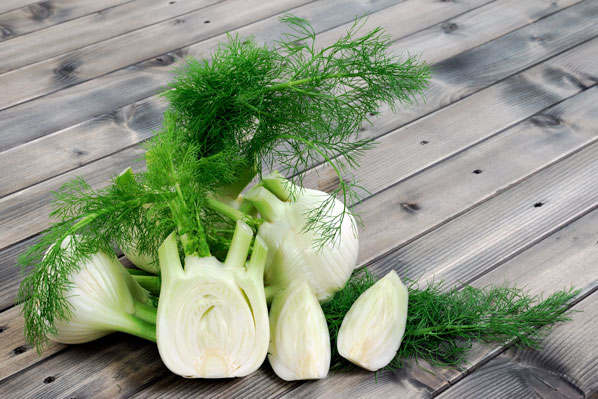
1. Florence fennel

This aniseed-flavoured veg with a swollen white bulb-like base is delicious used raw in salads or roasted in the oven.

It’s challenging because it prefers a Mediterranean climate, so you need to mimic that as much as possible growing it in a warm spot in light, well-drained soil, working in plenty of organic matter and watering it during dry spells.

Its main problem is bolting – when it produces flowers and runs to seed – which will make the bulbous base inedible. This can be caused by lack of organic matter in the planting area, dry soil and sudden swings in temperature.

Start the seeds off indoors in May, sowing three seeds each in small pots. Germination can be erratic, but remove the weakest two, leaving one seedling per pot.

Harden the plants off carefully before planting outside at the end of June, or when there’s a prolonged period of warm weather. Water them carefully – you don’t need much to start with, but don’t let them dry out.

If you want to sow outside, leave sowing as late as you can, probably late June or early July, as Florence fennel will bolt if sown too early or in a cold summer. The seeds should be sown directly into a well-prepared seedbed. It grows quickly and should be ready in late August and September.

Top tip: Cover young plants with fleece at night if it’s chilly, even in the summer.

allotment veg challenge

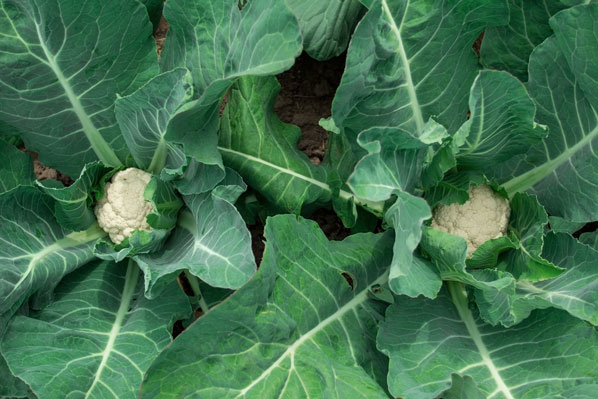
2. Cauliflower

Now a designer veg, with purple and lime-green varieties as well as the traditional types, have a go with them on the allotment if you fancy something a little more challenging. The main problems are bolting and poor soil.

You can get summer, autumn and winter varieties which you’ll need to sow at different times of the year – the only one which can be started off outdoors is the winter variety, which can be sown in April and May.

The biggest job is really good soil preparation. They like clay soil which isn’t waterlogged. If you have light soil, dig in plenty of organic matter. If you have acid soil, add lime over the winter to give it a pH of 7 and a good boost of balanced fertiliser, working it into the soil before planting.

Water young plants in well but once they’re established, only water if the soil becomes very dry. Too much water will encourage bigger leaves, rather than curds.

To stop them bolting, feed and water seedlings well and transplant them no later than six weeks old. When the curd looks full-size, cut it off just below the base of the head.

Top tip: When small curds appear in the centres of the plants, bend a few outer leaves over for protection from bad weather, snapping them so that they stay in place.

allotment veg challenge

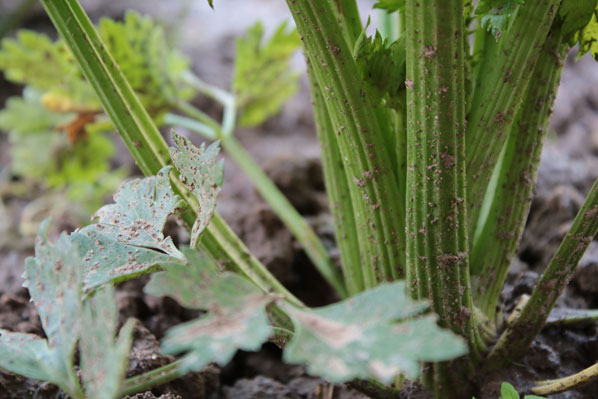
3. Celery

Delicious in salads, as crudites or cooked in stews, celery does, however, need attention to detail when growing. Sowing needs to be done indoors in relatively high temperatures (60-70°F/16-21°C). For the best chance of success, choose a self-blanching type.

Celery needs rich, fertile soil, which has had plenty of well-rotted organic matter worked into it beforehand. Plant the seedlings out in early June, after the last chance of frost has passed, spacing the plants 23cm apart in all directions. They need close spacing as the plants need to shade each other’s stems.

Water in well and keep them watered regularly. If you let the plants get remotely dry or water irregularly, you’ll lose the crop. Give them a liquid feed regularly too using a high-nitrogen feed, and keep them well weeded.

Top tip: Be vigilant against slugs, which can settle in and feed on the central stems, making the celery unusable.

National Allotments Week runs from August 12-18. Visit nsalg.org.uk.

Want your Little Ones to Love Gardening? Here are the Tools to Give Them a Head Start

children gardening

Former Blue Peter gardener Chris Collins helps us select the kit to get your children interested in gardening.

Gardening can be child’s play if youngsters are given the right tools for the job.

Now, former Blue Peter gardener Chris Collins, head of organic horticulture at Garden Organic (gardenorganic.org.uk), the national charity for organic gardening, has helped us select some basic pieces of equipment to enable kids to plant and grow seeds, care for them and to encourage them to spend time in the garden.

children gardening

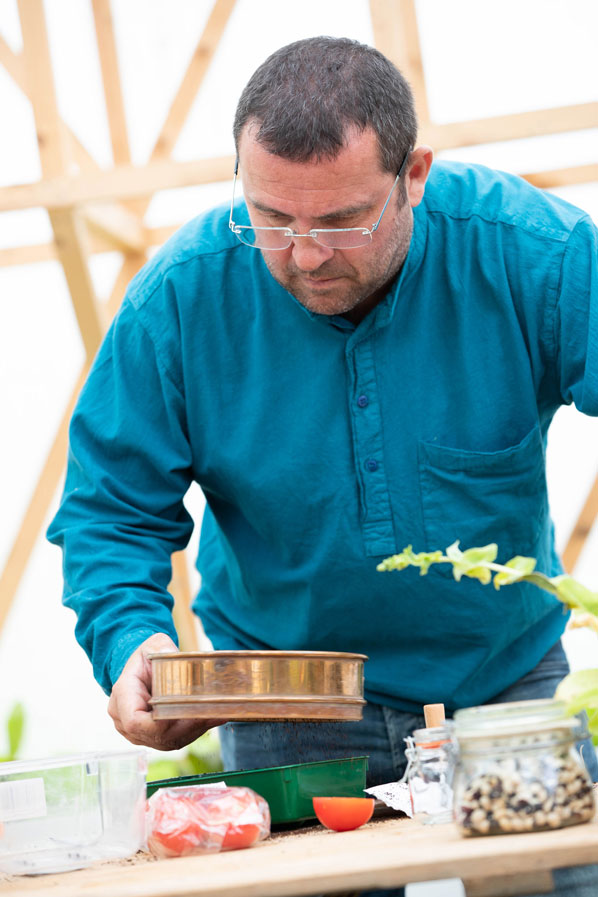
1. Tamper and sieve

“Children will love using a tamper to stamp on the soil to firm it and enjoy getting their hands dirty sieving the soil to produce a light crumbly mix,” he says.

These items will get them directly involved in preparing the soil and help improve seed sowing success and avoid any disappointments.

Good seeds to sow for little hands include sunflower, runner beans and sweet peas.

children gardening

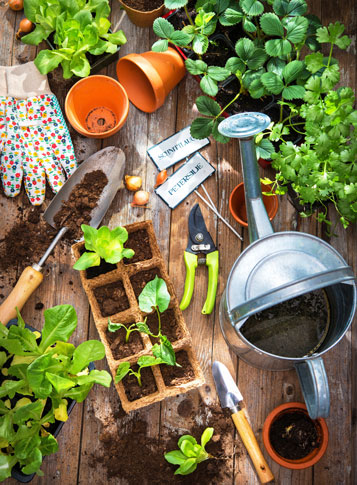
2. Hand trowel

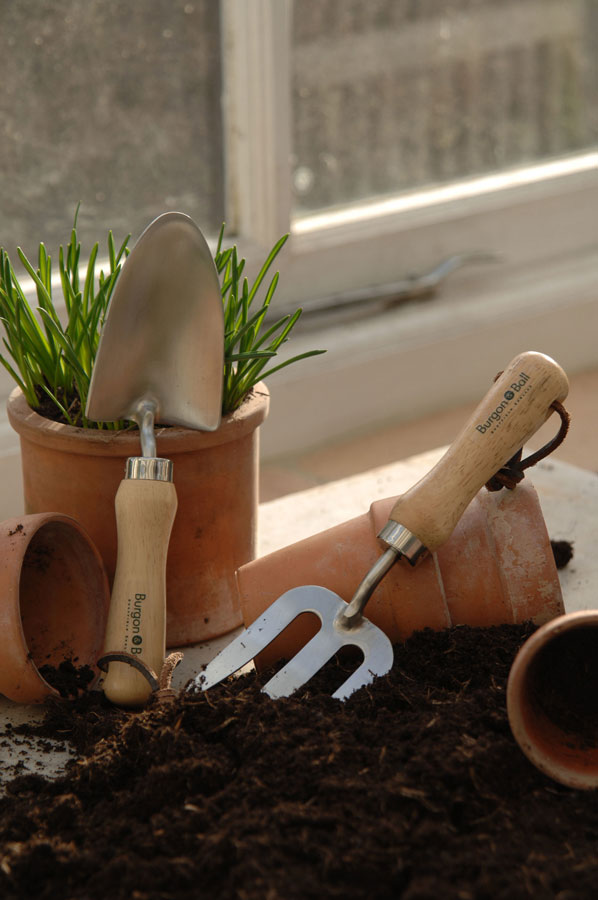
Serious young gardeners will be able to prepare beds for sowing, transplant seedlings and remove weeds with a good set of hand tools. Very young children will just enjoy a bit of digging and exploring the soil to look for worms and insects, which is always a cause for great excitement.

For younger children, colourful garden tools are widely available.

children gardening

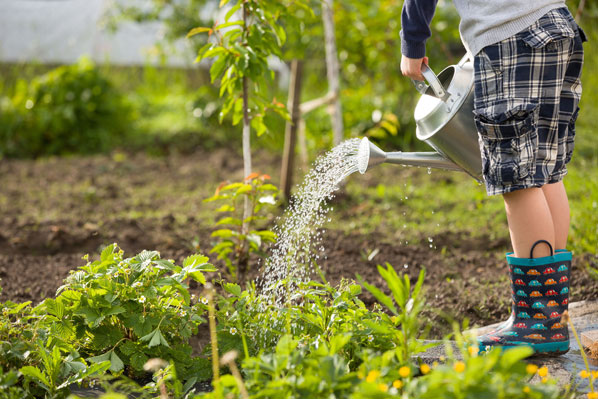
3. Watering can

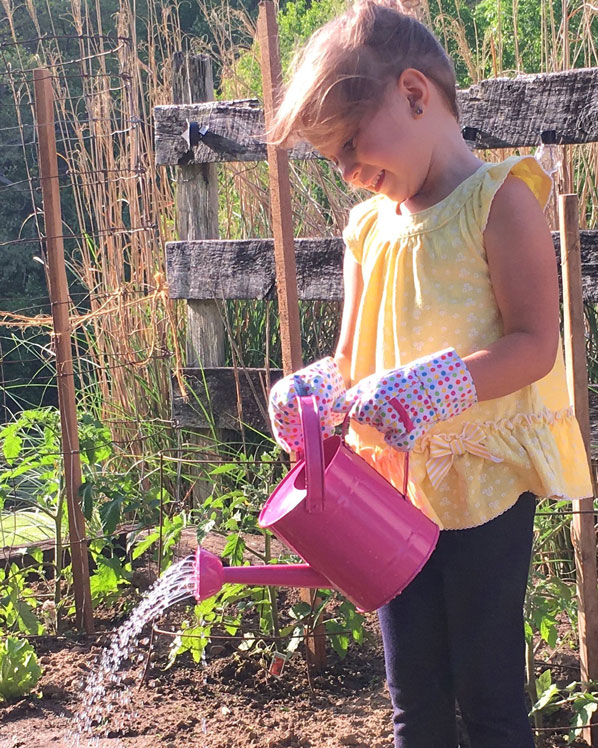
Playing with water – especially in hot summer weather – should encourage children into the garden, so a watering can is a must-have. Buy one with a rose to allow for gentle watering so they can get involved with regularly caring for their plants and make sure that the watering can is the right size and holds the right amount of water for the size of your child, so he or she can easily lift it.

Among the best is the Little Pals Children’s Watering Can Kit which includes a metal watering can, pink hand trowel and spotty gardening gloves (£15.90, Amazon www.amazon.co.uk)

children gardening

4. Compost bin

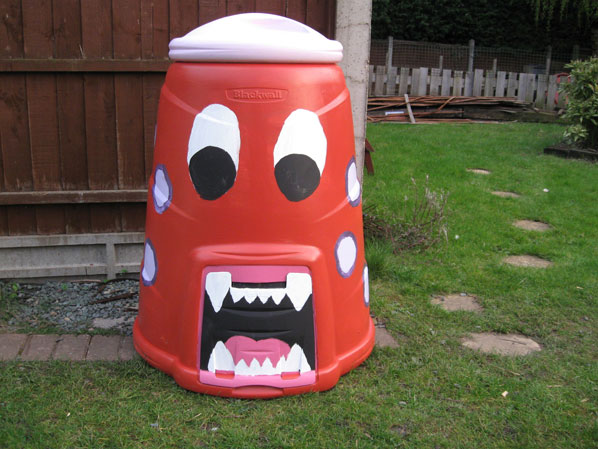
If you have a compost bin, you can help teach them the importance of recycling kitchen scraps and garden waste. Why not get one they can decorate too, making a lovely fun feature in the garden? They can then use the compost to help their plants to grow.

children gardening

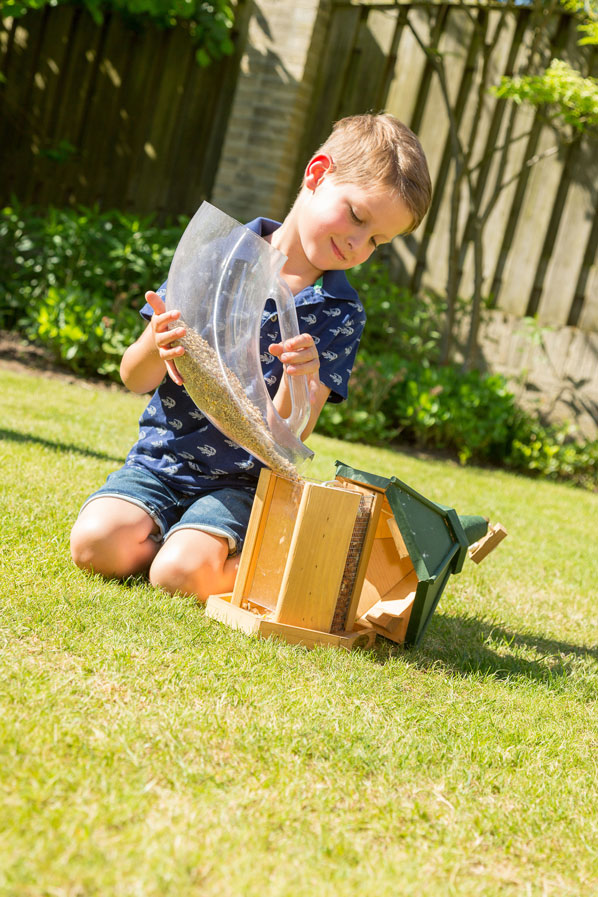
5. Wildlife feeder

Just letting your child fill up your regular bird feeder should engage them, especially when they see birds feasting on the seeds and nuts they have given them.

There are plenty of kits on the market to make your own bird feeder or bird house, or alternatively you can recycle old bits and pieces from your home to give them a fun activity of creating a habitat for wildlife, which will help them feel more connected to the garden and make them aware of the many creatures which use your open space.

Alternatively, invest in a good one for your child such as the Yukon Feeder (£24.99, CJ Wildlife – birdfood.co.uk) which enables three different types of bird food to be placed into different slots, to attract a variety of birds.

children gardening

6. Gardening clothes

The oldest clothes are probably the most sensible ones for kids to wear when gardening but if they are going to get their hands dirty, it may be wise to invest in a pair of junior gardening gloves in their preferred colour.

A good bet could be the Vgo gardening and DIY gloves for four to five-year-olds (£14.98 for two pairs, Amazon)

And don’t forget, most importantly, to get your child to wear a hat on sunny days.

10 Ingredients you can Forage to Pep Up Cocktails- According to an Expert

foraging for cocktails

The country's leading urban forager shines a light on wild herbs and plants to jazz up your garnish, and much more, says Sam Wylie-Harris.

Since the dawn of time we’ve been foraging for wild foods to use in drinks and as medicine.

To really get a taste for the year-long bounty around us, how about delving a little deeper for sprigs and slices to add a quirky twist to a classic cocktail?

However, you don’t need to run to the hills, go down to the woods or take a jaunt to the seaside to scout for wild ingredients if you want to make a variation on a much-loved tipple.

Founder of Forage London and author of The Edible City cookbook, John Rensten wants to give city dwellers the chance to enjoy and discover some of the wonderful wild foods that grow all around us – some of which can be used in cocktails, as he recently demonstrated on a guided foraging walk for Bushmills Irish Whiskey.

To steer you through the urban landscape, here are Rensten’s top 10 foraged ingredients that can be used as part of your cocktail repertoire…

foraging for cocktails

1. Lime blossom

“Used fresh it gives sweet notes of melon and a hint of cucumber. Great as an addition to a mint julep,” says Rensten.

2. Hogweed bitters

“Tastes like bitter orange and numerous other dried spices all rolled into one. Works really well in place of Angostura bitters when making an Old Fashioned.”

foraging for cocktails

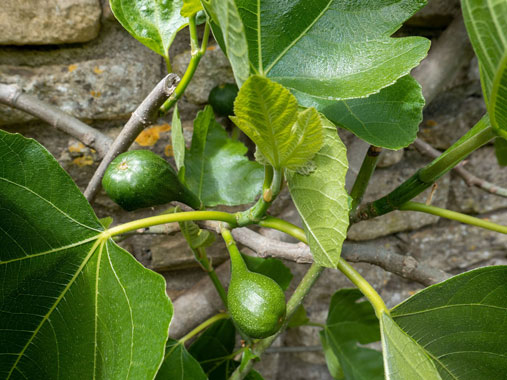
3. Fig leaves

“When crushed and made into a syrup, these taste like coconut. Great for giving depth to a Gimlet or adds extra coconut flavour to a Pina Colada.”

4. Crab apples

“Some sweet/sharp varieties work well instead of orange peel in an Old Fashioned,” when dried says Rensten.

5. Sumac

“Has strong citrus elements but less sour than lemons. Can be used as part of a Whiskey Sour.”

foraging for cocktails

6. Magnolia blossom

“Tastes a lot like ginger with additional bitter notes. A magnolia blossom syrup would work really well as part of an Agave Ginger Rita,” suggests Rensten.

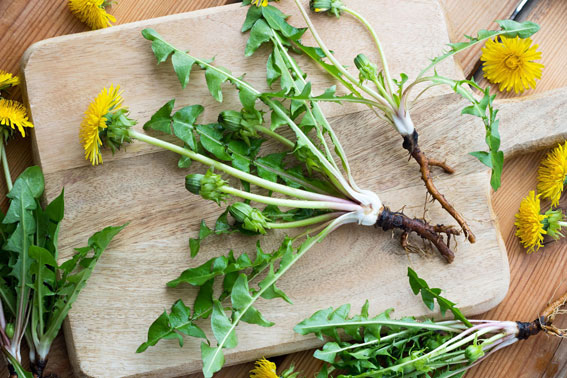
7. Dandelion root

“Tastes like nutty coffee but is caffeine free. Roast [the roots] first and grind, then use as part of an Irish coffee.”

8. Sorrel

“Has a tart/sweet lemon meets apple flavour. Can be used in place of lemon juice when making a Tom Collins, with gin, or a John Collins, with whiskey.”

foraging for cocktails

9. Quince

“Another great substitute for lemon because of its intense citrus taste. Can be used as part of a Whiskey Sour.”

10. Nettles

“Cook gently with water and sugar to make a nettle syrup, to give an interesting twist to a [bourbon based] Southern Spell,” says Rensten – wear gloves when you go harvesting to mind the sting.

9 Expert Tips to Transform Your Greenhouse from Messy Junkyard to Rustic Retreat

updating your glam greenhouse

Hannah Stephenson reveals how to banish the greenhouse clutter and create a horticultural haven instead. If you're tripping over compost bags, battling with broken pots and spent seed trays and can't find a tool in sight, your greenhouse may be in need of a serious makeover.

updating your glam greenhouse

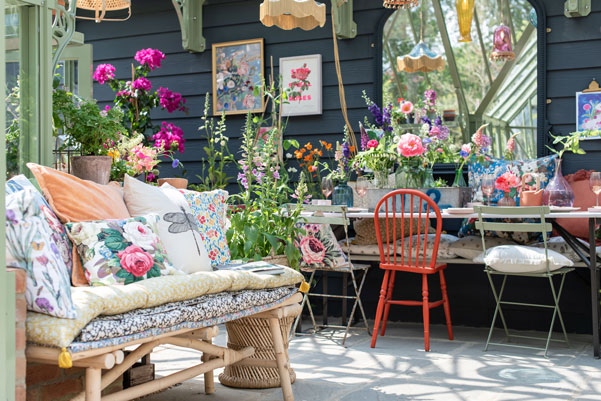
Smart gardeners can create a space that’s not only useful for growing plants but acts as an extension of their home – a stylish, comfortable bolthole through the warmer months and beyond, with the help of a little furniture, cushions, wall art and some nifty tidying accessories.

Where to start with your makeover? Follow this greenhouse guide for inspiration, including tips from garden styling pros and Richard Baggaley, director of The Greenhouse People (greenhousepeople.co.uk)…

updating your glam greenhouse

1. Create a potting corner

To prevent clutter in your greenhouse, carefully plan your layout and segment the space into purposeful areas. Create a potting corner next to where you grow your fruit and vegetables to make planting more efficient and to save space.

This area needn’t be dull. Place seed packets in a brightly coloured tin to store them safely and add a pop of colour to your greenhouse. Rather than leaving tools in a chaotic heap, a row of hooks will keep everything off the floor and neatly stored.

updating your glam greenhouse

2. Be bold with plant choice

The greenhouse needn’t just be a space to nurture seedlings. Exotic and tender plants will thrive in the warm environment and brighten up the space.

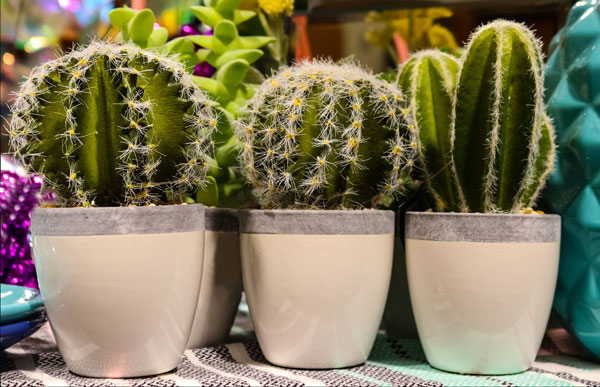
Fill your greenhouse with a range of desert and succulent plants like cactus, agave and crassula. These easy-care plants flourish inside a greenhouse and are very on-trend.

If botany is more your style, orchids are among the most beautiful and exotic greenhouse plants. They require a high level of humidity though, so store your misting bottle nearby to keep your orchid healthy.

Tom Barry, managing director of Hartley Botanic (hartley-botanic.co.uk), adds: “Architectural tropical and subtropical species are still very popular with both homeowners and gardeners alike.

“These plants look dramatic and add height within a greenhouse which works well when combined with bench-level succulents and cacti. For colour, and to add an exotic look, orchids in pretty ‘sweet shop’ colours can be grown in individual pots.”

updating your glam greenhouse

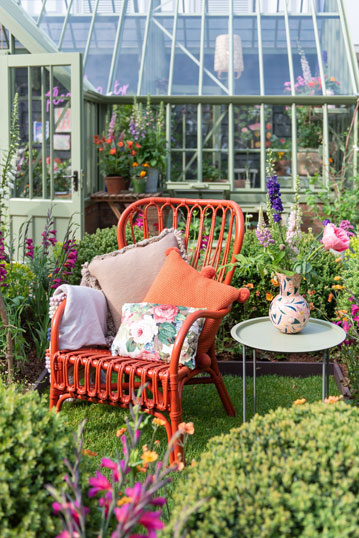
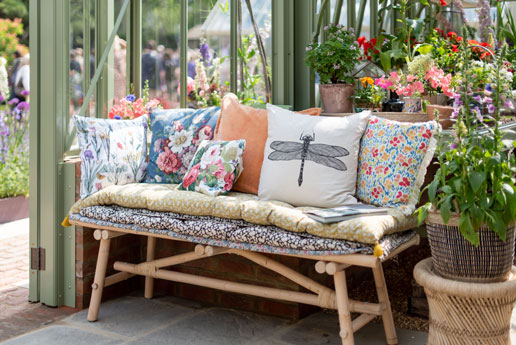
3. Create a cosy nook

Acclaimed author and botanical stylist Selina Lake (Selinalake.co.uk), who styled for Alitex (Alitex.co.uk) at this year’s RHS Chelsea Flower Show, suggests you update tired items such as old chairs, metal furniture or plant pots by adding a pop of colour with paints. A simple bench can be turned into a sumptuous day bed with a mass of comfy cushions.

updating your glam greenhouse

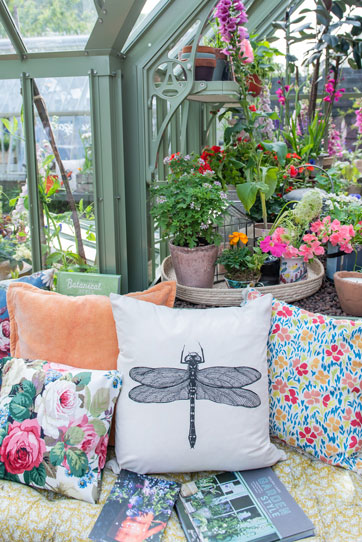
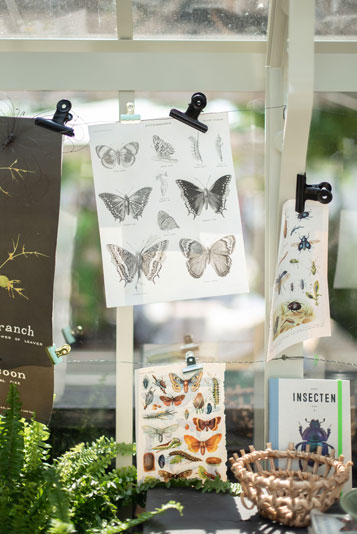
4. Use insect designs

Entomology, or the study of insects, is the new botanical trend, adds Lake. Get the look by having a go at drawing bugs on greenhouse windows using a chalk pen.

Add prints and posters in frames or clipped to bare walls and use a wire washing line for another display.

updating your glam greenhouse

5. Go for a natural look

‘Upcycling’ is the word on everyone’s lips – and for a good reason. With items sourced from second-hand shops, or even junkyards, it’s easy to go boho on a budget. Simple changes like a lick of paint on wooden furniture or changing the handles on drawers can have a huge impact, says Baggaley.

In line with environmental issues, forgo plastic items for furniture and accessories made from natural materials such as metals, rattan and bamboo.

updating your glam greenhouse

6. Find space to sit

Baggaley advises: “Add comfort to your glass-walled structure with seating and soft furnishings. Textiles will instantly soften the space and make it feel inviting.

“Be aware that these will fade under the concentrated sunlight, so shop for items with a vintage-inspired design or are second hand to accomplish the shabby-chic look.”

updating your glam greenhouse

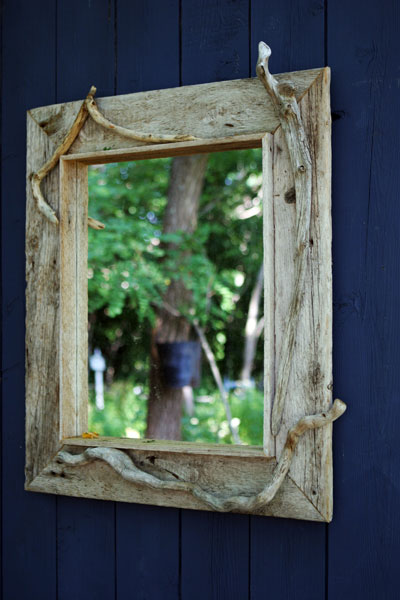
7. Make use of mirrors

Add mirrors inside your greenhouse to reflect light and the sight of your beautiful plants, Baggaley says. Careful placement will give the illusion of more space but do consider what it will be reflecting. Try to reflect the leafy interest in your greenhouse, rather than watering cans or plastic pots.

updating your glam greenhouse

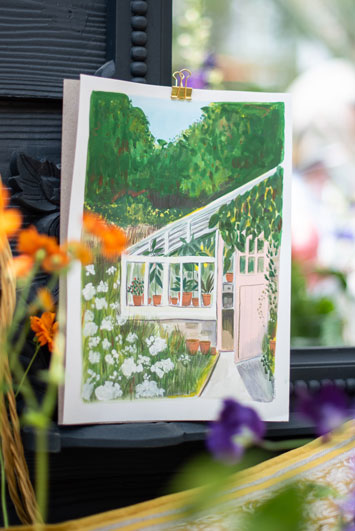
8. Use your greenhouse as a gallery

To add further interiors-inspired touches to your greenhouse, wall art is a great option to make the space ooze personality and feel more like a home.

Get creative and create your own works of art to display. You could decorate a canvas with cuttings from garden magazines, known in the art world as ‘decoupage’, for garden inspiration as well as decoration.

updating your glam greenhouse

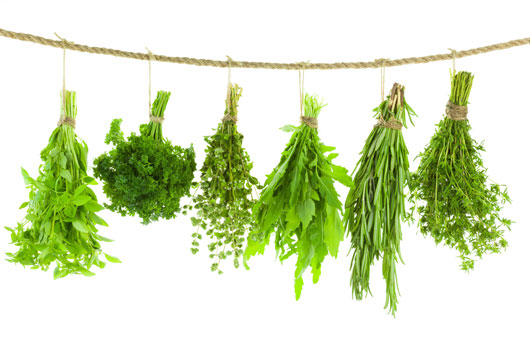
9. Create a herb haven

Drying herbs in a greenhouse is ideal as they dry quickly under the concentrated sunlight, add scent to the space, and look decorative.

Lavender, sage and thyme retain their fragrance when dried – just try to keep them out of direct sun. They dry quickly, so check periodically and package for storage as soon as they are crisp.

×
Find a Property
M
Country & Equestrian
By submitting this form, you agree to McCarthy Holden using your personal data in accordance with our Privacy Notice.