
Autumn décor ideas for a seasonal refresh

AUTUMN INTERIOR

With a nip in the air and change in seasons comes a new dawn – and a natural desire to create a comfy, snug space ahead of the cooler months.

Alongside sumptuous textures, polishing up warm woods and ambient lighting, now’s also the time for seasonal candles.

Here, experts share their top tips for an autumnal aesthetic…

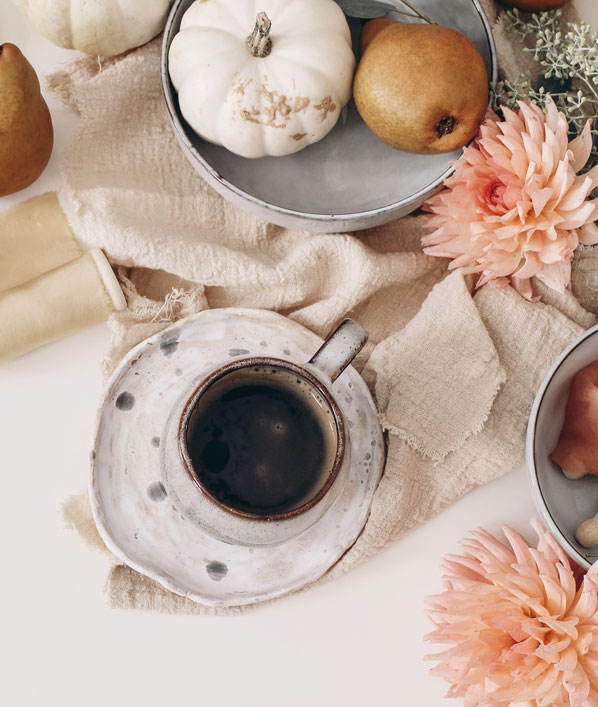
Forage for farmers’ market-style floral displays

“As we prepare for colder, darker months, it’s all about getting cosy and adding some extra touches that will make you feel cocooned and comforted,” says Charlotte Reddington, one half of styling and organising duo, Style Sisters. She says one of her favourite things things about autumn is the rich variety of textures and tones, from crunchy leaves to the abundance of changing colours in parks and gardens.
AUTUMN INTERIOR

“Be inspired inside your home and think about how you can weave these elements into rooms,” suggests Reddington.

“This can be through the addition of a statement autumnal floral display, including a rich array of crimson reds, dark greens and burnt orange.”

And with pumpkin season in full swing, don’t forget this colourful squash can be styled with foliage, berries and autumn wreaths.

Embrace cosier fabrics

“Shorter daylight hours mean only one thing – cups of guilt-free hot chocolate and plenty of movie marathons,” says Dani Burroughs, head of product for Snug.

“To get into the autumnal spirit, start by swapping out summer fabrics for cosier ones, like soft velvets or fuzzy boucle,” enthuses Burroughs.

“Bring in warm, inviting colours – think rich browns, deep reds and rustic oranges. Not only will they help transition from summer to autumn, they’ll also create a relaxing and warm feeling that’s perfect for those lazy evenings on the sofa.”

Introduce ambient lighting

Clever lighting can totally transform a room and the overall atmosphere, highlights Reddington.

“A harsh overhead light isn’t always the cosiest for an autumn evening at home on the sofa! Think about placing a large floor lamp or table lamps for some mood lighting, which will create a calming ambience.”

She continues: “And with darker evenings as the clocks go back, it’s an important factor to consider for maximum home comfort.”

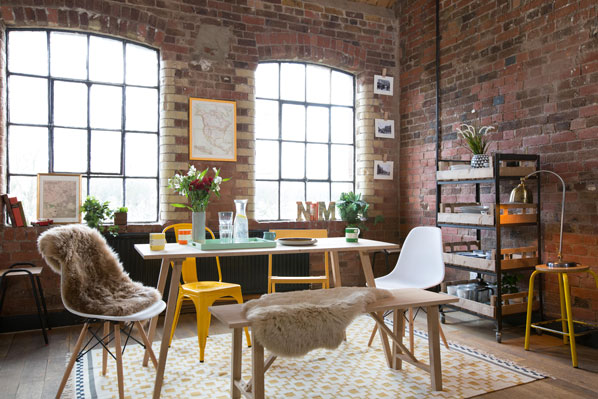
Dec out your dining room to combine function with beauty

Look to Scandinavian-inspired styles for a mindful, minimalist and meaningful take on autumn decor, suggests Francesca Hadland, interiors expert for Bridgman.

“Choose linen tablecloths and napkins, cutlery in classic styles and simple crockery while keeping to a colour scheme of just one or two main shades that imbue your space with warmth,” says Hadland. “Whether that’s a rust red or forest green.”

Ahead of the festive season, she says to make sure your guests feel comfortable with upholstered dining chairs – a personal favourite.

“Whether modernised by a metal frame or softened by a wooden leg, an upholstered chair is a beautiful way to ensure a sublime seating experience, while also adding an extra pop of colour to your dining room décor scheme,” notes Hadland.
AUTUMN INTERIOR

Embrace the biophilic trend

“Bring some new life into your home ahead of the colder months by incorporating air-purifying houseplants into décor,” says Rikki Fothergill, bathroom expert at Big Bathroom Shop.

Especially in bathrooms and kitchens, which she says is hugely beneficial for improving the quality of indoor air, regulating humidity levels and reducing the risk of more serious problems, like damp or even mould.

“Look to include species like ivy and fern as these are known to be great for maintaining air quality”, suggests Fothergill. “Spider plants are perfect too, and make for a great addition to any bathroom touching on the biophilic trend.”

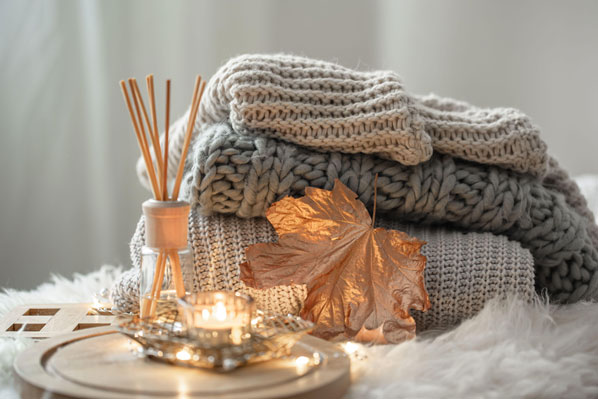
Scent the season

One of the very first things you notice (sometimes unknowingly) when you enter a room isn’t just how it looks, but how it smells, notes Reddington.

“Scent can evoke memories, elevate an atmosphere, and help to change your mood – from energising and lifting, to relaxing and even aiding sleep… we really think it’s one of the most important aspects of a home.”

Candles and diffusers are the most popular and easy addition, says Reddington. “Not only can they smell amazing, but the design can add a stylish decorative touch to a mantlepiece or coffee table.

“An absolute autumn home essential,” she adds.
AUTUMN INTERIOR

Five minutes with… Mary Berry for Mary Makes It Easy

MARY BERRY

By Rachael Davis, PA Entertainment Features Writer

For some of us, cooking can be a real chore. You might feel like you’ll never understand how to put together a nutritious, delicious dinner for your family, or you might think you simply don’t have time to get into the kitchen after a long day at work while juggling after school clubs, homework, and all the rest.

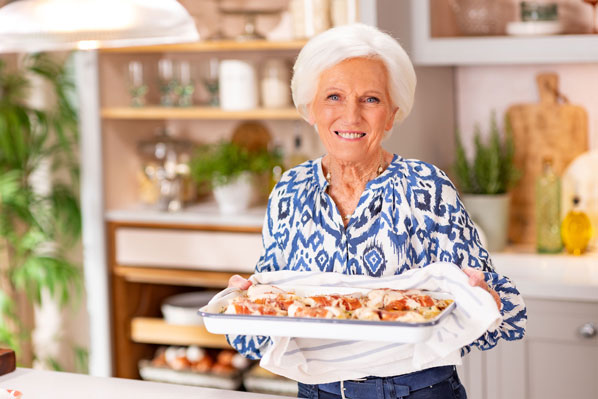
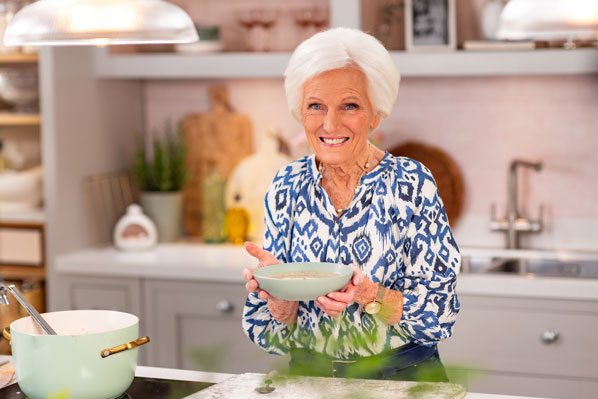
In her new programme for BBC Two, Mary Makes It Easy, former Bake Off judge Mary Berry gets together with celebrities with various levels of cooking experience to teach them exciting dishes that don’t take a lot of time, effort or skill.

MARY BERRY

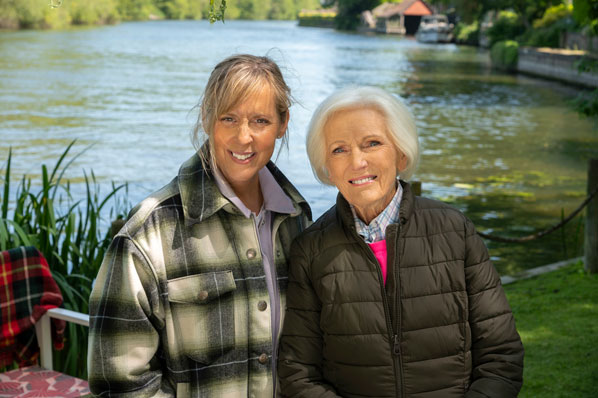
She joins her famous friends Mel Giedroyc, Jordan North, Anton Du Beke, Lorraine Kelly, AJ Odudu, and Michael Ball to guide them, and us at home, through some scrumptious recipes that even those who’ve never made toast without burning it will be able to whip up in a flash.

Let’s hear more from Berry, 88, about what she gets up to in the kitchen.

WHY DID YOU WANT TO SHOW PEOPLE HOW EASY COOKING CAN BE IN THIS SERIES?

I’d listened to what people say, and they want easy recipes, things that don’t take too long, too many ingredients, and perhaps, from ingredients that they (have) got in their cupboard. So Makes It Easy was good for me to do, because I knew everybody would love it. Nice shortcuts as well.

WHAT DO YOU THINK PEOPLE FIND HARD ABOUT COOKING?

I think they find it difficult because time is short, and they’re cramming so much into their lives… It’s the decision making.

I say: don’t make it complicated, make it on the simple side and follow the recipe. First of all, follow it exactly as it is written, read it through two, three times, and then place yourself thinking how it’s going to work… Choose a recipe that your family are bound to enjoy, and that’s achievable in the time that you’ve got.

I love a one pot dish. I’ve got a recipe that has a couple of chickens that have been spatchcocked – that means the backbone’s taken out. You can buy them already prepared, if you like, and put everything in one dish, all the roasted vegetables around it. Absolutely delicious.

MARY BERRY

HOW WAS IT WORKING WITH THE CELEBRITIES IN THIS SERIES?

Well, all the people that I had wanted to learn to extend their repertoire, or to do something a little bit different.

Lorraine (Kelly) is not an experienced cook, at all. And she likes healthy food. I did a vegetarian mixed bean and red pepper chilli and thought it was lovely, and her daughter enjoyed it too.

Mel (Giedroyc), she’s already a good cook and just wanted a few more to add to her repertoire. She did a veggie ragu, which was all sorts of different vegetables, but all sorts of things that you’ve got to hand – who hasn’t got a bottle of red wine? And we’ve always got things like tomato, tinned tomatoes and tomato paste, and mushrooms. You know, not too unusual vegetables.

And some like cakes. Now, Jordan (North), not a very good cook, but was dying to make a cake.

His idea of a spread was something he called “picky tea”, and he just emptied all different bowls on the table and put the cubes of cheese in, peanuts, crisps – so this was stretching him!

I made, with him, a red velvet sandwich cake… It had a delicious texture which was given by buttermilk – that was a new thing for him, and a buttercream icing. And on the top, just bought truffles, the sort that I like, the white chocolate ones – that was delicious. He seemed to enjoy it.

I had Anton Du Beke, also. When I spoke to him, I said: “Well, what do you already cook?”.

He said: “I do eggs. I do boiled eggs, fried eggs, scrambled eggs, omelette”.

“Can you do anything else?”

“No!”

So it was perfect to show him how to do a chicken escalope with tzatziki. We always buy chicken breasts, don’t we? And to make them cook quickly, you just can beat them out, which is very, very simple.

You just put the chicken breast on a board and put some baking paper on top, and then bang it with a wooden rolling pin. And it will be double the size – well, not quite double, but a nice escalope.

We fry it with mustard, and parsley on top and chopped dill, and that goes into the pan with it. And it is delicious.

YOU MENTIONED MEL THERE. OF COURSE, PEOPLE LOVE SEEING THE TWO OF YOU TOGETHER, BUT THIS IS THE FIRST TIME YOU’VE COOKED TOGETHER, AND YOU GO CAMPING! HOW WAS THAT?

It was just as much fun as playing cards with her, we used to do that…

We think alike. We have great fun. And of course, she is very bright and took to camping. I mean, she does camp with her family in the Lake District, and so she was certainly guiding me with putting up tents and things, and I would tell her all about cooking.

WHAT’S YOUR BEST ADVICE FOR PEOPLE STRUGGLING WITH COMPLICATED MEALS, OR WITH TIME TO COOK?

Well, don’t choose complicated recipes! Choose simple recipes. And it’s very important that you take on board the sort of food that your family enjoys.

Check that you’ve got all the ingredients together, and perhaps choose something that you could cook double the amount of and put some in the freezer for next week. It’s nice to look in your diary and say: “I’ve made a note that I’ve already cooked that, and it’s beautifully cooked, in the freezer – all I’ve got to do is reheat it!”

Mary Makes It Easy starts on BBC Two at 7.30pm on Thursday, November 2.

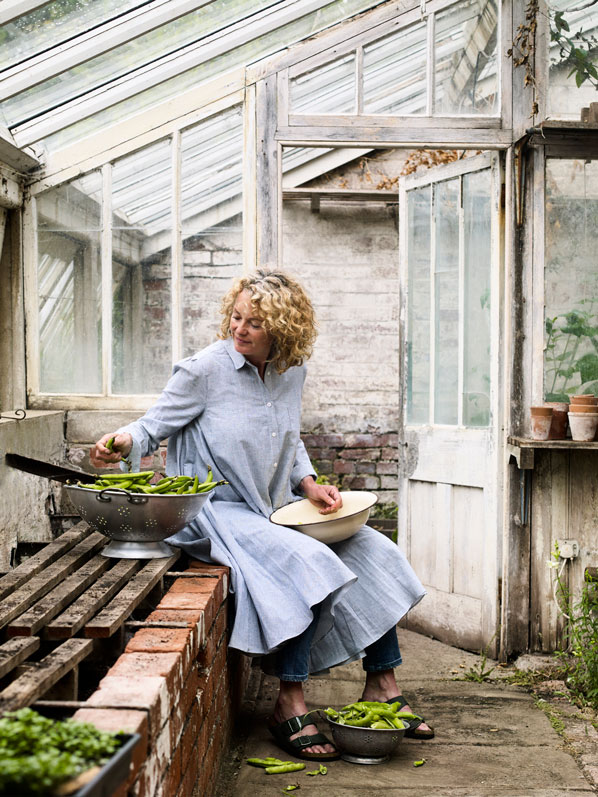
Wildlife presenter Kate Humble on what really makes a house a home

KATE HUMBLE MCCARTHY HOLDEN NEWS ITEM

What makes a house a home? Is it the building itself, the possessions inside, the people that live there, the location or community?

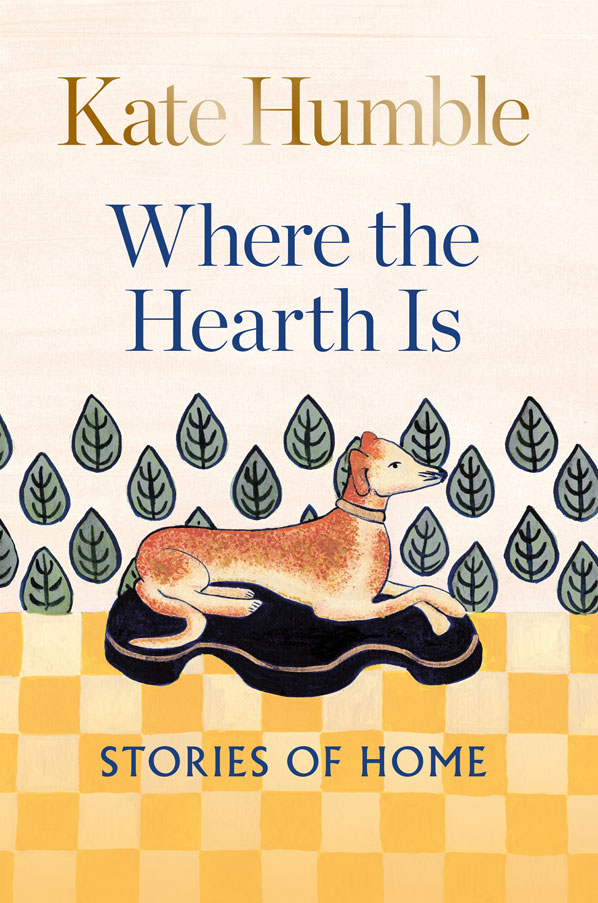
It’s probably all of these to some degree, says Kate Humble, who delved into the topic for her new book, Where The Hearth Is – sparked by the TV presenter’s own quest to understand why a London Victorian terraced property she thought would be her ‘dream home’ never really felt like it, but the Welsh farmhouse she later moved to did.

“Before I moved to Wales, my husband and I had bought a derelict house in London. We spent 18 months sleeping on kind friends’ sofas, giving everything we earned to the builders to try and make it un-derelict and create what we thought was going to be our absolutely perfect house, with a lovely kitchen, all our bookshelves and pictures on the walls, and all the elements we believed would make it the perfect, happy home,” explains Humble, 54.

“And what was really odd and actually rather distressing was the day we moved in and unpacked, we thought that instantly it would be home. It wasn’t. And it never felt like home, and I couldn’t work out what we’d done wrong.”

She repainted walls, moved pictures, furniture and even walls in a bid to fix the issue: “I drove my husband completely mad. For the whole seven years we were there, I basically battled to try and make this house a home.”

She eventually realised the problem wasn’t so much the house, but the location. “The reason that poor house was never going to be home was that I wanted it to make me believe London was home, and it couldn’t do that.”

mccarthy holden news item Kate Humble book

Humble’s TV career has always focused on the countryside and nature, with shows like Springwatch and Countryfile, and for a long time she’d harboured a desire to live in rural Wales.

“I was never a city girl, I was brought up in the countryside,” she explains. “I had for quite a long time wanted to be back in the country, but because of my job, doing things like Springwatch, lots of wildlife programmes and programmes that took me out into the countryside, I could manage coming back to London. But it just ceased to feel like home.

“I had this weird, inexplicable – and I still haven’t worked out why this was the case – longing to live in Wales, even though I have no family history in Wales or heritage, and I hadn’t even really been on holiday there. I didn’t really have a connection. But for some inexplicable reason, I really, really wanted to live in Wales.”

Then, “completely out of the blue” in 2007, Humble’s TV producer husband Ludo was offered a job in Cardiff. “It was like fate was intervening.”

The couple bought an old stone farmhouse with four acres of land in the Wye Valley. “As soon as I got there, I knew I had found my home,” she recalls. “There are many elements of that, but I think it was instant because I was back in the countryside, and those were my roots, even though it wasn’t geographically where I’d grown up, I had grown up in a rural area – and I was back in a rural area and suddenly I felt like I belonged again.”

Yet although Humble, her husband and their dogs have lived happily in the farmhouse in Wales for the last 16 years, running the Humble by Nature working farm and rural skills centre nearby, they may still not be in their ‘forever home’ – which is what sparked the idea for the book.

“For a long time, I’ve wanted to build a house of my own,” she reveals. “I’ve got the design in my head – I’ve always been fascinated by the idea of creating the place that I end up living.

“But the thing that worries me is, I might build this house one day that I think is perfect – but what will it be that turns it from a building I’ve imagined in my head, a physical thing, into the nebulous but nonetheless essential thing that makes it a home? What will shift it from simply being a building with furniture and a bed, into the place where you feel safe and secure and at home? What do I need to do to make sure that I don’t repeat the experience I had in London?”

Humble was so worried about this, she wrote long lists of the sort of people that might be able to give her insight into what makes a house a home. “I started off by thinking that would help me build a thesis, a kind of Humble theory of what makes a home, if you like.”

She spoke to many people, compiling stories for the book – ranging from brother and sister Willie and Ruby Brown, both in their late 70s, whose home (a 150-year-old family stone croft on the west coast of Shetland, where they’d been born and raised) was struck by lightning and destroyed, to a Syrian woman who lost not just her home in the war, “but her community, her culture, her language, everything she knew”, explains Humble.

“She had to start from scratch, trying to make a home in a country that wasn’t hers, and the thing she said made the UK feel like home was the kindness of people.

“What I learned was home doesn’t stop or start when you walk into the front door – it’s more than that,” Humble adds. “And for a lot of people – and I would include myself in this – community is really important, what’s around you, what do you look out at through your window?

“Of course, there’d be things that all of us, if they were lost through fire, flood or whatever, we’d probably mourn. But ultimately, possessions are ephemeral – one day they’ll fade, fall apart, or get lost. Whereas the people in your life are the fabric of your home. When I walk around my house and think what would I grab if the house was on fire, I think, well I’d grab my husband and my dogs,” Humble reflects.

“What I discovered is what makes a home is incredibly personal and individual to each person. But if you have a place you can genuinely call home, where you feel safe and secure and it’s your refuge, actually, you’re very lucky.

“Through talking to all these people and putting this book together, I realised how precious home is.”

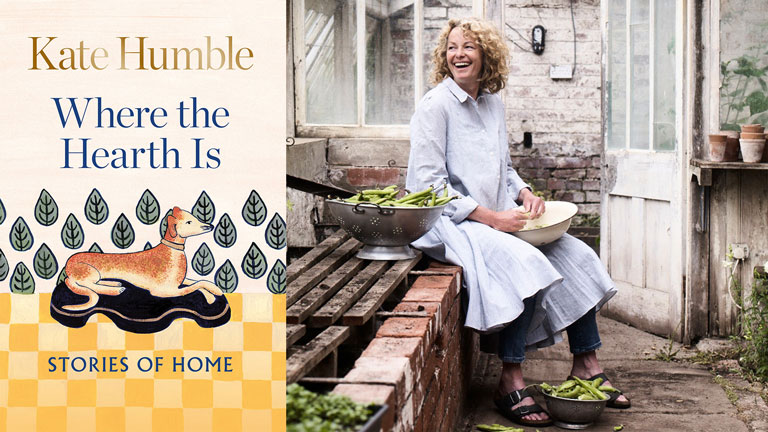
Where The Hearth Is: Stories Of Home by Kate Humble is published by Aster, priced £22. Available now.

mccarthy holden news item Kate Humble book

Mini though the ages – the evolution of a motoring icon

Mini Editorial McCarthy Holden

The word ‘icon’ is overused in the automotive world, but it’s most certainly suitable to describe the Mini. It’s been a true trailblazer in the small car class for decades, successfully evolving with the times as well.

From dinky ‘60s car to a modern electric hatchback, the Mini has done it all, while never losing its focus as being an affordable and fun car in the process.

(Motoring feature by By Ted Welford, PA Motoring Reporter)


Mini Editorial McCarthy Holden

With the British firm just revealing its new Mini Cooper, it’s time to take a walk back down memory lane and look back at the history of the Mini.

1959 – The original Mini

In the late 1950s, fuel prices skyrocketed as a result of the Suez Crisis, and that meant that suddenly the idea of a gas-guzzling large car fell out of fashion. It prompted the Morris Motor Company to challenge its top engineer, Alec Issigonis, to create a small, fuel-efficient car capable of carrying four adults but at a low price that many could afford.

The result was the aptly named Mini – a true marvel in engineering and packaging. With the wheels pushed out to the far corners, the engine was put in the car sideways, helping to improve stability and free up more interior space. It was British through and through, being built at Longbridge, Birmingham, and also at Cowley, Oxford.

1961 – Racing success

The public was a little baffled by the Mini at first, but it quickly grew a fanbase, and by 1962 the British Motor Corporation (BMC) had manufactured 200,000 examples.

Its popularity also came down to Mini’s success in racing. Its lightweight and agility made it a prime candidate for modifications, not least with John Cooper, a British racing legend. This led to the introduction of the Cooper, featuring a more powerful engine and other tweaks. An even hotter Cooper S would follow, with the Mini chalking up some impressive racing victories, not least three wins at the prestigious Monte Carlo rally. By 1965 the millionth Mini had been produced.

Mini Editorial McCarthy Holden

1970s and 1980s – the Mini would just keep plodding on

It’s a testament to just how brilliant the original Mini’s engineering was that the firm just kept producing them as the years rolled on.

Helped by rising inflation and increasing petrol prices, demand for the small Mini was relatively sustained, with cumulative Mini sales passing three million and four million in 1972 and 1976 respectively, helped by the addition of new versions such as the Clubman estate and a pick-up.

1994 – BMW buys Mini and the final Classic Minis are produced

Mini came under the Rover Group in 1986, and in 1994, BMW acquired the firm. Though it would also own Land Rover as part of the deal, this was sold to Ford in 2000, but BMW retained Mini and continues to do so to this day.

The original Mini would continue to soldier on, helped by lots of special editions, until 2000, when it was finally discontinued. More than 5.3 million classic Minis were produced.

Mini Editorial McCarthy Holden

2001 – The New Mini

Reinventing a car like the Mini, especially when it was in production for more than 40 years, was always going to be challenging. But Mini presented its ‘New Mini’ at the 2000 Paris Motor Show, with production at the firm’s Oxford factory and sales beginning in 2001.

It was quite a lot bigger than the original, which proved controversial, but it sold well, with the 100,000th model being made just a year later. A Convertible version followed, as did sportier Cooper S and John Cooper Works models. A special edition ‘GP’ also arrived in 2006, with the rear seats removed and power increased to 218bhp, making it the most powerful Mini ever.

Mini Editorial McCarthy Holden
2001 ’new' Mini

2006 – The Second New Mini

Following the success of the New Mini, the firm didn’t deviate far from its proven formula with this second-generation model, which looked quite similar.

But it was larger, better equipped and featured new engines as well. This new model would also serve as the basis for the reincarnated Mini Clubman, introduced in 2007. This generation of model is also noteworthy as providing the setup for the ‘Mini E’ in 2009 – an electric Mini trialled for 12 months to evaluate the user-friendliness of EVs. Though it would be another decade before buyers could choose an electric production Mini, these prototypes helped pave the way for BMW to introduce its electric i3 in 2013.

Mini Editorial McCarthy Holden
2006 ’second' Mini

2014 – The third innings

In 2014, a brand-new Mini was launched. Though sharing a clear lineage with its predecessors, it was based around a new platform and was noticeably more modern to look at. A broad range of new engines were available, while it was also available with a range of new features, including a head-up display and LED headlights – both fairly advanced technology at the time.

Though revealed in a three-door guise, Mini would introduce its first five-door Hatch shortly after, helping to improve interior space further. In 2020 we saw the launch of the Mini Electric as its first EV, boasting a range of around 145 miles. In the same year, Mini also pulled the wraps off its latest John Cooper Works GP – an aggressive-looking 302bhp hot hatch that remains by far the most powerful Mini hatchback ever made.

Mini Editorial McCarthy Holden
2014 ‘third’ Mini

2023 – A simplified, digital Mini

Mini has just revealed its new Cooper, as it will now be known, rather than Hatch. Offered in just a three-door guide, it gets a modern, simplified design that makes it look quite different to the outgoing model.

The plastic wheelarch trim is gone, as are the questionable Union Jack rear lights, and in place is a modern-looking Mini that will exist for many years to come. Inside there’s a new circular touchscreen display and a simplified layout. Only revealed in eclectic guise so far – petrol versions will join the line-up at a later date – the Mini Cooper can now travel up to a claimed 250 miles on a charge, considerably more than its predecessor.

Mini Editorial McCarthy Holden
new Mini Cooper

A beginner’s guide to pickling your homegrown fruit and veg

Pickeling Editorial McCarthy Holden PA

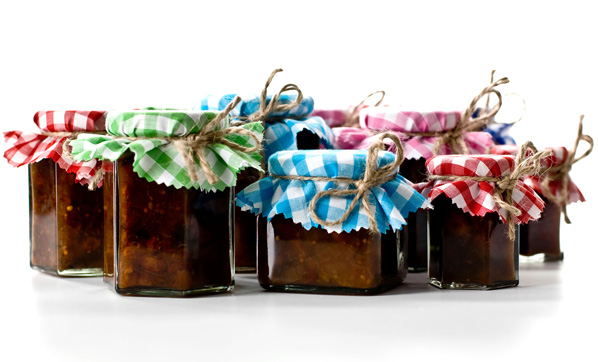
Want to know how to make delicious pickles, chutneys and relishes by adding homegrown vegetables, fruits and herbs to the mix?

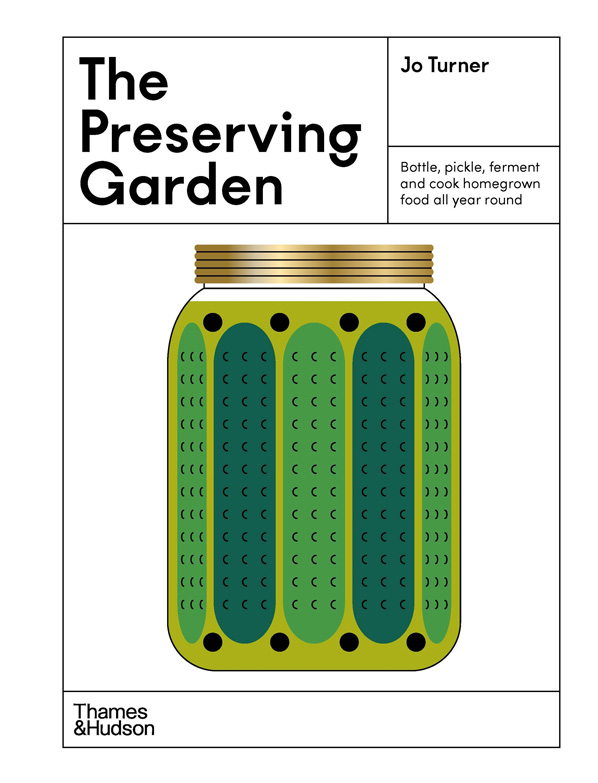
“A veggie patch is the fastest path to preserving homegrown produce,” says keen gardener Jo Turner, who learned many of her skills from her mother and grandmother and has now put her knowledge into a new book, The Preserving Garden, an illustrated guide on how to preserve your produce throughout the year.

The book features recipes for chutneys, piccalilli and a plethora of pickled veg, and how to go about growing and preserving them.

Pickeling Editorial McCarthy Holden PA

Here, she offers tips for anyone wanting to have a go at pickling their homegrown produce.

Pick fresh produce

“You can pickle courgettes, cucumbers, onions, carrots, beetroot and capsicums,” Turner enthuses, or use tomatoes in chutneys and courgettes in piccalilli.

Choose firm, young, blemish-free vegetables and start the pickling process within 24 hours of picking them. Some, such as beetroot, will need preparation. Turner peels and roasts her beetroot before pickling.

Watch your vinegar

“You need an acidic brine made from vinegar and spices,” she advises. The vinegar used should have an acidity content of at least 5%, which should be on the label of the bottle. Alternatively, ready-made pickling vinegars are widely available from supermarkets.

White vinegar is often the base for pickling vinegars, but you could also use cider vinegar, wine vinegar or malt vinegar. For a richer flavour, balsamic vinegar can also be used. Don’t add water to the mix as it will reduce the acidity, Turner says.

Mix your vinegar with sugar (some recipes require a lot of sugar), salt and spices and you will get a brine. You may have to taste it to assess sugar content, she suggests. Remember that darker vinegars will result in a darker brine and may not be ideal if you want your pickles displayed in a clear liquid, she adds. Use white sugar to keep the brine clear, not cloudy.
Herb choice

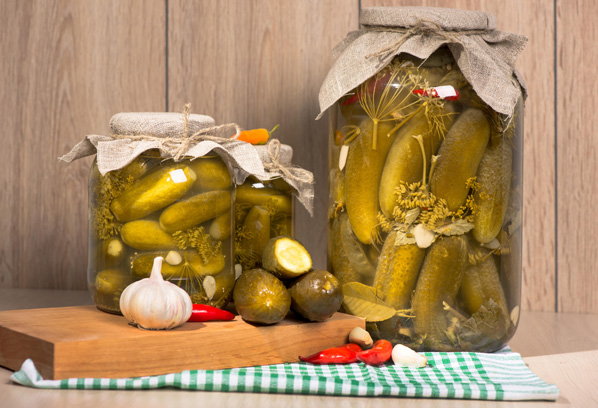
Use whole spices and washed fresh herbs to add to your vinegar, as that will give the best flavour. Ground spices will make the brine cloudy.

“Ideal additions include whole peppercorns and bay leaves, star anise and more robust spices,” Turner suggests. She uses fennel leaves with carrots and finely sliced chillies to spice up other pickled veg, while cucumbers (gherkins) go well with mustard seeds, coriander seeds, cumin, dill, chilli and bay leaves. Whole cloves, allspice and star anise make good companions for beetroot.

Sterilise your jars

She advises avoiding metal lids to seal jars containing brined or pickled produce, unless they are sealed with a plastic-like coating on the underside. Sealing rings help long-lasting preservation and glass bottles can also be used.

To sterilise, wash the jars, lids and rings in hot soapy water and rinse in a sink of clean hot water. Leave the lids to air dry on a clean tea towel. Place damp jars upside down on a baking tray lined with an old tea towel and place in a warm oven for 15-20 minutes, she advises. Turn the oven off and leave the jars to keep warm until needed.

Pickeling Editorial McCarthy Holden PA

Putting it together

Some veg, such as cucumbers, will need to be sprinkled with salt and left for a few hours before being rinsed off in a colander with boiling water and dried. Peppers will need to be grilled and their blistered skins removed before preserving.

You’ll need to boil the brine in a pan so that the sugar and salt are dissolved.

“Place your spices and cut-up vegetables as you would want them into the jar and then cover it with boiling hot brine, ensuring that your jars are warm when you do it, or they may crack,” Turner says.

“Pouring hot brine on veg won’t make them softer because it doesn’t cook them through.”

Remove air bubbles by gently running a small spatula or cocktail stick into and around the jar and leave a centimetre at the top, but the vegetables need to be completely covered with the brine, she adds.
How long will pickled veg keep?

If you place an unopened jar of pickled veg in a dark, cool room it should last for six to 12 months, she predicts.

Once the jar is opened, it needs to be resealed and kept in the fridge and should last a couple of weeks. Chutney may keep longer, although it will need to be placed in the fridge after opening, she adds.

The Preserving Garden by Jo Turner is published by Thames & Hudson, priced £19.99. Available now.

Pickeling Editorial McCarthy Holden PA

Bake Off’s Hermine Dossou: Being thrifty helped me get on the housing ladder

bakery editorial McCarthy Holden

As a trained accountant and a long-time baking enthusiast, Hermine Dossou knows a thing or two about saving money in the kitchen.

“My first breadmaker was from Panasonic – I bought it from Gumtree,” the former Great British Bake Off contestant says.

“It was basically somebody’s wedding present that they didn’t want and they sold it half price.”

A devotee of Martin Lewis’s Money Saving Expert website, the 42-year-old, who was born in Benin, West Africa, and moved to the UK for university aged 20, tries to avoid ever paying full price for a big ticket item.

“If I wanted to buy, let’s say, a mixer, I would go online, and type ‘Kenwood discount vouchers’ and then something always comes up,” says Dossou, who lives in Kettering and came fourth on the 2020 series of Bake Off.

bakery editorial McCarthy Holden

But the mum-of-one – whose son Steven is 13 – wasn’t always such a frugal foodie.

“That came from that period where I became a single mum on a reduced income,” she says.

“I couldn’t work full-time because I had to look after my son, and also I didn’t want him to have the processed kind of bakes.”

Whipping up cakes and cookies filled her “empty afternoons” as a new mum and was a lot cheaper than buying ready-made baked goods.
“I would cook from scratch and prep my vegetables when I could get them on offer,” she continues.

“Same for fruits – they are often very discounted when they become a bit soft, and that’s the best time to make jam.”

Even post-Bake Off and her book deal (she works full-time as an accountant), Dossou remains a savvy shopper, knowing that a higher price doesn’t always mean a better product.
“Like a bar of chocolate, if it’s the same quantity of cocoa, why are you paying three times the price? Especially if you’re going to bake with it.

“Wonky onions at half the price is the same… they all come from the same farm.”

bakery editorial McCarthy Holden

Her accountancy skills came in handy, too, and she still uses a spreadsheet to track her income and outgoings every month.

“I think generally in life it is important to budget and know where your money goes, because I think it allows you to achieve a lot more than if you were just living freestyle,” Dossou says.

“It’s a nightmare trying to get on the housing ladder here in the UK – that’s something I’ve been able to do through being thrifty in every area of my life.”

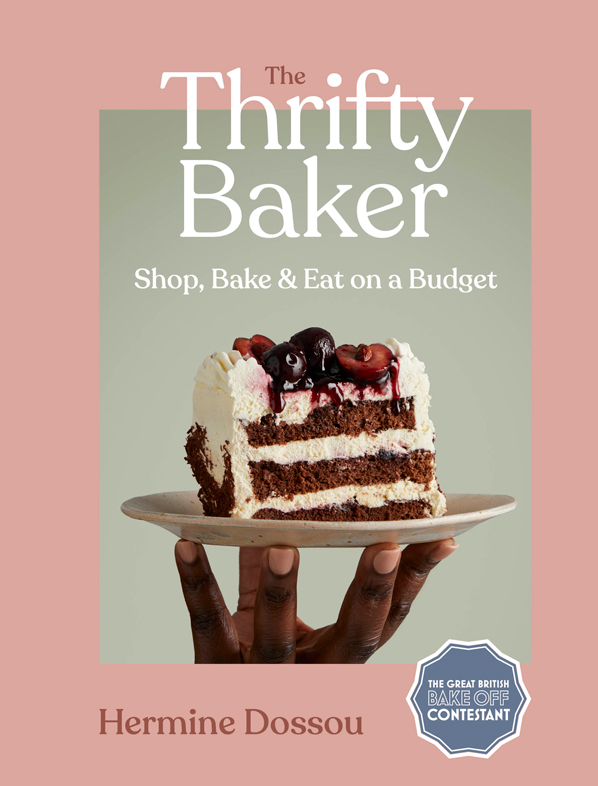
That’s why she decided to call her first cookbook The Thrifty Baker: “I just really wanted to bring that awareness of how we choose what we eat, and how we can save through making little changes here and there.”

“Now, more than ever, when people are struggling with the cost of living, I think it’s even more important to go back to those values of cooking from scratch, trying to cook at home, and making meals from, you know, not much.”

With lots of advice for beginners, the book focuses on affordable dishes, from basic breads and simple biscuits to special occasion puds and impressive-looking desserts.

There’s a distinct Gallic influence (Benin, where Dossou learned to bake as a child, is a former French colony) felt with recipes such as pain de campagne, orange and brown butter madeleinesm and pear frangipane tart.

bakery editorial McCarthy Holden

The author points out when a recipe can be cooked in an air fryer – a recent Black Friday bargain she loves because it allows her to enjoy fried Benin delicacies using less oil and without turning on the oven.

“Because we have a really small family, just me and my son, you don’t always want to put the oven on just to bake something for two.

“With an oven you’ll need to preheat it for a good 15 to 20 minutes before you can even bake in it. With the air fryer you just put the cake in and 15 minutes later it’s out – easy and convenient.”

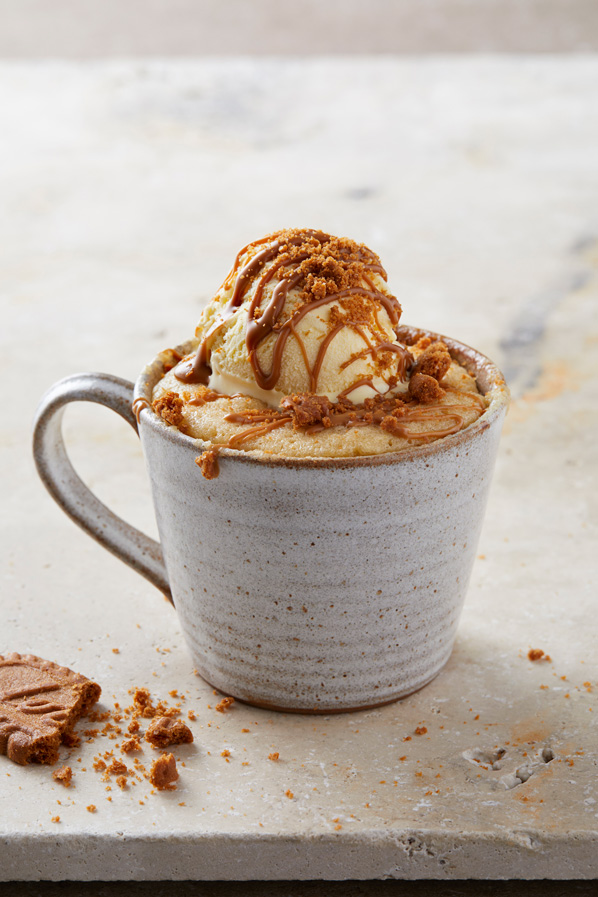
There’s also a section devoted to microwaveable mug cakes, with peanut butter and jam, speculoos (aka Biscoff) and chocolate hazelnut flavours of the cheap and easy-to-make single-serve puds.

bakery editorial McCarthy Holden

“In the microwave you can make a cake in five minutes from weighing, mixing and baking,” says Dossou, who loves how kid-friendly they are.

“With my son I feel more inclined to let him make a mug cake than maybe something bigger.

“Even if it goes wrong he’s not wasting a lot of ingredients and, you know, he’s not turning the kitchen into a bonfire.”

The Thrifty Baker by Hermine Dossou is published by White Lion, priced £18.99. Photography by Patricia Niven. Available now.

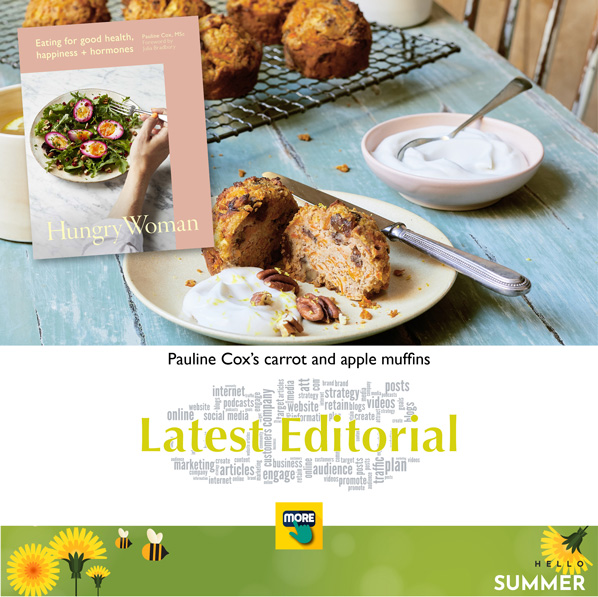
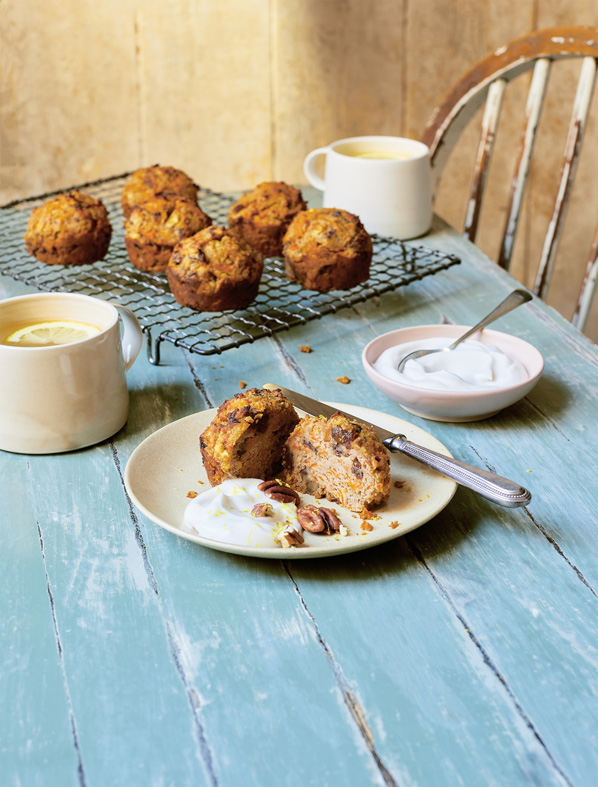
Pauline Cox’s carrot and apple muffins

muffins McCarthy Holden

“These muffins are naturally sweetened by the grated carrot, apple and cinnamon,” says functional nutritionist Pauline Cox.

“This fibre fest will keep you feeling full and satisfied without a blood-sugar spike.”

Carrot and apple muffins

Ingredients:

(Makes 12)

90g coconut oil, melted, plus extra for greasing

5 eggs

375g ground almonds

150g sultanas

90g walnuts or pecans, roughly chopped, plus a few extra to serve

3tsp baking powder

3tsp ground cinnamon

1tsp salt

375g carrots, grated

375g apples, grated (green apples for a lower carb content)

Zest and juice of 1 unwaxed lemon

Coconut or natural yoghurt, to serve

Method:

1. Preheat the oven to 170°C fan and grease a 12-hole muffin tin.

2. In a mixing bowl, beat the eggs and combine with the melted coconut oil.

3. Add the ground almonds, sultanas, walnuts or pecans, baking powder, cinnamon and salt to the liquid egg mix, along with the grated carrots and apples and mix together to form a thick batter. Add in a quarter of the lemon juice (use the rest in drinking water) and half of the lemon zest.

4. Spoon the thick mixture into your greased muffin tray. Bake for 22-25 minutes. Remove from the oven and leave to cool.

5. Serve with a dollop of coconut or natural yoghurt, a pecan or a walnut and sprinkle with the remaining lemon zest.

Muffins image
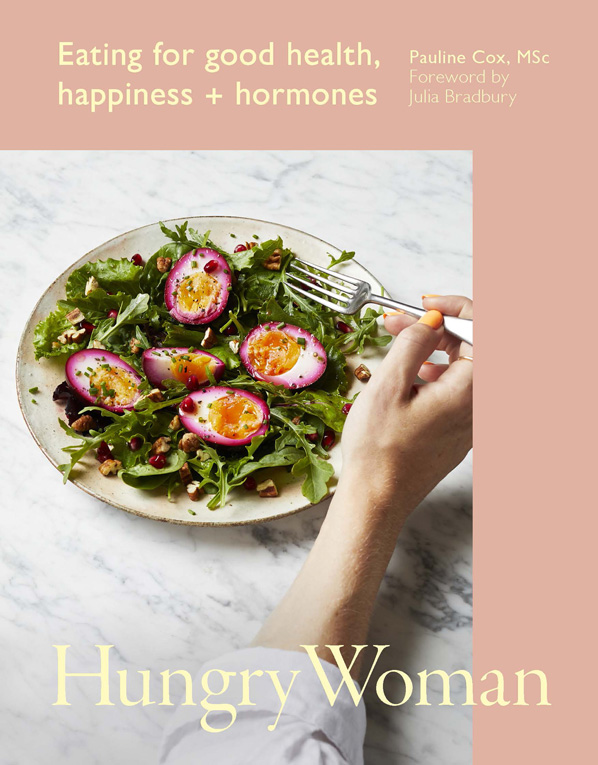
Pauline Cox book Hungry Women McCarthy Holden
Pauline Cox Recipe McCarthy Holden
Pauline Cox

Pauline Cox’s Roquefort, rocket and pink grapefruit salad

McCarthy Holden Salad for summer

By Katie Wright, PA:

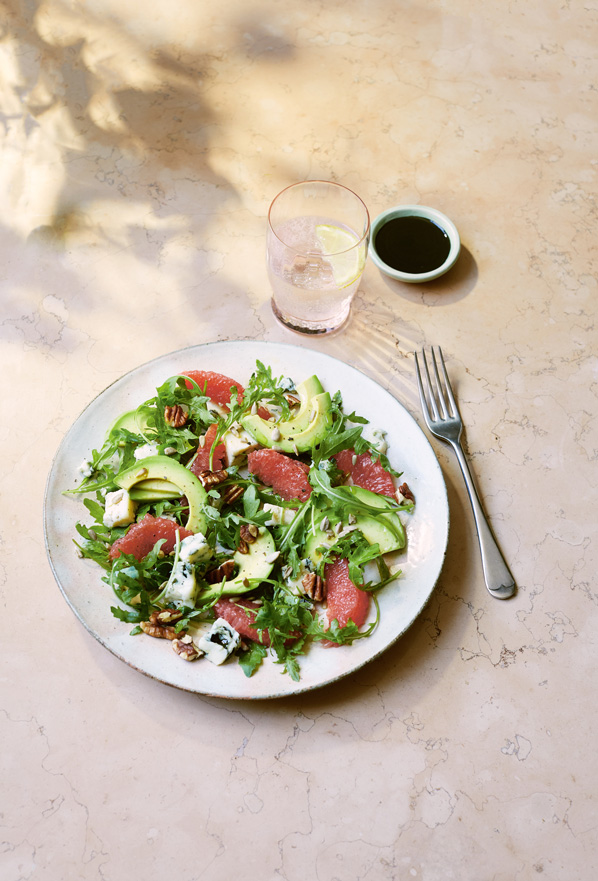
“As colourful in nutrients as it is in appearance, this easy-to-construct salad is a powerhouse of goodness!” says functional nutritionist Pauline Cox.

Roquefort, rocket and pink grapefruit salad

Ingredients:

(Makes one salad)

90g rocket

100g Roquefort (ideally raw), cut into chunks

1 ripe avocado, peeled, stoned and sliced

2 pink grapefruits, segmented

A drizzle of raspberry blush vinaigrette

A handful of chopped fresh coriander

A handful of pecans, chopped

A handful of sunflower seeds

For the vinaigrette:

100g raspberries (10-12 juicy raspberries)

60ml extra virgin olive oil

Juice of 1 lime

20ml balsamic vinegar

20ml beet kvass (optional, but ideal)

1tsp salt (ideally beetroot salt)

Method:

1. To make the vinaigrette, add all of the ingredients to a blender and combine. Transfer to a clean glass jar with a lid, keep in the fridge and use within three days.

2. Lay the rocket leaves onto two plates, adding chunks of Roquefort, slices of avocado and pink grapefruit segments, and drizzle over the raspberry blush vinaigrette.

3. Sprinkle over the chopped coriander, pecans and sunflower seeds.

Hungry Woman by Pauline Cox is published by Ebury Press, priced £27. Photography by Luke Albert. Available Now.

McCarthy Holden Salad for summer
roquefort, rocket and pink grapefruit salad

11 stylish ways to kit out kids’ bedrooms

From play areas to bedtime bliss, check out these cute ideas for children’s rooms, says Sam Wylie-Harris.

Everyone loves a summer refresh, especially tots and tweenies with playtime high on the agenda.

To capture their hearts and set the scene for after-school projects, reading hour, bedtime stories and imaginary beings, here’s what’s on our kiddies’ wish list…

1. Vipack Kiddy Tipi Desk, £209, Cuckooland

A centrepiece and workstation with a sense of wonder, think how much fun your littlun will have laying out their favourite things. With two open compartments for consoles, colouring pens and books.

2. Habitat Kids Mermaid Bookends, £18, Habitat

Ideal for kids of all ages – and child-like adults – this sweet mermaid has found a place in our hearts. Beyond the bookshelf, she’d look just as enchanting bookending dolls and soft toys.

3. Kids Prehistoric Dinosaurs and Friends Reversible Duvet Cover and Pillowcase Set, from £24, Next

When they know their brontosaurus from their T-Rex, and want to learn more, this larger-than-life bedding is just the thing.

Teddy Bear Rattan Easy Fit Shade, £57, Next

This teddy shade loves the spotlight – and will add charm to any ceiling.

5. Habitat Kids Grey Stars Bean Bag, £32, Habitat

We all love stars and this brilliant bean bag is perfect for cosying up with in front of their screen.

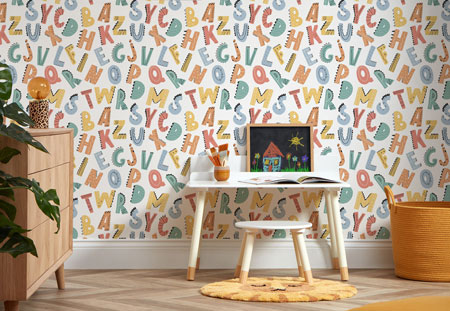
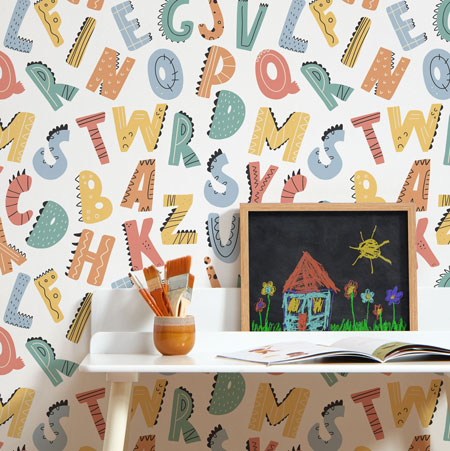
6. Dino Alphabet Wallpaper in Multicoloured, £12 per roll, I Love Wallpaper

A feature wall full of wonder, look a little closer and this alphabet wallpaper is a riot of fun with teeth, scales and claws to up their learning skills.

7. Children’s Rocket Night Light, £16.99, Lights4fun

The only light to launch, every spaceman dreams of a rocket.

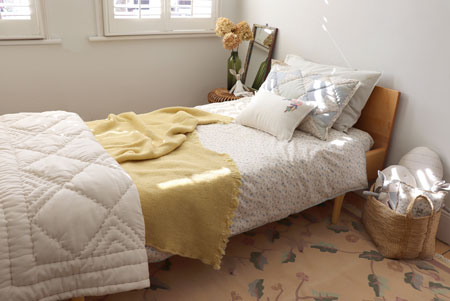
8. Bella Floral Pillowcase, £25; Bella Floral Fitted Sheet, £50.50 (Single); Bella Floral Duvet Cover, £75 (Single); Bella Floral Kantha Quilt, £149; rest of items from a selection, Camomile London

A little bit special, this cottagecore-inspired vintage rose print imbibes thoughts of Little House On The Prairie. With sprigs of pastel blue and green flowers, it can be mixed and matched with other favourite finds.

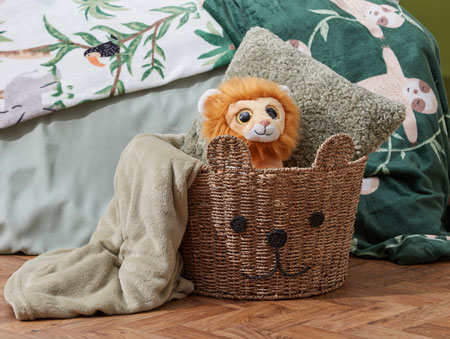
9. Bear Basket, Large, £15; Simply Everyday Throw – Sage, £5; Plush Lion, Small, £6, B&M, in-store

A best-loved bear basket deserves their hero toys.

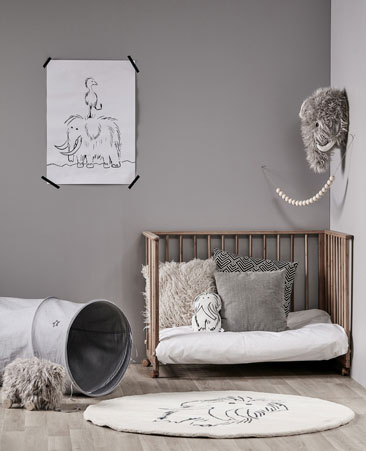
10. Kids Concept Neo Mammoth Animal Head Wall Decoration, currently £29.95 (was £44.95), rest of items part of room set, Cuckooland

This handsome fellow with curved tusks brings wall art to life – and who wouldn’t want to stroke his soft fur if you can reach? One to stand the test of time, you’re never too old for a furry friend.

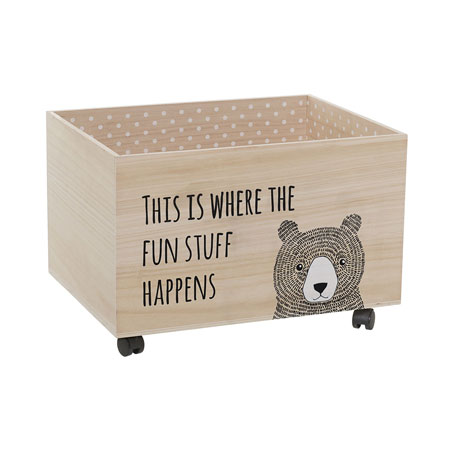
11. Bloomingville Kesa Storage Box, £135, Sweetpea & Willow

Wheels of fun, this charming crate can be stacked high with goodies and parked in their special play space.

3 of the best new BBQ cookbooks to try this summer

Fire up the grill, because BBQ season is upon us, says Prudence Wade.

Few things are more satisfying than cooking up a storm on the BBQ.

Whether you’re catering for a crowd or firing up for a quick midweek dinner – as the weather starts to warm up, so do our grills.

BBQing used to have a somewhat basic reputation for chucking unseasoned steaks on the grill and calling it a day. However, there are worlds of possibilities when it comes to cooking over fire – for example, did you know you could even whip up a batch of chocolate chip cookies outside?

New BBQ cookbooks released in preparation for summer take us all over the world with their recipes, and could even convince to you to build your own grill from scratch…

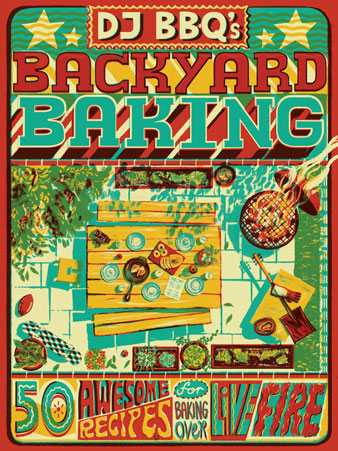
1. DJ BBQ’s Backyard Baking: 50 Awesome Recipes For Baking Over Live Fire by David Wright, Chris Taylor and Christian Stevenson

Think BBQs are just for hunks of meat? Think again.

DJ BBQ’s Backyard Baking proves baking doesn’t have to be an indoor, rainy day pursuit – and can be just as delicious and as much fun over the open fire outside.

This book is a collaboration from three foodies – Christian Stevenson (better known as DJ BBQ), his regular co-author Chris Taylor and baker David Wright.

The trio argue both cooking over fire and baking are often seen as overly complicated pursuits that are easy to get wrong – but in this book, they set out to prove this misconception wrong.

The book starts with the basics – the equipment and set-ups you’ll need, with a baking focus – and then launches into a host of technicolour recipes.

Dishes range from simple crowdpleasers, such as campfire bread and chocolate chip cookies (which yes, you can bake on a BBQ, you’ll discover) to the more adventurous, including lamb kofta sausage rolls and a full Moroccan-inspired chicken dinner.

There’s even a recipe for charcoal ice cream – which isn’t black like you might see on Instagram, but is full of those beautiful, smokey flavours.

With DJ BBQ’s signature brand of wit and irreverence, this book will open up the worlds of possibilities within outdoor cooking.

Quadrille, £20. Photography by David Loftus. Available now.

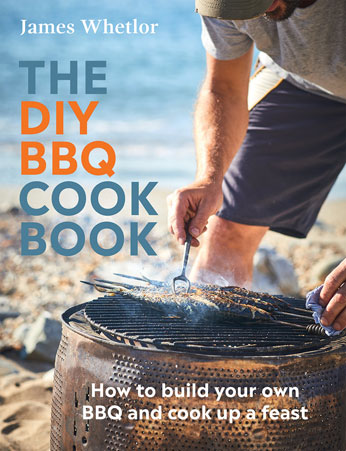
2. The DIY BBQ Cookbook: How To Build Your Own BBQ And Cook Up A Feast by James Whetlor

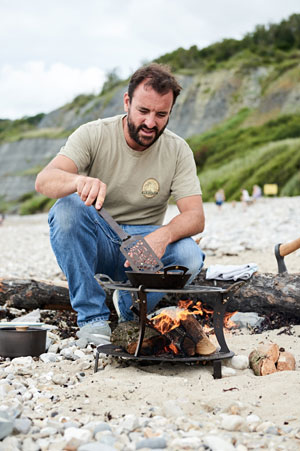
This is one for the DIY enthusiasts – anyone who really wants to their hands dirty when BBQing, from start to finish.

While it’s all very well and good to use a regular, shop-bought BBQ, food writer James Whetlor is a huge proponent for making your own.

Why? Because shop-bought versions are often expensive, and near-impossible to cart with you on a jaunt to the beach or a day in the park.

But Whetlor predominantly highlights how fun it is to make your own BBQ. You don’t have to be a DIY wizard or a building maestro to do so – some of the simplest set-ups will be hugely effective.

You’ll need a few basic bits of kit for a DIY BBQ – including breeze blocks, pots, planks and chains – all of which Whetlor says is available at your local DIY store. He also urges safety – wearing work gloves and goggles when building.

Whetlor gives a comprehensive guide on building your own BBQ – covering all the different options, from small versions to one that can smoke a whole pig – and there’s even an ingenious step-by-step guide for building your own tandoor oven out of a flowerpot.

If you’re tentative about building your own BBQ, Whetlor’s guide is so comprehensive he’ll put any nerves at rest – and then he follows up with the best bit: what to cook on your new creation.

Dishes range from vibrant veggie options – mushroom tacos and miso-marinated aubergine steaks – to meaty dishes (coconut hot wings, tandoori quail, spicy pork ribs and more).

Quadrille, £20. Photography by Sam Folan. Available now.

3. Big Green Egg Feasts: Innovative Recipes To Cook For Friends And Family by Tim Hayward

While this book is predominantly geared towards people with Green Eggs – a specific type of ceramic BBQ – don’t be put off, because the recipes will suit anyone, with any type of BBQ.

The beauty of a Green Egg is it covers so many different types of cooking – you can slow-roast, wok-fry and cook pizzas on there – but you’ll just as easily be able to do that without one, be it on stove or in your oven, if it’s not a recipe that specifically calls for BBQing.

If you’ve got a Green Egg, food writer Tim Hayward will take you through the best ways to use it, making sure you get the most out of this (admittedly expensive) piece of kit.

But the real strength of this cookbook lies in the sheer range of recipes included from all over the world. You’ll get step-by-step guides on how to make lobster rolls from the US, Indian chicken curry, a whole rack of spiced lamb from the Maghreb region in north-west Africa and Mexican taco recipes to feed a crowd.

Dishes are vibrant, colourful and will be everything you want to make this summer – with or without a BBQ.

Quadrille, £30. Photography by Sam Folan. Available now.

×
Find a Property
M
Country & Equestrian
By submitting this form, you agree to McCarthy Holden using your personal data in accordance with our Privacy Notice.