Perfect your patio, terrace or garden with fashionable furnishings and serveware, says Sam Wylie-Harris.
With gorgeous weather putting the spotlight on indoor-outdoor living, throwing open the doors and prepping for summer soirées has lasting appeal, thanks to this slew of sun-kissed days.
So much so, if you’re spending a good chunk of your time in the garden, chilling out in the sunshine, barbecuing and entertaining family or friends, there’s always room for some stylish upgrades when you enjoy dining in the open air…
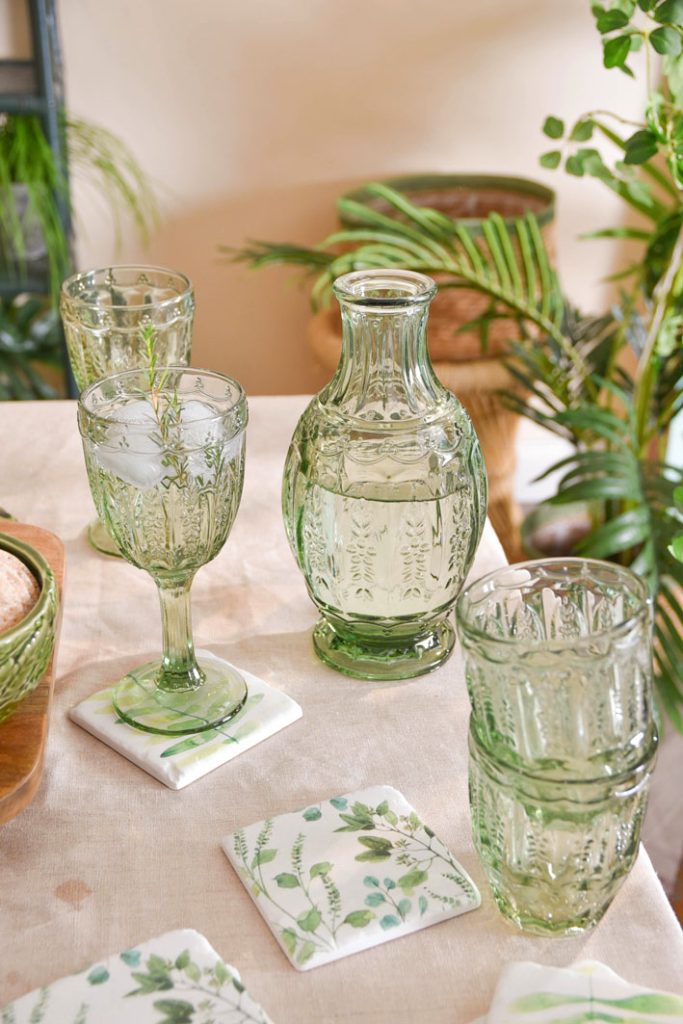
1. Wine Glasses – Green Pressed Goblets, £7.99 each, Glass Carafe – Green Pressed, £24.99, rest of items from a selection, Gisela Graham
We all love to drink with our eyes, and these cool green glasses will make your white wine spritzer taste even fresher.
With a pretty palm leaf print, this melamine dinner set has green leafy salads, exotic fruit plates and smoothies written all over it. Includes four dinner plates, side plates, bowls, and tumblers.
3. Mesh 4 Seat Outdoor Dining Set with Parasol, £249.50 (was £499), Dobbies Garden Centres
With summer parasols at a premium, this outdoor dining set should be snapped up. Featuring a round table and four chairs, the canopy will shade you from the sun and is tailor-made for a patio or big balcony.
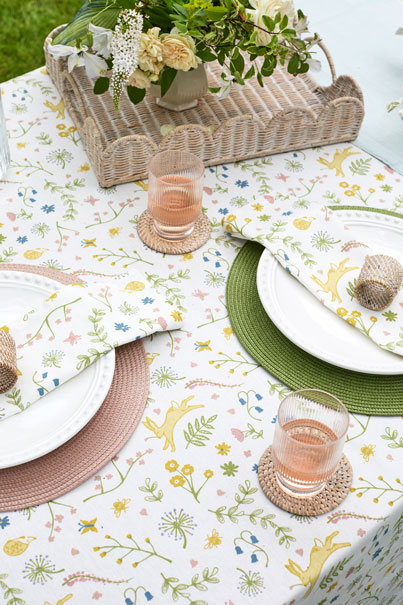
4. Meadow Tablecloth, (100cm x 100cm), from £21, Walton & Co
If you’re setting the stage for a summery cottagecore tablescape or complimenting a cottage-style garden, this cotton tablecloth with whimsy illustrations ticks all the right boxes.
5. Morso Grill 71 Table Outdoor Barbecue, £249, Direct Stoves
Depending on the size of your space, this portable grill makes a great centrepiece for chicken, veggie or seafood skewers – choose wood or charcoal. Made from enamelled cast iron to distribute and retain heat, it’s quick and easy to clean too.
6. Walnut Wood Fork And Spoon Set, £14; Walnut Wood Rectangle Trays, from £14 (Small), Bohemia Design Ltd
Rustic table settings with love this eco-friendly cutlery; crafted in Morocco from sustainable walnut wood, the trays compliment the range – and right on point for serving stuffed peppers or antipasti.
7. GoodHome Powell Black 4 Burner Gas BBQ, £200, Diy.com
If the thrill of the grill has passed you by, or your existing BBQ needs replacing, this keenly priced model should encourage the sizzling sound of burgers. Well-suited to smaller patio spaces, it’s easy to wheel around and electronic ignition system means no faffing around with lighters.
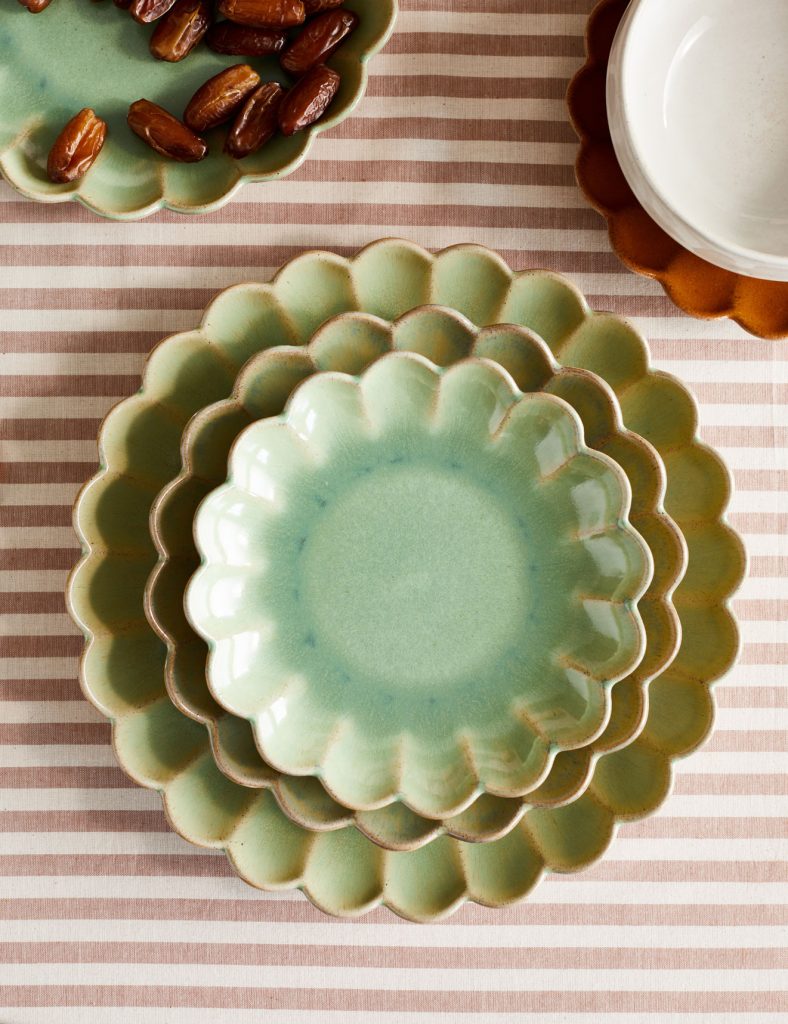
8. Marrakesh Olive Collection: Olive Green Side Plate, £14; Olive Green Dinner Plate, £19.50; rest of items from a selection, Rose & Grey
These pretty, floral plates have a boho vibe and can be mixed with old and new. Perfectly placed for avocado salads, houmous or dips… and terracotta tablescape.
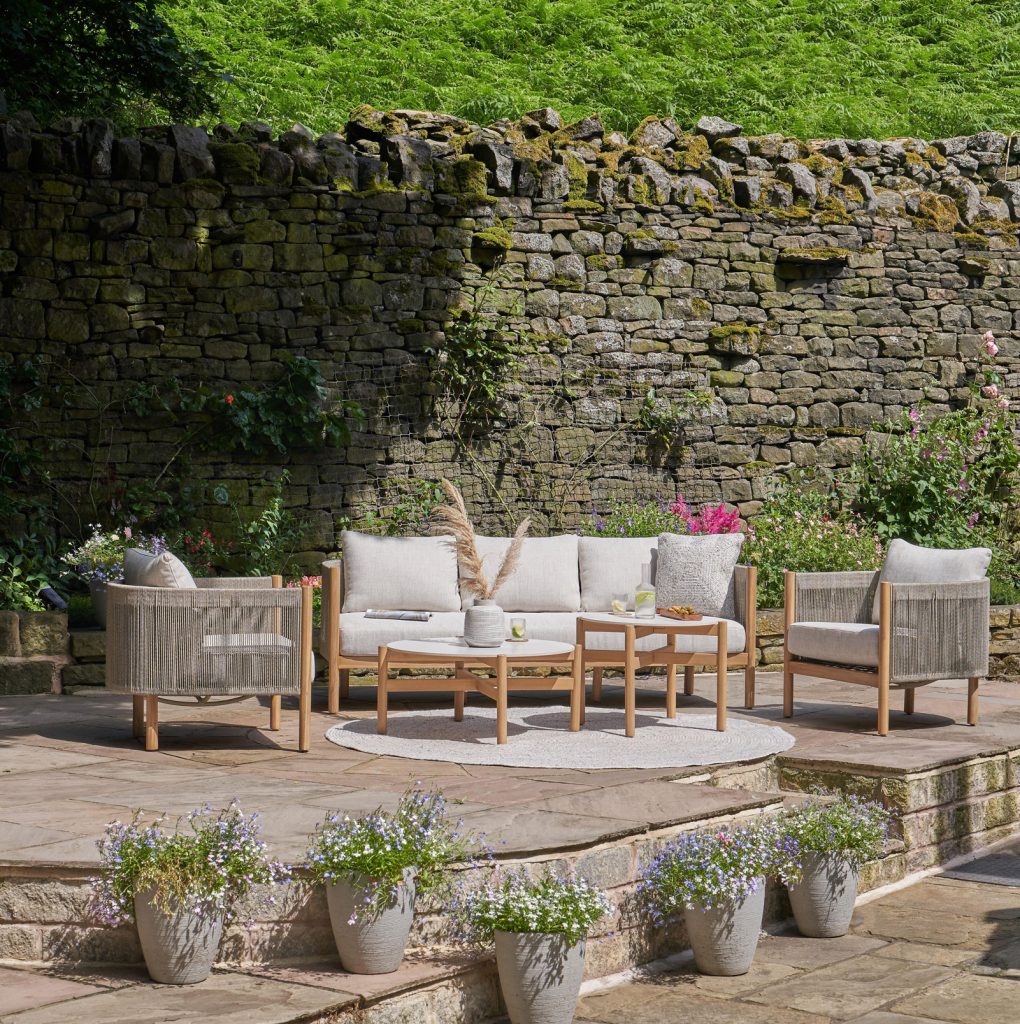
9. Leros Woven Outdoor Seating Set, £2,345, Ruma
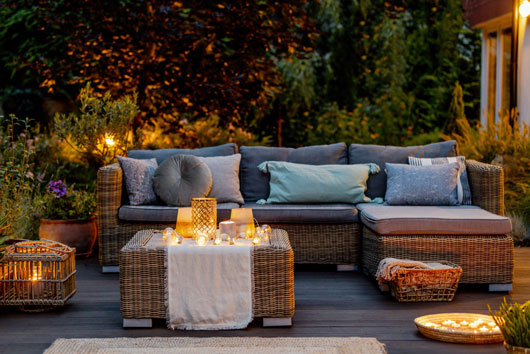
For the look and feel of luxe, stylish outdoor sofas with comfy cushions and co-ordinating armchairs set the scene for garden parties or resting and reading… depending on your social calendar. With rope weave detailing and modern design, this set includes a sofa, two armchairs, season-proof cushions, small and large coffee tables.
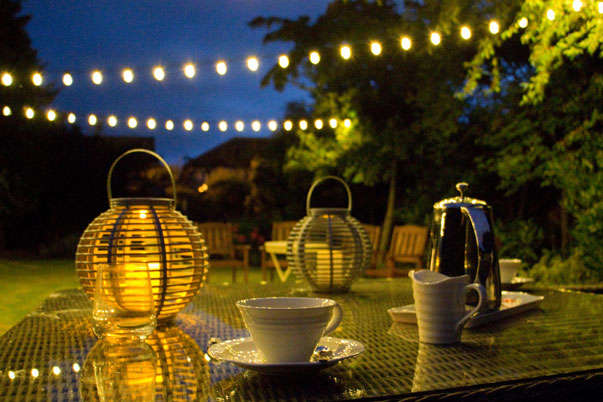
10. Porto Lantern Duo with TruGlow Candles, £59.99 (Set of 2), rest of items from a selection, Lights4fun
When dusk falls, lighting can be make or break for an ambient scheme. With a matte black metal frame and flickering ivory flame, these LEDs will brighten those forgotten corners or cosy, conversation areas.
Light, soil and what you want from your outdoor space are all important, says an expert.
As we look outside, urging winter to turn into spring, now is a good time to plan your garden, whether you just want a few changes or a complete makeover.
Garden design doesn’t need to be super complicated, because with some simple guidelines you could soon be relishing your outdoor space, says award-winning garden designer Pollyanna Wilkinson, author of How To Design A Garden, who has 400,000 Instagram followers and is host of The Ins & Outs podcast.
“One of the biggest mistakes people make is not spending enough time getting to know the garden,” she says. The light, border depth, soil and shape will all make a difference.
Here, she offers some design tips to help you get the most from your outdoor space.
Make your garden look wider
“If you have a long narrow garden, the worst thing you can do is run narrow borders down the side next to a strip of lawn because it’s going to turn it into a runway and highlight that it’s long and thin,” says Wilkinson.
Instead, feature your highlights across the garden by planting into it and a deep border at the back which brings your depth of field forward. If you have paving immediately outside the house, bring plants up to that paving across the garden, she suggests. You could then create a gap through to a lawn, or position a path and planting in the middle of the garden as a focal point.
“We’re trying to get you to move your eyes left and right, not down to the end. The trick is to bring the plants in.”
Plant deep borders
Make your flower borders as deep as possible because if they are under 60cm, you’ll only get one row of plants, which can feel accidental, she advises.
“Ensure you can get at least two or three rows of plants, in which will give you a much more interesting garden in terms of seasonality, but will also give you more depth even in a smaller space.”
Use large pots
“In courtyards or small gardens, get rid of your small pots because anything small in a small space feels like clutter. You’re much better off going with one or three really generous pots, I’m talking waist-high,” she suggests. “They can be narrow but if they are waist-high they feel intentional.
“And don’t shy away from putting small trees into small spaces. For urban gardens we use a lot of cornus, crab apples and Amelanchier lamarckii.”
Check the light
“Look at the light in the garden, which is something people can forget,” she advises.
“Focus on where the light falls at different times of day, because that is going to tell you what you can plant, as plants have different light needs.”
The light will also have a bearing on where you will want to sit, she notes.
“Some people like to sit out in the sun in the middle of the day. A lot of people might prefer to sit in the shade. Also think about it at different times of the day. We may want to have somewhere for a morning coffee that’s east-facing and a more comfortable area, like a sofa or bench, that is west-facing for evening sun or cocktails.”
Consider how you want to use your space
“How do you want to use your space and what’s realistic for your lifestyle?
“It depends on where you are in life. If you’ve got young kids or pets, you’re going to use your garden in quite a different way to if you’re older or don’t have kids yet, and you’re using it to entertain or to actually garden,” she observes.
Make a list about what you want and what you can realistically do with the time available, Wilkinson suggests.
In small spaces…
“Be strict with yourself, because if you’ve got a small space, it’s more limited as to what you can do.
“Do one or two things really well. Maybe don’t have a dining table outside. If you’ve got your kitchen right next to the house, you can still eat inside with the doors open.
“Instead, have something comfier, like a sofa or chairs out there, so that you’ve got more versatile space.”
Look at landscaping
“A mistake a lot of people make is to put the patio right by the house and nothing else, so you’ve got this hardscape by the house. We try to find at least one extra place in the garden which is a destination away from the house.
“We can all be guilty of sitting near the house, looking at the garden, rather than being in the garden. You could have a seating area at the end of the garden.
“It might just be on gravel, a few slabs or even on grass, but you could be on a bench in the garden that enjoys sun at a different time of day, or tucked away under a really beautiful tree.”
Repeat-plant
Repeat plant and cluster, always with perennials and also with shrubs, she suggests.
Repeat plants such as clumps of salvias at intervals down a border, spaced between one and two metres apart depending on the size of your border, in clusters of odd numbers (such as three or five), using fewer species but repeating at intervals, to create a fluid scheme.
Hide your shed
If you can’t move your shed to a spot where it is out of the eyeline of your main windows, put it to the back of the garden and plant hedging in front of it, which creates a fake boundary. You may want to also plant other things in front of the hedge.
Remember the seasons
Create a spreadsheet or list of plants you like which will suit each season. Don’t forget winter structure or autumn colours, she says. You want the garden to be interesting year-round, not just in summer.
How To Design A Garden by Pollyanna Wilkinson is published by DK on February 6, priced £22.
This year’s show gardens let nature do the talking, as gardening editor Hannah Stephenson discovers.
Gardens featuring more weeds and less formality have taken centre stage at this year’s RHS Chelsea Flower Show, placing more emphasis on letting nature take control.
Native plants and trees, nettles, dandelions and a predominantly green palette of planting feature in many of the 36 show gardens, along with salvaged and upcycled materials. Elsewhere, huge bursts of colour remain in the Great Pavilion, while first-time exhibitors include mushroom growers the Caley Bros.
This year’s show is likely to spark controversy, reckons garden designer Andrew Duff, co-chair of the Society of Garden Designers and managing director of the Inchbald School of Design.
“There’s a clear message about sustainability and environmental factors in an aesthetic way. There’s a loss about actually, what is a garden supposed to do?” he says. “Right across the show, the inference is that nature’s taking control… maybe that it’s OK to let weeds grow and let things get a little bit ruinous.
“But at the end of the day, people like a lawn, they like to look after a space – that’s part of being in a garden – and it’s time that we need (to address) that controversy,” Duff adds.
Reflecting on the topic, Matthew Pottage, curator of RHS Garden Wisley, says: “We are having a climate crisis. We do need to garden environmentally sensitively. Is this the place to be showing that? It’s arguably the world’s best flower show, so this is the place.”
5 highlight gardens from this year’s RHS Chelsea Flower Show
Centrepoint Garden
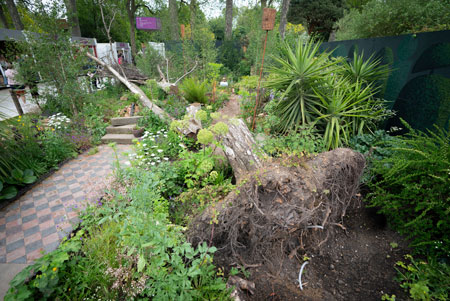
Love it or hate it, this garden is likely to cause a stir with its partly demolished house, so-called ‘weeds’ and a fallen tree. Designer Cleve West has admitted it’s a ‘Marmite garden’ – people will love it or hate it.
“There’s a sense of abandonment, which is so clever. Cleve West has done a partly demolished ruined house with the idea of nature taking over,” Duff observes. “He’s saying it’s a metaphor for what it is to be young and homeless. There are nettles and dandelion seedheads. It’s really going to question what beauty is in a plant – and I think we need to have that discussion.”
Nurture Landscapes Garden
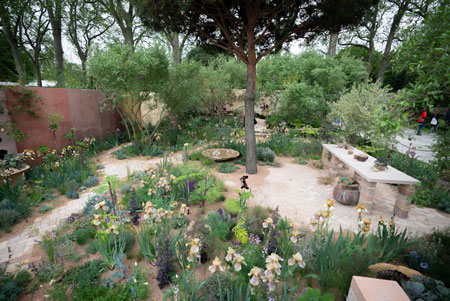
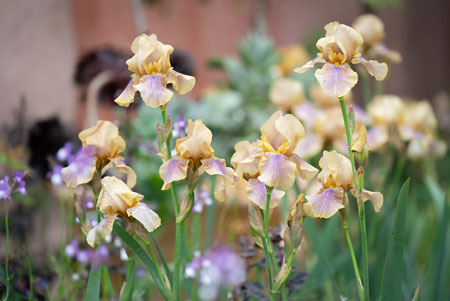
If you’re looking to take home some plants with you, be inspired by the beautiful Benton irises in rich shades of pastels and deep yellows which you’ll see in designer Sarah Price’s Nurture Landscapes show garden, inspired by the artist and plantsman Cedric Morris.
Memoria and GreenAcres Transcendence Garden
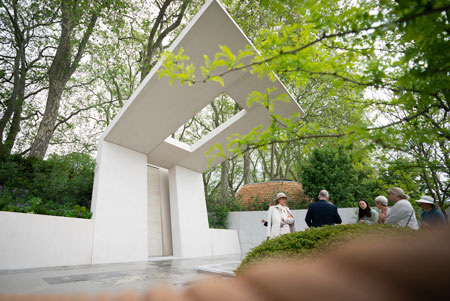
Designers Gavin McWilliam and Andrew Wilson’s garden aims to deliver an uplifting spiritual space, reflecting the emotional experience at the end of life (it’s going to a bereavement site after the show).
“Controversially, they’ve used concrete, but with the idea that this concrete is going to be around for hundreds of years,” says Duff. “It’s not a single use concrete.
“It has a simple palette of planting, is cool and calm and you immediately feel rested. The minimal use of materials and colour palette was really special and a moment of calm in the entire show. It was a relief to get to it,” Duff adds.
Myeloma UK – A Life Worth Living Garden
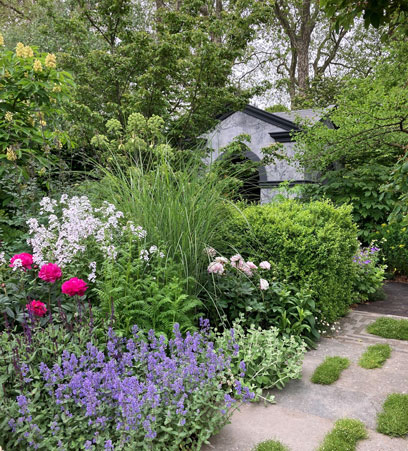
Top designer Chris Beardshaw’s garden has a much more traditional garden feel, with a structured order in the colourful planting against a backdrop of clipped yew, including peonies and salvias, plus inspired woodland planting.
Horatio’s Garden
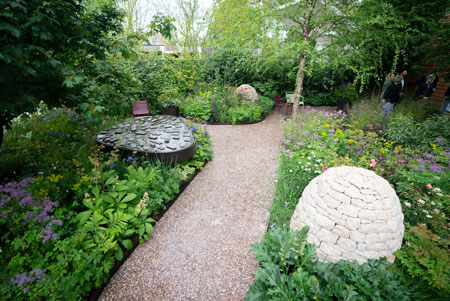
Putting wheelchair access at the forefront of their design, Charlotte Harris and Hugo Bugg (Harris Bugg Studio), have created the eighth garden for the eponymous charity, which builds gardens to improve the lives of people with spinal cord injury.
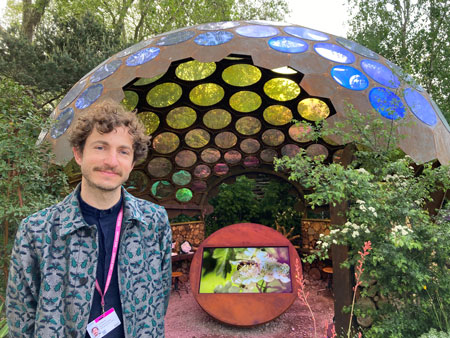
The wheelchair-accessible space, influenced by the ways of seeing from a bed or a wheelchair, features tactile stone cairn and a table water feature to encourage wildlife, while a garden pod provides a cocooning place for physical and emotional shelter. After the show it will be relocated to Sheffield’s Princess Royal Spinal Cord Injuries Centre.
“There’s an incredible depth of planting, which is mind-blowingly beautiful, and beehives of warm cut stone which kind of replace topiary – they’ve made topiary out of stone,” says Duff.
Top trends
These are some of the key gardening trends to emerge from this year’s event.
Wildlife
“Unsurprisingly, there’s going to be the awareness of wildlife-friendly planting,” says Pottage. “There’s lots of habitat in gardens, but hopefully showing that can be beautiful as well. There are lots of logpiles, lots of water, lots of native plants, but also lots of gardenesque planting.”
Reclaimed and reused
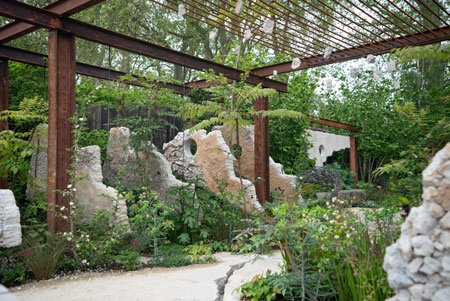
Crushed concrete, piles of rubble, bare sand, re-used bricks and other recycled material dominate many of the show gardens’ pathways and form decorative features in several gardens. There’s a message to get gardeners thinking about how they might reuse materials, which formerly headed for the skip.
“All the gardens have a destination, which is really important,” says Pottage – the show gardens are all being relocated after the show.
Award-winning designer Tom Massey, who has this year designed The Royal Entomological Society Garden, predicts: “Reuse of waste materials is going to be a big thing.”
He uses crushed construction waste in his show garden, including crushed bricks and concrete to create a textured, aesthetic backdrop for the planting along with deadwood. “These waste materials are really good habitat for insects,” he points out.
Plants
People will be encouraged to grow native plants, from hazel to cow parsley, while those seeking colour may go for irises, which are prevalent at this year’s show. There’s also a resurgence of common yew (Taxus baccata) and other familiar plants including a cloud pine, Eleagnus ‘Quicksilver’
Drought-tolerant plants are also being pushed – some 55% of perennials in the show gardens are drought-tolerant, almost double that of last year, including fennel, salvia and cistus.
Weeds
Dandelions and other weeds feature in some of the gardens. Chelsea gold medallist Cleve West notes: “People get their knickers in a twist about weeds but they are the pioneer plants that stitch everything together.
“It’s just getting people to understand that all the things we kill with herbicides and pesticides can look quite beautiful,” West adds. “Just be more tolerant, and if you have a space where you can let nature take its course, it’s got to be good for wildlife and insects.”
Massey adds: “Dandelions are an early source of pollen and nectar for bees – and insects are in mass decline, so we need to be more considerate in the way we manage and maintain our gardens.”
Sculpture
“We are seeing nature becoming the sculpture,” says Duff, citing designer Sarah Price’s Nurture Landscapes Garden Mediterranean cloud pine. There are pillows of yew in the Memoria and GreenAcres Transcendence Garden.
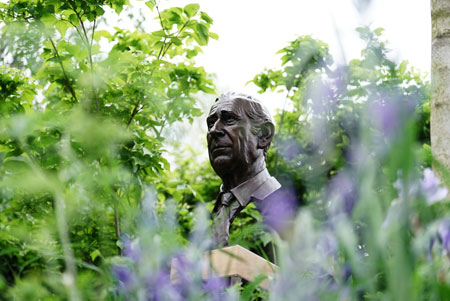
Nods to the Royal Family abound, from bronze bust of the King in A Garden of Royal Reflection and Celebration, which features some of the Windsor family’s favourite plants including roses and camassia, plus several crowns featuring flora and fauna.
Standing at just under 7m is the biggest driftwood sculpture ever displayed at Chelsea, a Wyvern dragon perched on a tree, the centrepiece of sculptor James Doran-Webb’s exhibit.
And paying homage to the unsung heroines of horticulture at The Monument is the ‘Women in Horticulture’ exhibit honouring the likes of Janaki Ammal, Beth Chatto and Gertrude Jekyll.
Bigging up small spaces
Guy Barter, chief horticulturist for the RHS, says people are likely to be planting bigger trees on their balconies and also using drought-tolerant species. “This year there’s a pollinator section, a wildlife bath, and drought-resistant plants.”
Award-winning garden designer Chris Beardshaw offers tips on planting, lights and show-stopping centrepieces. By Hannah Stephenson.
With lockdown restrictions easing, there’s likely to be a lot of entertaining going on in back gardens throughout summer.
So, is your garden party-ready – where guests will be able to sit in comfort, savour the beautiful plants around them, and enjoy the atmosphere late into the night?
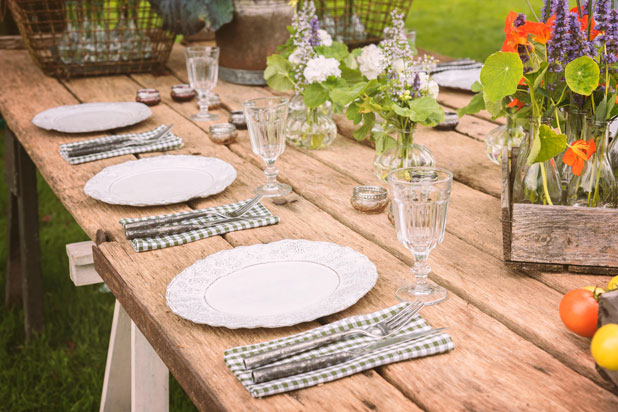
Of course, your own home-grown cut flowers will always pretty up a table, while sprigs of lavender or other herbs could add a scented accent to your place settings.
“All the research shows there’s a generation of gardeners, who have been exposed to the opportunity of getting outside, growing plants and experiencing the green world around them as a result of being locked-down,” says award-winning garden designer, Chris Beardshaw.
“One of the ways to keep that focus going is to provide opportunities in our gardens for increased socialising and increased sharing in the garden. People can enrich their garden without it becoming hardcore gardening.”
Beardshaw, who is supporting Readly, an online subscription service to consumer magazines including major gardening titles, offers the following tips…
1. Plant a riot of colour
“Plant up containers of colour. Take any container – basically if it has a hole in the bottom and you can put gravel and compost into it and stick it somewhere with light, you can grow something,” says Beardshaw.
“Choreograph those containers – perhaps with colour coordination, or with particular design approaches which suit the rest of your garden or your interiors or particular passion – so you get that instant colour creating a wow factor.
“Of course, the best range of plants to use for this are the annuals, the live-fast die-young plants, and short-term perennials such as dahlias and chrysanthemums, or perhaps bulbs like galtonias and leucanthemums. They create a chic, stylish look.”
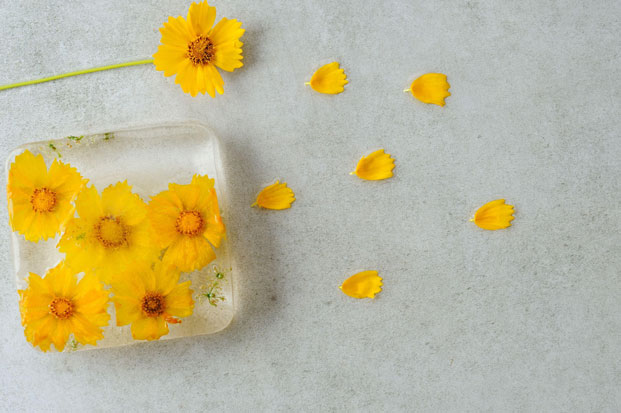
2. Make a floral ice bowl centrepiece
“If you have two bowls which are interlocking (one smaller than the other), you can pour water between the two, then put it into the freezer and as it starts to freeze, layer on the petals like geraniums, cistus and nasturtiums as a veneer, and then keep topping up with water between the two bowls.
“When your guests arrive, you remove the inner bowl (by filling it with warm water), upturn the bigger bowl and you then have a complete iced bowl decorated with petals.
“You could fill it with fruit or ice cream as the entertaining takes place. It’s a great summer centrepiece.”
3. Create ambience
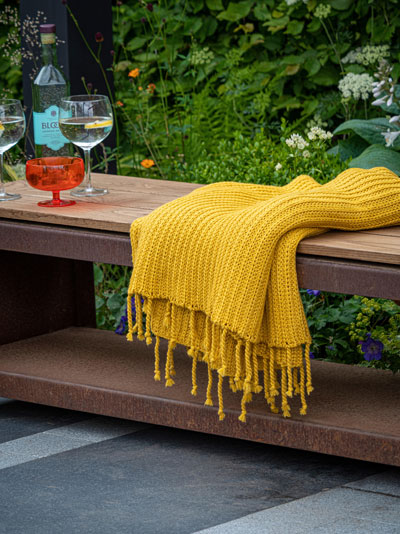
“Make sure you’ve got cushions and blankets and throws, which really extend internal furnishings into the great outdoors. Corral seats around a firepit or under a parasol, where people can feel a bit more at home and a bit more willing to sit outside later in the evening and listen to the way nature is putting itself to bed, and maybe owls and other creatures making themselves heard.”
4. Wow guests with wildlife
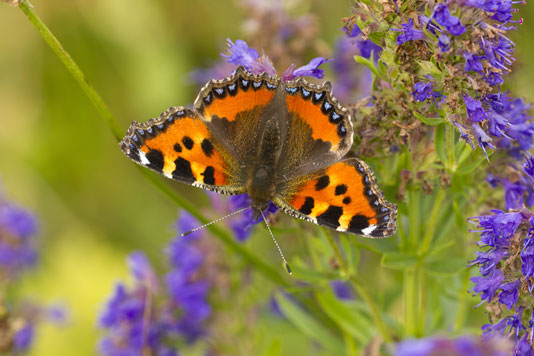
“Choose plants which are more biodiverse and wildlife-friendly, with more open flower, things like cistus for instance, anthemis, the wonderful daisy flowers, an advertising hoarding for insects.
“Angelica is also very good, along with alliums and astrantias, where you have cluster flowers that are bringing in insects. You’ll not only see beautiful butterflies but also night-time moths.”
5. Enjoy home-grown party food
“Growing your own is a fantastic experience of gardening, with the rich flavours and satisfaction you get, and you’ll also have a knock-on admiration from anyone you invite in, as they munch on your lettuce or rocket, or fresh strawberries warmed by summer sunshine. Your guest will be in love with your dining style forever.
“If you are growing produce in containers, go for short-rooted varieties. So if you are growing carrots or beetroot, go for the dwarf types; if you are growing salads, go for the cut-and-come-again varieties, where you can harvest them and they’ll keep growing back relentlessly.
“If you do have a glasshouse, conservatory or porch, you can grow things like peaches. A home-produced peach is like nothing else. You might not get many of them, but they are sweet, juicy and delicious.”
6. Add subtle lighting
“In my own garden, we don’t shy away from subtle lighting. We have old-fashioned festoon-style lightbulbs, which are solar powered and have little LEDs in them.
“They hang from some of the trees, shrubs and bushes to give a moonlight wash, a subtle extension of the internal lighting of the house.”
Choosing a staycation? You can still capture a feel of the tropics in your garden with plants and accessories, experts insist.
While many of us may be staycationing this year, there are ways to create a holiday haven in our gardens using plants and decor that mimic a host of exotic destinations.
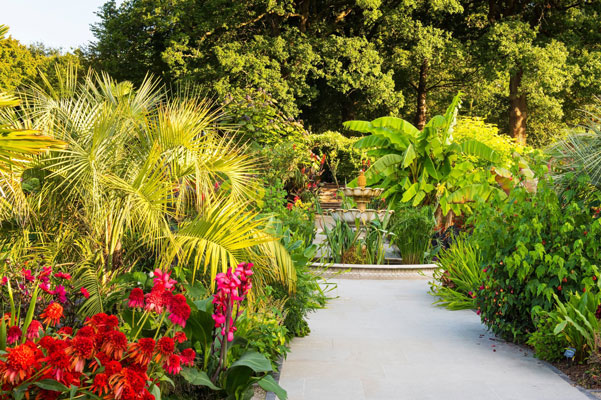
RHS Garden Wisley’s exotic garden, for example, houses not only tropical-looking pineapple plants, striking palms and giant banana trees which flourish in summer, but shows what will survive the winter.
RHS Wisley’s garden manager Emma Allen, who looks after the exotic garden, says: “When experimenting with tropical plants at home, remember the ‘right plant, right place’ rule. If you have a shady corner, make sure you plant shade tolerant options, and if you have sun trap areas, select plants that will flourish there.”
Allen’s top plants for a tropical sensation…
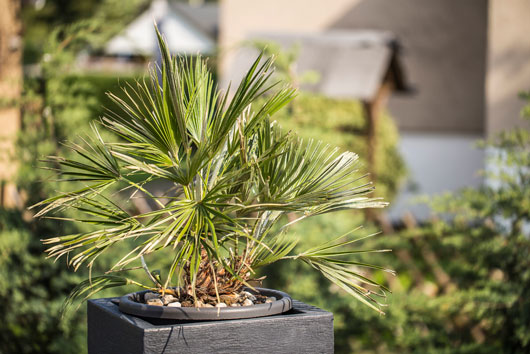
Trachycarpus fortunei – a really hardy palm (down to between -10 C and -15 C), this will give your garden the exotic look and feel without the need to worry about whether it will survive through winter. They are rather slow growing, ultimately reaching a height of over 12m after 20-50 years.
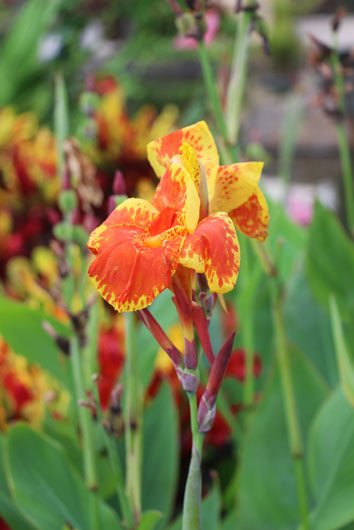
Canna – any type of canna will bring large juicy leaves and exotic looking flowers in pink, orange, yellow, white or red. Some have variegated leaves such as Canna ‘Stuttgart’ or ‘Phaison’.
Passiflora caerulea – a hardy semi-evergreen climber with the most striking flowers. This vigorous plant will cover a wall or pergola in no time.
Fatsia japonica – a medium-sized evergreen shrub with palmately-lobed leaves to 45cm in width, and small white flowers in clusters and small black fruits.
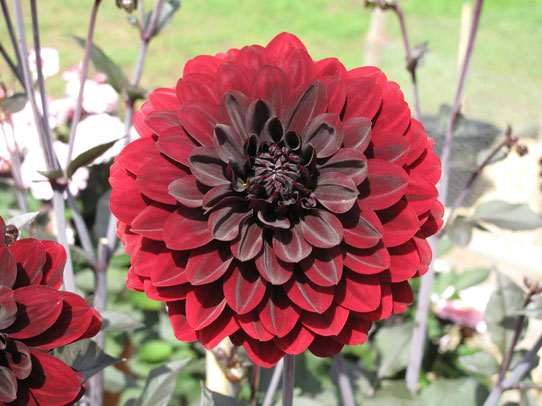
Dahlia – extravagant and flamboyant flowers, plus they flower all summer long. For drama and colour, try ‘Karma Choc’ (Decorative Group) with dark red velvety flowers, or ‘Edwin’s Sunset’ (Waterlily Group) with beautiful vivid red flowers that almost glow.
Use decor and accessories…
Blend your tropical-looking plants with exotic accessories and seating to create a holiday feel. Experts at Dobbies Garden Centres (dobbies.com) offer five design tips to help you into the holiday mood…
1. Go totally tropical
Fill patio containers with a selection of vibrant bedding or perennial cottage garden plants for an instant display of foliage and flower colour, including Cordyline australis ‘Peko’, along with potted palms such as Phoenix canariensis, Chamaerops humilis (dwarf fan palm) and Trachycarpus fortunei to add height and interest and look great in groups. Position pots behind garden furniture to create the illusion that they are planted in the ground.
2. Create a colour pop
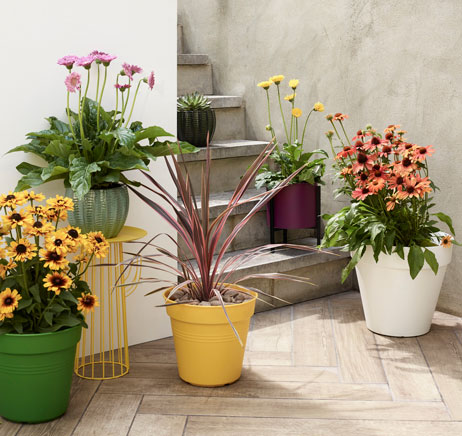
Bring a brilliant burst of sunshine and add some zing to your exterior space using an eclectic array of brightly coloured pots, mixing and matching flowers in contrasting shades for maximum impact. Fun accessories will quickly brighten patios or balconies. Choose pots in vibrant primary colours, which will really pop against white or neutral backdrops.
3. Bring the indoors out
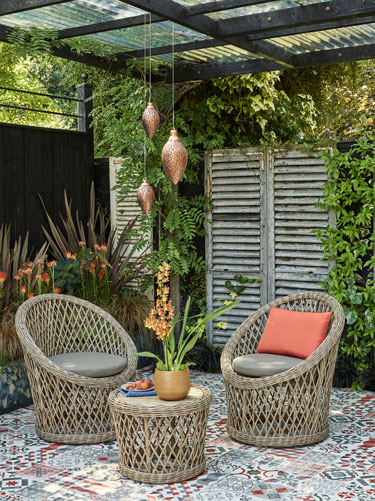
Brighten your garden getaway by bringing houseplants outside for the day. Adding your favourite indoor orchid to a bistro table will create a tropical centrepiece – just be sure to return them to their normal home later on to ensure they don’t get exposed to too much direct sunlight.
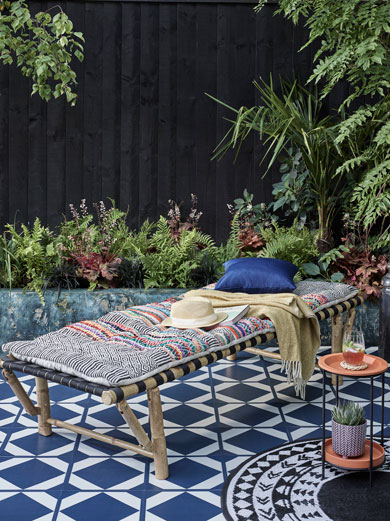
An outdoor rug will instantly transform your space and offers protection to patios and decking from sun cream spillages or melting ice creams. They also help to zone an area, adding a stylish decorative touch. Day beds and hanging egg chairs are the ultimate garden getaway luxury if you have room.
4. Make it magical
For atmospheric evenings, accessorise with a variety of lanterns, fairy lights and candles to enhance the mood – it is amazing how magical a space can look at twilight. A stylish lantern, or a solar-powered string of lights draped across trees and fences will stretch out the time spent outside. Use blankets, floor cushions and chunky knit throws to keep warm and curl up under the stars.
5. And when the sun sets…
Take the chill out of cooler evenings by investing in a practical chiminea or fire pit for your patio, adding warmth and light to extend outdoor entertaining.
And think about how you are going to protect your plants during the cooler months, RHS expert Allen advises. “As many domestic gardeners do not have the time or space to bring plants inside over winter, it is essential to protect in situ. If focusing on the tropical look, select hardy options such as trachycarpus, fatsia, eucomis, tricyrtis, schefflera and zantedeschia, which will re-emerge after winter.
“If you want to have bananas or half-hardy palms, try wrapping them throughout the winter using horticultural fleece or hessian and fill the inside with straw for extra insulation,” she adds.
RHS Chelsea Flower Show designer and dog-lover Sam Ovens offers tips on ensuring your garden is a dog-friendly space. By Hannah Stephenson.
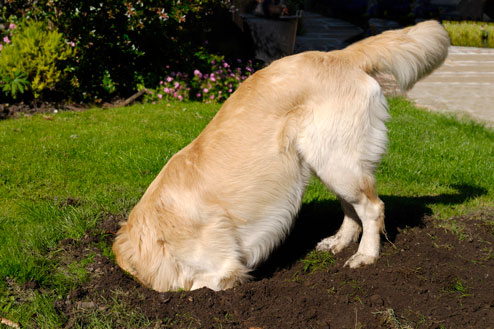
So often, pets are considered a bit of a nuisance among gardeners, who don’t really appreciate their lawn being dug up by pooches burying their bones, or bounding through their flowerbeds.
But award-winning Chelsea designer Sam Ovens, a dog owner himself, is adamant gardeners and their pets can share outdoor space in harmony.
He’s teamed up with the Animal Health Trust (aht.org.uk) to share top tips on how you too can create a dog-friendly garden for your pooch…
What plants may be beneficial to dogs and stimulate interest on all sides?
Ovens suggests: “For me, a dog-friendly garden can be beautiful – dogs love to explore and I think actually a plant-filled garden is great place to investigate and play.
“Care just needs to be taken to ensure the plant selection is robust and will bounce back when our doggy friends decide to take short cuts across the borders!
“Choose robust plants, as well as ornamental grasses like miscanthus and pennisetum, but in any case, beware of spikes and thorns, particularly at eye level,” he adds. “For something both dog and owner can enjoy, plant herbs like oregano, fennel and nepeta, all good, safe choices.”
Which design ideas could be incorporated into a dog-friendly space?
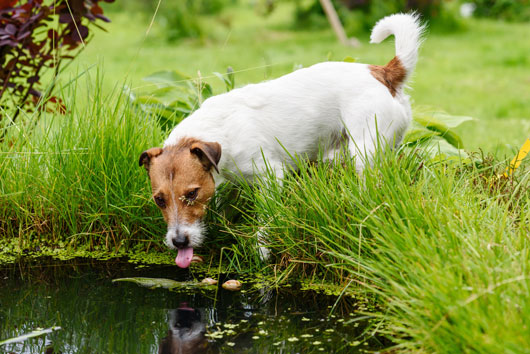
“Dogs will enjoy a shady spot for those hot summer days, and different textures, from paving and grass to cobbles and mulch. Also, a clear path around or through the garden space for the dog to run around, fresh water to keep dogs hydrated and cool, but with shallow sloping edges so they can easily get in and out, and herbs and other scented plants that smell great,” says Ovens.
Anything to avoid that’s likely to be trashed by a boisterous dog?
“Boisterous dogs can damage young and delicate plants, either by digging them up or running through them. It’s best to avoid small and delicate plants that are slow growing, as these will struggle to recover from the rough and tumble of dog play,” says Ovens. “Planting larger and more established plants than normal is also wise, as established plants are more resilient.”
Any features both dog and human can enjoy in unison?
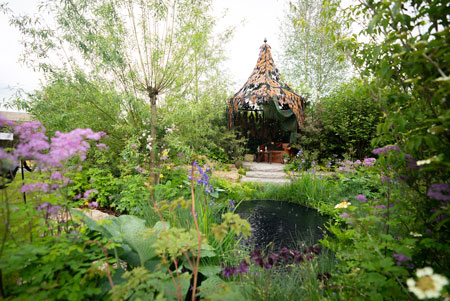
“I think sensory elements are great, as they are stimulating for both man and dog,” he suggests. “A simple water feature set among planting can provide a natural sound that’s as calming for dogs as it is for us. It’s also a source of water for thirsty dogs, as well as an attractive thing to sit and watch.”
Other elements enjoyable to human and dog include scented plants, as well as natural sounds from ornamental grasses and bamboo, which create a calming environment.
What else should you avoid in a dog-friendly garden?
Heather Covey, head of internal medicine at the AHT small animal clinic, advises: “When planning a garden, remember that our dogs are great scavengers and can find a number of things to eat, many potentially dangerous to your dog.
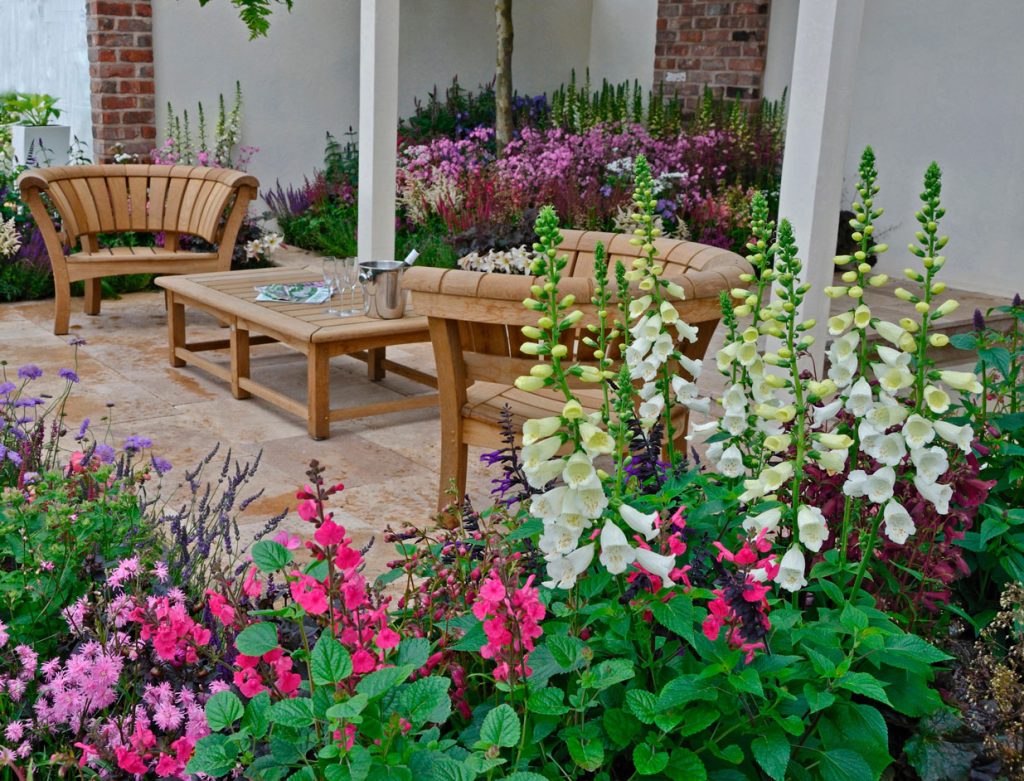
“Certain plants, such as foxgloves and delphiniums, are toxic. Be careful with bulbs which can be dug up and eaten, as these can cause stomach upsets and in some cases severe irritation of the mouth and throat.
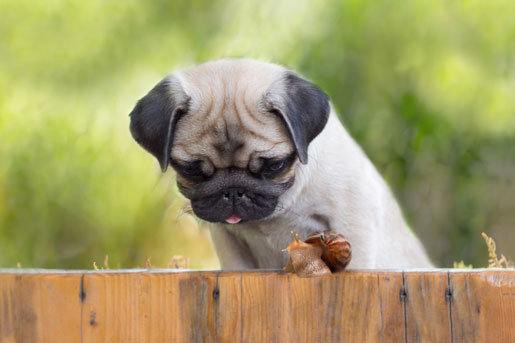
“Make sure your dog doesn’t eat snails and slugs, as these can cause lung worm (a serious condition in your dog) and instead of using slug pellets, use the old remedies for slug prevention, such as eggshells and copper tape.
Don’t forget about your compost heap, she adds.
“This can contain food scraps, such as avocados, grapes and onions which, although may be tempting to your pet, can be harmful.
“Your compost heap can also contain mould toxins, which if ingested can have worrying neurological or liver side-effects. If you want to compost at home, then a sealed bin is a good idea. Finally, if an owner is concerned about their animal’s health, they should always consult their vet.”