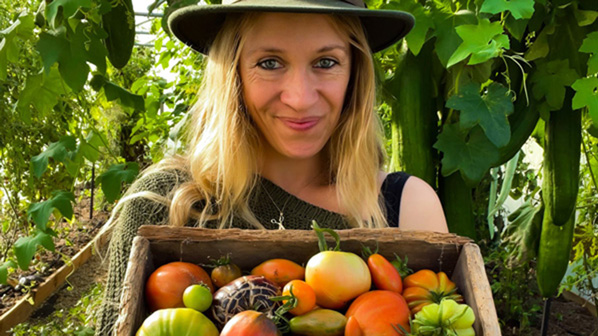
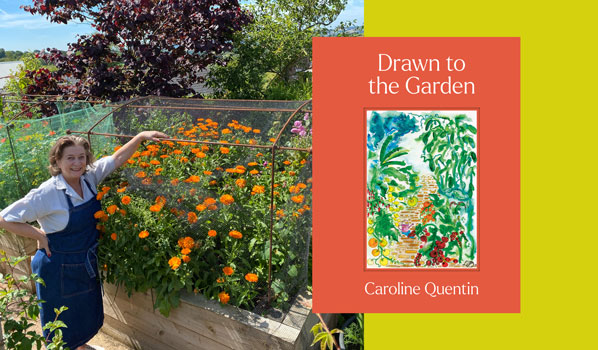
Caroline Quentin: Being an actor and a gardener is not a happy combination

Caroline Quentin Gardening McCarthy Holden

The Men Behaving Badly and Life Begins star, who recently appeared in Sky sci-fi series The Lazarus Project, also offers a wealth of advice and tips to her 150k followers on Instagram (@cqgardens).

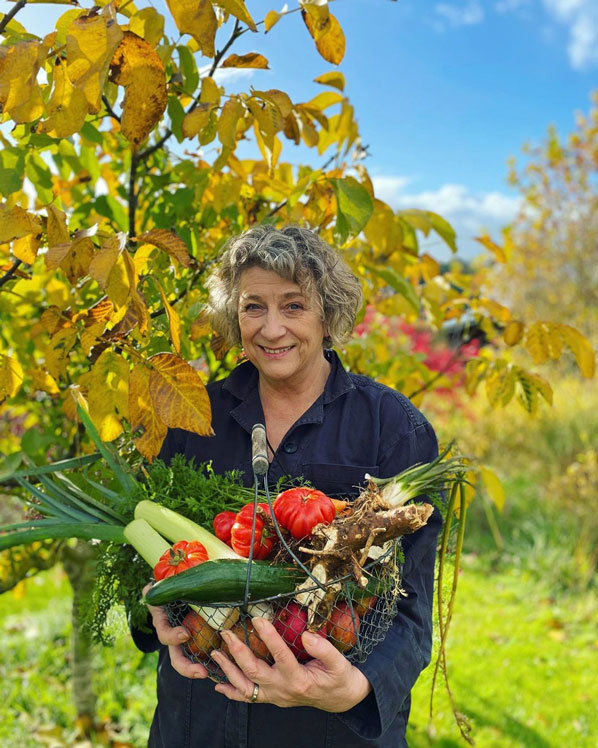
Her husband, Sam, does much of the filming when she invites followers into her home near Tiverton in Devon, where she makes all sorts of dishes from ingredients she has grown, and shows us what she’s up to in her two-acre garden – which features an orchard, pond, greenhouse, raised vegetable beds and a flower garden, where the magic takes place..
Caroline Quentin Gardening McCarthy Holden

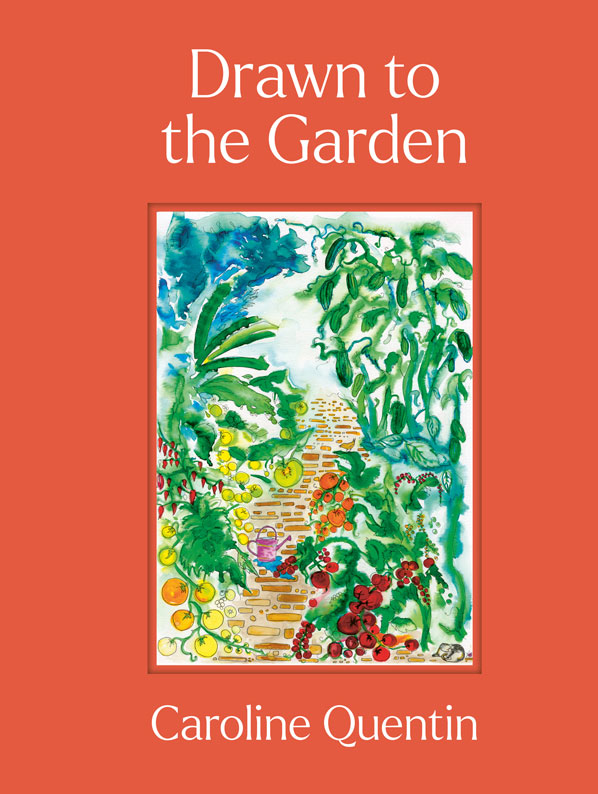
Now, Quentin has written – and illustrated – a new book, Drawn To The Garden. It’s part memoir, part guide, with chapters on seeds, salads, fruit and veg, water, herbs, pets and pests, memories and anecdotes meandering through each section.

Her garden, she says, is “not immaculate”. Weeds haven’t taken over, but she allows some buttercups and daisies to encourage bees.

“By my nature, I’m quite a chaotic person, so I don’t need things to be immaculate, but my vegetables are in a rotational system. I’ll mow a path through the grass rather than cut all the grass. I garden organically.”

The book also features a chapter on wellbeing, an important element to Quentin, whose mother suffered from bipolar disorder and spent periods in a psychiatric hospital, she recalls in the book.

When she was allowed to visit, she’d spend time in the hospital gardens, surrounded by marguerites, which she still loves.

“I genuinely believe that growing things, watching the birds, smelling the roses, eating the green stuff and drawing and painting, all help keep me this side of sanity and one step away from the big dark house on the hill,” she writes.

Here, she tells us more…
Caroline Quentin Gardening McCarthy Holden

How much has gardening benefited your mental health?

“I consider it responsible for my wellbeing. I am by nature someone who goes up and down. I have mood swings, I get low. And if I do feel low, the first thing I turn to is my garden, or if I can’t be near my garden, the nearest open space or natural environment.”

Did you always have access to a garden?

“As a little girl, we had a long strip of suburban terraced house lawn. It was not really a gardening space. Nobody in my house was particularly interested in gardening.

“I wouldn’t say I was a gardener when I was young but at primary school, I’d put a seed on a bit of blotting paper or a bulb in a jam jar with water underneath and it was fascinating. The whole optimism about growing things is always a good thing.”

What was your garden in Devon like when you first moved there?

“It was a derelict property, with just a field and a trickle of stream at the bottom. There was no garden. That was about 17 years ago.

“I put the pond in first because I knew when you put water into a garden, nature comes, and that was what I was most interested in. It was one of the most exciting things I’ve ever done with a garden. I swim in it too.”

How do you juggle your acting career with looking after the garden?

“You tend to film in the summer months, and gardening obviously happens a lot in the summer months as well. So I tend to be in the greenhouse in January, February and March, getting everything ready, sowing my seeds, getting the garden ready, and then suddenly the phone will ring and I’ll need to be away from the garden when everything needs to go in and be planted out. Being an actor and a gardener is not really a happy combination. The time balance is somehow wrong.

“I’m filming two dramas this year. I do get homesick. I’m really bad at being away from home, which is weird given that I do it for 90% of my life. But it’s a small price to pay for what has been a very enjoyable career.”

Do you have help?

“Sam will water for me, but he’s not a gardener. Anthony (her gardener) has helped me over the years. He comes in for a morning a week.”
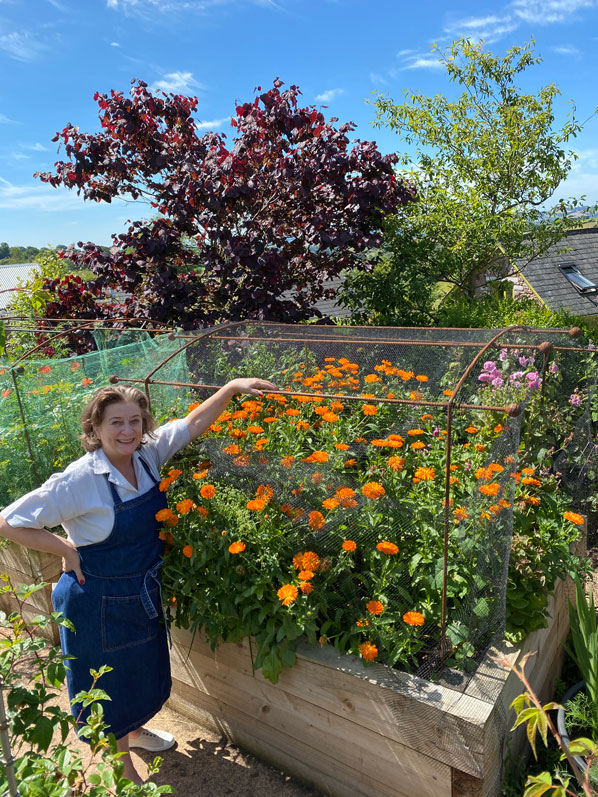
Caroline Quentin Gardening McCarthy Holden

How do you maintain your wellbeing in the garden?

“I hug trees, I talk to trees, I spend as much time as I can in woodland. They call it forest bathing. It’s a deeply rooted human thing to want to be in the shade or dappled light of a tree on a summer’s day.

“I don’t formally meditate, but I do have a process where I try to breathe well when I’m outside if I’m feeling stressed or trying to learn some lines and they’re not going in, or there’s too much to do. I do a little bit of yoga every day. In the summer, I can do that outside and get my breathing organised to just slow my heart rate down and breathe in some good air.”

What’s next?

“I’m planning to downsize and start a new garden (in Devon). My children (Will and Rose) have left home and we have a big house and big plot of land. I’m getting older and maybe it’s time for me to start thinking about a garden for someone in their 60s. I want to make my next garden as well, I don’t want to inherit one. At the moment I’m fixated on having bees. So I’m thinking of an orchard with bees in it, and possibly some wildflowers.”

What will you take from your old garden to your new garden?

“Probably water. What’s brought me the most joy is watching swallows over the pond on a summer’s evening. I would definitely grow apples again and I would have maybe three or four raised beds, and a greenhouse or potting shed.”

Drawn To The Garden by Caroline Quentin is published by Frances Lincoln on February 15, priced £20.


Caroline Quentin Gardening McCarthy Holden

These are the foods to eat to avoid colds and flu this winter

By Lauren Taylor, PA

Nutritionist to the stars, Gabriela Peacock, has revealed the immune-boosting foods to get into your diet this winter, if you want to starve off dreaded colds and bugs.

A lot of people don’t realise just how interlinked winter health and nutrition are, says the 44-year-old, but our immune system “is directly dependant on what we put within the body to create a chemical reaction – it’s really, really important”.

Here are Peacock’s hero foods your body needs this winter…

Fermented food – “Digestion support is incredibly important for immunity – 70 to 80% of our immunity actually lies within a digestive system,” says Peacock, whose celebrity clients include Princess Beatrice, Joan Collins, Jodie Kidd and Amber Le Bon.

She recommends eating live yoghurts, kefir, kombucha, sauerkraut, kimchi and tofu. “They directly increase the beneficial bacteria in your intestine, which supports the healthy microbiome – and the healthy microbiome will in turn support our immunity.” They also contain protein. “Protein is really important for any kind of repair within the body, so when you have a cold, when you scratch your arm, when you need more hormones to be produced.”

How to add it: Peacock recommends using live yoghurt as a base for homemade ice cream with a dash of agave syrup.

“Sauerkraut goes really nicely with any kind of rich foods, which is what we tend to eat around this time, quite heavy and oily meals, sauerkraut cuts through it,” she says. “Kombucha is just a nice alternative when you get a bit bored of drinking water. Most of them are really, really low in sugar.”

Green tea – “This would be one of my one of my hero drinks, especially over this period of the year because tea is nice and warming. Green tea contains catechins which are polyphenols,” explains Peacock.

“Polyphenols are phytochemicals – plant chemicals that have numerous health benefits. One of the main benefits is immunomodulating properties [which] stimulate our immune system and decrease the chronic inflammation. Basically, when you’re looking at the immunity, you want to decrease the inflammation.”

How to add it: If you drink coffee, Peacock suggests sticking to one or two a day and then switching to green tea afterwards.

“A really good to tip is to put lemon in green tea – you increase the absorption of the catechins, plus it gets rid of the bitter taste. Don’t make the tea too hot because the heat will kill the vitamin C.”

Matcha tea – powdered green tea – is another great way to get the nutrients but is higher in caffeine. “I would recommend thinking about it as a caffeine supplement [to coffee],” she says.

Pigmented fruits – “We are looking for the dark pigments, [they] will contain the polyphenols which will directly stimulate the immunity. So think about black blackberries, red raspberries, red peppers, green kale, orange or yellow pumpkins – if and you see these saturated colours, they are really beneficial. “Eat the rainbow – beige food is not good for us. The pigment is the polyphenol.”

How to add it: “I would recommend doing smoothies because you are keeping the fibre inside [as opposed to juicing]. If you’re doing smoothies I always recommend adding some greens that are lying in your fridge. You will not taste it at all but you increase your colours, you increase your fibre,” Peacock says.

“I don’t dislike juicing but I would never have juice on an empty stomach. You should have it with foods or have it after foods. Think of it as more of a vitamin boost – as apposed to food.”  You can buy supplements of red and green superfood powder too, which she recommends adding to smoothies, live yoghurt or soup.

Omega-3-packed fish, nuts and seeds – “Essential fatty acids are incredibly important – the reason they’re called essential is because your body cannot produce them by itself, you need to obtain them by diet,” says Peacock. “Omega-9 and omega-6 we tend to be OK with [obtaining] but most people struggle with omega-3 because we just don’t eat enough of it. This would be oily fish; salmon, mackerel, sardines, a bit of tuna, also a vegetarian source; nuts and seeds.

“We need to at least three to four portions of oily fish per week in order to cover your basic baseline.”

Seeds, in particular, are really high in omega-3, says Peacock. “Pumpkin seeds, sunflower seeds, flax seeds, hemp seeds, also a nice variety of nuts is really important. Omega-3 is directly anti-inflammatory. They’re [also] really important for our skin, our hair, our hormonal balance, for the way our cells communicate with each other. But the prevention of chronic inflammation is one of the main benefits.”

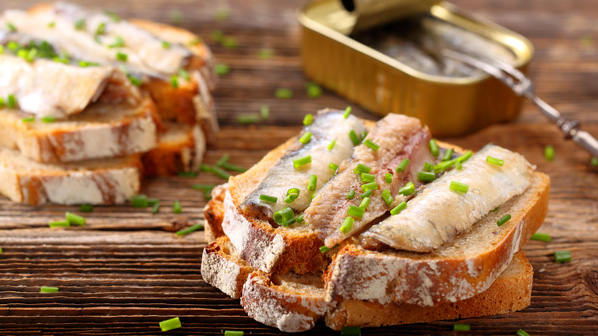
How to add it:  “You know what’s really good and really cheap – mackerel and sardines in a can. They’re kind of unattractive but I absolutely love them. You can get mackerel in a spicy tomato sauce [in a tin] – absolutely delicious.”

She suggests tinned sardines on toast, keeping bowls of seeds on your kitchen counter to add to everything (especially soups and porridge) and carrying nuts in your handbag. “Food source would be preferential but you can get supplements of omega-3 – 99% of my clients need supplementation.”

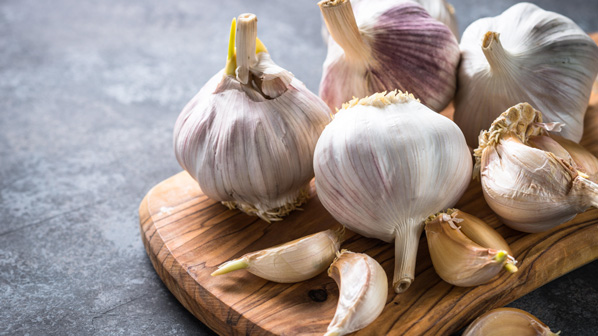
Garlic – Garlic contains sulphur (as do onions, leeks and eggs). “Sulphur is incredibly important because they stimulate the liver detoxification processes and that in turn will have a really positive effect on immunity.” Peacock says.

How to add it: “I would add it into everything really – include it as much as possible. With garlic, you only release the sulphur-containing compounds when you crush it, so it does need to be crushed down and not cooked for too long. Add garlic very last minute. The cooking process helps for the absorption but if you overcook it, if you deep-fry garlic, it will definitely reduce its properties.”

Cruciferous vegetables – Including broccoli, cauliflower, cabbage, Brussel sprouts and kale – are really important for immunity, Peacock says, and it’s “probably the best liver-supporting group of vegetables”. They contain liver-friendly sulphur, polyphenols and are high in fibre – which is “fantastic for digestion” (immunity and digestion are very much linked).

How to add it: Include different kinds in your Sunday roasts, she suggests. “If some clients of mine don’t like the taste or texture of cabbage or kale [I suggest] cutting them into really small pieces – you get exactly the same benefits and you don’t [notice] the texture.”

Citrus – Vitamin C is very important this time of year. “It’s a direct antioxidant, in order to fight free radicals, which is essentially what makes us sick. If you increase antioxidants in your diet, you’re increasing the protection, you’re giving your immune system protection,” Peacock says.”Grapefruit is high in vitamin C.”

How to add it: “If you want to increase your hydration (because not many people drink enough water), add a teeny bit of grapefruit juice to a lot of other water,” she suggests, “I use it for the kids’ water bottles. It’s important for it to be fresh [citrus] so you can get as much vitamin C as possible.”

These principles are incorporated in Gabriela Peacock’s latest book, 2 Weeks to a Younger You, (Kyle Books, £25). Supplements are available at GP nutrition.

Three Recipes From Mary Berry

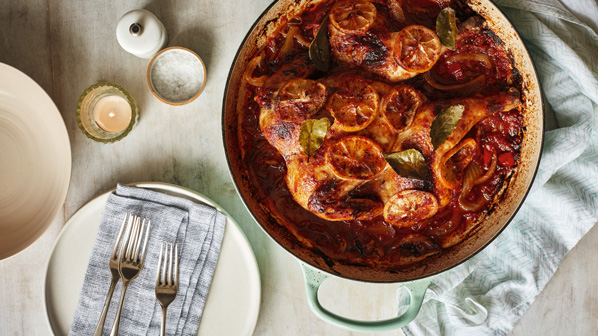
Mary Berry’s easy-peasy one-pot chicken

By Katie Wright, PA

“A whole spatchcock chicken with Mediterranean-style vegetables, this is a healthy and hearty all-in-one dish made in a casserole or deep saucepan,” says iconic TV cook Mary Berry.

“Removing the backbone of the chicken makes it a spatchcock and it is easier to arrange in the pot and to carve or joint. Double up for eight people, if you wish, and arrange two chickens in a large roasting tin, covered in foil.”

Easy peasy one-pot chicken (Serves 4-6). Ingredients:

2 tbsp olive oil

1 large onion, thinly sliced

1 large fennel bulb, thinly sliced

1 red pepper, deseeded and diced

3 large garlic cloves, finely grated

100ml (3½fl oz) white wine

1 x 400g tin chopped tomatoes

2 tbsp sun-dried tomato paste

2 tsp Worcestershire sauce

1 small whole chicken (about 1.25kg/2lb 12oz)

5 bay leaves

1 lemon, thinly sliced into rounds

1 tsp paprika

1 tbsp runny honey

Method:

1. Preheat the oven to 200°C/180°C Fan/Gas 6.

2. Heat the oil in a deep lidded casserole or large, lidded, ovenproof frying pan over a high heat. Add the onion, fennel and pepper and fry for about 3–4 minutes, stirring regularly. Add the garlic and fry for 30 seconds. Pour in the wine and boil to reduce by half.

3. Stir in the chopped tomatoes, sun-dried tomato paste and Worcestershire sauce, and season with salt and black pepper.

4. Meanwhile, put the chicken upside down on a board. Remove the backbone by cutting either side of the bone with scissors. Turn over and press down on the breastbone to flatten the bird; it is now a spatchcock chicken. Arrange the lemon slices and bay leaves over the chicken.

5. Put the chicken, breast-side up, on top of the vegetables in the casserole or frying pan. Season and bring up to the boil. Cover with a lid and transfer to the preheated oven for about 35 minutes.

6. Remove the lid and sprinkle the paprika over the chicken and drizzle with the honey. Return to the oven, uncovered, for about 30 minutes to brown and finish cooking.

7. To serve, spoon the vegetables on to a hot platter and joint or carve the chicken before arranging the chicken on top of the vegetables.

Mary Makes it Easy is published by BBC Books, priced £28. Photography by Laura Edwards. Available now.

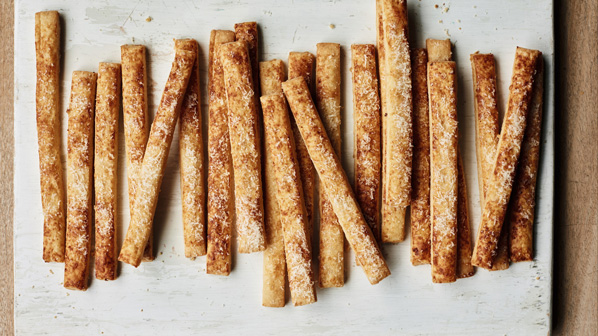
Mary Berry’s Somerset cheddar cheese straws

“Cheese straws are so delicious, but can be tricky to make if the proportions are not quite right,” says iconic TV cook Mary Berry.

“We tested these every week for a month, just to make sure they were perfect – and because they are so moreish, too!”

Somerset cheddar cheese straws (Makes 50)

Ingredients:

250g (9oz) cold butter, cubed

55g (2oz) semolina

400g (14oz) plain flour

1 tsp mustard powder

¼ tsp cayenne pepper

150g (5oz) mature Somerset Cheddar, coarsely grated

150g (5oz) Parmesan, coarsely grated, plus about 4tbsp finely grated, to garnish

1 egg, beaten

A little milk

Method:

1. Preheat the oven to 200°C/Fan 180°C/Gas 6. Line 2 large baking sheets with non-stick baking paper.

2. Measure the butter, semolina, flour, mustard powder, cayenne pepper and a little salt into a food processor. Whizz until the mixture looks like breadcrumbs.

3.  Add the Cheddar, Parmesan and egg and whizz again for a short time, just until the dough comes together.

4. Remove the dough from the processor, divide into two equal pieces, and shape each one with your hands on a floured work surface into a rectangle. Roll each piece of dough to a rectangle about 46 x 16cm (18 × 6½in) and about 8mm thick.

5. Brush the milk over the top of the dough and sprinkle with the finely grated Parmesan. Slice each rectangle into roughly 25 strips.

6. Carefully lift each straw on to the prepared baking sheets and bake in the preheated oven for about 18 minutes, or until golden brown. Leave to cool on the baking sheet until the straws have hardened and are easy to handle.

7. Serve cold.

Mary Berry’s red velvet sandwich cake

“An impressive, but easy cake,” is how iconic TV cook Mary Berry describes this bake.

“Use a professional food colouring paste, if you can; a natural liquid colouring won’t work and may turn the sponge green,” she recommends.

“For a particularly elegant finish, you could make extra icing and crumb coat the sponge before applying the top layer of icing.”

Red velvet sandwich cake

Ingredients:

(Serves 8)

Butter, for greasing

250g (9oz) plain flour

1 tbsp cocoa powder

2 tsp baking powder

1 tsp bicarbonate of soda

250g (9oz) light muscovado sugar

200ml buttermilk

150ml (¼ pint) sunflower oil

2 tsp vanilla extract

1 tbsp red food colouring gel or about ¼ tsp food colouring paste

2 large eggs

8 white chocolate truffle balls, to decorate

For the buttercream icing:

250g (9oz) butter, softened

2 tsp vanilla extract

300g (10½oz) icing sugar

250g (9oz) full-fat mascarpone cheese

Method:

1. Preheat the oven to 180°C/160°C Fan/Gas 4. Grease and line the bases of 2×20cm (8in) sponge sandwich tins with non-stick baking paper.

2. Measure the flour, cocoa powder, baking powder, bicarbonate of soda and sugar into a bowl and mix well.

3. Mix the buttermilk, oil, vanilla, food colouring and 100ml (3½fl oz) water in a jug. Add the eggs and whisk until smooth. Pour the wet ingredients into the dry ingredients and whisk until combined. The mixture should be bright red; it will get a little darker as it cooks. If it’s not as vivid as you’d like, add a touch more colouring.

4. Divide the mixture evenly between the two prepared tins and level the surfaces. Bake in the preheated oven for about 25–30 minutes, or until well risen and shrinking away from the sides of the tins. Cool in the tins for 10 minutes, then turn out, peel off the paper and leave to cool completely on a wire rack.

5. To make the buttercream icing, place the soft butter and vanilla extract in a large bowl and sift in half the icing sugar. Mix with an electric whisk until smooth. Sift in the remaining icing sugar and mix again. Add the mascarpone to the bowl and gently stir with a spatula until smooth (don’t beat with a whisk as it may split). Put a fluted nozzle in a piping bag and spoon about 150g (5oz) of the buttercream into the bag.

6. To assemble the cake, sit one of the sponges on a cake plate and spread a third of the buttercream over the cake, then sit the other cake on top. Ice the cake by first spreading a thin layer of icing – a crumb coat – over the whole cake before chilling for 30 minutes. Then pile the remaining icing from the bowl on top and spread over the top and around the edges to completely cover the cake. Make sure that the icing is smooth around the edges before starting to create lines up the sides. Using a small palette knife, make wide lines up the sides and swirl the top. Pipe a rope design around the edge of the top of the cake and decorate with the eight chocolate truffles to finish.

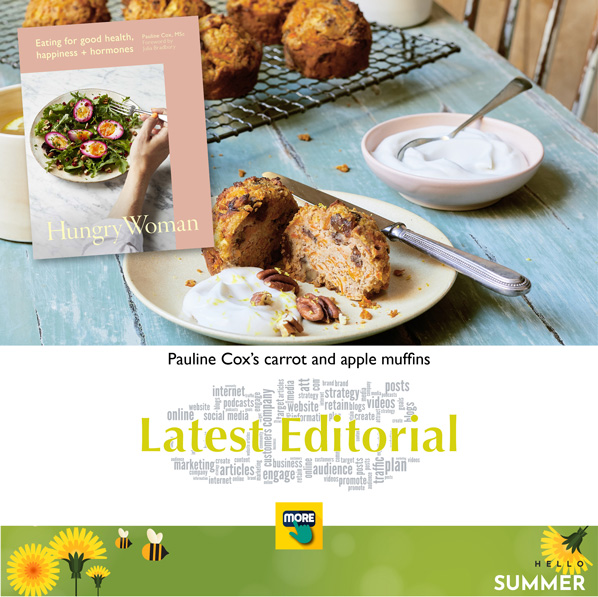
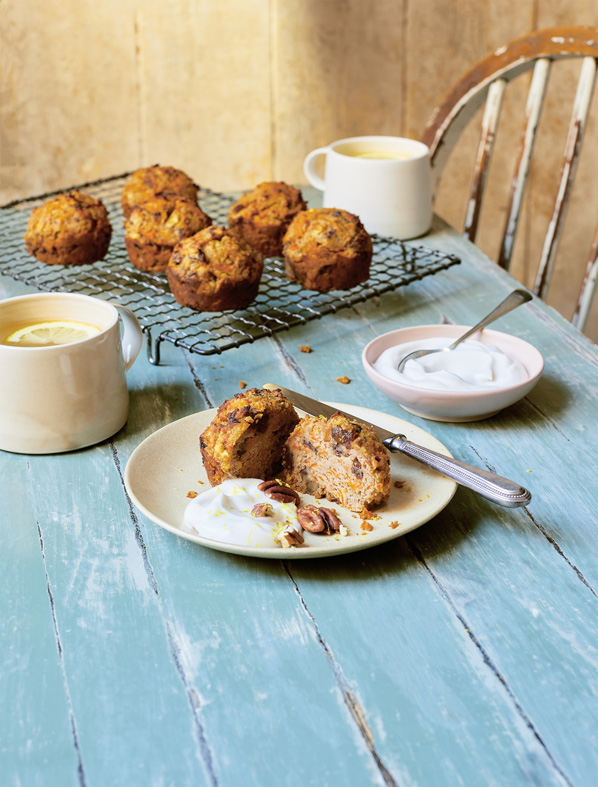
Pauline Cox’s carrot and apple muffins

muffins McCarthy Holden

“These muffins are naturally sweetened by the grated carrot, apple and cinnamon,” says functional nutritionist Pauline Cox.

“This fibre fest will keep you feeling full and satisfied without a blood-sugar spike.”

Carrot and apple muffins

Ingredients:

(Makes 12)

90g coconut oil, melted, plus extra for greasing

5 eggs

375g ground almonds

150g sultanas

90g walnuts or pecans, roughly chopped, plus a few extra to serve

3tsp baking powder

3tsp ground cinnamon

1tsp salt

375g carrots, grated

375g apples, grated (green apples for a lower carb content)

Zest and juice of 1 unwaxed lemon

Coconut or natural yoghurt, to serve

Method:

1. Preheat the oven to 170°C fan and grease a 12-hole muffin tin.

2. In a mixing bowl, beat the eggs and combine with the melted coconut oil.

3. Add the ground almonds, sultanas, walnuts or pecans, baking powder, cinnamon and salt to the liquid egg mix, along with the grated carrots and apples and mix together to form a thick batter. Add in a quarter of the lemon juice (use the rest in drinking water) and half of the lemon zest.

4. Spoon the thick mixture into your greased muffin tray. Bake for 22-25 minutes. Remove from the oven and leave to cool.

5. Serve with a dollop of coconut or natural yoghurt, a pecan or a walnut and sprinkle with the remaining lemon zest.

Muffins image
Pauline Cox book Hungry Women McCarthy Holden
Pauline Cox Recipe McCarthy Holden
Pauline Cox

Market Insight – June 2023

High levels of contracts exchanged on house sales in June

June was a bumper month for house sales going through to exchange of contracts, which is good news because during every month in 2023 when we start to write a quick blog about the house market, we expect to be reporting a house market in trouble because of the relentless UK media reporting of house prices falling and interest rates rising. The facts and experience from the shop floor is of a house market showing remarkable resilience half way through 2023.

House Prices?

It is clear from the volume of house sales going through to exchange of contracts that we have buyers and the market is in better shape than you would perhaps think.

Yes house prices have levelled off and in some sectors there has been a small reduction in values, however this is minimal and the buyer demand remains very good. House sellers are now more realistic on price if they are serious about moving home, so we have a more balanced market with buyers and sellers more aligned on pricing, which in some part has impacted on the fact that house sales productivity at McCarthy Holden are performing better than last year.

The Wider Picture

When the Nationwide recently reported the annual rate of house price growth as -3.5% to end of June, the lead their report with the heading ‘House prices relatively stable in June’

We need to remember that these sums represent the UK wide position, so in our area of operation in the Hampshire / Surrey / Berkshire borders house prices have held up well with some sectors only slightly lower compared to a year ago.

This resilience in the market is no doubt underpinned by the labour market conditions, which remain solid and also household balance sheets appear in relatively good shape because we get few if any house sales occurring because of financial stress.

The residential letting market is in very good shape with plenty of tenant demand, especially around the £4,000 p.c.m. price point where properties are being snapped up by eager tenants. If you need market insight at any time in 2023, just go to our web site and ask your nearest branch for a free no obligation house price appraisal.

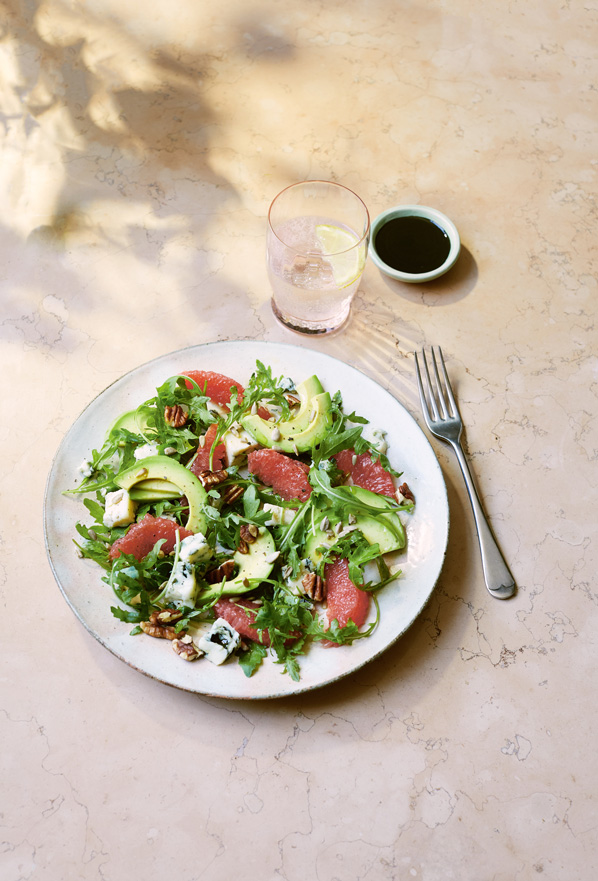
Pauline Cox’s Roquefort, rocket and pink grapefruit salad

McCarthy Holden Salad for summer

By Katie Wright, PA:

“As colourful in nutrients as it is in appearance, this easy-to-construct salad is a powerhouse of goodness!” says functional nutritionist Pauline Cox.

Roquefort, rocket and pink grapefruit salad

Ingredients:

(Makes one salad)

90g rocket

100g Roquefort (ideally raw), cut into chunks

1 ripe avocado, peeled, stoned and sliced

2 pink grapefruits, segmented

A drizzle of raspberry blush vinaigrette

A handful of chopped fresh coriander

A handful of pecans, chopped

A handful of sunflower seeds

For the vinaigrette:

100g raspberries (10-12 juicy raspberries)

60ml extra virgin olive oil

Juice of 1 lime

20ml balsamic vinegar

20ml beet kvass (optional, but ideal)

1tsp salt (ideally beetroot salt)

Method:

1. To make the vinaigrette, add all of the ingredients to a blender and combine. Transfer to a clean glass jar with a lid, keep in the fridge and use within three days.

2. Lay the rocket leaves onto two plates, adding chunks of Roquefort, slices of avocado and pink grapefruit segments, and drizzle over the raspberry blush vinaigrette.

3. Sprinkle over the chopped coriander, pecans and sunflower seeds.

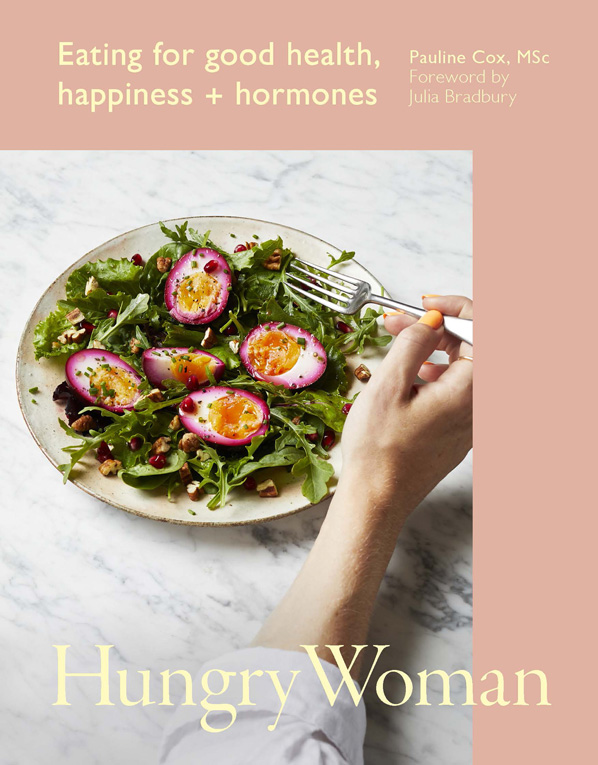
Hungry Woman by Pauline Cox is published by Ebury Press, priced £27. Photography by Luke Albert. Available Now.

McCarthy Holden Salad for summer
roquefort, rocket and pink grapefruit salad

The best scented plants to enhance your balmy summer evenings

McCarthy Holden Scented plants

Now that many of us have given our barbecues an airing and are enjoying the longer evenings, it’s wonderful to take in the variety of scents which pervade in the garden when the sun goes down.

Many plants actually increase their perfume production at night to attract moths to pollinate them.

Choose your plants carefully, and you can have a wonderfully scented garden for much of the summer.

There are many shrubs – mock orange (Philadelphus), shrub roses and lavender – which are all easy to obtain, along with fragrant annuals, which make great additions to patio pots and raised beds.

Even if you only grow some traditional sweet peas to cut and place in a vase on your outside table, guests will be able to enjoy a whiff of their heady scent.

McCarthy Holden Scented plants
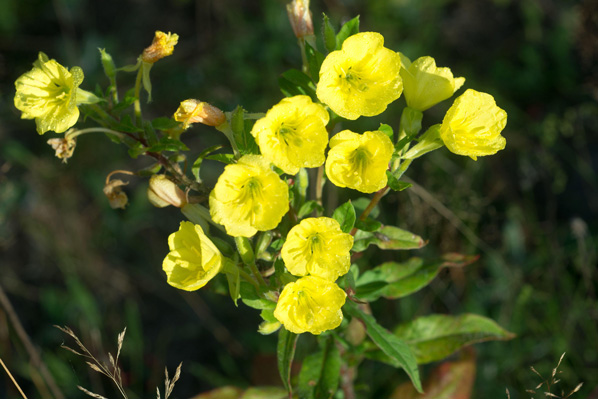
common evening primrose

Here are some of the best fragrant plants for enjoying as the sun sets…

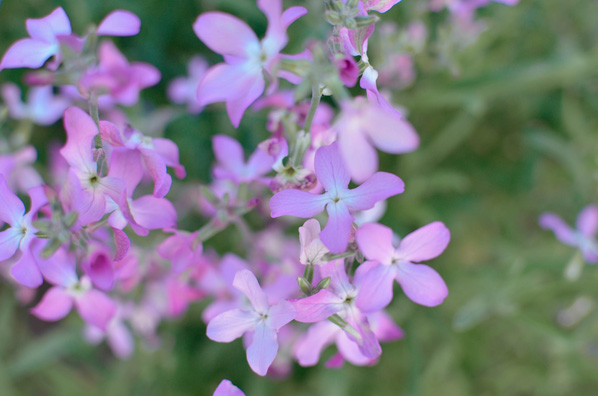
1. Night-scented stocks (Matthiola)

These pretty, old-fashioned annuals reach their fragrant peak at twilight, where they become moth magnets. Reaching up to 60cm in height, they produce small, four-petalled flowers in shades of white, lilac or pink and are ideal at the front of an informal scheme or added to container displays. They like full sun in a sheltered position and moist, well-drained soil.

McCarthy Holden Scented plants
night scented stocks

2. Evening primrose (Oenothera)

If you’re a wildflower fan, these fragrant bowl-shaped yellow flowering beauties are excellent for pollinators, and also produce their optimum scent in the evening.

Depending on the variety you choose, they can grow to up to 1m, ideal for the middle of a border, or to just 30cm, better for a container. Grow them in full sun or semi-shade. They don’t require much attention apart from watering during prolonged dry periods, and should flower from June to September

McCarthy Holden Scented plants
common evening primrose

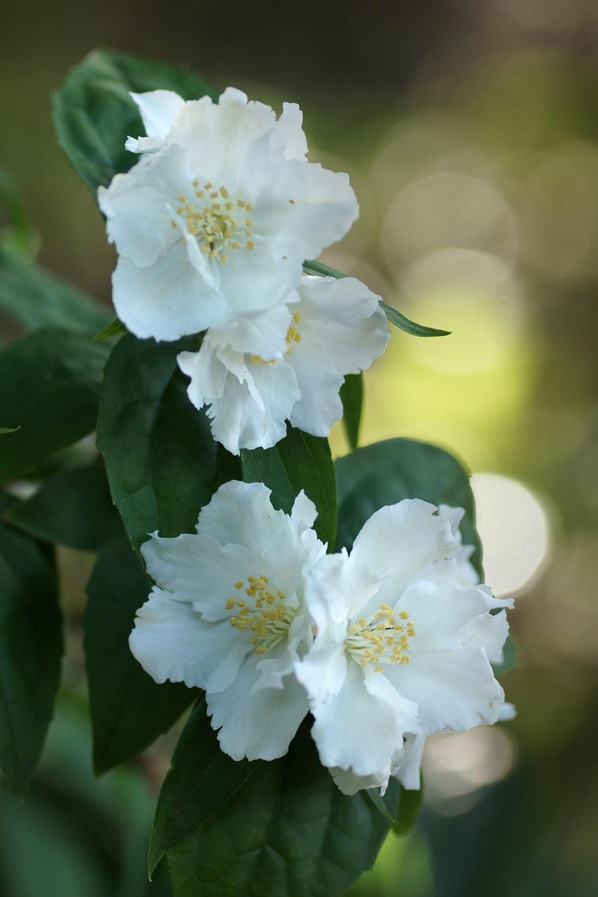
3. Mock orange (Philadelphus)

This is among the most fragrant of flowering shrubs, ideally given plenty of space to spread out, where its white blooms can emit their delicious scent reminiscent of orange blossom – which will pervade the whole garden on balmy summer evenings.

Single-flowered varieties are great for bees and butterflies and you can also get types which are suitable for large containers, such as ‘Manteau d’Hermine’, ideally placed near a window or door on the patio. They are easy to grow, withstanding poor soil and wind, but generally not shade.

McCarthy Holden Scented plants
philadelphus (mock orange)

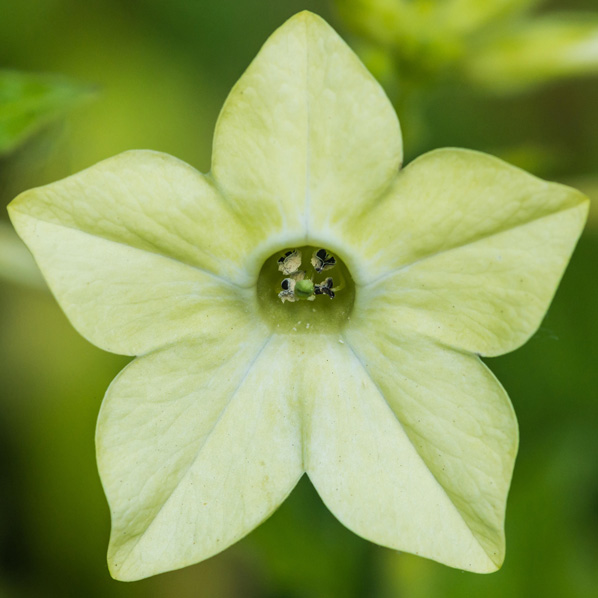
4. Nicotiana (tobacco plant)

Hanging their flowers sleepily during the day, especially in really bright sunlight, the old-fashioned varieties of these annuals come to life in the evening when their blooms open to emit a sweet scent – so make sure you place them in containers near where you are sitting.

Some, such as Nicotiana langsdorffii, will grow to 1.5m so may be better in the border or secured to a garden trellis, while others, such as the beautiful ‘Lime Green’, grow to around 60cm and are ideal for a pot. If you want flowers which open up during the day, go for the newer strains, but the old-fashioned ones will give you more perfume.

McCarthy Holden Scented plants
lime green nicotiana flower

5. Lilies

These are guaranteed to give you fragrance from mid-summer onwards, whether you want a dazzling splash of colour on your patio with showstopping varieties like the pink oriental ‘Stargazer’, which likes full sun and will need staking. Or more subtle hues which pack a fragrant punch, such as Lilium longiflorum, with its long, white, trumper-shaped flowers.

This one is best grown in large pots (it grows to 1m) as it is not totally hardy. Or try Lilium regale, a trumpet lily growing to 1m, which lights up a summer border

McCarthy Holden Scented plants
'Stargazer' lilies

Where to place them

Perfume is most apparent in calm conditions, as wind will carry the scent away in the air, so it’s best to plant fragrant climbers in a sheltered spot or on a partially enclosed patio.

Consider combinations

If you want fragrant perennials in your borders, go for combinations of those with scented flowers and those with fragrant foliage to complement each other.

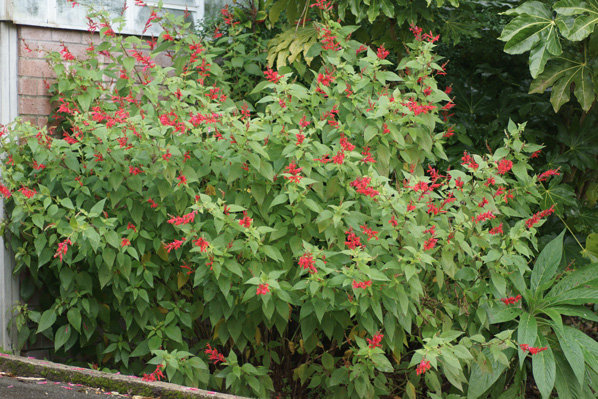
Some scented plants are not spectacular but will bring out the best in a border when planted with colourful non-perfumed plants. Try growing lemon-scented verbena and pineapple sage (Salvia elegans, whose foliage releases a pineapple-like scent when you brush past it) in the border amid unscented blooms, and you will have the best of both worlds.

Locate leafy scents

Plants with scented foliage include scented leaved pelargoniums, Achillea filipendulina, catmint (nepeta), Monarda didyma and the lemon balm Melissa officinalis `All Gold’, while those with perfumed flowers include Iris unguicularis, Phlox paniculata, Hosta `Honeybells’ and many varieties of dianthus.

Of course, plants with heavier scents may dominate, so keep richly fragrant roses, lilies, lavender and other strongly aromatic plants separate from those with more subtle perfumes.

McCarthy Holden Scented plants
pineapple sage

Pretty garden plants you didn’t know you could eat

McCarthy Holden garden plants

By Hannah Stephenson:

Garden designer, grower and social media star Lucy Hutchings, of She Grows Veg fame, has been showing followers the prettiest vegetables to add colour and form to ornamental borders.

“The best way to approach edibles within a planting scheme is to stop thinking of them as edibles and approach them as you would any other plants in your border. Look at height, colour and texture and vary that through the border,” says the designer, who has 171k followers on Instagram.

“You might want some frilly things, spiky things, architectural things, broad-leaved things – and you can achieve all of these textures and looks through edible plants as well.”

McCarthy Holden garden plants
sunflowers in a border

At the recent Gardeners’ World Live event, Hutchings launched She Grows Veg, a fully female design company. In The Secret Homestead show garden, she demonstrated how easy it is to integrate flowers and edibles and still make everything look beautiful.

With a background in fashion design, Hutchings explains: “Grow your own is almost always portrayed in a homespun, traditional, quite humble and slightly apologetic way. My interest lies firmly in edible plants and I never understood why there was this divide in approach.”

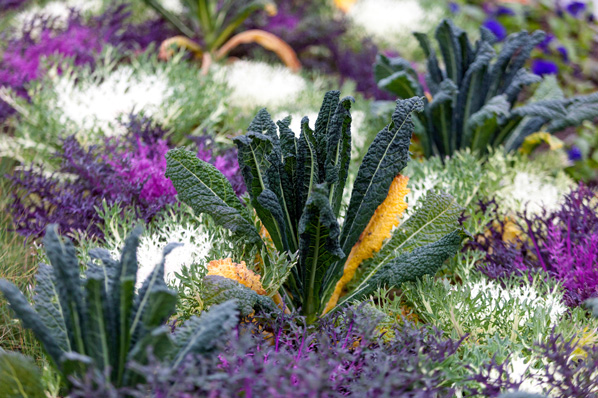
a border of ornamental kale

She aims to show people who love flowers and beautiful borders how to embrace the idea that veg can also be gorgeous.

Her show garden was filled with popular ornamental plants mixed with food crops which people might not realise are edible, including hostas, roses, cannas, dahlias, Oxalis triangularis and colocasia – which are traditional food crops in other parts of the world.

Here she suggests a selection of edible plants which will provide colour and texture to any ornamental border.

McCarthy Holden garden plants
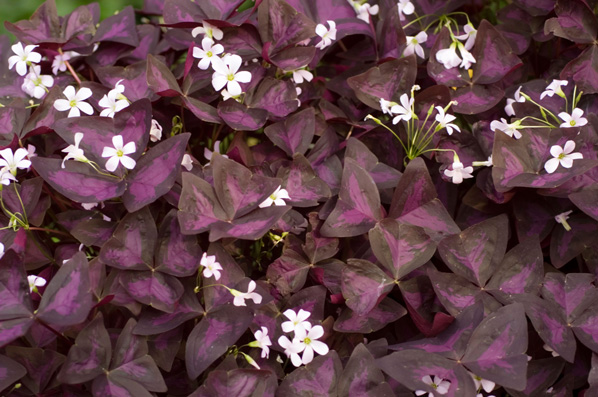
Oxalis triangularis

Striped japonica corn

Ornamental varieties of vegetable which blend in beautifully with a flower border include striped japonica corn (which can be used for popcorn), with candy cane striped foliage. “Popcorn is such an easy snack and you can get a lot off a plant,” says Hutchings.

Hostas

“These are very popular in East Asia, where people eat new shoots as they emerge. Take them from an established crown and give the plant a chance to bounce back. They taste similar to asparagus and you don’t get the woodiness.”

Japanese flowering kale

“Japanese flowering kale is sometimes referred to as ornamental kale, but you can eat it. It looks like a big purple flower, with white/green around the outside, fading to pink and bright vivid neon purple.

“All kales are really hardy and you can harvest it year round, sowing it twice a year, once in late summer to grow through winter and again in early spring to grow through summer.” Serve it as you would other green veg.

“I have kales spaced through the border, almost treating it like a great big flower as opposed to a foliage plant.”

Red orach

“This featured in quite a lot of the gardens at the Chelsea Flower Show,” Hutchings observes. “It’s commonly seen in borders and is sometimes referred to as French (or mountain) spinach. You eat it in exactly the same way as spinach despite the fact that it has really vivid purple leaves.

“Add colour through foliage and stem colour as well as flowers. Your greens don’t actually have to be green. Red and purple vegetables tend to be better for you because the red and purple colour is from an antioxidant called anthocyanin which is the same antioxidant that makes blueberries a superfood.”

Colocasia (elephant’s ears)

“A lot of people grow Colocasia as houseplants, but very few realise that it is actually taro, a starchy root you often get in Chinese restaurants – in Asia, it is very commonly eaten.”

Oxalis triangularis (purple shamrock)

“Again, this is a popular houseplant, but the leaves are really delicious, with a sour apple flavour. It’s a beautiful plant which is easy to grow and the leaves can be added to salads for a fruity taste. I’ve also seen it as a garnish on desserts.”

Dahlias

“These are a root crop, originally imported from Europe as a starchy food crop. If you lift them at the end of the season, use some of the tubers for eating. Cook them as you would a new potato – they have a slightly lemony taste. Flower petals of dahlias are also edible.”

Sunflowers

“These give you a lot of bang for your buck. Not many people realise how many ways you can eat a sunflower. They think that you just have to roast the seeds and they’re fiddly. But you can also eat the unopened flowerbuds as you would an artichoke head.

“If you harvest a sunflower head when the seeds have swelled but before the seed coating hardens too much, you can roast and eat the heads like you would corn on the cob.”

WARNING – This article was supplied by the Press Association. Check the facts / information and make sure a plant is edible, please consult an expert.

McCarthy Holden garden plants
ornamental kale
McCarthy Holden garden plants
variety of edible plants
McCarthy Holden garden plants
red orach

Is The House Market In Trouble?

MARKET COMMENT IMAGE

The UK media headlines are full of alarming headlines with predications about house prices falling on 2023, so how has the market shaped up in early January on the Hampshire / Surrey / Berkshire borders

There can be no doubt  that the upward movement in house prices has stopped and flattened out, however, that doesn’t mean the market has slowed. House sale transactions are at a good level and there is currently a remarkable resilience in the house market.

We should also remember that when intuitions such as the Halifax  or the BBC make statements such as UK house prices will drop by 8%, they are suggesting this for the UK as a whole and not specifically Hampshire / Surrey / Berkshire borders. Also, if you look back on house price predictions in the past they are typically found to be wrong.

There can be no doubt however that the days of constant upward movements in house prices are gone for the short to medium term, despite buyers still being in a competitive environment because there is so little property for sale on the supply side. The cost of living will make buyers more cautious so price sensitivity will be a factor, but the house market will remain in good shape.

Some Facts About January 2023 House Sales

To demonstrate how resilient the market is and how the buyer demand remains very high, just take a look at the following properties that have exchanged contracts in the last five days. This wouldn’t happen in a flaky market because fewer buyers would remain committed to their house purchase.

The following is a selection of properties that have proceed to exchange in the last five days, despite the backdrop of media commentary. The price range is as impressive as the amount of buyers that have remained committed to their individual purchase plans.

The Blue Triangle Fleet – Exchanged c. £1.6m.
Hazeley Lea – Exchanged c. £1.6m
Hartley Wintney – Exchanged c. £900,000
North Warnborough – Exchanged c. £1.3m.
Odiham – Exchanged c. £875,000
Hartley Wintney – Exchanged c. £695,000
Odiham – Exchanged c. £800,000
Odiham – Exchanged c. £600,000
Fleet – Exchanged c. £800,000
Fleet – Exchanged c. £700,000

Fleet, Hampshire – Exchanged This Week (guide c. £1.6m.)

Hazeley Lea, Hartley Wintney, Hampshire – Exchanged This Week (guide c. £1.6m.)

Hartley Wintney, Hampshire – Exchanged This Week (guide £900,000)

North Warnborough, Hampshire – Exchanged / Completes This Week (guide c. £1.3m.)

Odiham, Hampshire – Exchanged This Week (guide c. £875,000)

Hartley Wintney, Hampshire – Exchanged This Week (guide c. £695,000)

Odiham, Hampshire – Exchanged This Week (guide c. £800,000)

Odiham, Hampshire – Exchanged This Week (guide c. £600,000)

Fleet, Hampshire – Exchanged This Week (guide c. £800,000)

Fleet, Hampshire – Exchanged This Week (guide c. £700,000)

By any standards most would agree that this is an impressive performance demonstrating the strength of buyer demand.

We believe the house prices we are experiencing in December 2022 will be around the same level by December 2023, if the current supply side levels remain in place and the cost of borrowing doesn’t increase significantly.

If you need market insight at any time in 2023, just go to our web site and ask your nearest branch for a free no obligation house price appraisal.

×
Find a Property
M
Country & Equestrian
By submitting this form, you agree to McCarthy Holden using your personal data in accordance with our Privacy Notice.